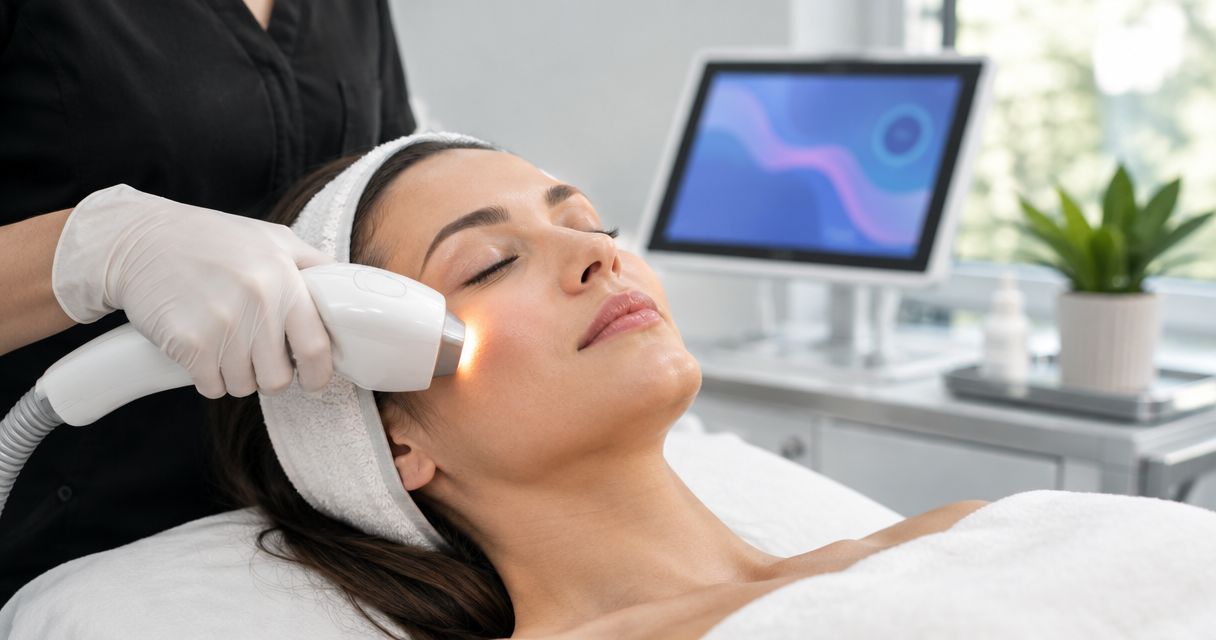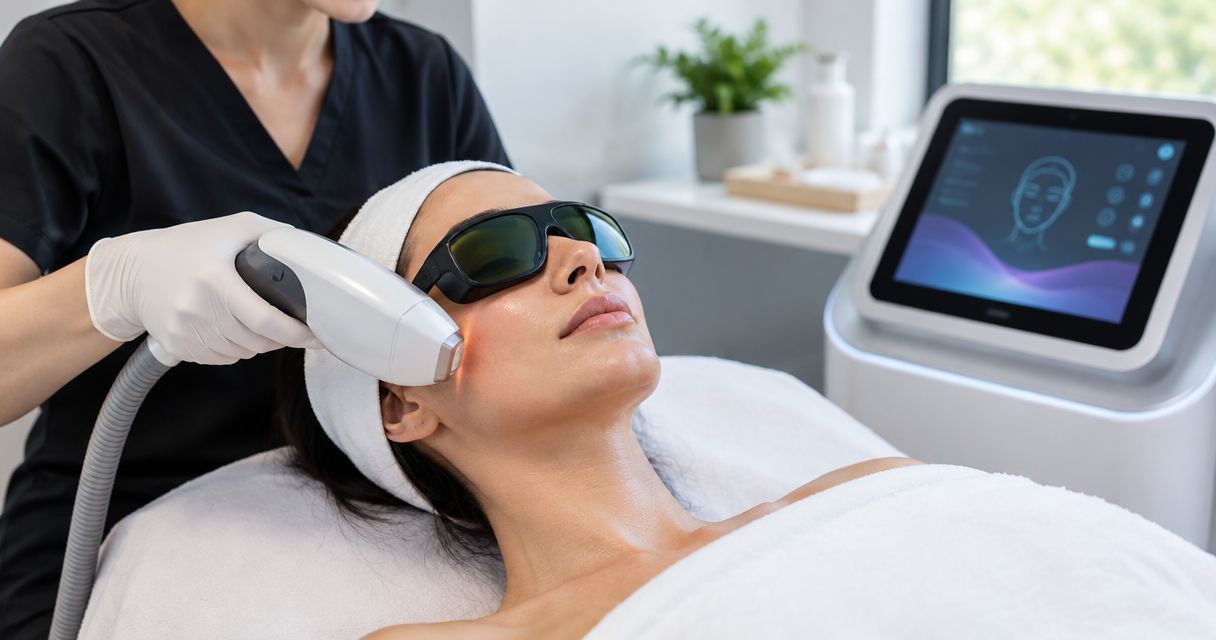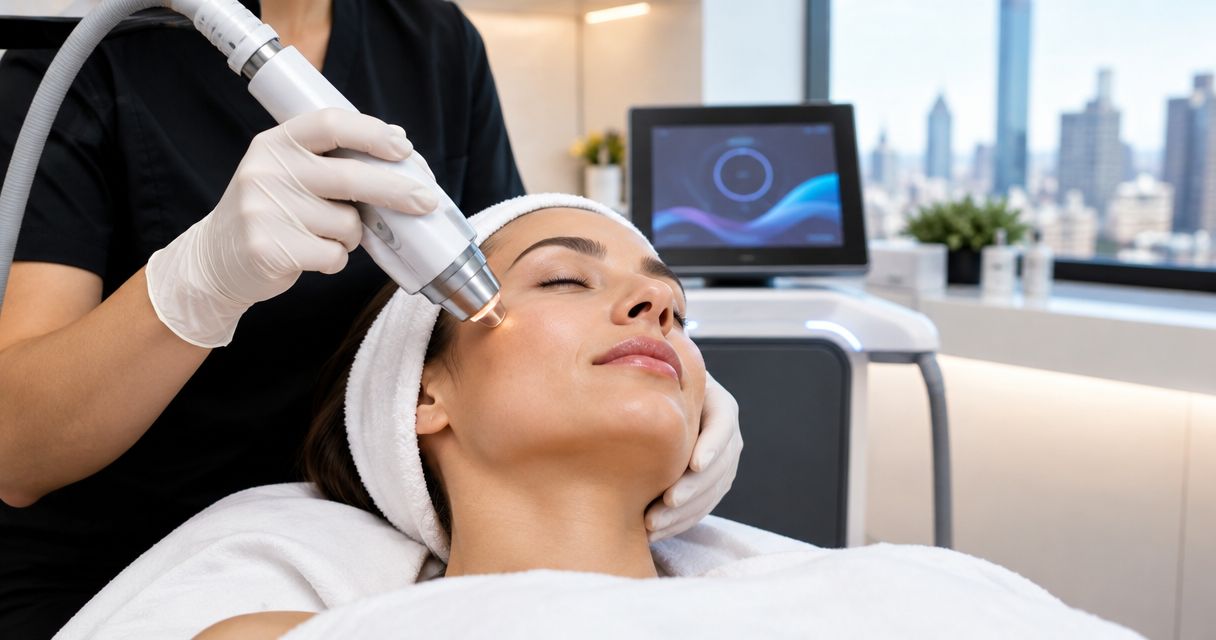
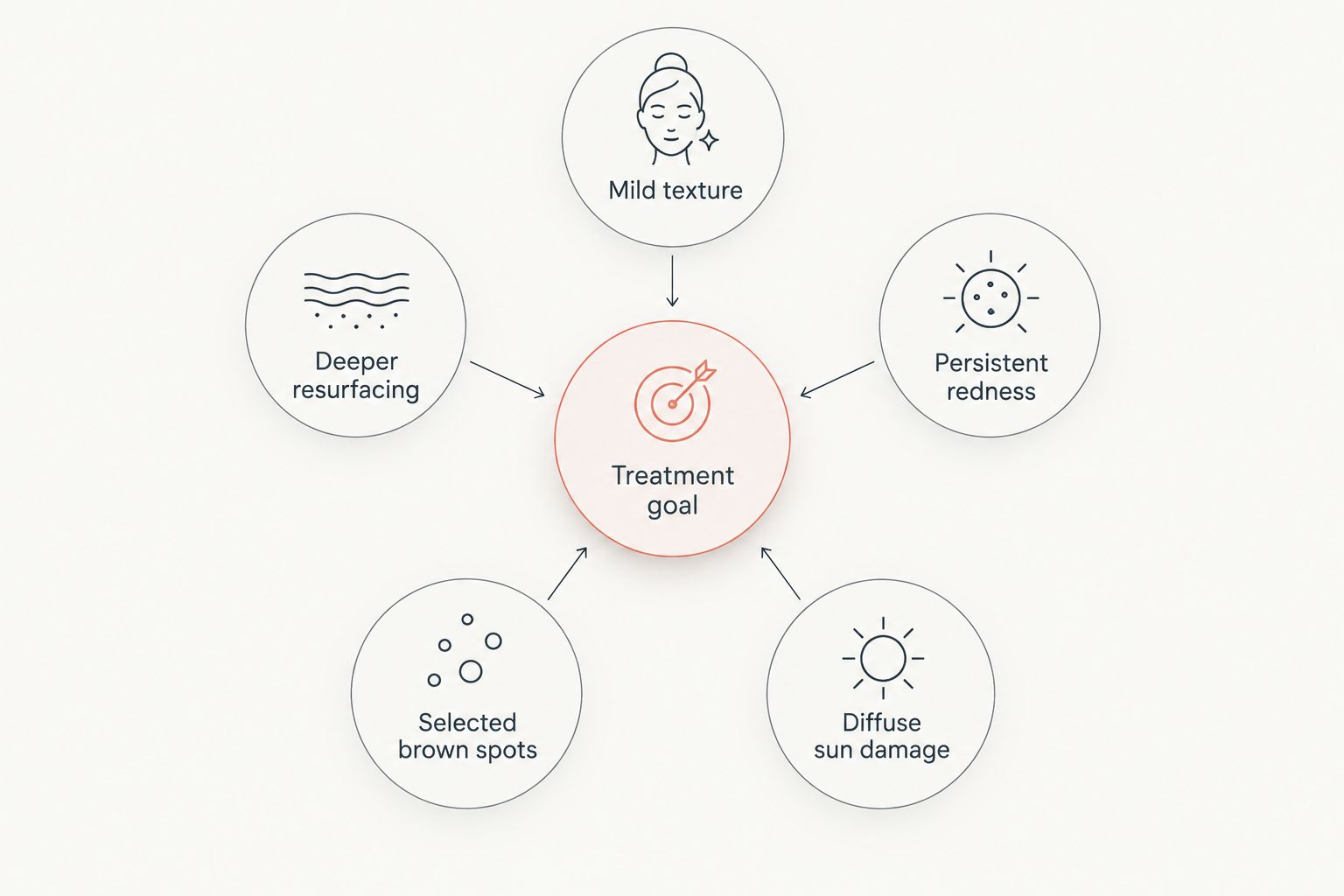
Best for mild texture changes: non-ablative fractional laser. Best for deeper resurfacing: fractional CO₂ laser. Best for persistent redness: vascular laser. This 2026 guide compares laser skin rejuvenation options in NYC by treatment goal, recovery, and safety—not by promises of a universal best treatment.
- For best laser skin rejuvenation NYC searches, choose by skin concern, skin tone, and recovery tolerance—not device popularity.
- Non-ablative fractional laser suits mild texture concerns; fractional CO₂ addresses deeper resurfacing goals with more recovery.
- Ammonite Laser Spa offers personalized laser skin rejuvenation in Downtown Brooklyn; ask which device fits your concern.
- Vascular lasers target redness; pigment-targeting lasers address selected spots; IPL is not a laser.
Why this matters
Wrinkles, acne scars, redness, and brown spots are different treatment targets. A device that treats one does not automatically treat the others, and a stronger treatment is not automatically a better match.
Ammonite Laser Spa offers personalized laser skin rejuvenation in Downtown Brooklyn. Ammonite Laser Spa is a local option for clients seeking personalized laser skin rejuvenation in Downtown Brooklyn. Choose a treatment only after confirming the device, your skin concern, and the recovery requirements.
This is a treatment-category guide, not a ranking of NYC providers or a substitute for a medical assessment. In 2026, the useful question remains specific: which treatment addresses your concern without adding an unacceptable recovery burden or risk?
What makes the best laser skin rejuvenation treatment?
Use these criteria before comparing treatments:
- Target match: The treatment should address a defined concern, such as texture, redness, or a diagnosed pigment spot.
- Skin-tone suitability: Ask how your natural skin tone, tanning history, and previous pigment changes affect treatment selection.
- Recovery fit: Get written expectations for redness, swelling, peeling, wound care, and return to your usual activities.
- Operator qualifications: Confirm who assesses your skin, who operates the device, and who manages complications.
- Device specificity: Ask for the device name and treatment mode. A category label alone does not describe the procedure.
- Aftercare clarity: Know which skincare products to pause, how to protect treated skin, and whom to contact afterward.
A consultation should connect all six criteria. If the explanation stops at the device brand or a dramatic before-and-after photo, keep asking questions.
Laser skin rejuvenation options at a glance
These 2026 recommendations separate treatment goals rather than rank every laser on a single scale. The order below matches the detailed sections.
| Treatment category | Best for | Standout feature | Key limitation |
|---|---|---|---|
| Non-ablative fractional laser | Mild texture | Treats microscopic zones without ablating the surface | Less intensive resurfacing than an ablative approach |
| Fractional CO₂ laser | Deeper resurfacing | Removes microscopic columns of tissue | More demanding recovery and aftercare |
| Vascular laser | Persistent redness | Targets blood vessels | Not a general solution for scars or brown spots |
| Pigment-targeting laser | Selected brown spots | Targets melanin in assessed lesions | Wrong lesion selection can cause harm |
| Intense pulsed light, or IPL | Diffuse sun damage | Uses filtered broad-spectrum light | Not a laser; suitability depends on skin tone and settings |
Start with the concern in the second column. Then compare recovery and risk; do not reverse that order by choosing a device first and searching for a reason to use it.
1. Non-ablative fractional laser: best for mild texture changes
Non-ablative fractional lasers deliver energy into microscopic treatment zones without removing the skin surface in the way an ablative laser does. They are used for concerns such as uneven texture, fine lines, and selected acne scars.
Best for: You want a texture-focused treatment and are not choosing the more intensive recovery associated with ablative resurfacing. Non-ablative does not mean risk-free or recovery-free.
Non-ablative fractional laser pros:
- Addresses texture rather than treating every concern as a pigment problem.
- Leaves the surface intact rather than ablating treatment columns.
- Offers an alternative to ablative resurfacing when recovery requirements drive the decision.
Non-ablative fractional laser cons:
- A treatment course can require repeat visits; obtain an individualized plan.
- Redness, swelling, burns, and pigment changes remain possible.
- It is not a substitute for a vascular treatment when redness is the main concern.
Ask what improvement is realistic for your specific scar type or texture concern. Also ask whether previous post-inflammatory hyperpigmentation changes the recommended settings or treatment choice.
Verdict — Hold: Request an assessment if mild texture is your main concern; do not book solely because the treatment is described as gentle.
2. Fractional CO₂ laser: best for deeper resurfacing goals
Fractional CO₂ resurfacing creates microscopic columns of ablated tissue while leaving intervening areas untreated. It is used for selected wrinkles, acne scars, and other resurfacing concerns that warrant a more intensive approach.
A CO₂ laser operates at 10,600 nanometers, a wavelength absorbed strongly by water. That physical property explains its tissue-removing action; it does not establish whether the treatment is appropriate for you.
Best for: You have a resurfacing concern that a qualified clinician considers suitable for an ablative procedure, and you can follow the required wound-care plan.
Fractional CO₂ laser pros:
- Provides an ablative option for texture-focused treatment.
- Addresses selected scars and wrinkles rather than pigment alone.
- Uses fractional treatment zones instead of treating the entire surface uniformly.
Fractional CO₂ laser cons:
- Requires more demanding recovery than non-ablative treatment.
- Carries risks including infection, scarring, and lasting pigment changes.
- Requires careful selection when skin has a history of abnormal scarring or pigment reactions.
CO₂ is not the only ablative laser category. Erbium:YAG lasers operate at 2,940 nanometers and also target water; wavelength alone does not tell you the treatment depth, recovery, or outcome.
Verdict — Hold: Seek a qualified resurfacing assessment before choosing fractional CO₂, especially when recovery or pigment risk is a concern.
3. Vascular laser: best for persistent redness and visible vessels
Vascular lasers target blood vessels rather than treating every visible mark as excess pigment. They are used for selected visible vessels and redness associated with conditions such as rosacea.
Best for: Persistent redness or visible facial vessels are your main concern, after the cause has been assessed. Laser treatment does not replace diagnosis or ongoing management of an underlying skin condition.
Vascular laser pros:
- Matches a vessel-related concern with a vessel-targeting treatment.
- Offers a focused option when texture is not the main problem.
- Can form part of a broader treatment plan for diagnosed redness.
Vascular laser cons:
- Does not directly solve every acne scar, wrinkle, or brown spot.
- Bruising, swelling, burns, and pigment changes are possible.
- Underlying conditions can still require skincare or prescribed treatment.
Different vascular devices use different wavelengths and settings. For example, Nd:YAG lasers operate at 1,064 nanometers, but that name alone does not establish the intended application or safety for a particular person.
Ask whether your redness comes from visible vessels, inflammation, or another cause. That distinction changes the treatment plan more than the popularity of the device.
Verdict — Hold: Request a vascular assessment when redness dominates; skip a texture-first treatment chosen without explaining the redness.
4. Pigment-targeting laser: best for selected brown spots
Pigment-targeting lasers direct energy toward melanin in selected lesions. The first decision is not which laser to use—it is whether the spot has been correctly identified and is appropriate for cosmetic treatment.
Best for: A clinician has assessed a discrete brown spot and recommended laser treatment. A changing, bleeding, irregular, or otherwise suspicious lesion needs medical evaluation before cosmetic treatment.
Pigment-targeting laser pros:
- Targets selected pigment concerns rather than resurfacing by default.
- Offers a focused approach for individually assessed spots.
- Allows the treatment discussion to distinguish sun spots from other pigmentation disorders.
Pigment-targeting laser cons:
- Treating the wrong lesion can delay an important diagnosis.
- Post-inflammatory hyperpigmentation and loss of pigment are possible.
- Melasma requires a different discussion and can worsen with inappropriate treatment.
For a 2026 treatment plan, ask whether the diagnosis is a sun spot, melasma, post-inflammatory hyperpigmentation, or something else. Those labels are not interchangeable, and a general promise to remove pigmentation is not a sufficient explanation.
Verdict — Hold: Confirm the diagnosis first; skip laser treatment on an unexplained or changing spot.
5. IPL: best light-based alternative for diffuse sun damage
Intense pulsed light uses filtered, broad-spectrum light rather than a single laser wavelength. It belongs in this comparison because it is often discussed alongside laser rejuvenation, but IPL is not a laser.
IPL is used for selected superficial pigment and vascular concerns. Its suitability depends on the diagnosis, skin tone, treatment filters, settings, and operator.
Best for: You have diffuse sun-related discoloration or selected superficial redness that a qualified practitioner considers appropriate for IPL.
IPL pros:
- Offers a light-based alternative to laser resurfacing.
- Can address selected superficial pigment and vascular concerns.
- Fits a discussion focused on overall discoloration rather than deeper scar resurfacing.
IPL cons:
- Is not an equivalent substitute for ablative scar resurfacing.
- Requires particular caution with darker or recently tanned skin.
- Burns and pigment changes remain possible with unsuitable treatment.
Ask why IPL is preferable to a targeted laser for your concern. The answer should describe your skin and diagnosis, not simply the convenience of the device already in the treatment room.
Verdict — Hold: Consider IPL only after confirming suitability; skip it when offered as a universal treatment for every skin concern.
How these treatments are ranked
The ranking follows target match first, then recovery requirements and safety considerations. It is a decision guide based on established treatment mechanisms, not a head-to-head clinical trial or a claim that a particular NYC provider achieves better results.
The wavelength references describe established laser physics, not performance scores. For your 2026 research, the American Academy of Dermatology provides patient guidance on laser resurfacing and cosmetic-treatment safety; the FDA provides consumer information on medical-device risks. Neither replaces an assessment of your skin.
Which skin rejuvenation treatment should you choose?
Start with non-ablative fractional laser if mild texture is your main concern and your clinician confirms suitability. Move to a different category when the target changes: vascular treatment for vessels, pigment-targeting treatment for assessed spots, and an ablative discussion for deeper resurfacing.
Ammonite Laser Spa offers laser skin rejuvenation, acne and pigmentation treatments, and microneedling. These service categories do not establish which laser devices the studio uses or which treatment fits your skin; confirm those details during your assessment.
Before committing, get clear answers to:
- What is the diagnosis or defined treatment target?
- Which device and treatment mode are recommended?
- What risks apply to your skin tone and medical history?
- What aftercare and recovery does the procedure require?
- Who handles an unexpected reaction?
Review your treatment options
Explore personalized laser skin rejuvenation and other skin treatments in Downtown Brooklyn.
FAQ
What's the best laser skin rejuvenation treatment in NYC in 2026?
The best treatment matches your diagnosed concern, skin tone, and recovery tolerance. Non-ablative fractional laser is a starting point for mild texture concerns; redness, brown spots, and deeper scars require different assessments.
Is fractional CO₂ better than non-ablative fractional laser?
Fractional CO₂ provides ablative resurfacing, while non-ablative fractional treatment does not remove the surface in the same way. CO₂ involves more demanding recovery, so greater treatment intensity does not make it the better choice for everyone.
Can darker skin tones receive laser rejuvenation?
Darker skin tones require careful device selection and settings because pigment changes are a significant concern. Ask the practitioner about experience treating your skin tone and the risks of the specific procedure.
Is IPL the same as laser skin rejuvenation?
IPL is not a laser; it uses filtered, broad-spectrum light. It is used for selected pigment and vascular concerns, but it is not interchangeable with laser resurfacing.
Does Ammonite Laser Spa offer laser skin rejuvenation?
Ammonite Laser Spa offers personalized laser skin rejuvenation in Downtown Brooklyn, along with acne and pigmentation treatments and microneedling. Confirm the device, treatment approach, and suitability for your concern directly with the studio.
Can laser treatment remove melasma?
Laser treatment is not a universal solution for melasma and can worsen pigmentation when used inappropriately. Get a diagnosis and discuss the full treatment plan before choosing a device.
How many laser rejuvenation sessions will I need?
Your treatment plan determines the number of sessions; there is no single schedule for every device and concern. Ask for an individualized plan with reassessment points rather than relying on a generic package.
One last thing
A changing brown spot is not a cosmetic shopping decision. Get the spot medically assessed before any treatment designed to fade it. Clearing pigment without first establishing the diagnosis can obscure the very feature that needed attention.
For any 2026 appointment, bring your medication list, recent tanning history, and details of previous skin reactions. Those facts help the practitioner make a treatment decision; a saved device name does not.