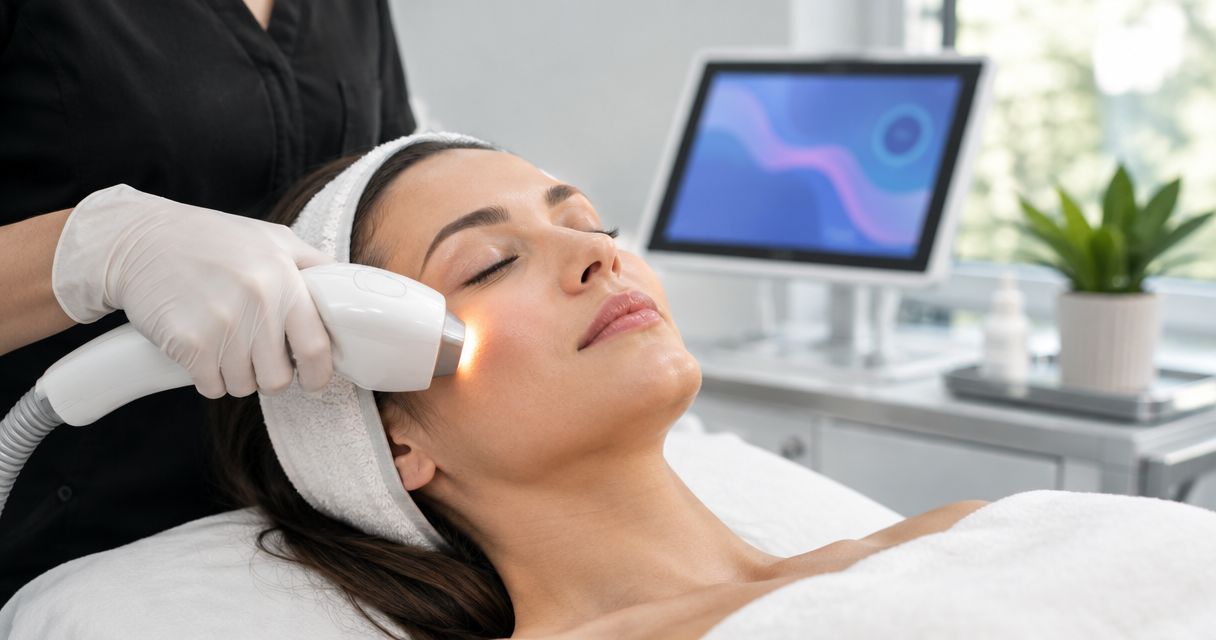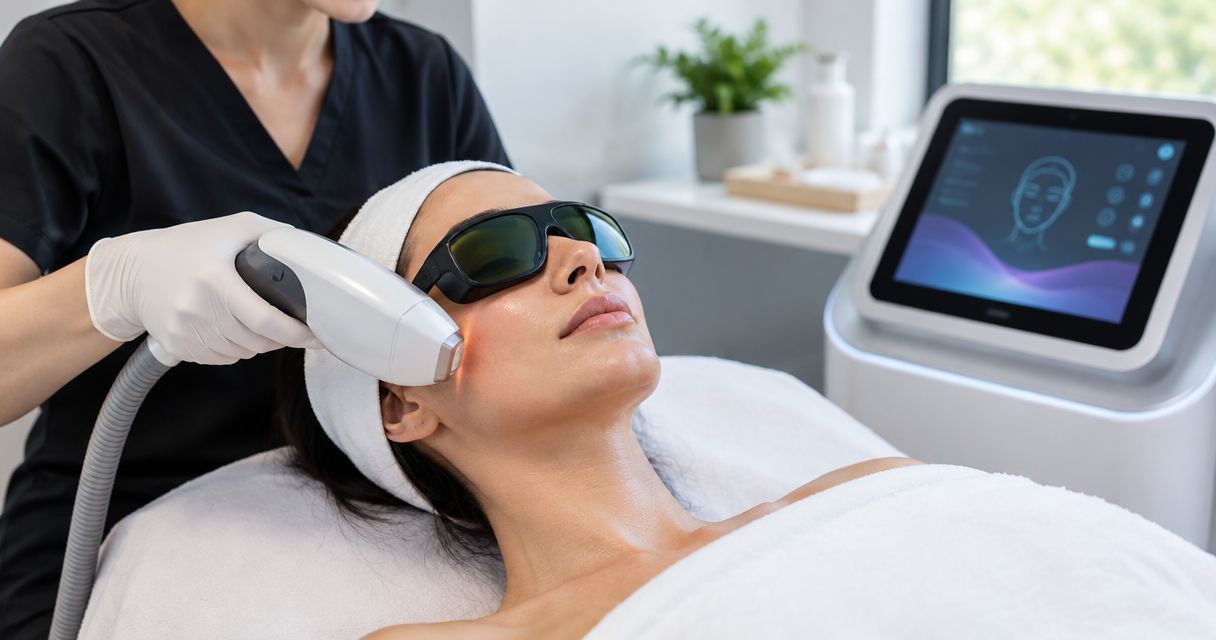
Best overall for shallow depressed scars: microneedling. Best for tethered rolling scars: subcision. Best budget-focused starting point for flat post-acne marks: topical care—not a procedure intended for deep scars. This 2026 guide compares treatment fit and explains how to evaluate cost without treating unlike procedures as interchangeable.
- The best acne scar treatments by price depend on scar shape, treatment scope, and the complete quoted plan.
- Microneedling suits shallow depressed acne scars; subcision targets tethered rolling scars.
- Laser resurfacing addresses broader texture changes but requires careful assessment of recovery and pigmentation risk.
- Ammonite Laser Spa offers microneedling and laser skin rejuvenation in Downtown Brooklyn.
Why this matters
A flat brown mark and a deep indentation need different treatment plans. Paying for the wrong treatment is poor value, even when the appointment quote looks attractive.
Choose the treatment category before comparing quotes. For a local starting point, Ammonite Laser Spa offers microneedling, laser skin rejuvenation, and acne and pigmentation treatments in Downtown Brooklyn. The exact procedure proposed for your scars belongs in your consultation—not in an assumption based on a service name.
There is no defensible cheapest-to-most-expensive order that applies to every patient. Treatment area, technique, clinician, and the proposed course change the comparison. The ranking below prioritizes clinical fit; the cost framework helps you compare equivalent plans in 2026.
What makes the best acne scar treatment?
Use these criteria before reviewing a recommendation or accepting a quote:
- Scar match: Is the concern a depression, a raised scar, or flat discoloration?
- Treatment target: Does the procedure address surface texture, deeper tethering, or pigment?
- Skin suitability: Has the clinician assessed your skin tone, recent tanning, and history of pigment changes?
- Complete scope: Does the written plan identify the area, technique, follow-up, and proposed course?
- Recovery fit: Can you follow the aftercare and accommodate the expected healing period?
- Realistic endpoint: Is the goal improvement rather than a promise of completely smooth skin?
Dermatology references commonly describe 3 atrophic scar shapes: ice-pick, boxcar, and rolling. Raised scars need a separate assessment. Flat red or brown marks are not the same as those structural scars, even when people call all of them acne scars.
Acne scar treatments at a glance
| Rank and option | Best for | Standout role | Key limitation | What to clarify in the quote |
|---|---|---|---|---|
| 1. Microneedling | Shallow depressed scars | Creates controlled skin injuries to stimulate remodeling | Does not directly release deep tethering | Treatment area, technique, and proposed course |
| 2. Laser resurfacing | Broader texture changes | Treats skin with a selected laser approach | Recovery and pigmentation risks depend on the procedure | Exact device and whether treatment is ablative or nonablative |
| 3. Subcision | Tethered rolling scars | Releases fibrous attachments beneath a depression | Does not address every scar shape | Which scars will be treated and whether other procedures are separate |
| 4. TCA CROSS | Selected narrow, deep scars | Applies acid focally inside individual scars | Requires precision and carries pigmentation risk | Targeted scars, follow-up, and combination treatment |
| 5. Topical care | Flat post-acne marks and acne management | Addresses discoloration or ongoing breakouts | Does not release tethering or fill deep pits | Product purpose and how progress will be reviewed |
A lower quote is not better value when the treatment misses the structure causing the scar. Compare options within the same treatment category before comparing different categories.
1. Microneedling: best for shallow depressed acne scars
Microneedling uses fine needles to create controlled injuries that stimulate skin remodeling. It is an option for selected depressed acne scars, particularly when the concern is shallow texture rather than a deep, narrow pit.
Standard microneedling and radiofrequency microneedling are different procedures. Do not assume that a quote for one includes the other, or that a studio offering microneedling offers every variation.
Microneedling pros:
- Addresses selected shallow depressions across a treatment area.
- Supports gradual collagen remodeling rather than temporary camouflage.
- Can form part of a plan that treats different scar shapes separately.
Microneedling cons:
- Does not directly cut the bands responsible for tethered rolling scars.
- Is not a universal solution for deep ice-pick scars.
- Still requires infection precautions, aftercare, and assessment of pigmentation risk.
Microneedling cost comparison: Ask whether the proposal covers the full area of concern, what technique is used, and how the clinician will decide whether to continue treatment. A small-area appointment and a broader treatment plan are not equivalent purchases.
Best for: Shallow depressed scars after active acne and skin suitability have been assessed.
Ammonite Laser Spa lists microneedling among its services. Ask how the proposed treatment matches your scar shapes and what improvement the clinician considers realistic.
Verdict: Buy only after the assessment confirms shallow depressed scars are the target.
2. Laser resurfacing: best for broader texture changes
Laser resurfacing uses laser energy to treat skin and encourage remodeling. Ablative approaches remove tissue; nonablative approaches heat tissue without the same surface removal. Fractional treatment describes delivery in separated treatment zones rather than treating the entire surface uniformly.
Those distinctions matter. The phrase laser skin rejuvenation does not identify a specific resurfacing procedure or establish that it is suitable for acne scars.
Laser resurfacing pros:
- Addresses broader areas of uneven texture.
- Offers different approaches for different skin and recovery needs.
- Can be considered within a plan for mixed scar patterns.
Laser resurfacing cons:
- Healing requirements differ substantially between approaches.
- Burns, infection, and pigment changes are recognized risks.
- A treatment directed mainly at pigment is not interchangeable with scar resurfacing.
Laser resurfacing cost comparison: For a 2026 quote, request the exact procedure name, treatment area, expected recovery, and follow-up arrangements. A generic laser facial description does not provide enough detail to compare scar treatment plans.
Best for: Broader textural scarring when a qualified clinician identifies an appropriate laser approach.
Ammonite Laser Spa offers laser skin rejuvenation. Confirm the proposed modality and its intended target rather than assuming it includes a particular resurfacing device.
Verdict: Hold until the exact laser procedure and recovery plan are clear.
3. Subcision: best for tethered rolling scars
Subcision targets fibrous bands that pull the skin downward. A clinician works beneath the scar to release those attachments, addressing a structural problem that surface treatment alone does not directly resolve.
Rolling scars often have a broad, wave-like appearance. A clinician must determine whether tethering is present; a photograph alone does not replace that assessment.
Subcision pros:
- Directly targets the attachments beneath tethered scars.
- Treats a different mechanism from surface resurfacing.
- Can be considered alongside other treatments for mixed scarring.
Subcision cons:
- Bruising, swelling, bleeding, and other complications require discussion.
- Does not independently treat flat discoloration or every deep pit.
- Requires a clinician trained in the procedure and facial anatomy.
Subcision cost comparison: Ask which scars the clinician intends to release and whether any additional resurfacing or other treatment is a separate part of the plan. Compare the same scope—not simply the word subcision on two quotations.
Best for: Depressed rolling scars with confirmed tethering.
Do not substitute a general skin treatment for an assessment of structural attachments. If tethering is the central issue, ask whether you need evaluation by a dermatologist who performs subcision.
Verdict: Buy only when a qualified clinician confirms tethering and explains the risks.
4. TCA CROSS: best for selected narrow, deep scars
TCA CROSS is the focal application of trichloroacetic acid inside selected scars. It is different from applying a general chemical peel across the face.
Dermatologists use this technique for selected ice-pick and narrow boxcar scars. Precision matters because the treatment intentionally produces a localized chemical injury.
TCA CROSS pros:
- Targets individual scars rather than treating every surrounding area.
- Addresses selected narrow defects that need focal attention.
- Can be considered within a broader plan for mixed scar shapes.
TCA CROSS cons:
- Can cause pigment changes, especially without appropriate selection and aftercare.
- Incorrect application can injure surrounding skin or worsen scarring.
- Does not release the bands beneath tethered rolling scars.
TCA CROSS cost comparison: Clarify which scars are included, how healing will be reviewed, and whether the clinician proposes other procedures. A focal treatment quote cannot be compared directly with full-area resurfacing without accounting for those different targets.
Best for: Selected narrow, deep scars assessed by a dermatologist experienced in the technique.
This is not an at-home acid treatment. Strong acid applied to a scar without clinical supervision can create a new injury rather than improve the existing one.
Verdict: Hold for specialist assessment; skip do-it-yourself treatment.
5. Topical care: best for flat post-acne marks
Topical care belongs in this comparison because many people searching for acne scar treatments are describing discoloration rather than a structural scar. Appropriate products can address ongoing acne or post-inflammatory pigmentation, depending on the ingredient and diagnosis.
They do not perform subcision, rebuild a deep pit on demand, or replace a procedure selected for established structural scarring.
Topical care pros:
- Fits flat marks when the skin surface remains level.
- Can address ongoing acne that creates further marks and scars.
- Supports daily care alongside a clinician-directed treatment plan.
Topical care cons:
- Does not release tethered scars or correct deep indentations.
- Irritating products can complicate recovery or worsen discoloration.
- Ingredients require individual assessment, including during pregnancy.
Topical care cost comparison: Compare products by their intended purpose, not the length of the routine. Adding unrelated products does not make a plan more suitable for your particular marks.
The American Academy of Dermatology recommends broad-spectrum, water-resistant sunscreen with SPF 30 or higher. Follow your clinician's instructions after a procedure; sun protection supports care but does not fill depressed scars.
Best for: Flat post-acne marks and acne management rather than deep structural scars.
Verdict: Buy targeted care for marks; skip scar-removal promises from skincare alone.
How to compare treatment plans by price in 2026
Start with the diagnosis, then compare the same scope. These steps prevent a small-area quote, a full-area procedure, and a multi-treatment plan from looking like equivalent offers.
- Identify scar shape. Ask the clinician to distinguish flat marks, depressed scars, and raised scars.
- Define treatment scope. Record the exact procedure, area, and proposed course.
- Compare written quotes. Check what the quoted plan includes and what is separate.
- Review recovery. Include the practical effect of healing and aftercare in your decision.
- Set review point. Agree on when the clinician will assess progress before adding treatment.
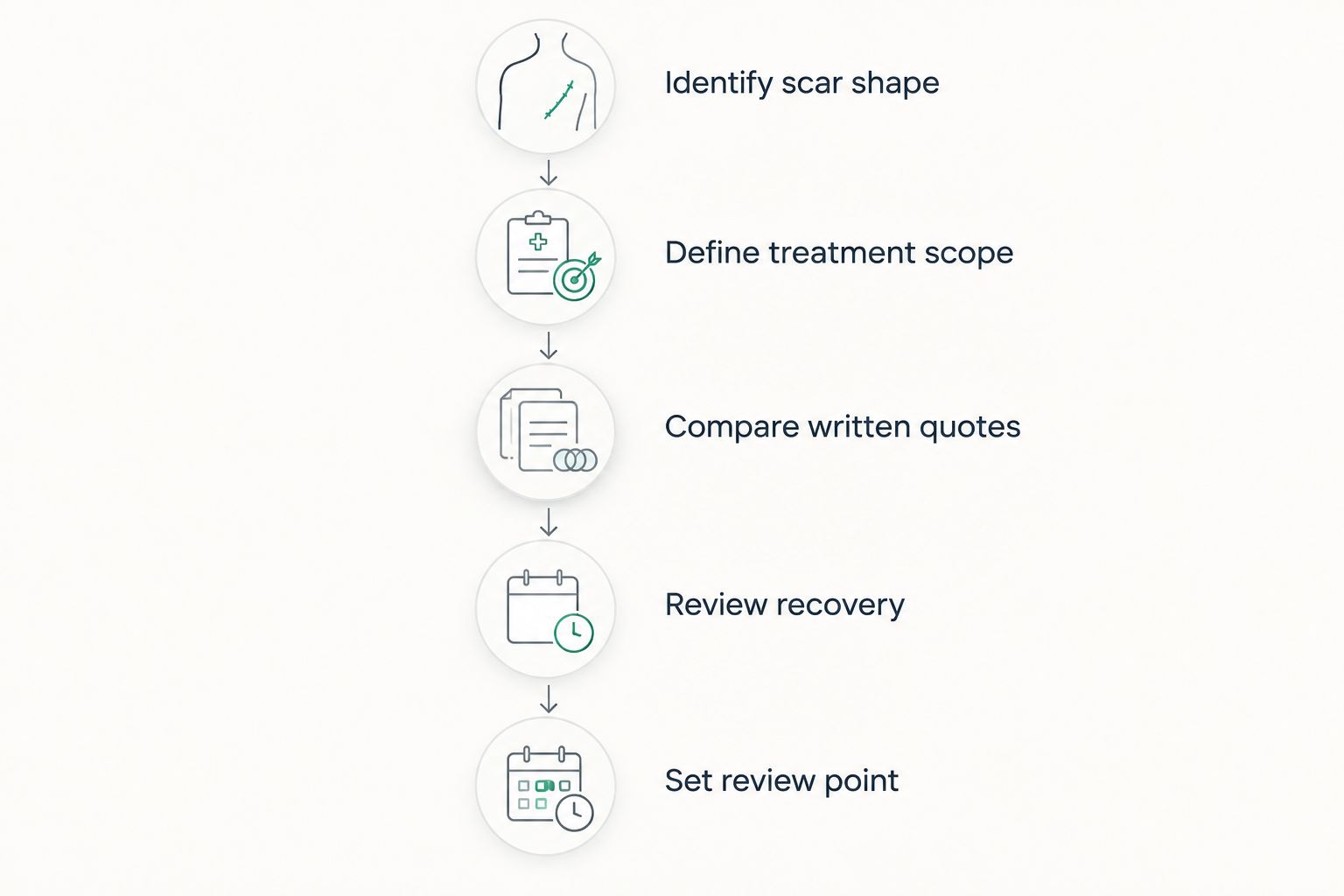
Ask the clinician to explain the purpose of every component. An itemized plan makes a 2026 comparison useful; a treatment name alone does not.
How the treatments were ranked
The ranking follows scar match, treatment target, suitability, and recovery—not an unsupported universal price order. Microneedling leads for selected shallow depressions; subcision takes priority when tethering is the main problem. Focal scar techniques and topical care serve different needs.
Which acne scar treatment should you choose?
If you are undecided, book an assessment before selecting a procedure. Bring your main concern: uneven texture, narrow pits, broad depressions, raised scars, or discoloration.
Ammonite Laser Spa is best suited to Brooklyn readers seeking a consultation about its microneedling and laser skin rejuvenation services. Ask whether those services match your scars or whether you need specialist evaluation for another technique.
For your 2026 decision, choose a plan with a clear target and review point. Do not buy a procedure solely because its headline quote is lower.
FAQ
What's the best acne scar treatment for the money?
The best value comes from a treatment matched to your scar type and a clearly defined plan. Microneedling targets selected shallow depressions, while subcision addresses tethered rolling scars; compare equivalent written quotes.
Is microneedling better than laser for acne scars?
Neither treatment is better for every acne scar. Microneedling and laser approaches have different treatment characteristics, and the choice depends on scar shape, skin suitability, and recovery requirements.
How much does acne scar treatment cost in 2026?
Your 2026 cost depends on the procedure, treatment area, and proposed course. Request an itemized quote that separates the treatment itself from additional procedures and follow-up arrangements.
Can skincare remove deep acne scars?
Skincare does not release tethered scars or reliably correct deep pits. Topical care is more relevant to ongoing acne and flat discoloration than to those structural defects.
What treatment works for ice-pick acne scars?
Selected ice-pick scars require assessment for focal treatment, such as TCA CROSS or other dermatologist-directed techniques. Do not apply strong acids to scars at home.
Should I treat active acne before acne scars?
Active acne needs assessment and management before an elective scar-treatment plan. Continuing breakouts can create new scars, and the clinician must decide when a procedure is appropriate.
Does Ammonite Laser Spa offer acne-related treatments?
Ammonite Laser Spa offers acne and pigmentation treatments, microneedling, and laser skin rejuvenation in Downtown Brooklyn. Confirm which service is proposed for your specific concern during consultation.
One last thing
Ask the clinician to point out which marks are actually scars. That distinction changes the entire purchase: a flat patch of discoloration, a tethered depression, and a narrow pit are not competing versions of the same problem.
Your next move is a diagnosis and an itemized plan—not the cheapest treatment name.