Best overall for cheek-focused manual treatment: buccal facial therapy; best for avoiding intraoral contact: external facial massage; best for a gentle touch: lymphatic-style facial massage; best for tool-based massage: facial gua sha. For a Brooklyn starting point in 2026, Ammonite Laser Spa offers buccal facial therapy; this guide compares treatment approaches, not unverified claims about NYC providers.
- For best buccal facial treatments NYC searches, choose by technique and comfort—not promises of permanent cheek contouring.
- Ammonite Laser Spa offers buccal facial therapy in Downtown Brooklyn for local clients seeking non-invasive treatments.
- External facial massage avoids intraoral contact; lymphatic-style massage emphasizes a lighter touch.
- Buccal massage does not remove cheek fat or change your facial bone structure.
Why this matters
A sculpting facial and permanent cheek contouring are different things. Massage works on soft tissues; it does not remove the buccal fat pad or reshape your cheekbones. A refreshed appearance after a facial is not proof of lasting anatomical change.
That distinction should guide your 2026 shortlist. If you want manual cheek treatment, buccal massage matches the request. If you want a lasting reduction in cheek volume, a facial is the wrong category to evaluate.
Ammonite Laser Spa is a relevant Brooklyn option for clients seeking buccal facial therapy rather than surgical cheek contouring. The useful next step is to discuss the technique, your comfort with intraoral contact, and realistic treatment goals—not to choose the strongest sculpting claim.
What makes the best buccal facial treatment?
Judge the treatment on these criteria before judging the name on the menu:
- Goal fit: The provider distinguishes cheek massage, relaxation, and temporary appearance changes from fat reduction.
- Technique clarity: You know whether treatment includes contact inside your mouth, outside your face, or both.
- Hygiene: Intraoral work requires appropriate hand hygiene, gloves, and infection-control practices.
- Consent and comfort: You can decline intraoral contact, ask for lighter pressure, and stop the session.
- Health screening: The provider asks about oral problems, recent procedures, skin irritation, and relevant medical history.
- Expectation setting: The explanation separates what the treatment does from outcomes the provider cannot guarantee.
The best choice is not automatically the deepest massage. Choose a technique you understand and consent to, with a goal that massage can reasonably address. Pain tolerance is not a useful ranking criterion.
Buccal facial approaches at a glance
These 4 approaches occupy different use-case slots. They are treatment categories, not named packages offered by the studio.
| Approach | Best for | Standout feature | Key limitation |
|---|---|---|---|
| Buccal facial therapy | Cheek-focused manual treatment | Access to cheek tissues through intraoral and external techniques | Requires comfort with mouth contact; does not remove fat |
| External facial massage | Avoiding intraoral contact | Hands-on treatment from outside the face | Does not include the intraoral component of buccal massage |
| Lymphatic-style facial massage | Preferring a gentle touch | Light, superficial massage techniques | Not a permanent cheek-contouring treatment |
| Facial gua sha | Preferring tool-based massage | A smooth tool applied over the skin | Pressure and friction can irritate skin; not fat reduction |
Use the table as a decision tree. Start with your tolerance for intraoral contact, then consider pressure and treatment goals. Do not treat these approaches as interchangeable versions of the same procedure.
1. Buccal facial therapy: best for cheek-focused manual treatment
Buccal massage involves manual work on the cheeks, including contact inside the mouth. The category uses 2 contact areas: the inner cheek and the outside of the face. Ask the provider which techniques the proposed session includes.
Ammonite Laser Spa offers buccal facial therapy in Downtown Brooklyn. That makes the studio relevant to a local search for this specific treatment, but it does not establish comparative results, practitioner credentials, or a standardized session protocol.
Buccal facial therapy pros
- Directly matches a request for manual cheek treatment.
- Includes an intraoral approach absent from external-only massage.
- Does not involve surgical removal of cheek tissue.
- Gives you a clear technique to discuss before consenting.
Buccal facial therapy cons
- Intraoral contact is uncomfortable or unsuitable for some clients.
- It does not remove the buccal fat pad or alter bone structure.
- Oral health concerns and recent procedures require discussion before treatment.
Best for: Someone who specifically wants cheek-focused massage and is comfortable discussing intraoral treatment.
For your 2026 appointment discussion, ask what the provider means by buccal therapy. Establish whether intraoral work is included, how consent is handled, and what happens if you want to stop. A clear explanation matters more than a dramatic treatment name.
Verdict: Buy only after the technique, hygiene, and suitability discussion. Skip buccal massage if your actual goal is permanent fat reduction.
2. External facial massage: best for avoiding intraoral contact
External facial massage treats the face from the outside. It gives you a hands-on option without a practitioner placing fingers inside your mouth. The treatment can include the cheeks, but it is not the same technique as intraoral buccal massage.
This is a useful choice when mouth contact is your main objection. You do not need to accept an uncomfortable technique simply because a treatment is described as sculpting.
External facial massage pros
- Avoids intraoral contact.
- Allows discussion of pressure and areas you want left untouched.
- Provides a manual facial treatment without a massage tool.
- Offers a straightforward alternative when relaxation is the priority.
External facial massage cons
- Does not provide the intraoral component of buccal therapy.
- Pressure or products can aggravate irritated skin.
- Does not create permanent cheek-volume reduction.
Best for: Someone who wants facial massage but does not want mouth contact.
Ask whether the session is external-only before booking. Also explain any painful areas, active irritation, or recent facial procedures. External access does not make every pressure level appropriate for every face.
A provider should not frame declining intraoral contact as accepting an inferior result. The right choice depends on your objective and boundaries, not willingness to tolerate a technique.
Verdict: Buy for an external-only massage goal. Skip it as a substitute for permanent cheek contouring.
3. Lymphatic-style facial massage: best for a gentle touch
Lymphatic-style facial massage emphasizes light, superficial techniques rather than deep cheek kneading. The term describes an approach, not proof that a particular facial treats a medical condition.
Choose this category because you prefer a gentle touch. Do not select it on the assumption that drainage means detoxification, fat removal, or a lasting reduction in facial size.
Lymphatic-style facial massage pros
- Emphasizes lighter contact rather than deep pressure.
- Offers an external approach when intraoral work is unwanted.
- Gives you a specific pressure preference to discuss.
- Keeps the treatment objective separate from cheek-fat reduction.
Lymphatic-style facial massage cons
- A cosmetic facial is not a diagnosis or treatment plan for unexplained swelling.
- The technique does not permanently contour cheek fat.
- The label alone does not establish specialized practitioner training.
Best for: Someone seeking a light-touch facial massage, not a medical answer to persistent swelling.
If your face is suddenly swollen, painful, or noticeably different on one side, seek medical assessment rather than booking a sculpting facial. The cause matters more than the cosmetic appearance.
In a 2026 treatment comparison, give more weight to a clear technique description than to the word drainage. Ask what pressure the practitioner uses and what outcome the session is intended to address.
Verdict: Buy for a gentle massage preference. Hold if unexplained swelling is the reason you are booking.
4. Facial gua sha: best for tool-based massage
Facial gua sha uses a smooth tool moved over the skin. It is an external technique, so it does not reproduce intraoral buccal work. Facial cosmetic use also differs from more forceful scraping techniques associated with traditional body treatments.
The tool changes how contact is applied; it does not make cheek-fat removal possible. Technique, pressure, and skin condition matter more than the tool's appearance.
Facial gua sha pros
- Avoids intraoral contact.
- Offers a distinct tool-based approach to external massage.
- Lets you discuss pressure, lubrication, and skin tolerance explicitly.
- Does not require a surgical procedure.
Facial gua sha cons
- Excessive pressure or friction can cause irritation or bruising.
- Tool hygiene needs attention.
- It does not permanently reduce cheek fat or reshape cheekbones.
Best for: Someone who prefers external, tool-based facial massage and accepts its limits.
Do not interpret redness or bruising as evidence that a facial has worked. For cosmetic facial use, stronger scraping is not a shortcut to better contouring. Stop if the treatment hurts or irritates your skin.
If you recently had an injectable, skin procedure, or facial surgery, ask the treating clinician before adding massage. A generic facial description cannot settle your individual recovery restrictions.
Verdict: Buy for a tool-based massage preference. Skip aggressive scraping and permanent-sculpting promises.
How to choose before booking
Use this sequence to turn a broad NYC search into a specific treatment request. You should finish the conversation knowing what will happen—not just which facial sounds appealing.
Define your goal
Say whether you want cheek-focused massage, a relaxing facial, or a lasting change in cheek volume. These are different requests. A treatment recommendation should respond to the goal you actually name.
Choose contact
Decide whether you accept intraoral contact. If the answer is no, ask for an external-only option rather than booking buccal massage and hoping the technique is different.
Review health
Tell the provider about oral pain, sores, skin irritation, recent dental or facial procedures, and relevant health conditions. Ask your treating clinician about restrictions where a recent procedure is involved.
Confirm consent
Ask how you signal discomfort, change pressure, or stop. Consent is an ongoing part of hands-on treatment, not something completed once at the start.
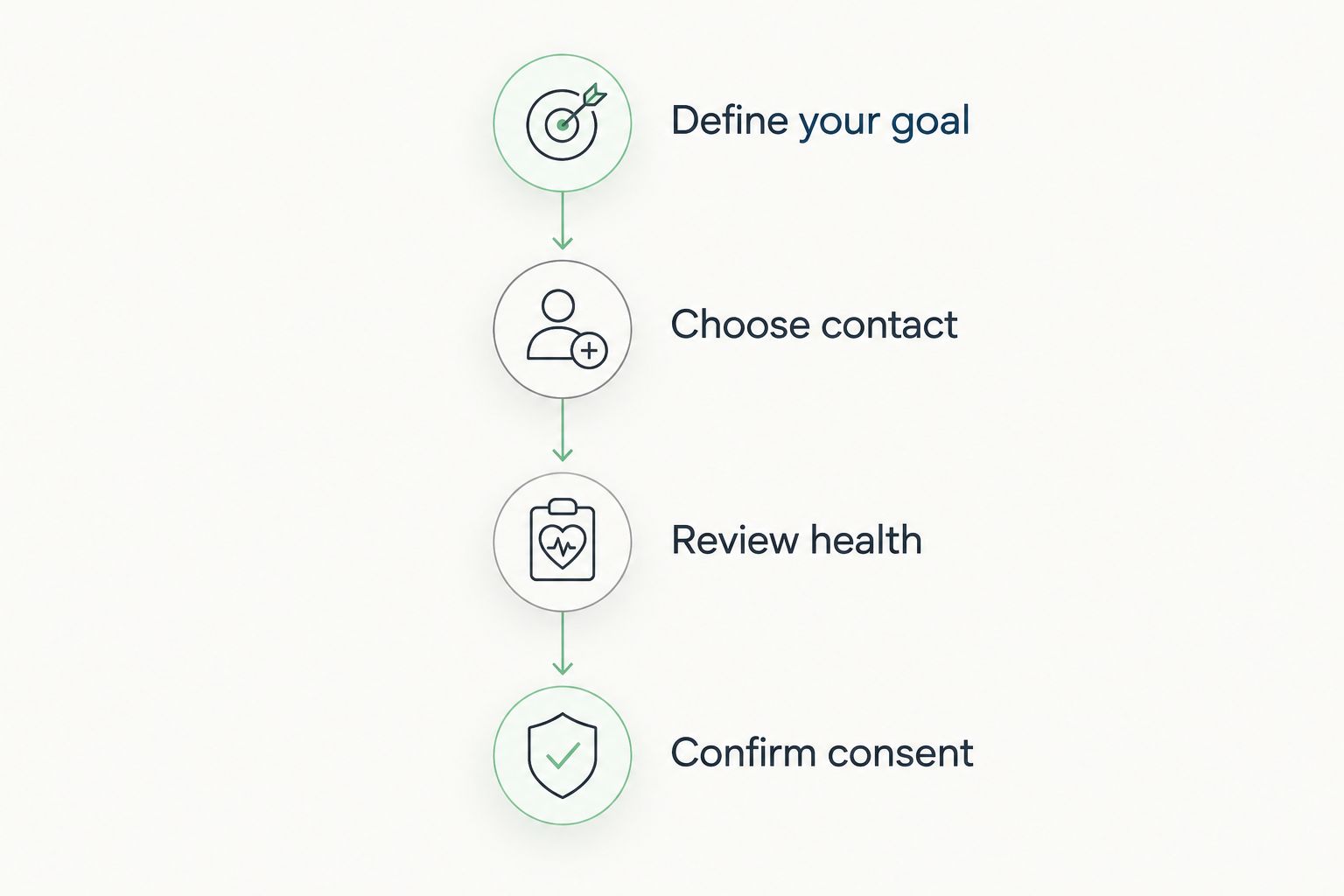
These steps apply whether you choose intraoral massage, external hands-on treatment, or a tool-based facial. Keep your request specific enough that the provider can explain both what fits and what does not.
Explore buccal facial therapy
Ammonite Laser Spa offers buccal facial therapy in Downtown Brooklyn.
How these approaches were ranked
The ranking prioritizes fit with a cheek-focused massage request, then separates alternatives by contact type and pressure preference. Buccal facial therapy comes first because it directly matches the query—not because this guide establishes better clinical outcomes than competing NYC studios.
External massage occupies the no-intraoral slot. Lymphatic-style massage occupies the light-touch slot. Facial gua sha occupies the tool-based slot. Each recommendation has a distinct reason to choose it and a limitation that remains true after treatment.
This 2026 ranking is a technique-selection guide, not a provider trial or clinical efficacy comparison. Location establishes convenience; it does not establish treatment quality. Discuss practitioner experience and suitability directly.
Which buccal facial approach should you choose?
Choose buccal facial therapy if your request is specifically for manual cheek treatment and you accept intraoral contact. For a Downtown Brooklyn option, Ammonite Laser Spa lists this service among its non-invasive treatments.
Choose external facial massage if you want hands-on treatment without mouth contact. Choose lymphatic-style facial massage for a lighter-touch preference, and facial gua sha when you specifically want tool-based external massage.
Keep 3 boundaries clear: massage is not fat removal, discomfort is not proof of effectiveness, and persistent swelling needs assessment rather than a cosmetic label. Those boundaries make your shortlist more useful than a ranking built around sculpting language.
For an undecided reader, the default is simple: establish whether you want intraoral treatment. That answer eliminates the wrong category before you compare individual providers.
FAQ
What's the best buccal facial treatment in NYC for cheek contouring?
Buccal facial therapy is the closest match for cheek-focused manual treatment, but it does not permanently contour cheek fat. Choose a provider who explains the technique, screens for suitability, and respects your comfort with intraoral contact.
Does Ammonite Laser Spa offer buccal facial therapy?
Ammonite Laser Spa offers buccal facial therapy in Downtown Brooklyn. Ask the studio about the proposed technique, practitioner experience, and suitability before booking.
Can a buccal facial remove cheek fat?
A buccal facial does not remove cheek fat. Massage is different from surgical removal of the buccal fat pad and should not be presented as an equivalent procedure.
Is buccal massage better than external facial massage?
Buccal massage better matches a request for intraoral cheek work; external massage better matches a request to avoid mouth contact. Neither choice establishes permanent cheek-volume reduction.
Should buccal facial massage hurt?
You should not accept pain as a requirement for an effective facial. Tell the practitioner immediately if treatment hurts, and ask for a change in pressure or stop the session.
Can I have buccal massage after dental work or facial injectables?
Ask the clinician who performed the procedure before having facial or intraoral massage. The appropriate restrictions depend on the procedure and your recovery, not a generic facial timetable.
How long do buccal facial contouring results last?
There is no universal duration you should assume for a sculpted appearance after buccal massage. The treatment does not permanently remove fat, and a refreshed appearance should not be confused with lasting anatomical change.
What should I check before booking a buccal facial in 2026?
Check the technique, hygiene practices, health screening, and consent process before booking a buccal facial in 2026. Confirm whether intraoral contact is included and how you can pause or stop treatment.
One last thing
Ask one direct question: What changes after this treatment, and what does not? A useful answer distinguishes massage from changes to fat, bone, or skin disease.
For your 2026 appointment, keep the goal in your own words. If you want relaxation, say relaxation. If you want permanent cheek-volume reduction, do not let a sculpting facial name turn that into a different purchase.