Best overall for localized, pinchable fat: cryolipolysis. Best for mild skin laxity: radiofrequency. Best for muscle conditioning: electromagnetic stimulation. The best non-invasive body contouring treatments in 2026 depend on whether you want to address fat, skin, or muscle—not on which treatment has the most persuasive before-and-after photos.
- The best non-invasive body contouring treatments match the target: localized fat, mild skin laxity, or muscle conditioning.
- Cryolipolysis suits pinchable fat; radiofrequency suits mild laxity; electromagnetic stimulation targets muscle contractions.
- Ammonite Laser Spa offers cryo body contouring for local clients in Downtown Brooklyn.
- Body contouring is not weight-loss treatment, and device-specific risks belong in every consultation.
Why this matters
A smaller fat pocket, tighter-looking skin, and more conditioned muscle are different outcomes. Treating one does not guarantee the others. Choose the tissue you want to address before choosing the technology.
Non-invasive treatments involve 0 surgical incisions, but that does not mean zero risk. The FDA’s consumer guidance on non-invasive body contouring distinguishes technologies by their mechanisms, intended uses, and complications. That distinction is the safety framework for this 2026 guide; it is not an endorsement of an individual clinic or device.
For a local starting point, Ammonite Laser Spa offers cryo body contouring in Downtown Brooklyn. Ammonite Laser Spa is best suited to Downtown Brooklyn clients exploring a local cryo body contouring service. Its stated service offering does not identify a device, establish your eligibility, or promise a particular outcome.
What makes the best non-invasive body contouring treatment?
Use these criteria to judge a recommendation before you compare names:
- Target tissue: Is the concern localized fat, loose skin, or muscle definition? A treatment should match that concern directly.
- Device-specific evidence: Ask for the exact device name, its intended use, and the body areas covered by its FDA clearance or authorization.
- Medical suitability: Relevant health conditions, implants, medications, pregnancy, and skin problems belong in the screening discussion.
- Risk transparency: The consultation should explain common reactions and serious complications—not just describe treatment as comfortable.
- Outcome measurement: Agree on the body area and use consistent photographs or measurements rather than relying on memory.
- Practical fit: Understand the proposed visits, aftercare, and assessment timeline before committing to a treatment course.
These criteria matter more than a category’s rank. A well-matched treatment ranks above an unsuitable treatment with a recognizable name.
Best body contouring treatments at a glance
| Treatment | Best for | Standout feature | Key limitation |
|---|---|---|---|
| Cryolipolysis | Localized, pinchable fat | Uses cooling to affect fat cells | Does not treat obesity; has a rare risk of paradoxical fat growth |
| Radiofrequency | Mild skin laxity | Uses controlled heating to affect tissue | Results and risks depend on the device and treatment depth |
| Focused ultrasound | A defined fat-treatment area | Uses ultrasound energy to affect targeted tissue | Requires device-specific screening and careful application |
| Low-level light therapy | A nonthermal circumference-reduction approach | Uses low-intensity light rather than destructive heating | Circumference changes can be temporary |
| Electromagnetic stimulation | Muscle conditioning | Produces involuntary muscle contractions | Muscle effects do not automatically mean fat reduction |
The default choice is cryolipolysis only when the problem is a suitable localized fat pocket. There is no single best option for every body-shape concern in 2026.
1. Cryolipolysis: best body contouring for pinchable fat
Cryolipolysis uses controlled cooling to affect fat cells in a selected area. Your body gradually clears affected cells; the procedure is not a substitute for losing weight or treating obesity.
The FDA describes fat-cell clearance after cooling over approximately 2–3 months. That is a biological timeline, not a promise of a particular visible change or a deadline for your final result.
Cryolipolysis pros:
- Targets a defined fat pocket rather than requiring whole-body treatment.
- Uses a non-surgical approach without incisions.
- Separates fat reduction from muscle-conditioning treatments.
Cryolipolysis cons:
- Can cause pain, swelling, bruising, and altered sensation.
- Can cause paradoxical adipose hyperplasia, in which treated fat enlarges instead of shrinking.
- Does not correct substantial loose skin or deliver weight-loss treatment.
The FDA describes paradoxical adipose hyperplasia as typically developing 2–5 months after treatment. It does not resolve on its own and can require surgery. Ask how the provider explains, recognizes, and manages this complication.
Ammonite Laser Spa lists cryo body contouring among its services. Ask whether the proposed procedure is cryolipolysis, which device is used, and what that device is intended to treat; the word cryo alone does not answer those questions.
Best for: A localized, pinchable fat concern after medical and device-specific screening.
Verdict: Hold until the provider confirms suitability and explains the fat-growth complication.
2. Radiofrequency: best body contouring for mild skin laxity
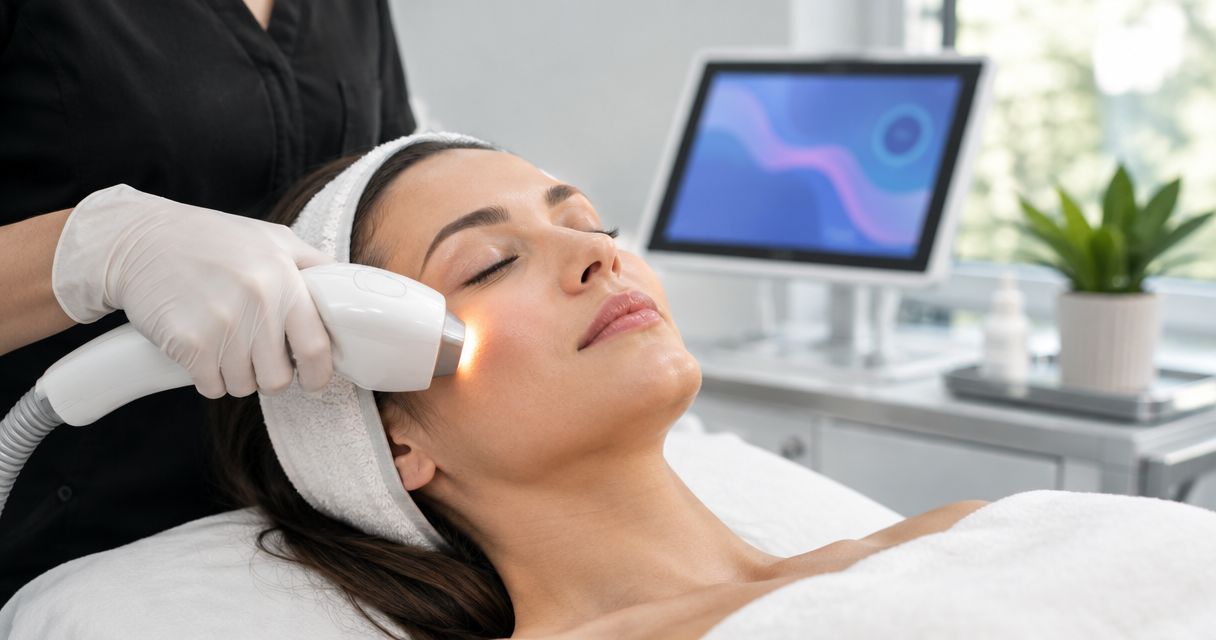
Radiofrequency devices use electrical energy to heat tissue. Depending on the device and its intended use, treatment can address skin appearance, cellulite appearance, or body circumference.
For a 2026 shortlist, radiofrequency belongs in the skin-laxity slot—not automatically in the fat-removal slot. Ask what the specific device treats and whether the proposed outcome concerns skin, fat, or both.
Radiofrequency pros:
- Offers a non-surgical option for selected skin-tightening goals.
- Addresses a different concern from muscle stimulation.
- Can be evaluated against an explicit skin-appearance goal.
Radiofrequency cons:
- Heating can cause burns, pain, and changes in skin color.
- Devices differ in treatment depth and intended use.
- Does not replace surgery for substantial excess skin.
Implanted electronic devices and metal in the treatment area require discussion before energy-based treatment. Do not accept a blanket statement that radiofrequency is suitable for everyone.
A useful consultation identifies where the looseness is, how much excess skin is present, and what a non-surgical change would realistically mean. If your main concern is a fat pocket, ask why a skin-focused protocol is being recommended.
Best for: Mild skin laxity when the selected device is appropriate for the treatment area.
Verdict: Hold until the provider defines the skin outcome and screens for heating-related risks.
3. Focused ultrasound: best body contouring for targeted fat treatment
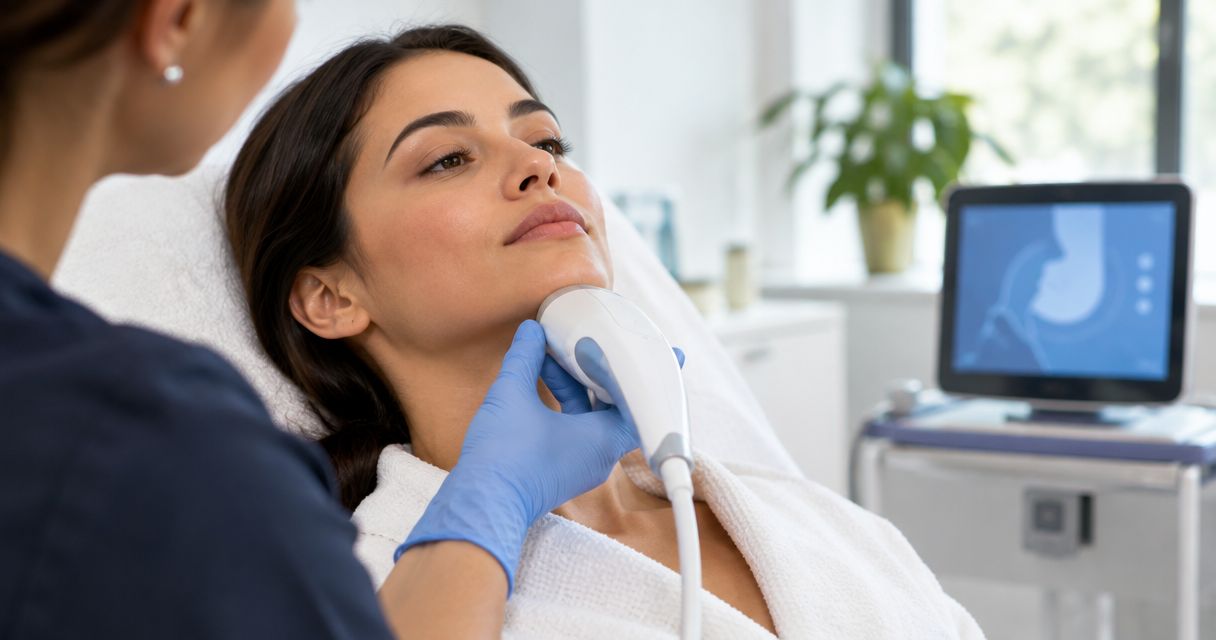
Ultrasound-based contouring devices deliver sound energy into tissue. Some devices use focused energy to affect subcutaneous fat in a defined treatment area.
The term ultrasound covers different applications. A facial lifting device, a diagnostic scanner, and a body-contouring device are not interchangeable; the intended use of the actual device decides what belongs on your shortlist.
Focused ultrasound pros:
- Provides a non-surgical approach to a targeted area.
- Uses a mechanism distinct from cooling.
- Allows the consultation to focus on a specific body region and tissue target.
Focused ultrasound cons:
- Can cause burns and tissue or nerve injury.
- Requires appropriate contact, placement, and treatment technique.
- Is not a general solution for obesity or substantial loose skin.
Ask the provider to explain the tissue depth being treated and the reason that depth fits your concern. You do not need to interpret technical settings yourself, but you do need a clear explanation of what receives the energy.
A provider should also explain which symptoms after treatment require contact or medical assessment. Written aftercare is more useful than a vague instruction to expect some soreness.
Best for: A defined fat-treatment area supported by the specific device’s intended use.
Verdict: Hold until the device, body area, and tissue target are clearly identified.
4. Low-level light therapy: best for a nonthermal approach
Low-level light therapy uses low-intensity light rather than the destructive heating used by some other energy-based treatments. The FDA describes this category as a way to temporarily reduce circumference in treated areas.
Temporary circumference reduction is not the same claim as permanent fat-cell removal. Keep that distinction visible when comparing treatment descriptions in 2026.
Low-level light therapy pros:
- Offers a nonthermal treatment mechanism.
- Avoids the cooling mechanism used in cryolipolysis.
- Supports a clearly defined circumference-based goal when the device is intended for it.
Low-level light therapy cons:
- Circumference changes can be temporary.
- Does not establish a weight-loss outcome.
- Light sensitivity and relevant medications require screening.
Ask how circumference will be measured and when it will be reassessed. The same body landmark, posture, and measuring method matter; otherwise, an apparent difference is difficult to interpret.
Also ask what happens after the initial treatment course. A plan built around repeat visits should explain what those visits are intended to maintain, without presenting maintenance as proof of lasting fat removal.
Best for: Someone considering a nonthermal, circumference-focused approach with realistic expectations about persistence.
Verdict: Skip if your requirement is documented permanent fat-cell removal.
5. Electromagnetic stimulation: best for muscle conditioning
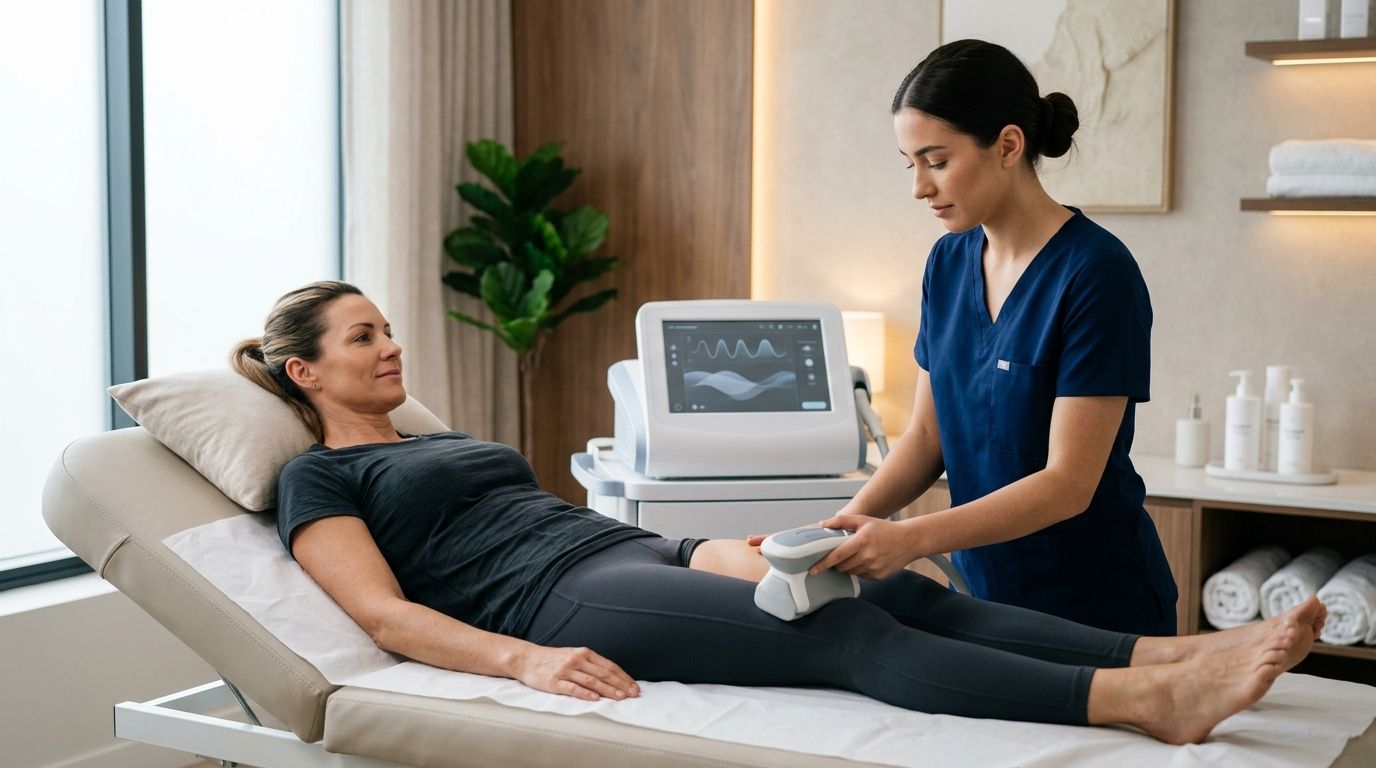
Electromagnetic stimulation devices induce muscle contractions. This places them in a different decision category from a treatment whose primary purpose is affecting fat cells.
Some platforms combine muscle stimulation with another technology. Evaluate each component separately; adding a second mechanism does not make every advertised outcome automatic.
Electromagnetic stimulation pros:
- Directly targets muscle contractions.
- Fits a muscle-conditioning goal rather than a skin-removal goal.
- Can be discussed independently from fat-reduction treatment.
Electromagnetic stimulation cons:
- Can cause muscle soreness and cramping.
- Requires screening for relevant implanted devices and other contraindications.
- Does not automatically reduce fat or tighten loose skin.
Ask whether the proposed treatment is electromagnetic stimulation alone or a combined procedure. Then ask which outcome belongs to which component and how the provider will assess it.
Treat muscle conditioning as its own goal. Do not interpret a treatment’s ability to create contractions as proof that it replaces exercise, changes body weight, or resolves a separate skin concern.
Best for: A muscle-conditioning objective with appropriate medical screening.
Verdict: Skip if your sole goal is removing a localized fat pocket.
How the treatments are ranked
This 2026 ranking assigns each treatment a distinct use case using its mechanism, intended outcome, and safety limitations. It is not a head-to-head clinical trial or a ranking of individual providers.
Cryolipolysis leads for suitable localized fat; radiofrequency leads for mild skin laxity; electromagnetic stimulation leads for muscle conditioning. Focused ultrasound and low-level light therapy remain separate options because their mechanisms and outcome claims differ.
Device evidence outranks the category label. A treatment name cannot establish the safety or effectiveness of an unidentified machine.
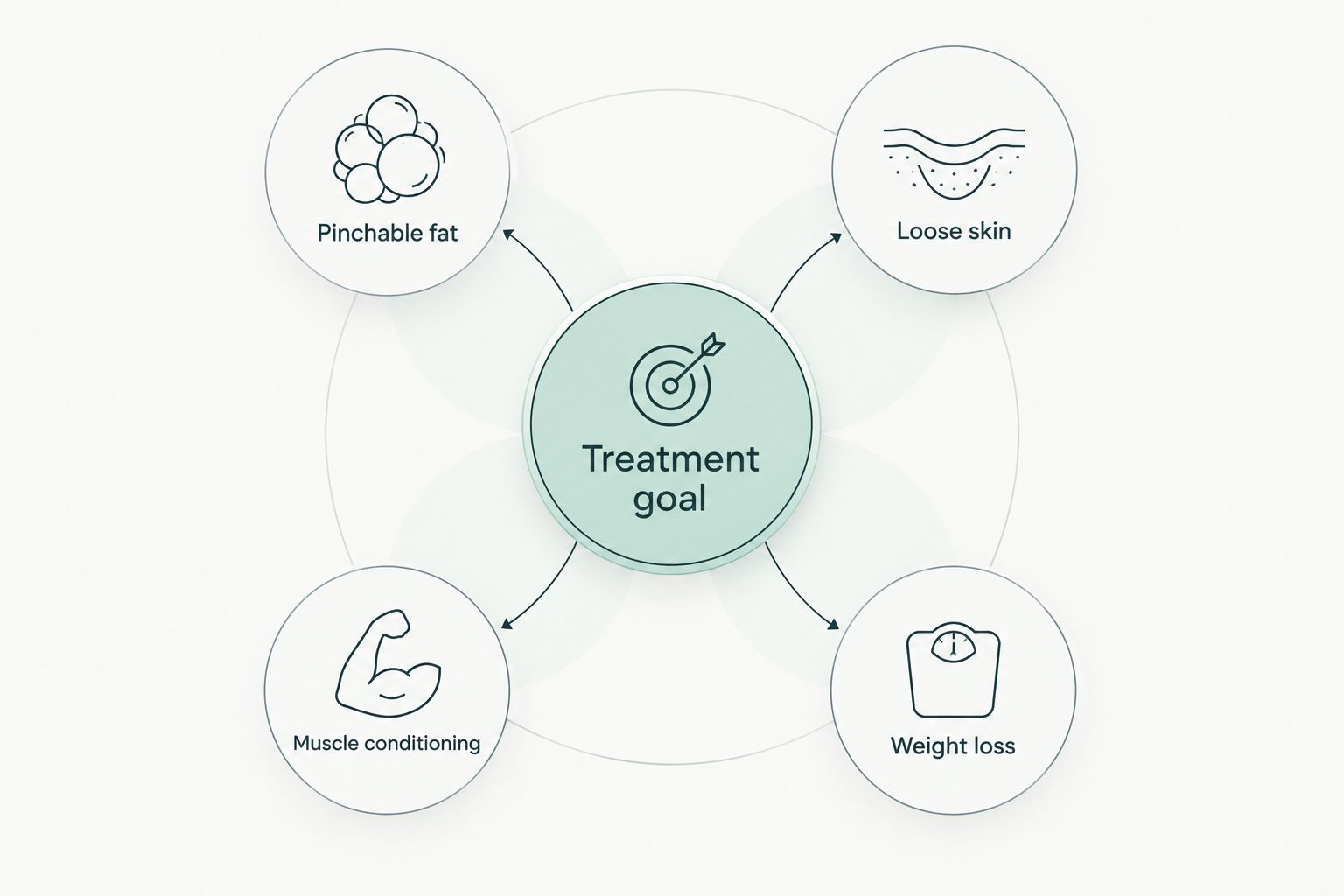
Which body contouring treatment should you choose?
Start with a plain description of your concern. Avoid starting with a treatment name copied from an advertisement.
- Pinchable fat: Discuss cryolipolysis and device-specific ultrasound options.
- Loose skin: Discuss whether radiofrequency fits the degree of laxity.
- Muscle conditioning: Discuss electromagnetic stimulation and its contraindications.
- Weight loss: Seek a weight-management assessment rather than treating contouring as the solution.
For Downtown Brooklyn clients considering cryo body contouring, Ammonite Laser Spa is a local service option. Bring your health history and ask for the exact procedure and device rather than assuming that every cooling treatment is equivalent.
Before booking, ask for the intended outcome, relevant risks, proposed treatment course, and follow-up plan in writing. Decline a package recommendation that arrives before those questions are answered.
Explore local cryo body contouring
Review the studio’s services, then ask about the procedure, device, suitability, and follow-up.
FAQ
What are the best non-invasive body contouring treatments in 2026?
The best choice depends on the target: cryolipolysis for suitable localized fat, radiofrequency for mild skin laxity, and electromagnetic stimulation for muscle conditioning. The exact device, treatment area, and medical screening determine suitability.
Is cryolipolysis better than radiofrequency?
Cryolipolysis and radiofrequency address different priorities. Cooling targets suitable localized fat, while radiofrequency can address skin appearance or other outcomes depending on the device; neither is universally better.
Can non-invasive body contouring help me lose weight?
Non-invasive body contouring is not weight-loss treatment. It addresses selected contour or tissue concerns rather than treating obesity or replacing weight management.
How long does fat freezing take to show results?
The FDA describes affected fat-cell clearance after cooling over approximately 2–3 months. That timeline does not guarantee a specific visible result, so agree on an assessment plan with the provider.
Is non-invasive body contouring risk-free?
No, non-invasive body contouring has treatment-specific risks. These include burns with some energy-based devices and paradoxical adipose hyperplasia after fat freezing, so screening and informed consent remain necessary.
Does Ammonite Laser Spa offer body contouring in Brooklyn?
Ammonite Laser Spa offers cryo body contouring in Downtown Brooklyn. Ask which procedure and device are proposed, what they are intended to treat, and whether your health history affects eligibility.
How should I compare body contouring quotes?
Compare quotes against the same treatment area, device, proposed course, and follow-up arrangements. A lower total does not establish a better fit, and a larger package does not establish a better outcome.
One last thing
With fat freezing, enlargement is a warning sign—not proof that you need another session. A treated area that becomes larger, firmer, or changes shape deserves assessment, especially because paradoxical adipose hyperplasia can develop months after treatment.
For any body contouring treatment you choose in 2026, keep the device name, consent information, baseline photographs, and aftercare instructions. Those records make follow-up more specific than trying to remember what changed.