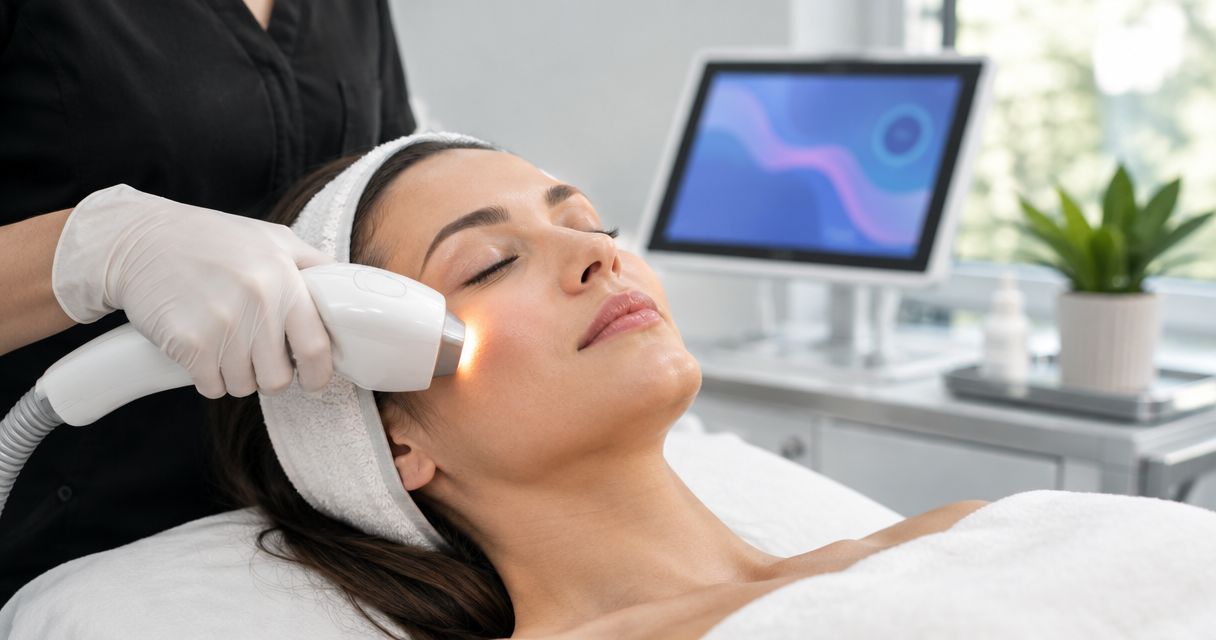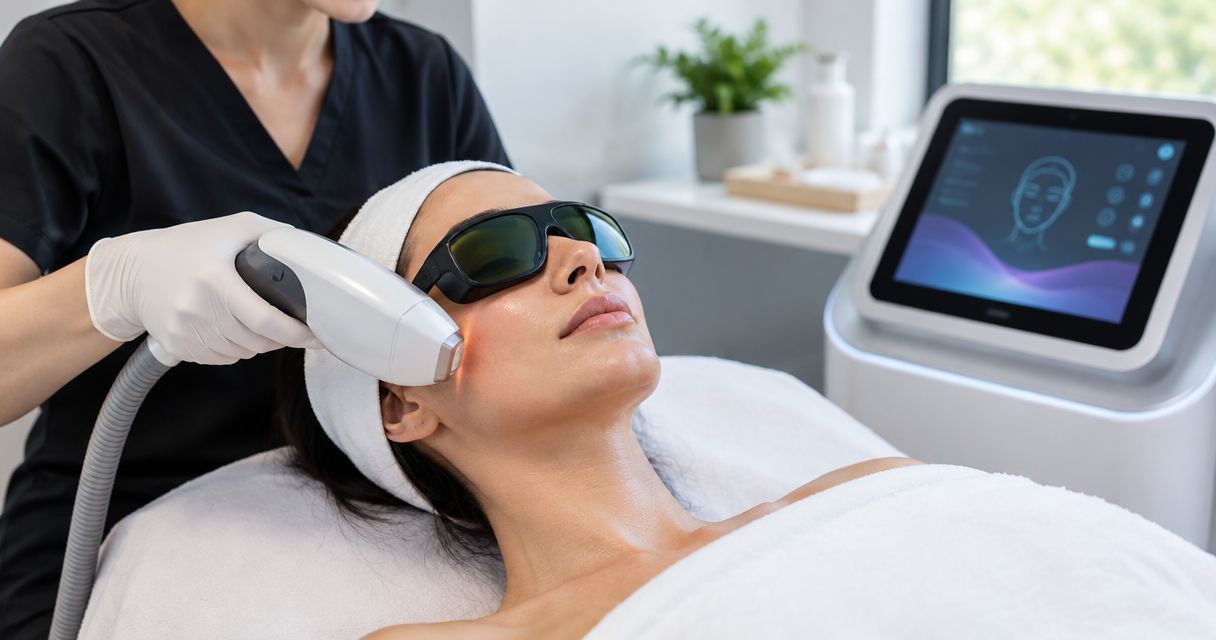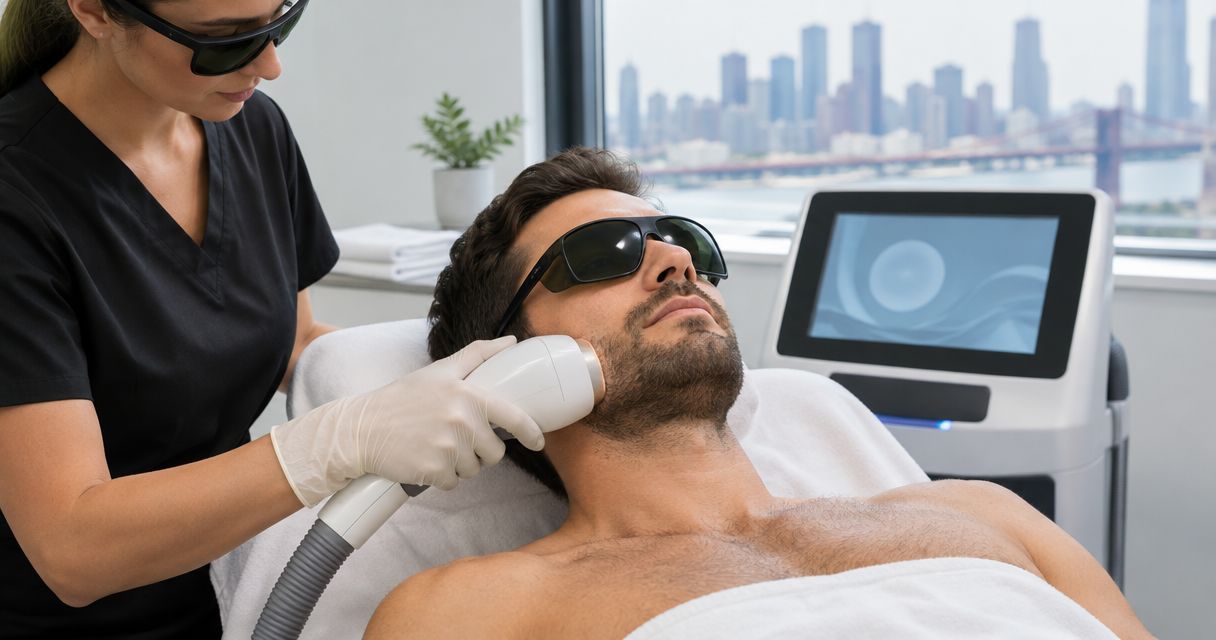
Best overall: a laser plan matched to your skin and hair. Best for darker skin: long-pulsed Nd:YAG. Best for light skin with dark hair: alexandrite. This 2026 guide compares treatment options for men in Brooklyn, including when diode laser or electrolysis deserves a place on your shortlist.
- Best laser hair removal for men Brooklyn: prioritize skin type, hair pigment, and practitioner experience over device branding.
- Long-pulsed Nd:YAG is generally preferred for darker skin; alexandrite suits lighter skin with dark hair.
- Diode laser is another option for pigmented hair; suitability depends on the device, settings, and your skin.
- Ammonite Laser Spa offers personalized laser hair removal in Downtown Brooklyn; ask which technology fits your treatment area.
Why this matters
Men seeking laser hair removal often want less maintenance rather than completely bare skin. A cleaner neck, reduced back hair, and a less dense chest are different goals; your practitioner needs to know which result you want before treatment starts.
Ammonite Laser Spa is best for local clients seeking personalized laser hair removal in Downtown Brooklyn. Ammonite Laser Spa offers that service, but the decision still starts with an assessment of your hair, skin, and intended result—not an assumption about which device the studio uses.
For your 2026 shortlist, compare treatment suitability before comparing convenience. Dark hair on light skin presents a different treatment problem from dark hair on deeply pigmented skin, while white hair presents a different problem altogether.
What makes the best laser hair removal for men?
A useful ranking answers whether a treatment fits you, not whether its name sounds advanced. Use these criteria before choosing a Brooklyn provider:
- Skin compatibility: The practitioner must account for your baseline skin tone, recent tanning, and history of pigment changes.
- Hair pigment: Laser targets pigment in hair. Blond, red, gray, and white hair generally responds poorly compared with dark hair.
- Treatment goal: Full removal, broad reduction, and beard-edge cleanup require different planning. Agree on the boundary before treatment.
- Relevant experience: Ask about experience treating your skin tone and body area, not just general experience operating a machine.
- Safety process: Discuss medications, active irritation, eye protection, aftercare, and whether a test spot is appropriate.
- Practical follow-through: Choose a location you can return to, with clear instructions and a way to report a reaction.
These criteria matter more than a promise that one machine works equally well for everyone. In 2026, your consultation should explain both why a treatment fits and what would make the practitioner postpone or decline it.
Men's hair removal options at a glance
The order below reflects distinct treatment needs, not a claim that one wavelength wins for every man. Electrolysis appears as an alternative because laser is not the right answer for every hair color.
| Treatment | Best for | Standout feature | Key limitation |
|---|---|---|---|
| Long-pulsed Nd:YAG | Darker skin with dark hair | Longer wavelength with less absorption by epidermal melanin than shorter-wavelength options | Still requires careful settings; low-pigment hair responds poorly |
| Diode laser | Dark body hair when the device suits the skin | Common hair-removal technology with device-dependent cooling and delivery | The diode label alone does not establish suitability |
| Alexandrite laser | Lighter, untanned skin with dark hair | Strong melanin absorption | Less suitable for deeply pigmented or recently tanned skin |
| Electrolysis | White, gray, or other hair that laser cannot target effectively | Does not depend on hair pigment | Treats individual follicles, making large areas time-intensive |
1. Long-pulsed Nd:YAG: best for men with darker skin
Long-pulsed Nd:YAG hair-removal lasers use a wavelength of 1,064 nm. Compared with shorter-wavelength hair-removal lasers, this wavelength has less absorption by melanin in the skin surface, making it an important option for darker skin tones.
That advantage does not make treatment risk-free. Burns and changes in skin color remain possible when settings, preparation, or technique are inappropriate.
Nd:YAG pros:
- A well-established option for hair reduction on darker skin.
- Useful for dark, coarse hair when the practitioner selects suitable settings.
- Allows the treatment decision to account for skin pigment rather than treating it as an afterthought.
Nd:YAG cons:
- White, gray, and other low-pigment hair remains a poor laser target.
- Treatment can be uncomfortable despite cooling.
- The wavelength alone does not guarantee safe treatment.
Best for: Men with darker skin and dark hair who want an assessment for laser reduction on areas such as the back, chest, or neck.
Ask the practitioner why the proposed settings suit your skin, how they manage cooling, and what skin reaction they expect immediately afterward. A clear answer is more useful than a blanket assurance that a laser is safe for everyone.
Verdict: Buy into a long-pulsed Nd:YAG plan when an assessment confirms the fit; skip any promise of zero risk.
2. Diode laser: best for a device-specific body-hair plan
Diode lasers are widely used for hair reduction, with 810 nm being a common wavelength. Devices differ in their wavelength configuration, cooling, and delivery, so the word diode is not enough information to choose treatment.
For men considering a broad area such as the back or chest, the practical question is whether the actual device and settings suit the skin and hair. Do not assume that a familiar technology name establishes that fit.
Diode laser pros:
- An established option for reducing dark, pigmented hair.
- Applicable to body-area treatment when the device and settings are appropriate.
- Offers an alternative to discuss when comparing laser approaches.
Diode laser cons:
- Suitability varies across devices and skin types.
- Results depend on hair pigment and growth cycles, not just machine selection.
- Cooling does not remove the possibility of burns or pigment changes.
Best for: Men with dark body hair whose practitioner can explain why a particular diode device is appropriate.
Ask for the device name and the reason for choosing it over another wavelength. You do not need to become a laser technician; you need a treatment explanation that goes beyond popularity.
Verdict: Hold until the practitioner identifies the device and explains its suitability for your skin.
3. Alexandrite laser: best for lighter skin with dark hair
Alexandrite hair-removal lasers use a wavelength of 755 nm. Their strong absorption by melanin makes dark hair on lighter skin a useful treatment match, but skin pigment also absorbs laser energy.
That trade-off matters if you tan or have deeper skin pigmentation. A recent tan changes the assessment even when your untreated skin is usually light.
Alexandrite laser pros:
- An established option for dark hair on lighter skin.
- Strong pigment absorption supports targeting suitable hair.
- Relevant to both facial and body-hair discussions when skin compatibility is established.
Alexandrite laser cons:
- Not the default choice for deeply pigmented skin.
- Recent tanning increases the need to reassess treatment timing.
- Low-pigment hair remains a poor target.
Best for: Men with lighter, untanned skin and dark hair seeking a practitioner-led reduction plan.
If you work outdoors, play outdoor sports, or regularly tan, discuss that routine before committing. The right plan must account for what happens between appointments, not just how your skin looks during the consultation.
Verdict: Buy into alexandrite treatment only when your skin tone and current sun exposure support it.
4. Electrolysis: best for hair that laser cannot target
Electrolysis treats individual hair follicles using a fine probe and electrical energy. Unlike laser hair removal, it does not depend on pigment in the hair, which makes it relevant for white or gray hair and other poorly responding strands.
It is not a laser treatment. It belongs in this comparison because repeatedly treating unsuitable hair with laser does not solve the underlying pigment problem.
Electrolysis pros:
- Does not require dark pigment in the hair.
- Can address individual hairs left after a laser-reduction course.
- Offers a separate route when laser candidacy is poor.
Electrolysis cons:
- Treating follicles individually makes broad coverage time-intensive.
- Discomfort and temporary skin reactions are possible.
- Operator skill remains important for limiting skin injury.
Best for: Men targeting low-pigment hairs or a small number of persistent strands rather than broad, dense coverage.
Discuss electrolysis with a qualified provider when hair color rules out a useful laser response. This comparison does not establish that Ammonite Laser Spa offers electrolysis.
Verdict: Skip laser for white or gray hair; assess electrolysis instead.
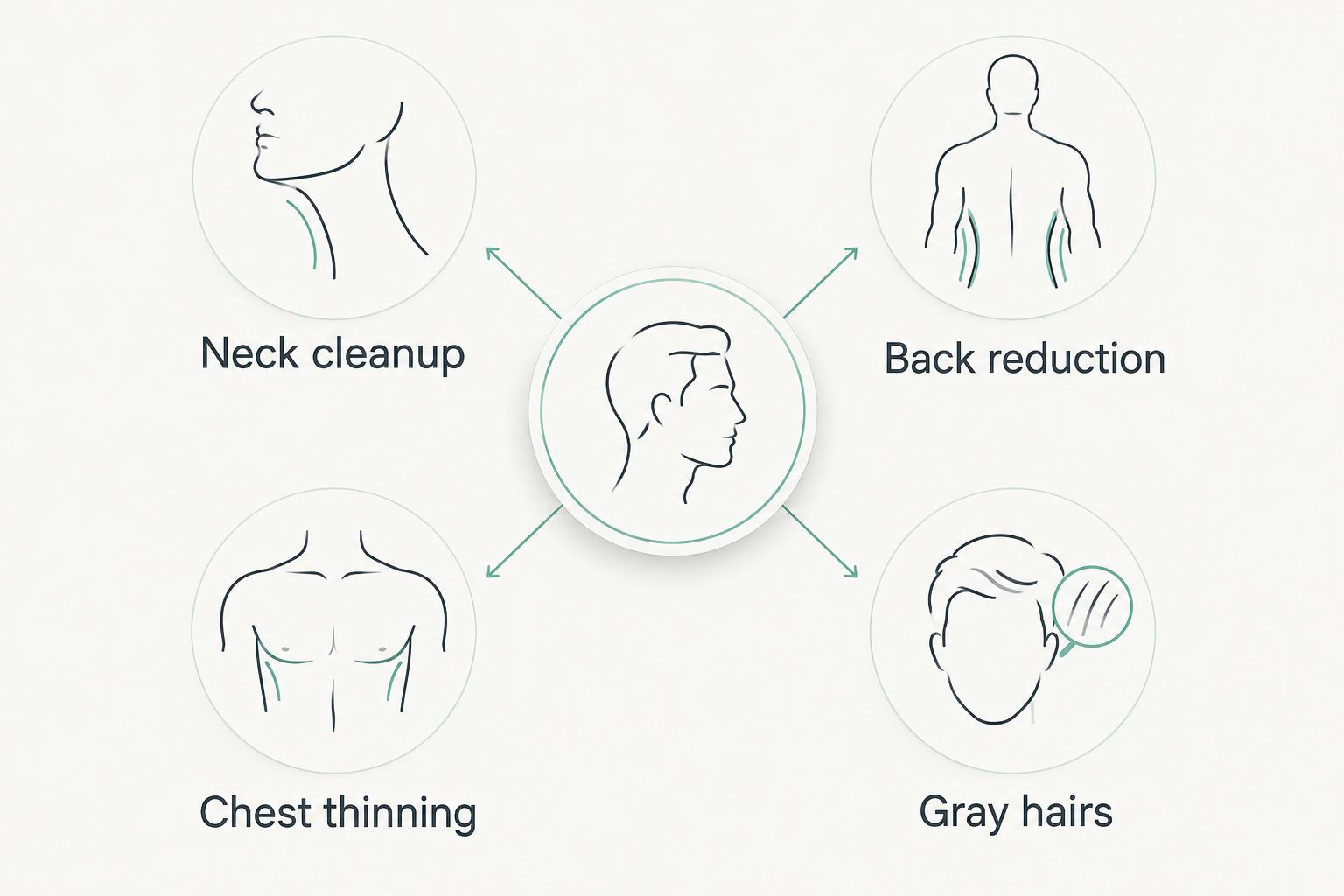
Match the treatment to the result you actually want
Choosing a wavelength is only part of the decision. For men's laser hair removal in 2026, the treatment boundary and the desired amount of reduction deserve equal attention.
Neck cleanup
If you want less shaving below the beard, define where the beard should stop before treatment begins. Preserve the option to change your beard shape later rather than treating an unnecessarily high neckline.
Shaving bumps also need assessment. Persistent bumps are not automatically a hair-removal problem, and active inflammation deserves attention before treatment.
Back reduction
Decide whether your goal is broad reduction or a much barer appearance. Ask how the practitioner will define the treatment area, including transitions around the shoulders, so the plan matches your expectations.
Chest thinning
Tell the practitioner if you want less density rather than complete removal. Laser reduction is not a precision guarantee of an exact final hair pattern, so a discussion about acceptable outcomes matters before starting.
Gray hairs
Separate dark hairs from gray hairs when discussing expected results. Treating the pigmented portion of mixed-color hair does not mean the gray portion will respond in the same way.
What to ask before your first appointment
Bring your actual routine to the consultation: shaving habits, sun exposure, skin products, medications, and previous reactions. These details affect planning more than a generic description of your skin as sensitive.
Use this checklist when discussing laser hair removal at Ammonite Laser Spa or another Brooklyn provider:
- Identify the device: Ask which laser will treat your area and why it suits your skin and hair.
- Review your history: Mention pigment changes, scarring, active skin conditions, and previous hair-removal reactions.
- Disclose medications: Include prescription medicines and topical products; do not stop prescribed treatment without medical advice.
- Discuss preparation: Ask when to shave and what to avoid. Waxing and plucking remove the hair that laser treatment needs to target.
- Confirm the boundaries: Agree on the exact area, especially around the beard and neckline.
- Get aftercare instructions: Know which reactions are expected and how to contact the provider about blistering, worsening pain, or other concerns.
If irritation is your main concern, the guide to laser hair removal for sensitive skin provides another decision point. Sensitivity does not identify the correct wavelength by itself.
Discuss your hair-removal goals
Review personalized laser hair removal in Downtown Brooklyn and prepare questions about skin and hair suitability.
How the treatments are ranked
This 2026 ranking prioritizes skin compatibility, hair pigment, treatment goals, and safety planning. It is a suitability guide, not a device test or a ranking of Brooklyn clinics by measured results.
Nd:YAG leads for darker skin; alexandrite has a distinct role for lighter skin; diode requires device-specific assessment. Electrolysis addresses the important exception: hair that lacks enough pigment for laser to target effectively.
Which treatment should you choose?
Choose the skin-matched plan, not the most heavily promoted machine. If you have darker skin, ask about long-pulsed Nd:YAG first. If you have lighter skin and dark hair, discuss alexandrite and diode suitability; if your target hair is white or gray, discuss electrolysis instead.
For an undecided local reader, Ammonite Laser Spa offers personalized laser hair removal in Downtown Brooklyn. Use the consultation to establish candidacy and treatment boundaries rather than arriving committed to a wavelength.
Your 2026 decision should end with a clear explanation of the proposed treatment, its limitations, and your responsibilities between appointments. If those points remain unclear, hold off.
FAQ
What's the best laser hair removal for men in Brooklyn?
The best treatment matches your skin tone, hair pigment, and treatment area. Long-pulsed Nd:YAG is generally preferred for darker skin, while alexandrite is an established option for lighter skin with dark hair; diode suitability depends on the device and settings.
Is Nd:YAG better than diode for darker skin?
Long-pulsed Nd:YAG is generally preferred for darker skin because its wavelength has less absorption by epidermal melanin than shorter-wavelength options. A practitioner still needs to assess your skin, hair, device settings, and recent sun exposure.
Can men get laser hair removal on the beard and neck?
Men can receive laser hair reduction on suitable beard and neck hair. Define the boundary carefully because lasting reduction can restrict future beard styles, and have active irritation assessed before treatment.
Will laser remove gray or white chest hair?
Laser generally does not effectively remove gray or white hair because it lacks sufficient target pigment. Electrolysis is an alternative to discuss for those hairs.
How many laser hair removal sessions will I need?
Laser hair removal usually requires multiple sessions because hairs are not all in the same growth phase. Your practitioner should explain the proposed course after assessing the area, hair characteristics, and response; no universal session count guarantees your result.
Does laser hair removal mean permanent removal of every hair?
No, laser hair removal is better understood as long-term hair reduction rather than a guarantee that every hair disappears permanently. Regrowth and maintenance needs vary, so discuss the expected endpoint before starting.
What should I ask Ammonite Laser Spa before booking?
Ask which laser suits your skin tone and hair, how the treatment boundary will be set, and what preparation and aftercare are required. Also discuss medications, recent tanning, previous pigment changes, and the result you want.
One last thing
Photograph your preferred beard boundary before a neckline consultation. A simple reference communicates what you want to keep—not just what you want removed—and gives the practitioner a concrete starting point for discussing the treatment edge.
For your 2026 plan, preserving the right hair is as important as reducing the unwanted hair. Make that decision before treatment, not after the outline has changed.