Best overall in 2026: professional conventional microneedling for suitable skin with visible pores and uneven texture. Best for a separate tightening discussion: radiofrequency microneedling; best home decision: skip needle rollers and address oil, congestion, and sun protection first.
- The best microneedling for large pores starts with identifying whether pores, acne scars, or congestion cause the texture.
- Professional conventional microneedling is the default option to discuss; radiofrequency adds heat and additional risks.
- Ammonite Laser Spa offers microneedling in Downtown Brooklyn; ask about suitability before choosing treatment.
- Skip home needle rollers: they do not replace professional assessment, infection control, or treatment planning.
Why this matters
Visible pores are normal openings associated with hair follicles and oil glands. Treatment cannot erase them. The useful goal is to reduce their appearance without creating irritation, pigment changes, or scars.
What looks like enlarged pores can also include blackheads, shallow acne scars, or texture from sun damage. Those concerns do not automatically need the same treatment. Starting with the wrong diagnosis turns a procedure decision into an expensive distraction.
Ammonite Laser Spa is a local option for Downtown Brooklyn clients considering professional microneedling for visible pores. The studio offers microneedling, but your consultation still needs to establish whether needling fits your skin and your main concern.
What makes the best microneedling for large pores?
Use these criteria before choosing a device or booking a series in 2026:
- Correct target: Establish whether the texture comes from visible follicles, congestion, acne scars, or several concerns together.
- Skin suitability: Review active acne, infections, irritation, healing problems, medications, and a history of raised scars.
- Risk control: Ask about practitioner qualifications, infection prevention, sterile single-use needle components, and aftercare.
- Treatment control: The practitioner should explain the device, treatment area, and reason for the proposed settings.
- Realistic outcomes: Look for a plan to assess texture improvement, not a promise to close pores permanently.
- Recovery fit: Understand expected redness and sensitivity, activity restrictions, and whom to contact if healing goes wrong.
A treatment fails this shortlist if the provider cannot explain why your skin needs it. Device names and dramatic photographs do not answer that question.
Microneedling options at a glance for 2026
| Option | Best for | Standout feature | Key limitation |
|---|---|---|---|
| Professional conventional microneedling | Visible pores with uneven texture after assessment | Controlled needling without added radiofrequency energy | Does not remove congestion or permanently eliminate pores |
| Radiofrequency microneedling | A medical discussion about texture plus skin laxity | Combines needles with radiofrequency energy | Adds heat-related risks, including potentially serious complications |
| At-home needle rollers | DIY shoppers deciding what to avoid | Manual rolling needles | Cannot substitute for professional assessment or procedural safeguards |
These are treatment approaches, not interchangeable versions of the same service. A more intensive device is not automatically a better match for your pores.
1. Professional conventional microneedling: best for texture-led pores
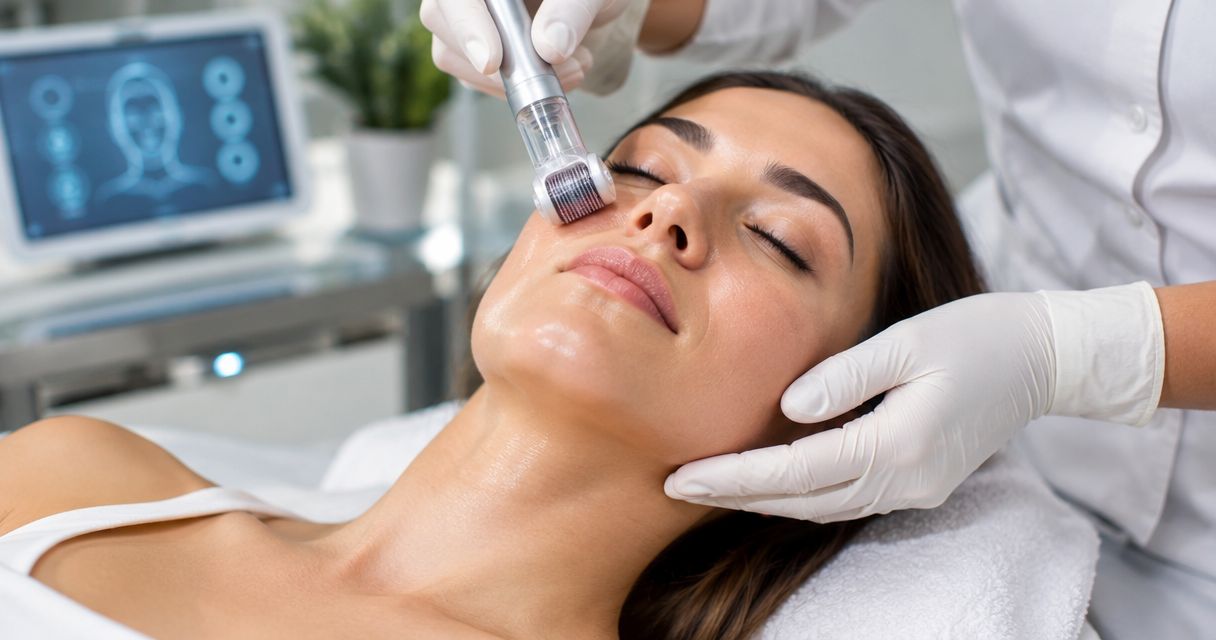
Professional conventional microneedling uses fine needles to create controlled skin injury. The healing response supports collagen remodeling, which can improve the appearance of some texture concerns. It does not switch off oil production or physically seal follicle openings.
This is the default procedure to discuss when visible pores sit alongside uneven texture and your skin is suitable for treatment. It avoids the added radiofrequency energy used in RF microneedling, although it still carries procedural risks.
Professional conventional microneedling pros
- Addresses skin texture rather than relying on temporary surface smoothing alone.
- Allows a practitioner to assess the treatment area and adjust the approach.
- Does not introduce radiofrequency heat into the skin.
- Can be considered alongside an acne-scar assessment when scarring contributes to the appearance.
Professional conventional microneedling cons
- Redness, sensitivity, bleeding, infection, and pigment changes are possible.
- Results develop through healing rather than appearing as an immediate permanent change.
- It does not treat every cause of visible pores, particularly ongoing congestion.
Best for: Someone whose main concern is texture-associated pore visibility, after a professional assessment confirms suitability.
Ammonite Laser Spa offers microneedling, but the supplied service description does not identify its device or treatment protocol. Ask which approach is proposed and why; do not assume the service includes RF energy or any particular add-on.
Before agreeing to treatment, ask how the practitioner will distinguish enlarged pores from shallow scars. That distinction changes what improvement should look like and how the result should be judged.
Verdict: Buy only after assessment confirms that texture—not untreated congestion or active inflammation—is the right target.
2. Radiofrequency microneedling: best for a laxity discussion
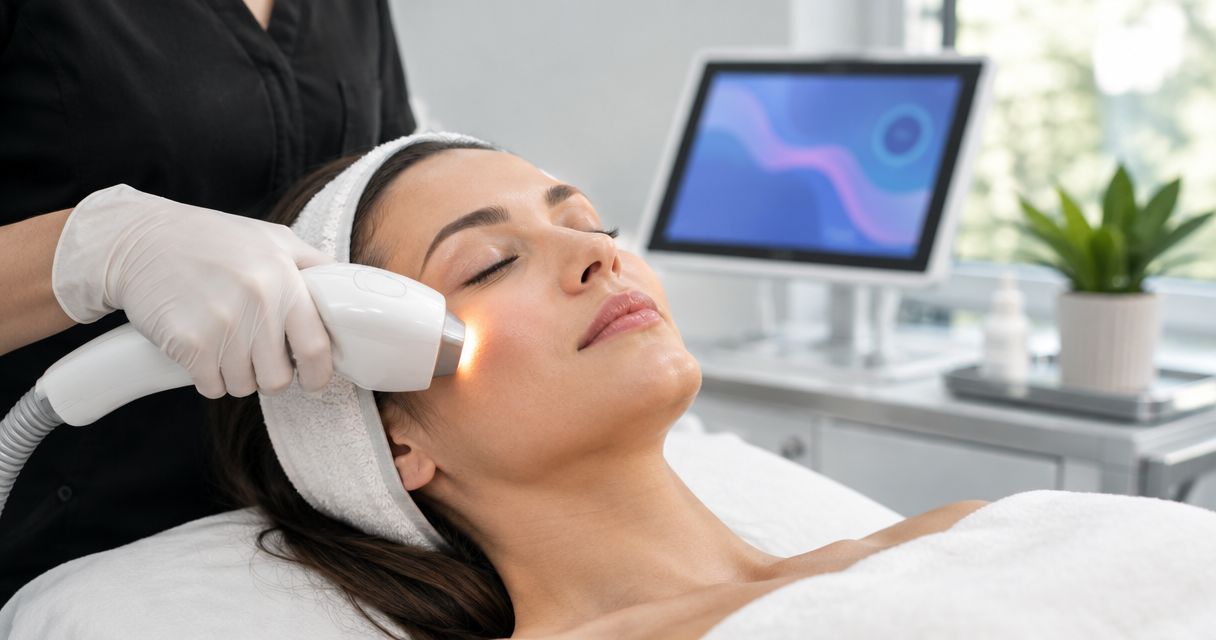
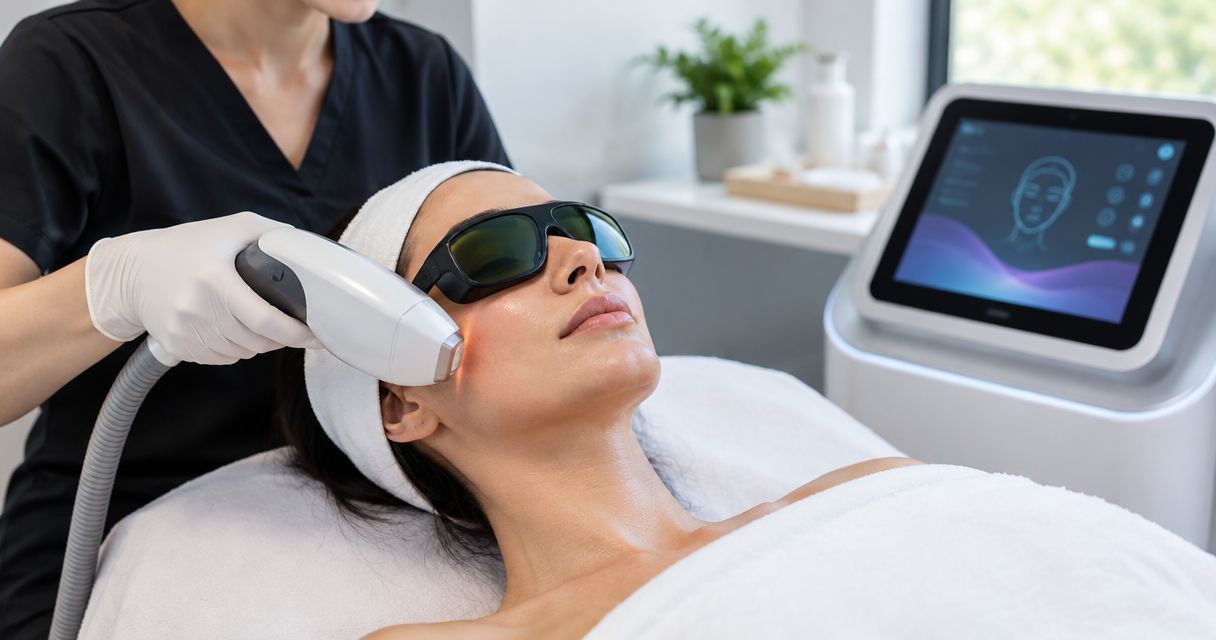
Radiofrequency microneedling combines needles with energy that heats tissue. Its relevance is different when your concern includes skin laxity as well as texture. That does not make it the default answer for otherwise uncomplicated visible pores.
For a 2026 treatment decision, review the FDA's safety communication on RF microneedling. The FDA identifies reports of serious complications with certain uses, including burns, scarring, fat loss, disfigurement, and nerve damage. This is a medical procedure, not simply a stronger facial.
Radiofrequency microneedling pros
- Gives a qualified clinician another approach to discuss when laxity accompanies texture concerns.
- Combines needling and energy delivery in the same procedure.
- Allows a treatment discussion that addresses tissue heating separately from conventional needling.
Radiofrequency microneedling cons
- Adds heat-related risks to the risks associated with skin penetration.
- Requires device-specific knowledge and careful treatment planning.
- Is not justified solely by a claim that stronger treatment produces smaller pores.
Best for: Someone with both texture concerns and skin laxity who receives an individualized medical assessment of benefits and risks.
Ask who will perform the procedure, what training that person has with the specific device, and why RF is preferable to a non-energy approach. The answer should address your anatomy and concern, not just the clinic's available equipment.
Do not interpret a device's regulatory status as proof that every treatment plan or advertised use is appropriate. Ask about the proposed use, the manufacturer's instructions, and the provider's complication-management process.
Verdict: Hold until a qualified medical professional establishes a reason to add RF energy.
3. At-home needle rollers: best for identifying what to skip
At-home needle rollers move small needles across the skin manually. They are not equivalent to a professionally planned microneedling procedure. You still face skin-injury risks without the same clinical assessment and controlled treatment environment.
The appeal is control over your own routine. The problem is that choosing needle depth, pressure, hygiene, and product use becomes your responsibility, even when you cannot reliably identify the texture you are treating.
At-home needle roller pros
- Gives you control over when you use the tool.
- Does not require a clinic appointment.
- Makes the tool accessible for repeated handling, although that is not evidence of benefit.
At-home needle roller cons
- Can cause injury, infection, irritation, and pigment changes.
- Does not establish whether acne, scars, or visible follicles are the actual concern.
- Creates an opportunity to apply unsuitable products to recently injured skin.
Best for: DIY shoppers deciding whether to buy a needling tool; the recommendation is not to use one for pore treatment.
Keep home care separate from deliberate skin injury. A gentle cleanser, moisturizer, sun protection, and a clinician-guided approach to acne or congestion offer a clearer starting point than adding needles to an unsettled routine.
If you already use a roller, tell your treating clinician before booking a procedure. Report irritation or wounds rather than trying to cover them with another treatment.
Verdict: Skip home needle rollers for large pores.
Match the treatment to what you actually see
Look at your skin in ordinary light before deciding it needs resurfacing. Magnifying mirrors and harsh side lighting exaggerate normal texture; they are poor tools for setting a realistic treatment goal.
Use these distinctions to structure the consultation:
- Visible pores: Follicular openings are apparent, especially in oilier areas. Ask what improvement is realistic without promising their disappearance.
- Congestion: Blackheads or blocked follicles dominate the concern. Discuss acne management before assuming collagen stimulation is the answer.
- Acne scars: Depressions remain where acne healed. Ask for scar assessment rather than treating every depression as a pore.
- Skin laxity: Looser skin accompanies the texture concern. Ask whether this changes the treatment discussion and its risks.
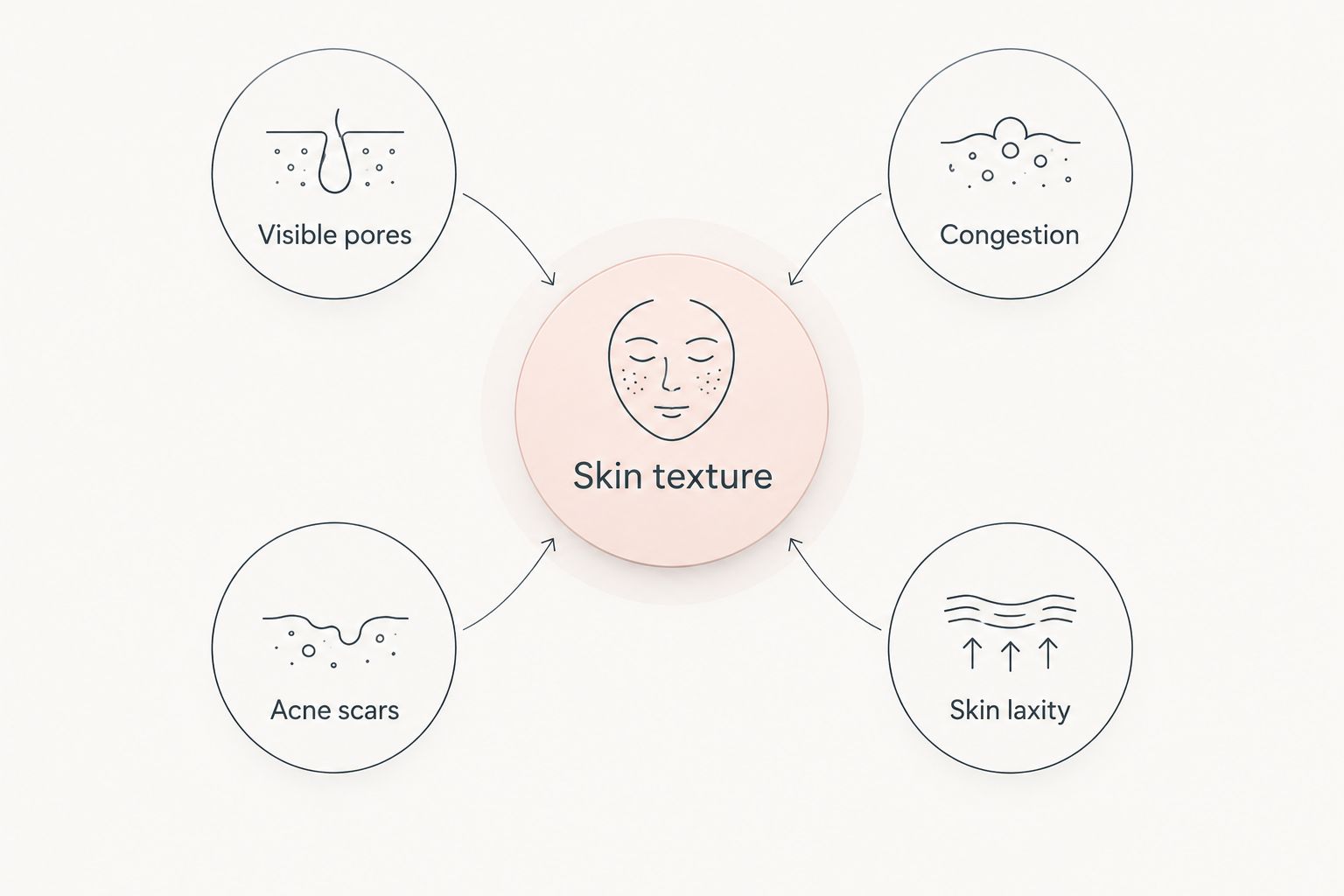
More than one concern can exist on the same face. Ask the practitioner to identify the main target and explain which concern the proposed treatment will leave unchanged.
Four questions to ask before booking
Bring these 4 questions to your consultation. Clear answers matter more than a named treatment package.
- What are we treating? Ask the practitioner to identify pores, scars, congestion, or laxity on your own skin.
- Why this approach? Ask why conventional microneedling, RF microneedling, or no procedure is the right next step.
- What changes my risk? Disclose medications, recent procedures, tanning, cold sores, healing problems, and previous pigment changes.
- What happens afterward? Get written aftercare instructions, expected recovery signs, and a contact route for concerning symptoms.
Do not stop prescribed medication to fit a treatment appointment without speaking to the prescriber. If active infection, a flare, or damaged skin is present, seek assessment rather than pushing ahead with an elective procedure.
For Ammonite Laser Spa, ask specifically which microneedling method the studio proposes. Its service list establishes that microneedling is offered; your consultation establishes suitability.
How to judge results without chasing every pore
Take 2 photographs before treatment: a front view and an oblique view. Repeat those views with the same lighting, distance, and camera settings when your practitioner recommends assessing the outcome.
Do not compare a close-up under bathroom spotlights with a filtered photograph. Consistent images help you separate a genuine texture change from lighting, swelling, or camera processing.
Make 1 skincare change at a time when your clinician advises restarting or adjusting products. This makes irritation easier to trace. Follow the procedure-specific aftercare plan rather than borrowing a schedule from someone else's treatment.
For your 2026 treatment plan, define success before booking: less noticeable texture in ordinary light, not a pore-free face. If a provider promises permanent pore closure, reject that promise.
How these options are ranked
This 2026 ranking prioritizes suitability, control over treatment, realistic outcomes, and avoidable risk. It is a decision guide based on established treatment mechanisms and safety considerations, not a head-to-head clinical trial or a claim about results at a particular studio.
Conventional professional microneedling comes first because it allows a texture-focused discussion without automatically adding RF energy. RF remains a separate medical decision, while home rollers do not meet the same assessment and procedural safeguards.
Which microneedling approach should you choose?
Choose an assessment before choosing a device. If your concern is suitable texture-related pore visibility, discuss conventional professional microneedling first. If congestion or active acne dominates, address that problem before committing to resurfacing.
Ammonite Laser Spa offers a local microneedling option for Downtown Brooklyn clients. Ask for a specific explanation of the method, its risks, and the outcome being targeted; do not book on the promise of invisible pores.
FAQ
What's the best microneedling for large pores in 2026?
Professional conventional microneedling is the first approach to discuss for suitable skin with texture-related pore visibility. An assessment should first distinguish visible pores from congestion, active acne, and acne scars.
Can microneedling permanently close my pores?
No, microneedling cannot permanently close pores. Pores are normal follicular openings; treatment aims to improve their appearance rather than eliminate them.
Is RF microneedling better than regular microneedling for pores?
RF microneedling is not automatically better for pores. It adds tissue heating and additional risks, so a qualified medical professional should explain why that energy is appropriate for your concern.
Can I use a home dermaroller instead of professional microneedling?
A home dermaroller is not a substitute for professional microneedling. It does not provide clinical assessment or the same procedural safeguards and can cause injury, infection, or pigment changes.
Should I get microneedling if I have active acne?
Active acne needs assessment before microneedling. A clinician should determine whether inflammation or infection makes treatment inappropriate and whether acne management should come first.
Does Ammonite Laser Spa offer microneedling for local clients?
Ammonite Laser Spa offers microneedling in Downtown Brooklyn. Ask the studio which method it proposes and whether your pore and texture concerns are suitable for treatment.
How many microneedling sessions will I need for large pores?
There is no single session count that fits every person with visible pores. Your clinician should explain the proposed schedule, review points, and reasons to change or stop the plan.
One last thing
An acne-scar depression can look like an enlarged pore but needs a different assessment. Ask the practitioner to show you which marks are normal openings and which are scars before discussing any treatment series.
That distinction is more useful than choosing the most intensive device. Treat the correct concern, and judge improvement in ordinary light.