Best overall starting option for mild post-acne dark marks: azelaic acid. Best for marks with recurring breakouts: a topical retinoid. Best for persistent, diagnosed pigmentation: clinician-supervised hydroquinone. This 2026 guide compares topical treatments, chemical peels, and lasers; Downtown Brooklyn readers can also explore personalized acne and pigmentation services at Ammonite Laser Spa.
- The best treatments for post-acne pigmentation depend on whether you have brown marks, redness, or textured acne scars.
- Azelaic acid is a practical starting option for mild dark marks, particularly when acne is still active.
- Chemical peels and lasers require careful selection because irritation and injury can worsen pigmentation.
- Ammonite Laser Spa is best for local clients seeking personalized acne and pigmentation treatments in Downtown Brooklyn.
Why this matters
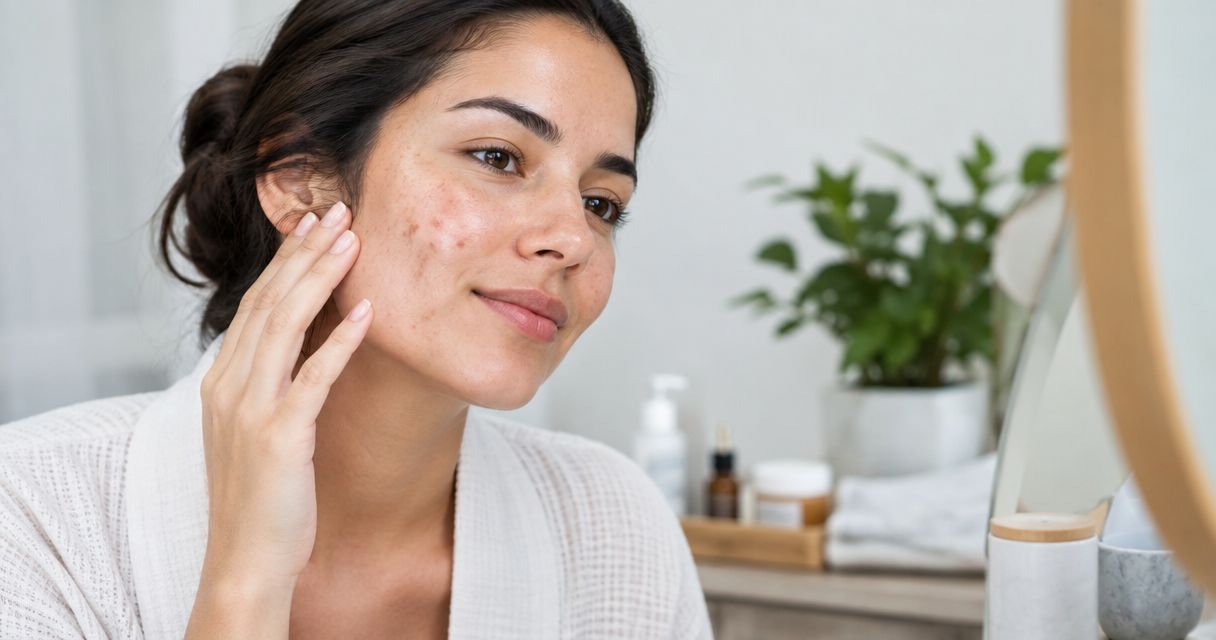
A flat brown mark after a breakout is usually post-inflammatory hyperpigmentation: inflammation has triggered excess pigment. A pink or red mark is different, and an indentation is a scar. Treating all three as the same problem leads to the wrong treatment choice.
Control new breakouts while treating existing marks. Otherwise, fresh inflammation keeps producing discoloration as older spots fade. Picking, harsh scrubbing, and an irritating combination of products can prolong that cycle.
For your 2026 treatment plan, start with the mark itself rather than the procedure name. Ammonite Laser Spa offers acne and pigmentation treatments, but a changing lesion, uncertain diagnosis, or severe acne needs medical assessment rather than a cosmetic treatment menu.
What makes the best post-acne pigmentation treatment?
The best option addresses your actual concern without creating more inflammation. These criteria determine the ranking:
- Correct target: Brown discoloration, persistent redness, and depressed scars need different approaches.
- Acne control: Treating breakouts helps prevent additional marks, not just fade existing ones.
- Irritation risk: Burning and peeling are not proof that a treatment is working better.
- Skin-tone suitability: Skin prone to pigmentation needs careful product selection and conservative procedural planning.
- Practical fit: Your pregnancy status, current medication, skin sensitivity, and ability to follow aftercare affect the choice.
- Escalation threshold: Procedures belong after assessment, not automatically ahead of topical care.
This is a decision-based ranking, not a claim that one treatment works best for every person. Prescription decisions belong with a qualified medical clinician.
Best treatments for post-acne pigmentation at a glance
| Treatment | Best for | Standout benefit | Key limitation |
|---|---|---|---|
| Azelaic acid | Mild dark marks with acne-prone skin | Addresses acne and uneven pigmentation | Can sting or irritate |
| Topical retinoids | Recurring breakouts that leave marks | Treat acne while supporting gradual pigment improvement | Irritation; avoid during pregnancy |
| Hydroquinone | Persistent, confirmed hyperpigmentation | Directly targets excess pigment production | Requires medical supervision and a defined plan |
| Superficial chemical peels | Selected superficial marks despite topical care | Controlled exfoliation | Can cause additional pigmentation |
| Selected laser treatments | Carefully assessed, resistant discoloration | Targets selected pigment concerns | Wrong treatment selection can worsen discoloration |
1. Azelaic acid: best for mild marks with acne-prone skin
Azelaic acid treats acne and can help reduce post-inflammatory hyperpigmentation. That combination makes it a practical starting option when you have flat brown marks and occasional new breakouts, rather than deep scars or unexplained patches.
It is not an instant spot eraser. Introduce it without simultaneously adding several other active ingredients, so you can identify irritation and adjust your routine.
Azelaic acid pros:
- Addresses both acne and post-acne pigmentation.
- Fits a topical approach before procedural treatment.
- Offers an alternative when a retinoid is unsuitable or poorly tolerated.
Azelaic acid cons:
- Stinging, dryness, and irritation can occur.
- Does not correct depressed acne scars.
- Persistent pigmentation still needs assessment rather than indefinite self-treatment.
Best for: Mild, flat post-acne dark marks, especially when acne remains part of the problem.
Ask a clinician or pharmacist which formulation suits your situation. During pregnancy or breastfeeding, confirm your entire routine with your healthcare professional rather than assuming that every acne product is interchangeable.
Verdict: Buy only after checking suitability; azelaic acid is the default starting option for mild acne-related dark marks.
2. Topical retinoids: best for breakouts that keep leaving marks
Topical retinoids help prevent clogged pores and treat acne. They can also improve post-inflammatory hyperpigmentation over time, making them useful when the main obstacle is a continuing supply of new blemishes.
The limitation is irritation. Starting aggressively or layering a retinoid with exfoliating acids can leave your skin inflamed, undermining the reason you started treatment.
Topical retinoid pros:
- Addresses active acne as well as residual marks.
- Helps prevent the breakouts that generate new pigmentation.
- Provides a topical option before considering a procedure.
Topical retinoid cons:
- Dryness, peeling, and irritation are common treatment challenges.
- Topical retinoids should be avoided during pregnancy.
- Different retinoids and formulations are not interchangeable.
Best for: Repeated breakouts followed by brown marks, when a retinoid is medically appropriate.
Use your clinician's or product's directions rather than treating visible peeling as a target. Moisturizer and sun protection support tolerability; an increasingly complicated routine does not necessarily improve results.
For 2026, choose a routine you can tolerate consistently over one that repeatedly forces you to stop. Persistent burning, swelling, or substantial irritation warrants stopping the irritating product and seeking advice.
Verdict: Buy if suitable for your acne pattern; skip during pregnancy.
3. Hydroquinone: best for persistent, diagnosed pigmentation
Hydroquinone reduces pigment production and is used to treat hyperpigmentation. It belongs in a clinician-directed plan, particularly when marks remain despite appropriate acne control and a tolerable skincare routine.
In the United States, hydroquinone is not an approved over-the-counter skin-lightening treatment. Do not substitute an unverified online lightening cream for a diagnosis and prescription discussion.
Hydroquinone pros:
- Directly addresses excess pigment production.
- Provides a medical option for persistent dark marks.
- Allows treatment boundaries and follow-up to be defined by a clinician.
Hydroquinone cons:
- Can cause irritation or contact dermatitis.
- Prolonged or inappropriate use carries a risk of exogenous ochronosis, a difficult-to-treat discoloration.
- Does not treat depressed scars or eliminate ongoing acne.
Best for: Confirmed post-inflammatory hyperpigmentation that needs a supervised medical treatment plan.
Ask which areas to treat, when to stop, and when to return for reassessment. Do not extend treatment indefinitely because a mark has not completely disappeared.
Verdict: Hold until a qualified medical clinician confirms the diagnosis and treatment schedule.
4. Superficial chemical peels: best for selected surface discoloration
Superficial chemical peels use an exfoliating solution to produce a controlled skin injury. Selected peels can help superficial pigmentation, but suitability depends on the formulation, your skin, and the professional's judgment.
A deeper peel is not automatically better for acne marks. Increasing treatment intensity also increases the consequences of a poor match or inadequate aftercare.
Superficial chemical peel pros:
- Offers an in-office option for selected superficial marks.
- Can complement a topical treatment plan.
- Allows treatment choice to account for skin sensitivity and pigmentation history.
Superficial chemical peel cons:
- Can trigger new post-inflammatory hyperpigmentation.
- Causes irritation and visible peeling depending on the treatment.
- Requires preparation, aftercare, and disclosure of current skincare and medication.
Best for: Assessed superficial discoloration when topical care alone has not met your treatment goals.
Tell the treating professional about previous reactions, recent tanning, retinoid use, and any tendency to develop dark marks after minor irritation. Avoid strong at-home peels as a shortcut to professional treatment.
Verdict: Hold until your skin and current routine have been assessed; skip aggressive DIY peeling.
5. Selected lasers: best for resistant marks after careful assessment
Laser treatment is not one interchangeable service. Devices and settings target different concerns, and a treatment intended for redness or texture is not automatically appropriate for brown post-acne pigmentation.
Ammonite Laser Spa offers laser skin rejuvenation and pigmentation treatments. That service range makes treatment suitability the question to discuss—not evidence that a particular device or protocol is right for your skin.
Selected laser treatment pros:
- Provides an option for selected concerns that persist despite topical care.
- Allows treatment planning around the specific pigment concern.
- Can form part of a broader plan when more than one skin issue is present.
Selected laser treatment cons:
- Burns, additional pigmentation, and loss of pigment are possible.
- Treatment selection requires particular care in darker skin tones.
- A laser session does not prevent future acne or replace daily skin protection.
Best for: Resistant discoloration after diagnosis and an individualized risk discussion.
Before choosing a laser in 2026, ask what is being targeted, why that approach suits your skin tone, and how complications are handled. Ask whether a test area is appropriate; a test does not guarantee that a full treatment will be complication-free.
Verdict: Wait until the diagnosis, device choice, and pigmentation risks are clearly explained.
Build the routine before adding a procedure
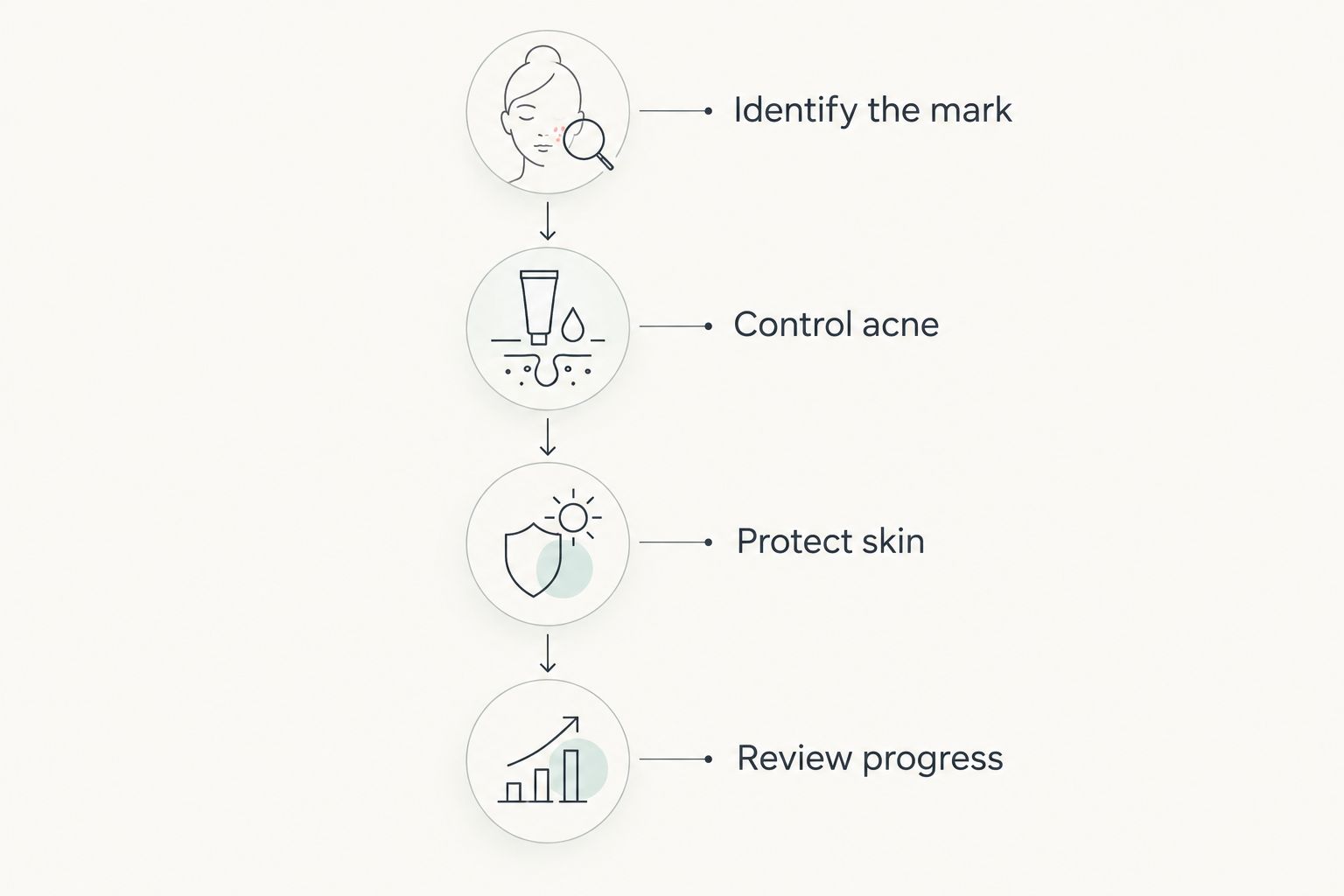
Procedures do not compensate for persistent irritation or unmanaged breakouts. Use this sequence to decide what belongs in your 2026 plan:
- Identify the mark: Establish whether the concern is brown pigmentation, redness, a scar, or a mixture.
- Control acne: Address ongoing breakouts rather than only treating yesterday's marks.
- Protect skin: Use a tolerable moisturizer and consistent sun protection.
- Review progress: Reassess tolerability and the diagnosis before escalating treatment.
Choose broad-spectrum sunscreen with SPF 30 or higher. American Academy of Dermatology guidance recommends applying sunscreen about 15 minutes before going outdoors and reapplying every 2 hours outdoors, as well as after swimming or sweating.
For pigmentation-prone skin, ask about a tinted sunscreen containing iron oxides, which can help protect against visible light. Sunscreen does not erase existing marks by itself, and irritation or an unpleasant texture can make consistent use harder. Choose a formulation your skin tolerates.
How the treatments were ranked
The ranking prioritizes a practical starting point for mild post-acne pigmentation, prevention of new marks, and treatment risk. It does not represent a head-to-head clinical trial or a guarantee of results.
Azelaic acid leads for mild marks with acne-prone skin. Retinoids take the recurring-breakout slot; hydroquinone requires medical oversight. Peels and lasers follow because procedural injury can create the very pigmentation you want to remove.
Which treatment should you choose?
Start with azelaic acid for mild brown marks, unless your medical history or skin tolerance points elsewhere. If breakouts keep returning, prioritize an acne treatment discussion rather than repeatedly treating the marks alone.
Choose clinician assessment before hydroquinone, peels, or lasers. If the concern is an indentation rather than discoloration, ask for an acne-scar assessment: pigment treatment cannot fill a depressed scar.
Explore personalized skin treatments
Discuss acne and pigmentation services in Downtown Brooklyn.
FAQ
What's the best treatment for brown marks after acne?
Azelaic acid is a practical starting option for mild brown post-acne marks, particularly when acne is still active. Persistent discoloration needs assessment before stronger topical treatments or procedures.
Are red acne marks the same as pigmentation?
No. Pink or red marks often reflect post-inflammatory redness rather than excess brown pigment. Treatment selection should follow an assessment of what is causing the color.
Is laser better than a cream for post-acne pigmentation?
Laser is not automatically better than topical treatment for post-acne pigmentation. Lasers carry risks including additional discoloration, so topical care is often the more appropriate starting discussion for mild marks.
Can I use a retinoid and exfoliating acids together?
Combining a retinoid with exfoliating acids can increase irritation. Ask your clinician how to structure the routine, especially if your skin develops dark marks after inflammation.
Does microneedling remove dark acne marks?
Microneedling is more commonly used for acne-scar texture than as a first choice for flat pigmentation. It can also trigger pigmentation, so dark marks alone do not establish that it is appropriate.
Can I treat post-acne pigmentation while pregnant?
Pregnancy changes which treatments are suitable, and topical retinoids should be avoided. Ask your pregnancy-care clinician or dermatologist to review every active ingredient and any planned procedure.
When should I see a dermatologist instead of trying another product?
See a dermatologist for uncertain or changing discoloration, painful or scarring acne, or persistent marks despite a tolerable routine. A spot that changes shape, bleeds, or behaves differently from your usual acne marks needs medical assessment.
One last thing
More irritation can mean more pigmentation—not faster clearing. Take comparison photos in consistent lighting and bring your current product list to an assessment. For your 2026 plan, that information is more useful than requesting the strongest treatment on the menu.