Best overall to discuss: professional conventional microneedling. Best for a specialist-led discussion about added heat: radiofrequency microneedling. Best treated as an optional add-on, not a default: platelet-rich plasma. Skip home rollers for treating stretch marks. This 2026 guide explains the differences, the risks, and what a realistic treatment plan should address.
- The best microneedling for stretch marks starts with professional assessment, not a device brand or promised result.
- Conventional microneedling is the first option to discuss; improvement does not mean complete stretch-mark removal.
- Radiofrequency microneedling adds heat and requires a separate discussion of burns, scarring, and other complications.
- Ammonite Laser Spa offers microneedling in Downtown Brooklyn; ask whether treatment fits your stretch marks and medical history.
Why this matters
Stretch marks are scars that develop when skin stretches or shrinks quickly. Their color and texture change as they mature, so treating a newer reddish mark is not the same decision as treating an older pale indentation.
No microneedling approach guarantees that stretch marks will disappear. The useful goal is improvement in appearance or texture, weighed against discomfort, recovery, complications, and the burden of repeat appointments.
Ammonite Laser Spa offers microneedling in Downtown Brooklyn. The studio is a local option for clients seeking a professional discussion of microneedling suitability, rather than choosing a home device without an assessment.
What makes the best microneedling for stretch marks?
Use these criteria before comparing treatment names. For a 2026 decision, the assessment and treatment rationale matter more than whether a clinic advertises the newest equipment.
- Diagnosis first: Confirm that the marks are stretch marks and discuss their cause, location, color, and texture.
- Relevant experience: Ask about the provider’s experience treating body stretch marks and skin tones like yours, not only facial acne scars.
- Treatment control: The provider should explain the device, treatment approach, and why those choices suit the area.
- Safety screening: Discuss medications, skin infections, healing problems, pregnancy, and any history of raised scars.
- Realistic documentation: Look for comparable photographs, consistent lighting, and a clear description of what changed.
- An exit plan: Agree on how progress and adverse effects will determine whether treatment continues.
Microneedling options at a glance
These are treatment approaches, not interchangeable versions of the same procedure. The ranking prioritizes a clear rationale and manageable complexity; it is not a claim that one approach produces the greatest improvement for every person.
| Rank and option | Best for | Standout feature | Key limitation |
|---|---|---|---|
| 1. Professional conventional microneedling | An initial discussion about stretch-mark texture | Controlled mechanical needling without radiofrequency heat | Results vary; infection, pigment changes, and scarring remain possible |
| 2. Radiofrequency microneedling | A specialist assessment when added heat has a specific purpose | Combines needles with radiofrequency energy | Adds thermal risks and is not automatically better for stretch marks |
| 3. Microneedling with platelet-rich plasma | Evaluating an optional adjunct after selecting a core treatment | Adds a preparation made from your own blood | The added benefit for your stretch marks needs a clear explanation |
| 4. Home rollers and home pens | Recognizing what not to substitute for professional treatment | Consumer-operated needling | Limited treatment control and avoidable injury or contamination risks |
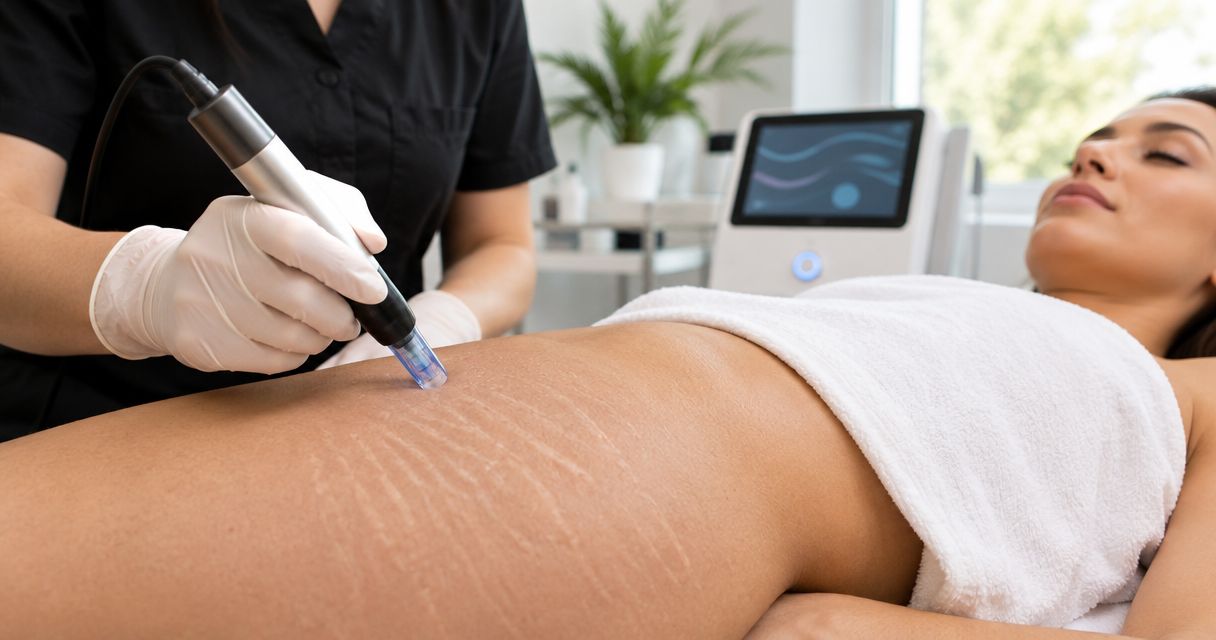
1. Conventional microneedling: best first discussion for texture
Professional conventional microneedling uses needles to create controlled skin injuries that stimulate a healing response. For stretch marks, the proposed benefit is remodeling scarred skin rather than simply covering its color.
It is the first approach to discuss because it does not add radiofrequency heat or a blood-derived adjunct. That makes the treatment decision simpler, not risk-free, and does not establish that conventional needling outperforms every alternative.
Conventional microneedling pros:
- Targets a healing response within the treated skin.
- Avoids the added thermal component of radiofrequency treatment.
- Allows the provider to tailor treatment to the body area and skin findings.
- Keeps the initial discussion focused on the core procedure rather than extras.
Conventional microneedling cons:
- Cannot promise complete removal of stretch marks.
- Can cause redness, swelling, discomfort, and pinpoint bleeding.
- Carries risks including infection, pigment changes, and scarring.
Best for: Someone seeking a professional assessment of depressed stretch-mark texture without starting with an energy-based procedure.
Ask the provider what improvement would look like on your particular marks. A useful answer distinguishes shallower texture from reduced color contrast and explains which outcome the proposed treatment is intended to address.
Verdict: Hold until assessment; choose conventional microneedling when the provider gives a clear, individualized rationale.
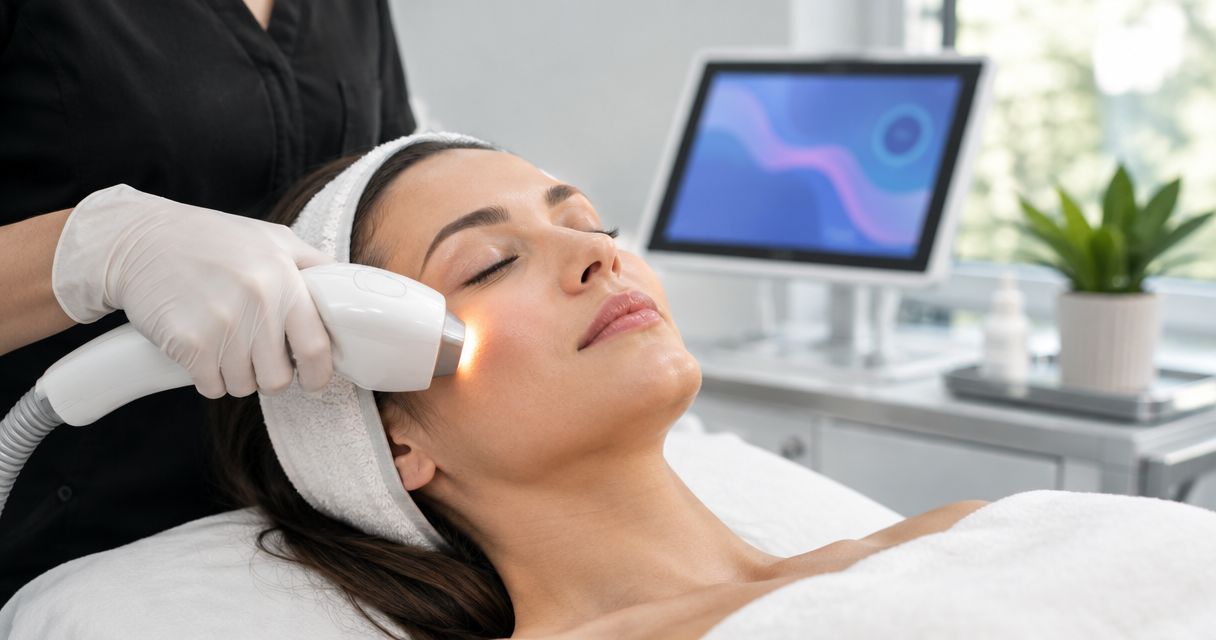
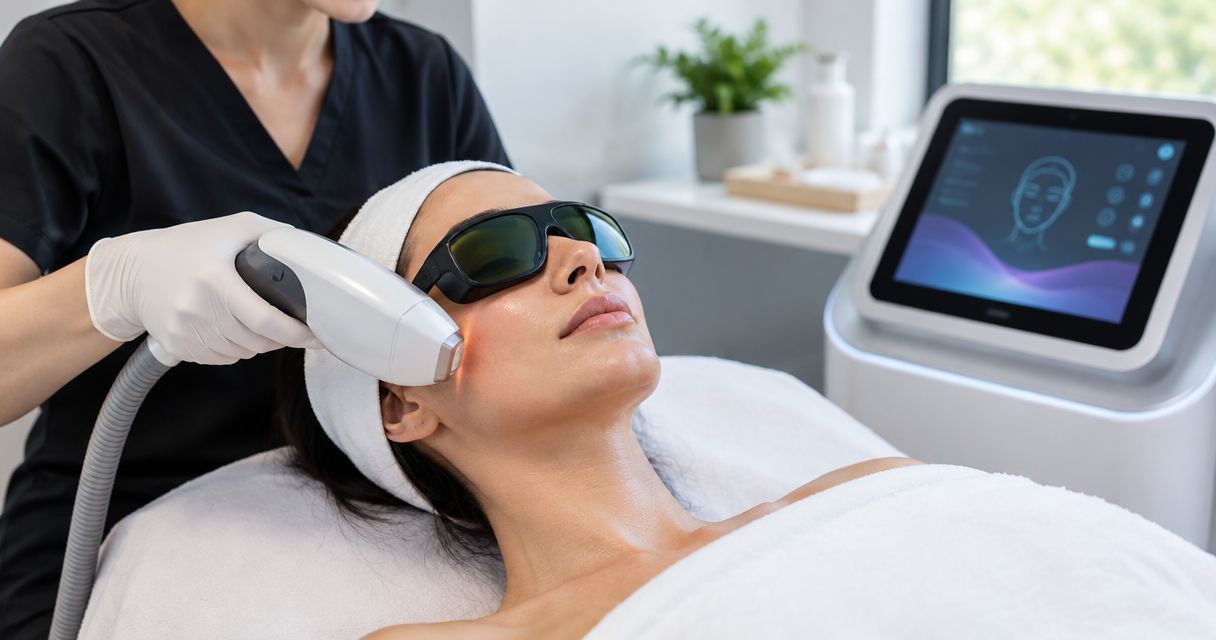
2. Radiofrequency microneedling: best for a specialist heat assessment
Radiofrequency microneedling places needles into the skin and delivers radiofrequency energy. The added heat changes both the treatment mechanism and the risk discussion; this is not simply conventional microneedling with a stronger setting.
For your 2026 shortlist, require a specific explanation of why heat is appropriate. A general promise of collagen stimulation is not enough to establish that the extra component is necessary for your stretch marks.
Radiofrequency microneedling pros:
- Combines mechanical needling with energy delivered into tissue.
- Allows a qualified provider to discuss an energy-based approach to remodeling.
- Provides an alternative to assess when conventional needling alone is not the proposed plan.
Radiofrequency microneedling cons:
- Adds risks of thermal injury, including burns.
- Serious complications can include scarring, fat loss, and nerve damage.
- Requires device-specific expertise; the treatment name alone does not establish suitability.
Best for: A person whose specialist identifies a concrete reason to use radiofrequency rather than conventional microneedling.
Ask who performs the procedure, what qualifications they hold, and how complications are managed. Also ask whether the device’s authorized indications cover the proposed use; clearance for one indication does not establish clearance for every stretch-mark treatment claim.
Verdict: Hold unless a qualified clinician explains why the added heat is justified for your case.
3. Microneedling with PRP: best for evaluating an optional adjunct
Platelet-rich plasma, or PRP, is prepared from a sample of your own blood. Some providers combine it with microneedling, but the addition should be evaluated separately from the needling procedure itself.
Do not treat a more elaborate appointment as proof of a better result. Ask what evidence supports adding PRP for stretch marks resembling yours, rather than accepting evidence about a different skin condition as an answer.
Microneedling with PRP pros:
- Gives you an adjunct to discuss after the main treatment approach is selected.
- Uses a preparation derived from your own blood.
- Allows a direct conversation about whether an additional treatment step has a useful purpose.
Microneedling with PRP cons:
- Adds blood collection, preparation, and handling to the appointment.
- Does not remove the underlying risks of microneedling.
- Should not be assumed to produce a meaningful additional improvement for every patient.
Best for: Someone who already has a suitable microneedling plan and wants a separate, evidence-focused discussion about PRP.
The provider should explain how PRP is used, why it is being recommended, and what changes if you decline it. A treatment plan that cannot explain the role of its add-on needs clarification before consent.
Verdict: Hold; do not make PRP the reason you choose a provider.
4. Home rollers and pens: best left off the treatment shortlist
Home rollers move small needles across the skin, while home pens use a powered needling action. Neither format makes self-treatment equivalent to professional stretch-mark assessment and controlled treatment.
The central problem is not convenience. You must also judge the diagnosis, hygiene, treatment intensity, skin response, and when to stop—without the safeguards of a clinical assessment.
Home-device pros:
- Do not require travel to a treatment appointment.
- Give the user control over when the device is used.
- Make it possible to avoid an energy-based procedure, although that does not establish safety or effectiveness.
Home-device cons:
- Incorrect use can injure skin or introduce infection.
- Repeated treatment of irritated skin can worsen the problem.
- Device access does not provide expertise in pigmentation, scarring, or wound healing.
Best for: Understanding why a consumer device is not a substitute for a professional stretch-mark treatment plan.
Avoid pairing home needling with acids, improvised numbing routines, or products not intended for introduction through the skin. A serum being suitable for intact skin does not establish that it is suitable during needling.
Verdict: Skip home needling for stretch-mark treatment.
Build a treatment decision around your skin
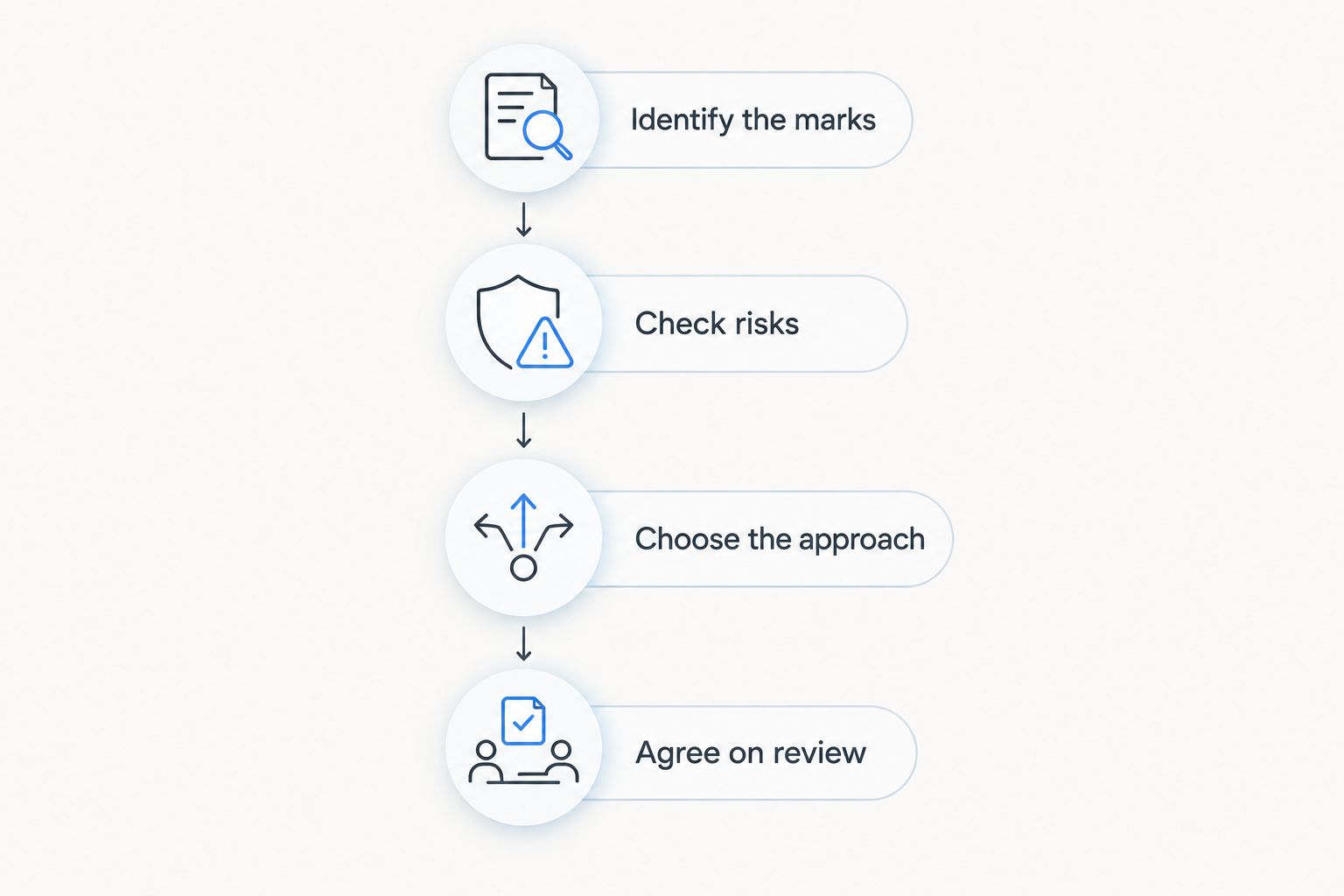
A useful consultation follows a sequence: identify the marks, check your risks, choose a justified approach, and agree on review. Do not begin with a prepaid series and work backward to the diagnosis.
Identify the marks
Explain when the marks appeared, whether they are changing, and whether rapid growth, pregnancy, weight changes, or medication use coincided with them. Unexplained or rapidly developing stretch marks deserve medical evaluation rather than an automatic cosmetic booking.
Check risks
Share your medication list and any history of poor wound healing, keloids, infections, or pigment changes after procedures. Mention pregnancy or breastfeeding before discussing an elective treatment; suitability requires an individual clinical decision.
Choose the approach
Ask the provider to distinguish the concern being treated: indentation, color contrast, loose skin, or a combination. These are different goals, and a procedure selected for one should not be presented as a guaranteed solution for all of them.
Agree on review
Set expectations for photographs, recovery instructions, and reassessment before proceeding. Your 2026 plan should explain when to pause for irritation or complications, not merely when to return for another appointment.
Recovery expectations that belong in the consultation
Redness and sensitivity are expected possibilities after microneedling, but recovery depends on the treatment and your skin. Get written instructions specific to the procedure instead of borrowing a facial aftercare routine for a body treatment.
- Ask when you can resume exercise, swimming, shaving, and products that irritate the treated area.
- Keep treated skin clean and follow the provider’s instructions about dressings or topical products.
- Use sun protection; the American Academy of Dermatology recommends broad-spectrum, water-resistant sunscreen with SPF 30 or higher.
- Ask which symptoms require urgent contact, including worsening pain, spreading redness, discharge, or blistering.
Do not choose needle depth from an online chart. Stretch marks on the abdomen, thighs, and breasts do not justify a universal home setting, and a deeper injury is not proof of a better treatment.
How these options are ranked
This 2026 ranking puts conventional professional microneedling first as the simplest core procedure to discuss, not as a guaranteed clinical winner. Radiofrequency and PRP require separate justification because each adds a distinct component to the decision.
Home devices rank last because convenience does not resolve diagnosis, treatment control, or complication management. No ranking replaces examination of your skin or establishes which service a particular provider performs.
Which microneedling approach should you choose?
Start with a professional assessment for conventional microneedling, then require a specific reason for every added treatment component. Choose the provider who explains limitations and alternatives, not the one who promises to erase stretch marks.
Ammonite Laser Spa offers microneedling, but that fact alone does not establish a stretch-mark protocol, a particular device, or suitability for your skin. Ask those questions directly before booking treatment.
Discuss your microneedling questions
Review the studio’s services, then ask about stretch-mark suitability and treatment limitations.
FAQ
What’s the best microneedling for stretch marks?
Professional conventional microneedling is the first approach to discuss in this guide, not a guaranteed winner for every patient. A qualified provider should assess your marks, skin, and medical history before recommending a procedure.
Can microneedling completely remove stretch marks?
Microneedling does not guarantee complete stretch-mark removal. Discuss improvement in texture or appearance rather than an expectation of unmarked skin.
Is radiofrequency microneedling better than regular microneedling?
Radiofrequency microneedling is not automatically better for stretch marks. It adds heat and thermal risks, so the provider should explain why that component is justified for your skin.
Does adding PRP guarantee better results?
Adding PRP does not guarantee a better stretch-mark result. Ask for an explanation of its expected additional benefit and whether the underlying microneedling plan remains appropriate without it.
How many microneedling sessions will I need?
Your session plan requires an individual assessment rather than a universal appointment count. Ask how the provider will review improvement and decide whether to continue, change, or stop treatment.
Can I use a home dermaroller on stretch marks?
This guide recommends skipping home needling for stretch-mark treatment. Incorrect use can injure skin or introduce infection, and a consumer device does not replace professional assessment.
Can darker skin tones receive microneedling?
Darker skin tones require an individualized assessment, not an automatic exclusion or an automatic promise of safety. Ask about the provider’s experience with your skin tone and the risk of post-inflammatory pigment changes.
Does Ammonite Laser Spa offer microneedling in Brooklyn?
Ammonite Laser Spa offers microneedling in Downtown Brooklyn. Ask directly whether the studio treats stretch marks and whether its approach fits your treatment area and medical history.
One last thing
Take baseline photographs under consistent lighting before judging improvement. A change in angle, posture, or shadow can make stretch-mark texture look different without proving that the skin changed; repeat the same setup when reviewing your 2026 results.