There is no established number of buccal facial sessions that guarantees results; choose follow-ups according to your goal, your response, and whether the benefit lasts long enough to matter to you. A temporary change in how your face feels or looks is not evidence of permanent slimming, and repeated appointments do not turn massage into structural facial reshaping.
- How many buccal facial sessions needed depends on your goal; no universal treatment count guarantees results.
- Ammonite Laser Spa offers buccal facial therapy in Downtown Brooklyn for clients seeking a local treatment option.
- Judge facial massage by comfort and repeatable changes, not promises of permanent cheek contouring.
- Schedule follow-ups after reviewing your response, rather than treating a package size as a clinical requirement.
Why this matters
A session count sounds like a clear answer, but it leaves out the question that determines whether treatment is worthwhile: what result are you expecting? Relaxation, a different-looking cheek contour, and relief from persistent jaw pain are not interchangeable goals.
For your 2026 treatment plan, separate a cosmetic service from medical or dental care before choosing a schedule. Ammonite Laser Spa offers buccal facial therapy in Downtown Brooklyn; the decision to repeat a treatment should follow an assessment of your goals and response, not an assumption that everyone needs the same course.
The right endpoint is a worthwhile, repeatable benefit—not finishing a predetermined package. Ask what the provider expects to change, how you will assess that change, and what would justify stopping.
How many buccal facial sessions are needed for results?
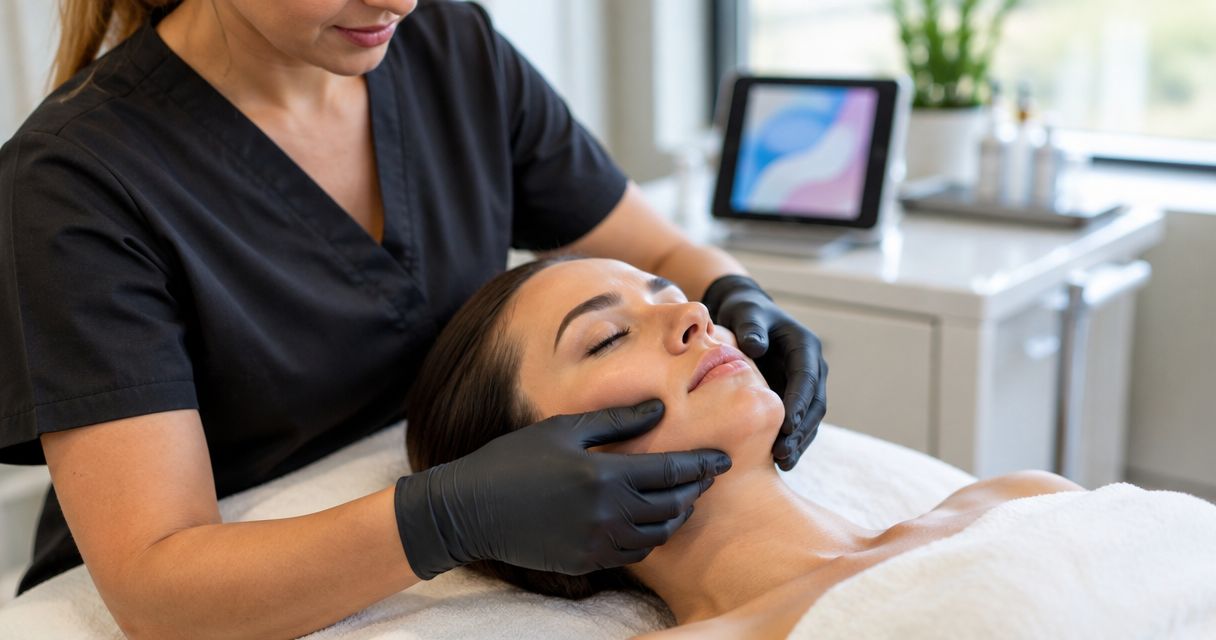
There is no standardized, evidence-established session count that applies to everyone. Buccal facial massage involves work around the cheeks, including an intraoral component, but a service name does not establish a validated treatment dose or a guaranteed cosmetic outcome.
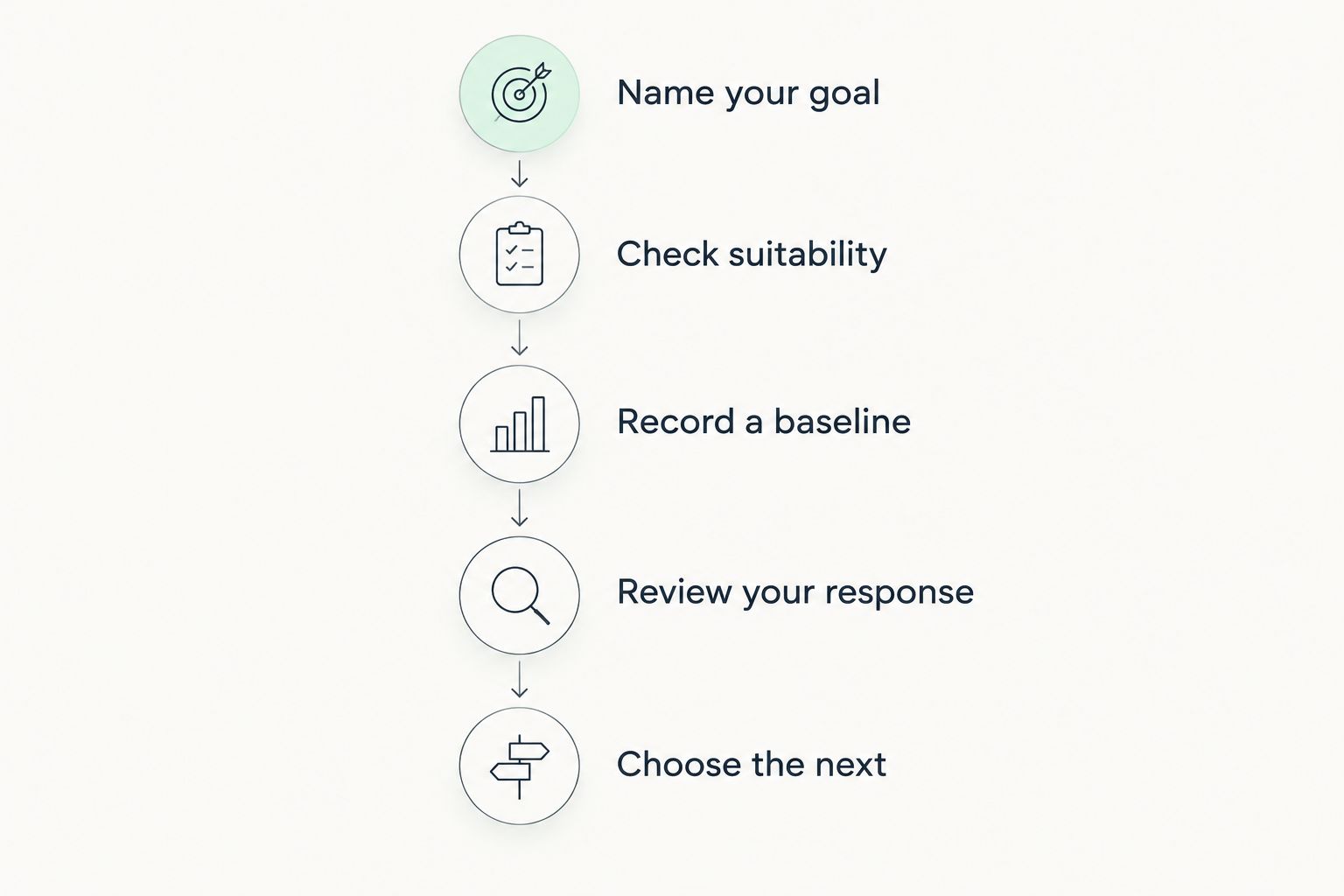
Use this sequence to decide whether another appointment makes sense:
- Name your goal. Describe the change you want without relying on words such as sculpted or lifted, which leave the endpoint unclear.
- Check suitability. Discuss oral health, skin concerns, recent procedures, medications, and any jaw symptoms before treatment.
- Record a baseline. Note how your face feels and, for a cosmetic goal, take photographs under consistent conditions.
- Review your response. Separate immediate impressions from changes that remain after you return to your usual routine.
- Choose the next step. Continue only when the benefit, comfort, and practical commitment make sense for you.
This approach gives you a reason for each follow-up. It also gives you a stopping rule if the treatment does not meet your expectations.
Match your session plan to your actual goal
The word results needs a definition before it can guide your schedule. Use the comparison below to distinguish a reasonable reason to explore treatment from an expectation that massage cannot substantiate.
| Goal | Best for | What to evaluate | Main limitation |
|---|---|---|---|
| Relaxation | People seeking a comfort-focused facial experience | Whether you enjoy treatment and feel comfortable afterward | Enjoyment does not establish a lasting cosmetic change |
| Cosmetic cheek definition | People willing to assess appearance without expecting permanent reshaping | Comparable photographs and whether any perceived change persists | Massage does not remove cheek fat or alter facial bones |
| Ongoing facial discomfort | People who need the cause of symptoms assessed | A qualified clinician's evaluation and advice | A cosmetic facial is not a diagnosis or a substitute for care |
| Event preparation | People who already know how they respond to the treatment | Predictability, comfort, and a realistic appearance goal | A deadline does not make an untried treatment predictable |
Choose the goal before choosing the frequency. A relaxing experience can be worthwhile without producing visible contour changes, but you should not be sold those outcomes as though they are the same.
Relaxation: let your experience guide repeat appointments
If relaxation is your priority, assess the treatment as a personal-care service rather than a course with a required finish line. Ask whether you felt comfortable during the intraoral work and whether the overall experience was something you would choose again.
There is no need to invent a visible transformation to justify enjoying a facial. Equally, you do not need to continue simply because someone describes consistency as essential without explaining what it is intended to achieve.
Cheek contouring: distinguish appearance from anatomy
Buccal massage and buccal fat removal are different procedures. Massage does not surgically remove fat, and repeated massage should not be presented as a substitute for that anatomical change.
If cheek definition is your goal, ask the provider to describe the expected effect without using permanent-slimming language. A photograph taken immediately afterward is not enough to establish how durable or meaningful a change will be.
Jaw symptoms: get the cause assessed first
Persistent pain, locking, difficulty opening your mouth, or unexplained swelling belongs in a medical or dental assessment. Do not use a facial-session package as a trial-and-error plan for symptoms that have not been evaluated.
A provider should distinguish a comfort-focused service from treatment for a diagnosed condition. If your main reason for booking is pain rather than cosmetic care, tell the provider before the appointment.
Why buccal facial session recommendations vary
Different recommendations do not automatically mean that a longer course is better. For a 2026 booking decision, ask the provider to connect the proposed schedule to these factors:
- Your intended outcome. Relaxation and a hoped-for appearance change need different ways of judging success.
- Your response to treatment. Comfort, irritation, soreness, and your own assessment matter more than a generic package description.
- How long the benefit matters to you. A short-lived experience and a sustained change offer different reasons to return.
- The treatment itself. Ask what the appointment includes, how pressure is adjusted, and whether other services are combined with the massage.
- Your health and procedure history. Oral problems, skin irritation, recent dental work, and recent cosmetic procedures need discussion before treatment.
These factors support an individualized conversation, not a precise session formula. A recommendation becomes useful when the provider explains how your response will change the plan.
Ask this directly: What would make you recommend fewer appointments—or no further appointments? A treatment plan should allow both answers.
How should you judge whether a session worked?
Choose your assessment method before treatment, especially if you are comparing photographs. Otherwise, an appealing image can replace the outcome you originally wanted.
For your 2026 progress record, use the same camera, lighting, head position, facial expression, and distance. Avoid comparing a close-up selfie with a professionally lit photograph, and keep filters out of the comparison.
Record appearance and comfort separately. Useful notes include:
- What you wanted to change before the appointment.
- What felt different immediately afterward.
- Whether that difference remained during your normal routine.
- Any discomfort or reaction you would not accept again.
- Whether you would repeat the appointment without a package commitment.
Do not treat tenderness as proof that the treatment was effective. Report discomfort, and ask for pressure to be adjusted or treatment to stop rather than trying to tolerate an experience that feels wrong.
The useful comparison is your baseline against your follow-up under similar conditions. Another person's results do not establish your likely outcome or your required schedule.
How often should you book buccal facial appointments?
There is no universal interval that guarantees better results. Ask for a proposed schedule only after discussing suitability, your goal, and how the provider will review your response.
Separate an initial appointment from a standing maintenance commitment. For a 2026 schedule, keep room to reconsider rather than assuming that recurring treatment is necessary indefinitely.
Before agreeing to repeat visits, ask:
- What specific benefit is the next appointment intended to provide?
- How will we decide whether the schedule is helping?
- What should I report before returning?
- What changes would mean postponing or stopping?
The question of frequency also depends on how long buccal facial results last. Do not confuse an appointment interval with proof that the treatment produces a lasting effect.
What should you ask a Downtown Brooklyn provider?
Ammonite Laser Spa is best suited to Downtown Brooklyn clients seeking local buccal facial therapy rather than permanent facial reshaping. Its location and service offering make it relevant to that search; they do not establish a guaranteed response or a required course length.
For a 2026 consultation, bring a plain-language description of your goal and disclose recent dental or cosmetic procedures. Ask how the provider handles intraoral hygiene, consent, pressure adjustments, and reasons to postpone treatment.
Ammonite Laser Spa offers personalized treatments, but personalization should still produce an understandable plan. You should leave knowing what the appointment is intended to do, what it is not intended to do, and how the decision about another visit will be made.
Discuss your buccal facial goals
Ask about suitability, expected outcomes, and how follow-up appointments are decided.
Can additional sessions make buccal facial results permanent?
There is no established session count that turns buccal massage into permanent facial reshaping. More appointments do not change the distinction between a manual treatment and a procedure that alters tissue or anatomy.
If permanent slimming is your deciding requirement, say so before booking. A provider should address that expectation directly rather than answering it with a larger package.
Should you book a course before trying the treatment?
There is no universal course length you need to purchase in advance. Ask for an assessment and an explanation of the treatment before committing to repeat appointments.
If a course is proposed, request a review point and a clear explanation of what happens if you dislike the experience or do not notice a worthwhile benefit. Read the provider's actual terms rather than assuming changes or cancellations are included.
FAQ
How many buccal facial sessions do I need before I see results?
There is no established session count that guarantees visible results. Define the change you want, assess your response, and decide on follow-ups only after reviewing whether the treatment meets that goal.
Can I notice a difference after my first buccal facial?
An immediate impression does not establish a lasting result. Assess comfort and appearance separately, and compare photographs under consistent conditions rather than relying only on an image taken immediately afterward.
Do I need weekly buccal facials?
There is no universal weekly schedule that guarantees better outcomes. Ask why a particular interval is recommended and what would justify changing or ending it.
Will repeated buccal facials permanently slim my face?
Repeated buccal facials do not remove cheek fat or reshape facial bones. Do not treat a massage course as equivalent to a procedure that changes facial anatomy.
Is a buccal facial the same as buccal fat removal?
No, buccal facial massage and buccal fat removal are different procedures. A buccal facial is a manual treatment, while buccal fat removal is surgery.
Should I book a buccal facial for jaw pain?
Persistent jaw pain needs medical or dental assessment rather than an assumed cosmetic-treatment schedule. Tell the provider about pain, locking, difficulty opening your mouth, or unexplained swelling before booking.
What should I tell my provider before a buccal facial?
Tell your provider about oral health concerns, skin irritation, medications, and recent dental or cosmetic procedures. Ask whether you need advice from your treating clinician before proceeding.
One last thing
Ask the provider to describe success without referring to the number of appointments. If the answer is only that you need to keep coming, you still do not have a treatment endpoint.
A useful plan explains when to stop as clearly as when to return. Keep that standard whether you are booking for relaxation, appearance, or an upcoming event.