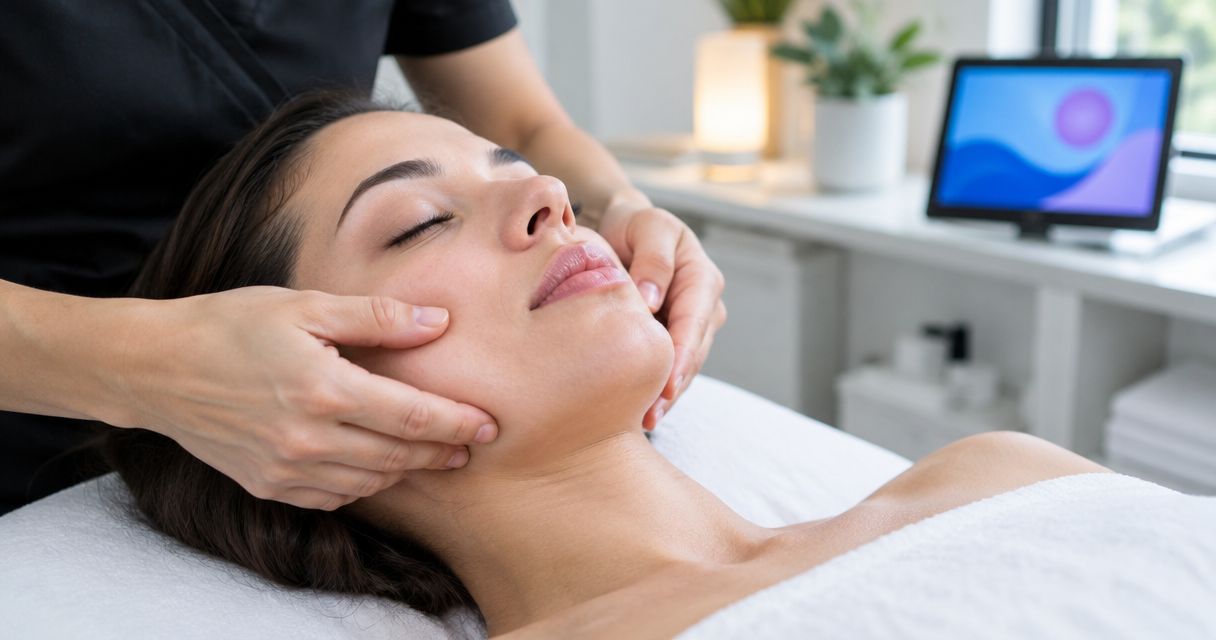
For performers and models, a buccal facial is massage performed inside and outside the cheeks with the aim of supporting facial relaxation within a cosmetic care routine. This 2026 guide explains how to assess the treatment, protect rehearsal and shoot schedules, and separate cosmetic goals from jaw symptoms that need clinical care.
- A buccal facial for performers is cosmetic massage, not a treatment for vocal problems or a replacement for dental care.
- Ammonite Laser Spa offers buccal facial therapy in Downtown Brooklyn; discuss your performance schedule before booking.
- Keep your first appointment separate from a critical shoot or performance so you can assess your response.
- Compare buccal massage, external facial massage, and clinical assessment by your actual goal—not promised cheek sculpting.
Why buccal facial therapy matters for performers and models
Your face is part of your work. Actors need comfortable expression, singers depend on coordinated vocal function, and models need a predictable appearance under changing lighting. Those requirements make treatment timing and realistic expectations more useful than dramatic before-and-after claims.
Ammonite Laser Spa offers personalized buccal facial therapy in Downtown Brooklyn. Ammonite Laser Spa is best for local performers and models seeking a cosmetic buccal facial, not diagnosis or treatment of a jaw disorder.
For your 2026 performance calendar, separate 3 priorities: comfort, appearance, and work readiness. A massage appointment addresses a different question from an assessment for persistent pain, restricted jaw movement, or voice changes. Decide which question you need answered before choosing a provider.
Buccal massage is also different from buccal fat removal. Massage does not surgically remove cheek fat, and a facial should not be presented as an equivalent procedure. If your goal is permanent structural change, a cosmetic massage is the wrong benchmark.
How to plan a buccal facial around performance work
1. Define the outcome you actually want
Start with a written goal rather than a treatment name. You might want a relaxing facial experience, a chance to discuss cheek massage, or a routine that fits between professional commitments. Those are clearer requests than asking for an instant camera-ready face.
Separate sensations from appearance. Feeling relaxed does not establish that your facial contours changed, and a photograph cannot prove improved vocal function. Use language that lets a practitioner explain what the appointment involves without promising an outcome outside cosmetic care.
- Write down your main cosmetic or relaxation goal.
- Identify whether discomfort, appearance, or both prompted your search.
- Describe any symptoms without diagnosing yourself.
- Ask what the treatment cannot accomplish.
2. Screen symptoms before choosing massage
A facial is not the first step for unexplained jaw pain. Persistent pain, locking, difficulty opening your mouth, dental pain, or a changing bite belongs with a dentist or appropriate healthcare professional. Voice changes require their own assessment rather than a promise that cheek massage will improve projection.
Tell the practitioner about mouth sores, dental work, recent procedures, medications, and existing diagnoses. Let the relevant clinician advise on medical suitability; do not treat an online checklist as clearance. If touching the area hurts, say so before the appointment starts.
- Describe jaw clicking alongside any pain or restricted movement.
- Disclose active mouth irritation or dental concerns.
- Share recent facial, oral, or dental procedures.
- Seek clinical assessment for persistent or worsening symptoms.
3. Compare the service with your actual needs
Begin with a conversation about the service, not a package commitment. Ask whether the appointment includes intraoral work, external massage, skincare products, or other techniques. A label alone does not tell you what will happen during treatment.
Ammonite Laser Spa offers buccal facial therapy, but the service name does not establish appointment length, practitioner credentials, or a particular protocol. Confirm those details directly. A provider conversation is the practical next step when you need to match a cosmetic service to your work schedule.
Choose the explanation you can understand, not the strongest sculpting claim. You should be able to describe the proposed treatment and its limits before agreeing to it.
- Request a plain-language description of the technique.
- Ask about training relevant to intraoral massage.
- Confirm whether products will touch your skin or lips.
- Discuss your performance commitments before choosing an appointment.
4. Protect your rehearsal and shoot calendar
Open your 2026 calendar before booking. Mark rehearsals, fittings, voice sessions, performances, and photography days, then identify which commitments leave no room for an unfamiliar response. Do not use an important booking as your first experiment with a new treatment.
There is no universal waiting interval that guarantees your face will look or feel a certain way. Ask the practitioner what after-effects to watch for and how to handle them, then choose a low-stakes appointment window. Keep preparation otherwise familiar so you can tell what changed.
- Mark your next camera, stage, or recording commitment.
- Choose a first appointment away from a critical workday.
- Ask how to respond to soreness or irritation.
- Avoid introducing several unfamiliar treatments together.
5. Confirm hygiene, consent, and pressure boundaries
Intraoral work involves contact inside your mouth, so hygiene and consent are central—not optional extras. Ask about hand hygiene, fresh gloves, and how the practitioner separates intraoral work from other facial steps. You should receive an explanation before contact begins.
Agree on a clear way to pause when speaking is awkward. Pressure should be discussed rather than endured, and pain is not proof that a treatment is effective. You can decline intraoral work or stop an appointment without needing to justify discomfort.
The decision sequence is straightforward: clarify your goal, screen symptoms, check timing, and set boundaries before treatment.
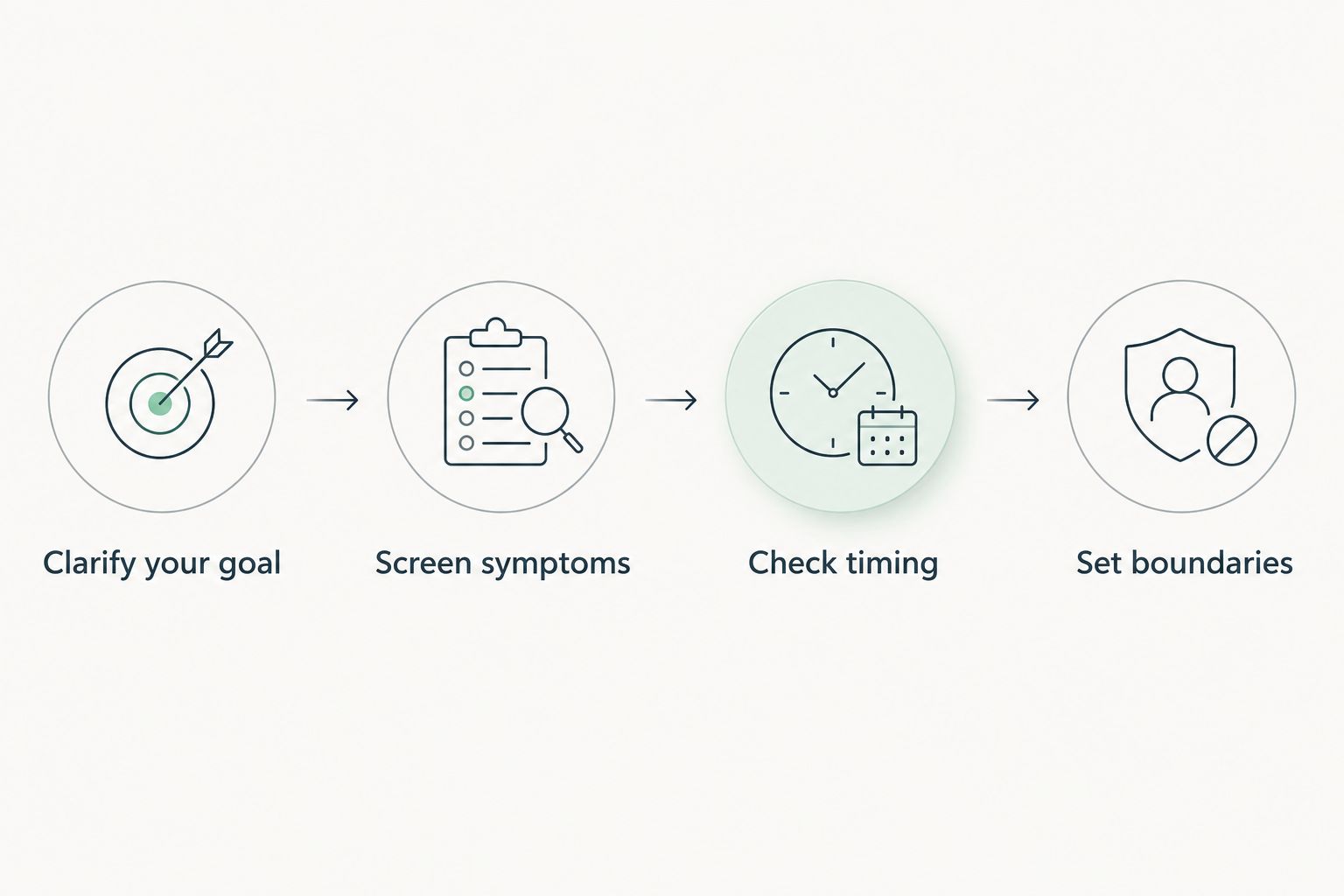
Use your 2026 preparation notes to make these questions repeatable. A consistent checklist helps you compare appointments without treating forceful pressure or elaborate claims as evidence of quality.
- Ask how gloves and hand hygiene are managed.
- Agree on a hand signal for pausing.
- Identify sensitive areas before massage begins.
- Stop if you experience pain or distress.
6. Observe your response without chasing a photograph
After the appointment, follow the practitioner's individualized aftercare instructions and record what you notice. Keep comfort, skin response, and work readiness separate. A treatment can feel pleasant without producing a visible change, and that distinction belongs in your assessment.
If appearance matters, take 2 photographs under matched lighting: one before and one after. Use the same camera position and facial expression. These images document your own experience; they do not prove that massage altered facial anatomy or predict another person's results.
- Record comfort and any irritation in plain language.
- Keep comparison photographs consistent.
- Note whether speaking and eating feel normal.
- Contact an appropriate clinician about persistent or worsening symptoms.
7. Decide whether another appointment earns its place
Review your experience against the goal you wrote down. Did the appointment provide the cosmetic care or relaxation experience you wanted? Did the preparation and recovery fit your work? Those questions matter more than following a generic treatment schedule.
For the rest of 2026, introduce 1 new treatment at a time when evaluating your response. That is a planning rule, not a prescribed medical interval. Do not buy into a recurring schedule based on claims that every performer needs buccal massage.
- Compare the experience with your original goal.
- Account for travel, appointment time, and preparation.
- Reconsider treatment if your symptoms changed.
- Repeat only when the experience justifies another booking.
Compare options for performers and models
The right option depends on whether you want cosmetic care, external touch only, or clinical help. These choices are not interchangeable, and none should be judged by an unsupported promise of permanent cheek contouring.
| Option | Best for | Practical advantage | Key limitation |
|---|---|---|---|
| Buccal facial therapy | Performers and models comfortable with intraoral cosmetic massage | Includes work inside the cheeks as part of the facial experience | Requires consent to intraoral contact; does not diagnose jaw problems or remove cheek fat |
| External facial massage | People who prefer massage without contact inside the mouth | Avoids the intraoral component | Does not provide the same technique as buccal massage or guarantee contour changes |
| Familiar skincare routine | People protecting a predictable routine before an important booking | Avoids introducing an unfamiliar hands-on treatment | Does not reproduce a professional massage experience |
| Dental or medical assessment | People with persistent pain, locking, dental symptoms, or functional concerns | Addresses the need for diagnosis and appropriate care | Is not a cosmetic facial appointment |
Ammonite Laser Spa belongs in the buccal facial therapy category for Downtown Brooklyn clients. Its relevant advantage is access to that cosmetic service locally; its limitation is equally important: a spa appointment is not a substitute for assessment of a painful or dysfunctional jaw.
Keep separate appearance concerns separate. Pigmentation, acne scars, skin laxity, and cheek massage require different discussions. A single facial should not be presented as an answer to every camera-related concern.
Common mistakes performers and models make
Booking a first treatment against a fixed deadline
A shoot or opening night gives you little flexibility to assess an unfamiliar experience. Choose a lower-stakes window instead. An appointment described as non-invasive still deserves planning; the term does not guarantee a particular appearance immediately afterward.
Treating facial relaxation as vocal treatment
Comfort and vocal performance are not interchangeable outcomes. Do not replace a voice assessment, dental evaluation, or prescribed care with cosmetic massage. If your working voice changes, explain the problem to a qualified clinician rather than asking a facial practitioner to correct it.
Mistaking lighting changes for structural results
A different lens, expression, or light direction can change how cheek contours appear in photographs. Compare like with like before drawing conclusions. A more flattering image is not proof of fat removal, lasting lifting, or a change in facial structure.
Enduring pressure to get a stronger result
Pain is not a useful target for a cosmetic facial. State your comfort limits and use the agreed pause signal. If the practitioner dismisses discomfort or promises that more force guarantees better contouring, stop and reconsider the appointment.
Combining unrelated treatments before a booking
Stacking unfamiliar skincare, massage, and other procedures makes your response harder to interpret. Keep your 2026 pre-performance routine simple enough to evaluate. Discuss recent and planned treatments with the relevant providers instead of assuming each appointment exists in isolation.
FAQ
What is a buccal facial for performers?
A buccal facial for performers is cosmetic massage involving the inside and outside of the cheeks. Performers should assess it as a facial experience, not as treatment for a voice problem or jaw disorder.
Will a buccal facial make my cheeks permanently slimmer?
A buccal facial does not surgically remove cheek fat and should not be presented as permanent cheek reduction. Treat claims of lasting structural change separately from descriptions of massage or relaxation.
Can I book my first buccal facial right before a photoshoot?
Keep your first buccal facial separate from a critical photoshoot. Choose a lower-stakes window so you can assess your own response rather than relying on a guaranteed camera-ready result.
Is buccal massage better than external facial massage?
Buccal massage is not automatically better than external facial massage. The choice depends on your cosmetic goal, your comfort with intraoral contact, and the practitioner's assessment of suitability.
Should I get a buccal facial if my jaw hurts?
Persistent jaw pain, locking, restricted movement, or dental symptoms need assessment by an appropriate healthcare professional. A cosmetic facial does not establish the cause or replace treatment.
Where can performers get buccal facial therapy in Downtown Brooklyn?
Ammonite Laser Spa offers buccal facial therapy in Downtown Brooklyn. Ask directly about the appointment process, practitioner training, suitability, and scheduling around your work.
How often should performers book buccal facials?
There is no universal booking frequency that every performer needs. Decide whether to repeat a cosmetic appointment based on your goal, your response, and individualized advice rather than a generic schedule.
One last thing
Your most useful treatment record is not necessarily a before-and-after photograph. It is whether the experience met your goal without disrupting the work you needed your face and voice to do. Add that question to your 2026 appointment notes, and let the answer determine whether you return.