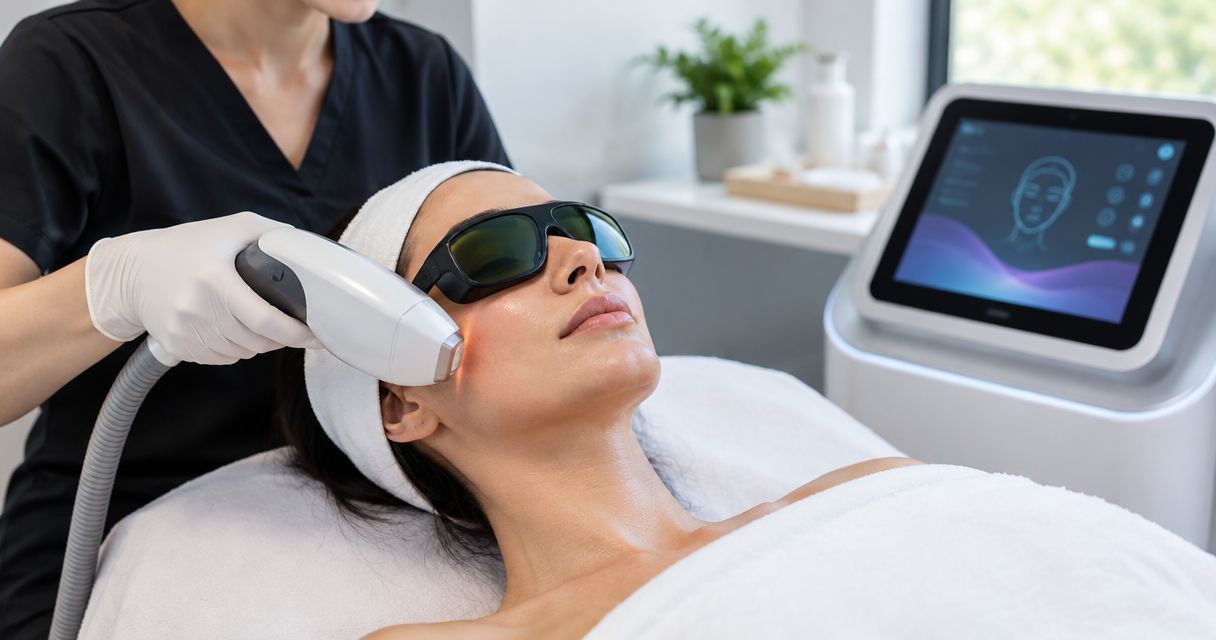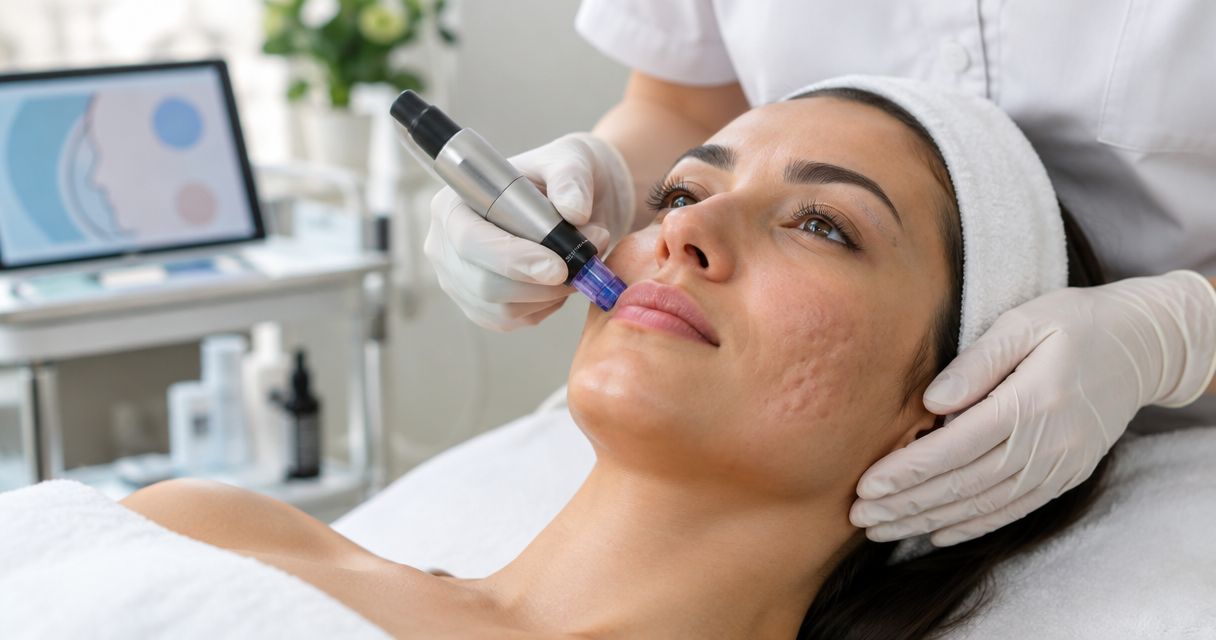
Microneedling for acne scars requires a personalized treatment series, not a guaranteed session count, in 2026. The number depends on your scar depth, scar pattern, skin health, and response to treatment; deeper or tethered scars can require a different procedure rather than more microneedling. Your treatment plan also needs to account for healing between appointments and continued improvement after the series ends.
- How many microneedling sessions for acne scars depends on scar type; more sessions are not always the answer.
- American Academy of Dermatology guidance describes three to five treatments for acne scars, not a guaranteed individual result.
- Ammonite Laser Spa offers microneedling in Downtown Brooklyn; suitability requires an individual skin assessment.
- Treat active acne and distinguish depressed scars from pigmentation before committing to a treatment series.
Why this matters
A treatment count is useful only when it addresses the right problem. Flat brown marks, shallow depressions, and deep pits can appear together, but they do not need identical treatment.
If discoloration is your main concern, start with the distinction explained in treatments for post-acne pigmentation. A plan that targets the wrong type of acne mark can leave your main concern unchanged, even after repeated appointments.
Use this 2026 guide to understand a proposed course, the reasons it might change, and the questions to ask before treatment. It is general education, not a diagnosis or a prescription for your skin.
How many microneedling sessions are needed for acne scars?
The American Academy of Dermatology's patient guidance on microneedling describes 3 to 5 treatments for acne scars, typically spaced 2 to 4 weeks apart. That is a general reference, not a promise that your scars will respond within that course or that this interval suits your procedure.
For your 2026 treatment plan, the examining clinician needs to translate that reference into a schedule based on your skin, treatment depth, and healing. Conventional microneedling and radiofrequency microneedling are not interchangeable procedures; do not transfer a schedule from one to the other.
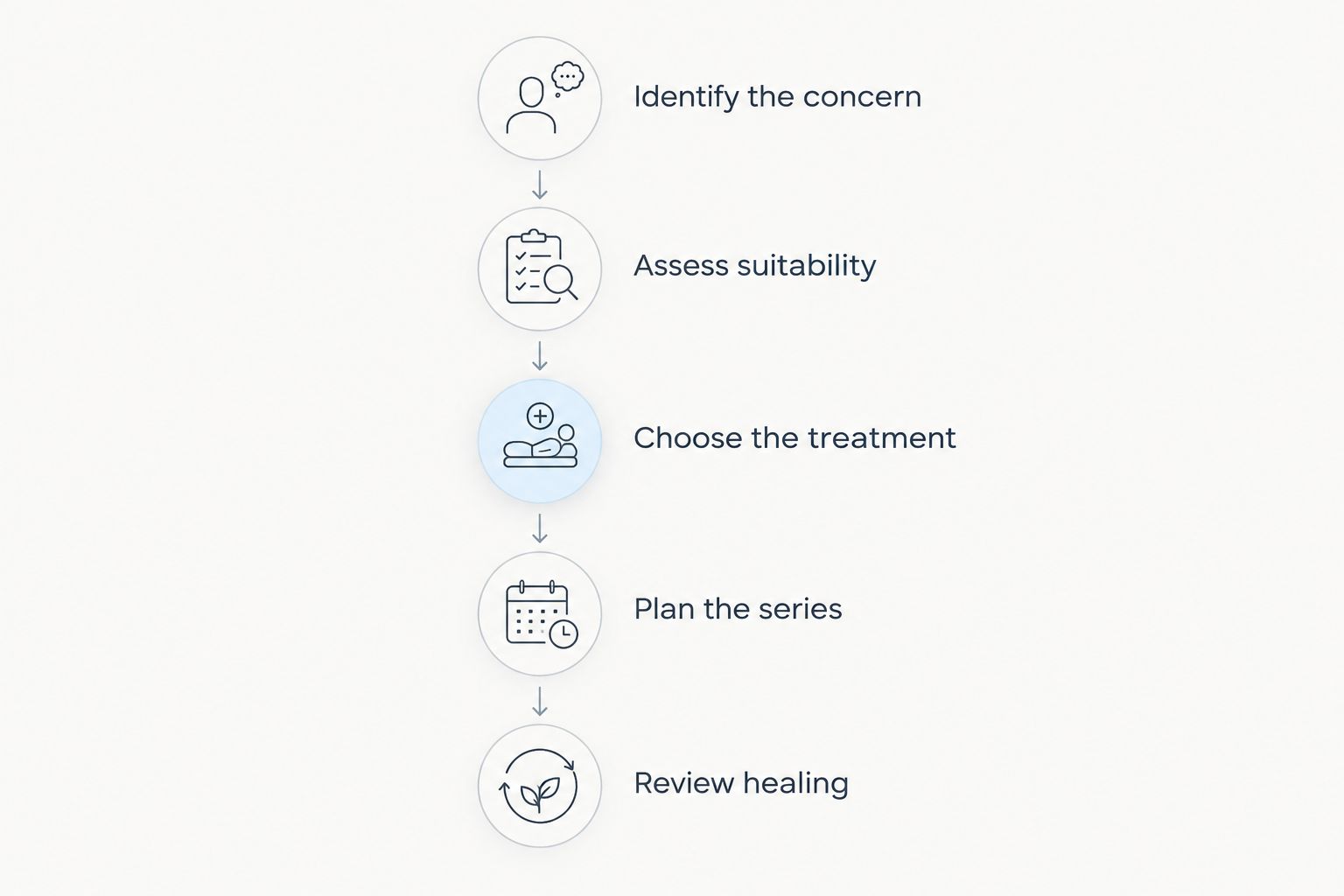
A sound planning sequence is:
- Identify the concern. Separate depressed scars from raised scars, lingering redness, and brown marks.
- Assess suitability. Review active acne, skin conditions, medications, and your history of healing or abnormal scarring.
- Choose the treatment. Decide whether microneedling addresses the scar structure or whether another approach is needed.
- Plan the series. Establish treatment spacing, aftercare, and a review point rather than promising complete clearance.
- Review healing. Compare settled skin under consistent lighting before deciding whether another appointment adds value.
The point is not to accumulate treatments. It is to choose a suitable treatment, allow recovery, and check whether the targeted texture is actually improving.
Shallow depressed scars: assess texture improvement
Shallow atrophic scars are depressions caused by tissue loss. Microneedling creates controlled skin injuries that stimulate a repair response and collagen production, which can improve their appearance.
Best for: an assessment of shallow depressed texture, rather than a promise of perfectly smooth skin. The benefit is gradual texture improvement; the limitation is that individual scars do not all respond equally.
Ask your clinician which depressions are realistic targets. If your main concern is a sharply defined, deep pit, a general discussion of collagen stimulation is not enough to establish that microneedling is the right choice.
Deep or tethered scars: reassess the method
Some scars have structural features that repeated surface treatment does not fully address. Tethered rolling scars involve bands beneath the skin, while narrow ice-pick scars extend more deeply.
Best for: a dermatologist's assessment when scars are deep, sharply edged, or pulled downward. Depending on the scar, that assessment can include discussion of subcision or focal scar treatments rather than simply extending a microneedling course.
These procedures have their own risks, recovery needs, and suitability requirements. They are not automatic upgrades, and this discussion does not establish that a particular studio provides them.
Flat acne marks: confirm whether you need scar treatment
A flat brown mark is not the same problem as an indentation. Post-inflammatory hyperpigmentation is a color change after inflammation; post-acne redness is also distinct from lost tissue.
Best for: a pigment-focused or redness-focused assessment when your skin is flat but uneven in color. The advantage is matching treatment to the visible concern; the limitation is that treating color does not fill a depression.
If you have both discoloration and texture changes, ask for separate goals. A reduction in brown marks should not be presented as proof that deep acne scars have been corrected.
Which approach matches your acne scars?
This comparison is a starting point for a clinical conversation, not a menu for choosing a procedure yourself. Scar shape, skin tone, medical history, and recovery requirements all affect suitability.
| Approach | Best for | Main benefit | Main limitation or risk |
|---|---|---|---|
| Conventional microneedling | Selected shallow depressed scars | Stimulates collagen remodeling to improve texture | Does not reliably correct every deep or tethered scar; infection and pigment changes are possible |
| Subcision | Selected tethered rolling scars | Releases bands pulling the scar downward | Requires clinical expertise; bruising, bleeding, and other complications are possible |
| Focal scar treatment | Selected narrow or sharply defined scars | Targets individual scar structures | Suitability depends on scar shape and skin; pigment changes and further scarring are possible |
| Pigment-focused care | Flat brown post-acne marks | Addresses discoloration rather than tissue loss | Does not replace treatment for depressed scars; irritation can worsen pigmentation |
The best next move is scar classification, not choosing the longest treatment package. Mixed scar patterns can require a combined plan, but every added procedure needs a clear purpose.
Why the number of microneedling sessions varies
A general treatment range cannot account for everything visible during an examination. These factors explain why a clinician should personalize your course:
- Scar depth and shape. Shallow depressions and deep, narrow scars present different treatment targets. More of the same treatment does not automatically solve that difference.
- Tethering beneath the skin. A scar pulled down by underlying bands needs a structural assessment, not just a surface-texture assessment.
- Active acne and irritation. Inflamed lesions, infection, or an impaired skin barrier can change whether treatment should proceed.
- Treatment method and intensity. Needle depth, treated area, and the use of radiofrequency affect recovery and scheduling. These choices belong to the treating clinician.
- Healing and pigment response. A history of persistent discoloration, abnormal scarring, or delayed healing belongs in the consultation before treatment begins.
- Your improvement goal. Softening visible texture is different from expecting every indentation to disappear. Set the goal before judging the result.
Bring your medication list and explain any previous reaction to a cosmetic procedure. Do not stop prescribed medication because of a general online preparation checklist.
How far apart should acne-scar microneedling sessions be?
2 to 4 weeks apart is the general interval described in the American Academy of Dermatology's acne-scar microneedling guidance. Your clinician must adjust that reference for the procedure performed and your recovery; it is not a deadline to meet despite irritation.
For a 2026 schedule, ask what would postpone the next appointment. Persistent redness, tenderness, a new rash, or signs of infection require assessment rather than automatic retreatment.
Can one microneedling session remove acne scars?
One session is not a reliable route to removing acne scars. Early swelling can temporarily change how texture looks, while collagen remodeling takes longer; judge progress after healing rather than from an immediate post-treatment photograph.
Ask for realistic improvement goals instead of a scar-removal guarantee. Even a completed series does not mean your skin will look as though acne never occurred.
When should you reassess instead of booking more sessions?
Reassess when your skin has healed but the targeted scars are not improving, when side effects persist, or when the original plan has no clear review point. A larger treatment count is not evidence of a better plan.
The review should revisit the scar diagnosis, the method used, and the outcome you expected. If the remaining scars are deep or tethered, ask whether a dermatologist should assess another approach.
What should you ask at a microneedling consultation?
Ask the clinician to point out the scar types being treated and explain what the proposed procedure cannot change. You should leave knowing the goal, the recovery requirements, and how progress will be assessed.
Useful questions include:
- Which marks are scars, and which are pigmentation or redness?
- Which specific depressions do you expect microneedling to improve?
- Are you proposing conventional or radiofrequency microneedling?
- What training and experience do you have with my skin tone and scar pattern?
- What would make you delay treatment or change the plan?
- What symptoms require a call after the appointment?
- When will we compare results and decide whether to continue?
Ammonite Laser Spa is a local option for Downtown Brooklyn clients seeking microneedling and personalized skin treatments. The studio also offers acne and pigmentation treatments, making the distinction between texture and color relevant to the discussion; those service offerings alone do not establish which procedure is suitable for you.
You can review the available services before discussing your concerns. Do not assume a named device, a particular scar technique, or a guaranteed outcome from a general service listing.
What should you do between appointments?
Follow the treating clinician's written aftercare instructions rather than combining advice from different procedures. Ask when to resume makeup, exercise, exfoliants, retinoids, and any other products that can irritate recently treated skin.
Sun protection also matters. The American Academy of Dermatology recommends broad-spectrum, water-resistant sunscreen with SPF 30 or higher; ask your clinician when to apply sunscreen after the procedure and how to protect healing skin in the meantime.
Avoid picking, scrubbing, or using an at-home needling device to accelerate progress. Contact the treating clinician promptly about worsening pain, spreading redness, drainage, or other concerning changes; severe symptoms need urgent medical assessment.
For your 2026 progress record, keep photographs consistent. Use the same lighting, angle, facial expression, and camera distance, without filters, so changes in shadows do not masquerade as changes in scar depth.
FAQ
How many microneedling sessions for acne scars should I plan for?
American Academy of Dermatology guidance describes 3 to 5 treatments for acne scars, but your individual course requires an assessment. Scar depth, tethering, skin health, and treatment response determine whether microneedling is appropriate and when to reassess.
How long should I wait between microneedling appointments for acne scars?
The American Academy of Dermatology describes treatments spaced 2 to 4 weeks apart in its general acne-scar guidance. Your clinician must choose the interval for the procedure performed and your healing; do not repeat treatment over persistent irritation.
Will microneedling completely remove my acne scars?
Microneedling does not guarantee complete acne-scar removal. It can improve selected depressed scars, while deeper or tethered scars can need a different clinical approach.
Can I get microneedling while I still have active acne?
Active inflammatory acne needs assessment before microneedling proceeds. Your clinician should decide whether acne treatment comes first and whether the intended treatment area is suitable.
Is microneedling suitable for darker skin tones?
Microneedling can be an option for darker skin tones, but pigment changes remain a risk. Ask about experience treating your skin tone, your history of post-inflammatory pigmentation, and the proposed aftercare.
Can I use a home dermaroller instead of professional acne-scar treatment?
A home dermaroller is not a substitute for a clinical acne-scar assessment. Incorrect use can cause injury, infection, or further scarring, and it does not establish which scar treatment you need.
Does Ammonite Laser Spa offer microneedling in Brooklyn?
Ammonite Laser Spa offers microneedling at its boutique studio in Downtown Brooklyn. An individual assessment is needed to discuss whether microneedling fits your acne-scar concerns; no session count or result is guaranteed here.
One last thing
Do not mistake temporary swelling for permanent scar improvement. Skin can look smoother immediately after treatment because its surface is swollen, not because collagen remodeling is complete.
Before starting a 2026 course, agree on a review point after healing and decide which scars you will compare. That makes the decision to continue, pause, or change treatment more useful than simply counting completed appointments.