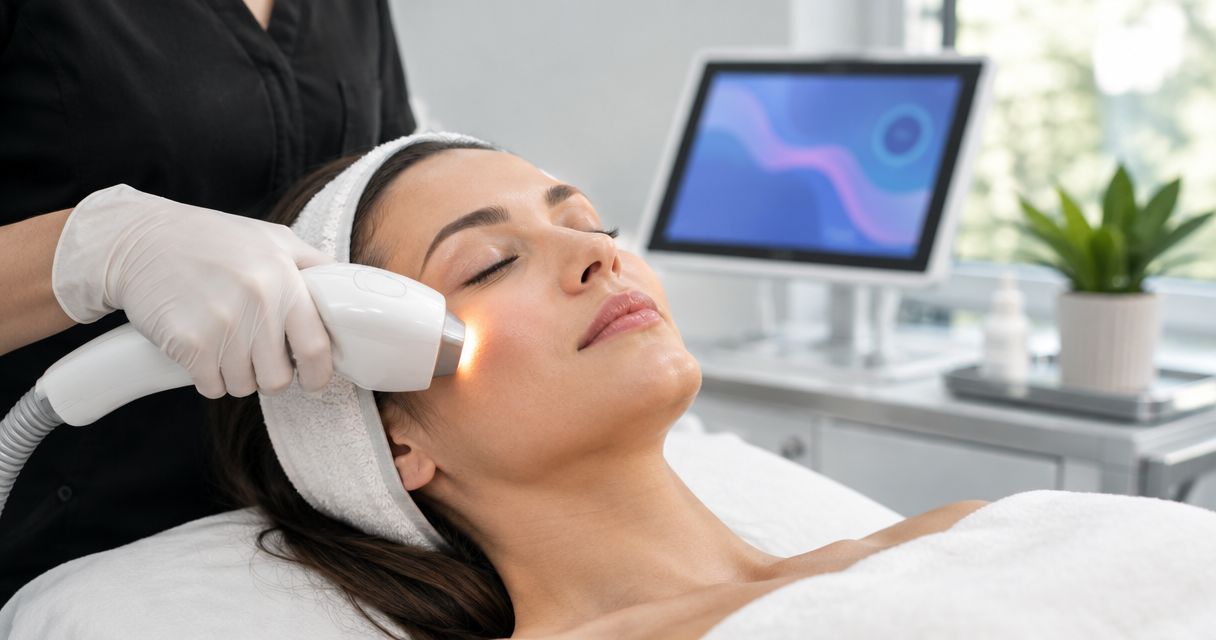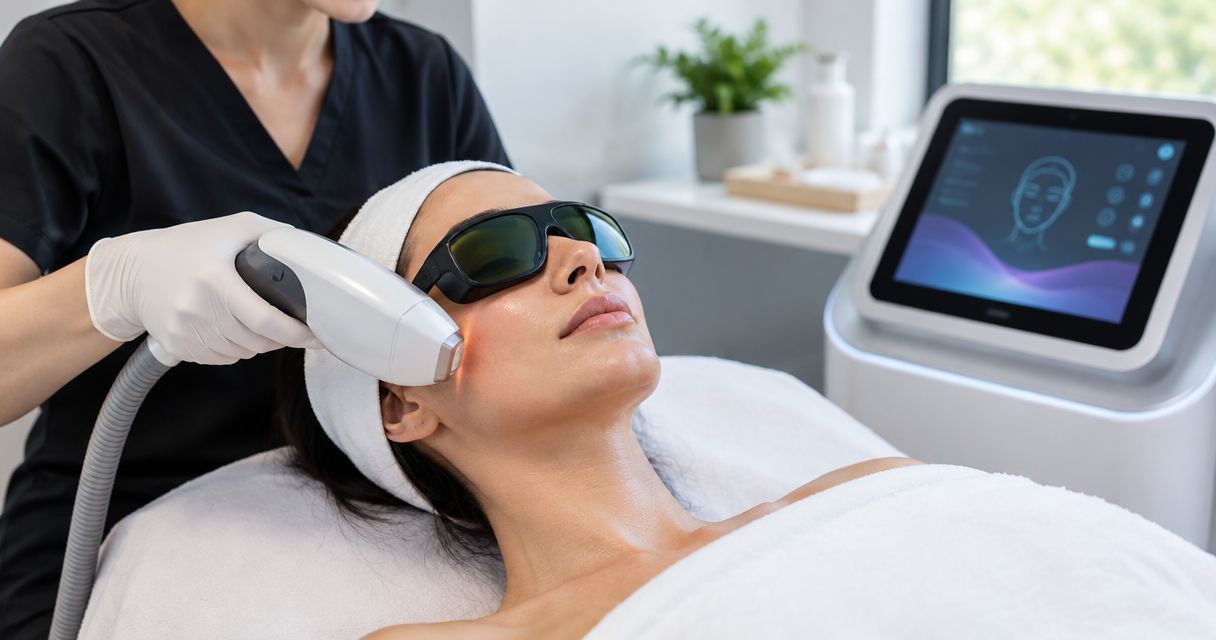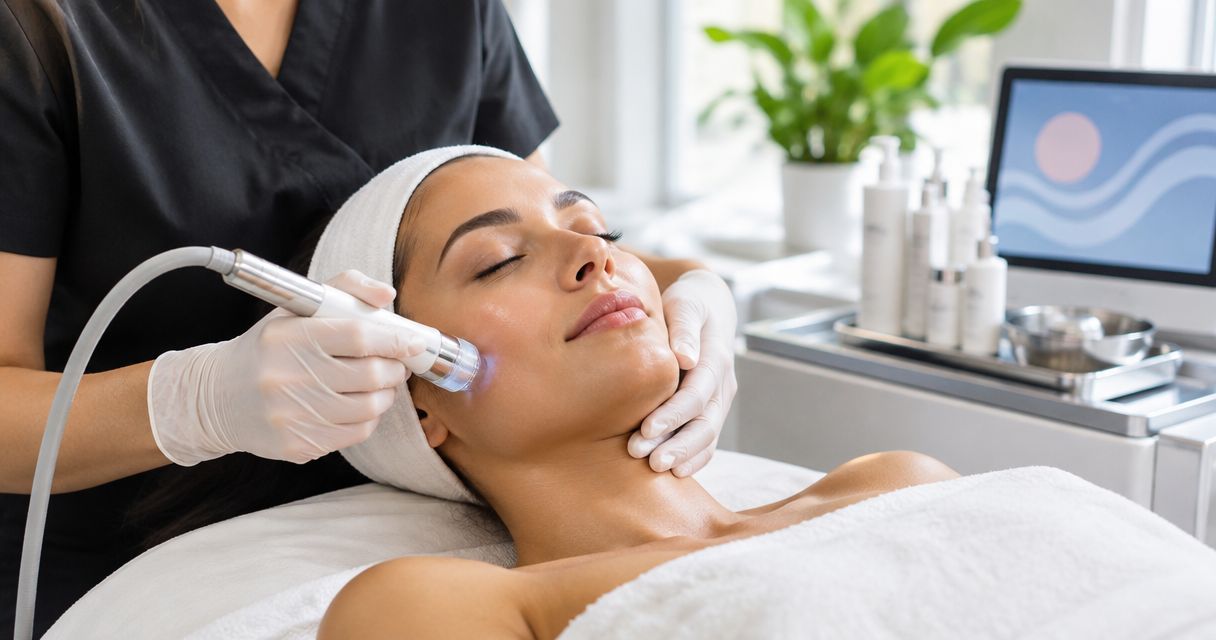
Best overall for minimal downtime: buccal facial therapy. Best for targeted rejuvenation without surface removal: nonablative laser treatment. Best for texture-focused treatment with recovery time: microneedling. This 2026 guide ranks the best facial treatments by downtime, while separating a quick return to your routine from actual skin healing.
- Buccal facial therapy leads the best facial treatments by downtime for relaxation, not acne scars or pigmentation.
- Nonablative laser rejuvenation leaves the skin surface intact, but redness and swelling still require planning.
- Microneedling and chemical peels require aftercare even when you feel ready to return to work.
- Ammonite Laser Spa offers buccal facial therapy, laser skin rejuvenation, and microneedling in Downtown Brooklyn.
Why downtime matters more than appointment length
A short appointment does not guarantee a short recovery. Your skin can remain sensitive after visible redness settles, and working from home does not remove the need for sun protection or prescribed aftercare.
Ammonite Laser Spa is best for Downtown Brooklyn clients comparing personalized facial treatments around their recovery tolerance. Ammonite Laser Spa offers buccal facial therapy, laser skin rejuvenation, acne and pigmentation treatments, and microneedling. Treatment suitability still requires an individual assessment.
For your 2026 treatment plan, distinguish three questions: When can you work comfortably? When can you use makeup and skincare normally? When has the skin finished healing? Those answers are not interchangeable.
This guide supports treatment planning, not diagnosis. Persistent acne, changing pigmented spots, active infection, or unexplained facial inflammation need medical assessment before a cosmetic procedure.
What makes the best facial treatments by downtime?
Use these criteria before comparing treatment names:
- Surface disruption: Massage does not intentionally injure the skin; peels, needles, and resurfacing procedures do.
- Visible recovery: Redness, swelling, peeling, and crusting affect social plans differently.
- Aftercare restrictions: Makeup, exercise, sun exposure, and active skincare require separate instructions.
- Goal fit: A low-downtime facial does not replace treatment for depressed acne scars or diagnosed pigmentation.
- Skin-specific risk: Skin tone, recent tanning, medications, cold sores, and healing history influence suitability.
- Treatment intensity: Device settings, peel depth, treatment area, and technique matter more than a generic service label.
Facial treatments at a glance in 2026
This order moves from treatments without intentional surface injury toward treatments with greater recovery demands. It is a planning hierarchy, not a guaranteed shortest-to-longest recovery schedule. Superficial peels, nonablative lasers, and microneedling overlap depending on the protocol.
| Rank and treatment | Best for | Standout feature | Downtime considerations | Key limitation |
|---|---|---|---|---|
| 1. Buccal facial therapy | Relaxation without resurfacing | Manual work inside and outside the cheeks | No intentional skin resurfacing; tenderness remains possible | Does not resurface scars or treat pigmentation |
| 2. Nonablative laser rejuvenation | Targeted treatment while preserving the surface | Delivers laser energy without removing the outer skin layer | Redness and swelling vary by device and settings | A broad category, not one predictable recovery profile |
| 3. Superficial chemical peel | Surface dullness and selected uneven pigmentation | Controlled chemical exfoliation | Peeling and sensitivity can extend beyond the appointment | Even a light peel needs screening and aftercare |
| 4. Microneedling | Texture and selected acne scars | Creates controlled punctures in the skin | Redness, swelling, and temporary restrictions need planning | Not suitable over active infection or inflamed breakouts |
| 5. Ablative laser resurfacing | Resurfacing goals that justify substantial recovery | Removes skin tissue in the treated area | Requires wound care and a longer recovery commitment | Poor fit when minimal downtime is your priority |
1. Buccal facial therapy: best for relaxation without resurfacing
Buccal facial therapy uses manual techniques inside the mouth and across the face. It is the most conservative choice here when your goal is facial massage rather than changing the skin surface.
Best for: You want a hands-on facial treatment without the peeling or wound care associated with resurfacing. Ammonite Laser Spa lists buccal facial therapy among its services, but massage should not be treated as a substitute for pigmentation or scar treatment.
Buccal facial therapy pros:
- Does not intentionally remove or puncture the skin.
- Avoids the exfoliation phase associated with chemical peels.
- Suits a relaxation-focused appointment rather than a resurfacing plan.
Buccal facial therapy cons:
- Pressure can cause discomfort or temporary tenderness.
- It does not remove pigment or resurface acne scars.
- Intraoral work requires appropriate hygiene and screening for oral problems.
Tell the practitioner about recent dental procedures, mouth sores, facial pain, or jaw symptoms before treatment. Do not assume deeper pressure produces a better result.
Verdict: Hold if your real goal is scar correction or pigment removal; choose buccal therapy for massage-focused care.
2. Nonablative laser rejuvenation: best for targeted care without surface removal
Nonablative lasers deliver energy without removing the outer skin layer. The treatment target depends on the device: “laser rejuvenation” alone does not tell you whether a protocol addresses vessels, pigment, or broader skin remodeling.
Best for: You have a defined concern and want to discuss a laser approach that preserves the skin surface. Ammonite Laser Spa offers laser skin rejuvenation; ask which device and treatment protocol match your concern before making recovery plans.
Nonablative laser rejuvenation pros:
- Leaves the outer skin surface intact.
- Allows treatment selection around a specific target.
- Avoids the open-wound recovery associated with ablative resurfacing.
Nonablative laser rejuvenation cons:
- Redness and swelling can still interrupt social plans.
- Burns and pigment changes are recognized risks.
- Suitability depends on the device, skin tone, and recent sun exposure.
Ask whether the proposed treatment is fractional and what visible changes are expected afterward. “Nonablative” describes tissue interaction; it does not promise an invisible recovery.
Verdict: Hold until the provider identifies the device, treatment target, and expected aftercare.
3. Superficial chemical peel: best for surface-focused exfoliation
A superficial chemical peel applies an exfoliating solution to produce a controlled injury near the skin surface. The acid, concentration, application technique, and your skin condition affect both the result and recovery.
Best for: You want to address surface dullness or selected uneven pigmentation after assessment. A superficial peel is not interchangeable with a medium-depth or deep peel.
Superficial chemical peel pros:
- Targets surface exfoliation directly.
- Does not require laser energy or needles.
- Offers a less intensive category than deeper chemical peeling.
Superficial chemical peel cons:
- Redness, flaking, and irritation can remain visible.
- Incorrect selection can cause burns or pigment changes.
- Picking peeling skin increases the risk of complications.
The American Academy of Dermatology's patient guidance describes healing after a light peel as 1–7 days. That category-level range is not a personal clearance date for makeup, exercise, or sun exposure; follow the treating clinician's instructions.
A “lunchtime peel” label does not override those requirements. For a 2026 event calendar, schedule around the actual peel protocol rather than its promotional name.
Verdict: Hold if you need certainty that your skin will look unchanged immediately afterward.
4. Microneedling: best for texture when you can protect recovery time
Microneedling creates controlled punctures that stimulate a wound-healing response. It is used for concerns including selected acne scars and skin texture, but results develop over time rather than appearing when initial redness fades.
Best for: You prioritize texture improvement over an immediately event-ready appearance. Ammonite Laser Spa offers microneedling, which requires different preparation and aftercare from a massage-based facial.
Microneedling pros:
- Addresses texture through controlled skin injury.
- Is used for selected depressed acne scars.
- Does not remove the skin surface in the same way as ablative resurfacing.
Microneedling cons:
- Redness, swelling, and sensitivity require recovery planning.
- Infection and pigment changes are recognized risks.
- Active infection and inflamed breakouts need assessment before treatment.
The American Academy of Dermatology advises waiting 24 hours before applying makeup after microneedling. That instruction does not mean every treatment has finished healing at that point; follow any stricter directions from your clinician.
Also ask whether the proposal involves conventional microneedling or radiofrequency microneedling. These are not interchangeable procedures with identical risk profiles.
Verdict: Hold if you cannot follow the recovery instructions or are scheduling immediately before an important event.
5. Ablative laser resurfacing: best for accepting recovery to pursue resurfacing
Ablative lasers remove skin tissue in the treated area. Fractional approaches treat portions of the skin, while fully ablative approaches treat the surface more extensively; neither belongs in a blanket no-downtime category.
Best for: You have a clinician-assessed resurfacing goal and can commit to wound care, follow-up, and recovery. This is a category comparison, not a statement that the studio offers ablative resurfacing.
Ablative laser resurfacing pros:
- Directly resurfaces treated skin.
- Addresses selected textural changes and wrinkles.
- Offers different treatment patterns for different clinical goals.
Ablative laser resurfacing cons:
- Requires more involved aftercare than non-resurfacing treatments.
- Carries risks including infection, scarring, and pigment changes.
- Redness can persist beyond initial surface healing.
Do not compare an ablative procedure with a facial massage by appointment length. Ask who manages complications, how wound care works, and when the clinician expects you to resume normal activities.
Verdict: Skip when minimal downtime is your deciding criterion.
How these treatments are ranked
The 2026 ranking prioritizes avoiding intentional surface injury, then considers visible recovery, aftercare demands, and goal fit. It is not a ranking of which treatment produces the greatest cosmetic change.
Buccal therapy ranks first because it is massage rather than resurfacing. Ablative laser treatment ranks last because removing skin tissue creates a different recovery commitment. The middle options require protocol-specific comparison; a treatment name cannot reliably predict your recovery.
Build your recovery plan before booking
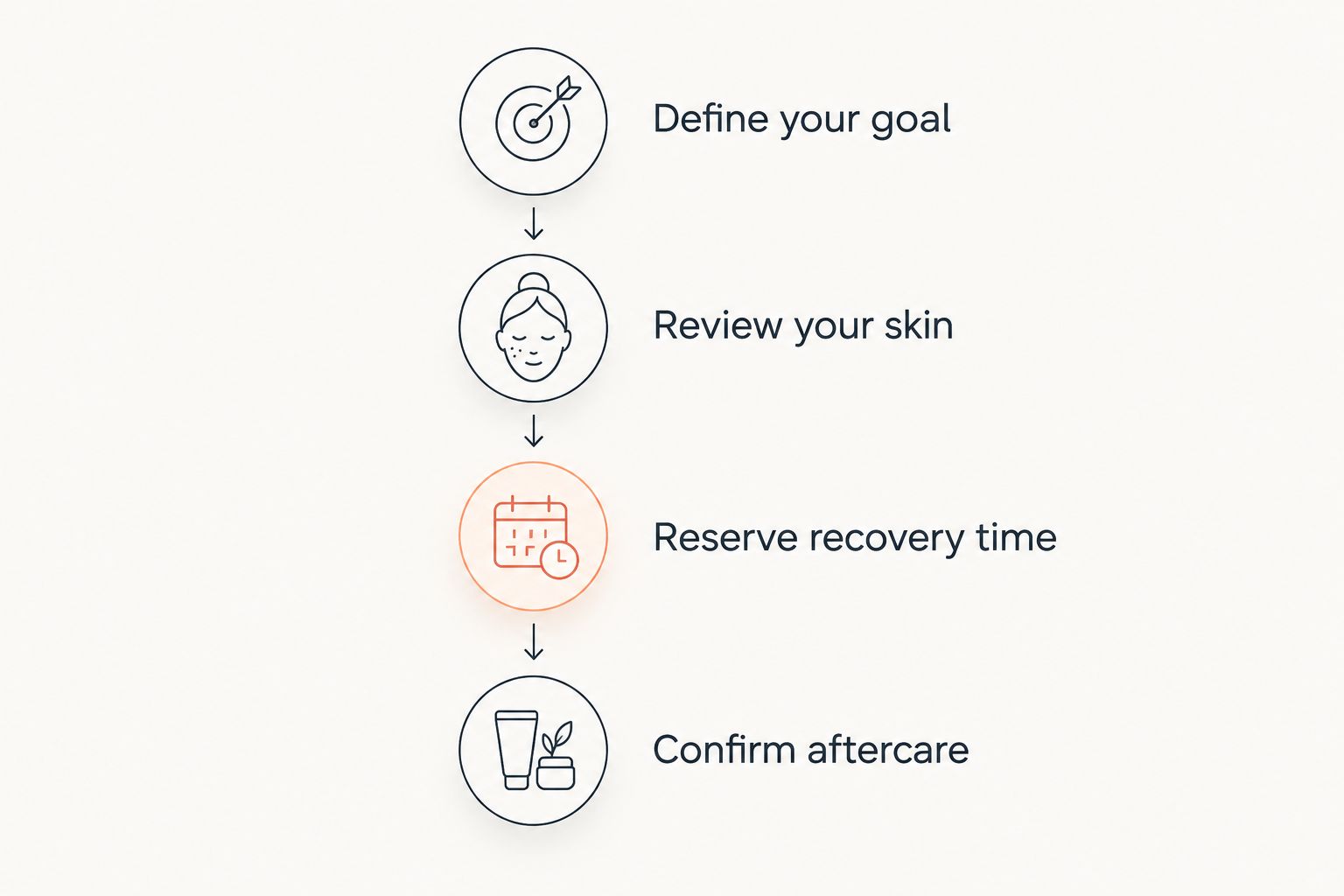
Use this sequence for a 2026 appointment, especially before a wedding, photography session, or travel. Get instructions for the actual treatment rather than borrowing a friend's experience.
Define your goal
Name the concern: relaxation, uneven pigment, redness, texture, or depressed scars. Ask what the proposed treatment will not address; that answer prevents choosing the shortest recovery for the wrong problem.
Review your skin
Disclose medications, recent tanning, cold sores, prior pigment changes, and previous treatment reactions. Skin tone matters, but it is not the only factor that determines suitability.
Reserve recovery time
Describe your real commitments, including outdoor work and events where you expect to wear makeup. Ask separately about visible recovery, exercise restrictions, and surface healing.
Confirm aftercare
Get written instructions covering cleansing, skincare, sun protection, and warning signs. The American Academy of Dermatology recommends broad-spectrum, water-resistant sunscreen with SPF 30 or higher for routine protection; treated skin also requires the procedure-specific protection your clinician directs.
Increasing pain, spreading redness, pus, or other concerning changes after a procedure require prompt contact with the treating clinician. Do not cover a possible complication with makeup and wait for an event to pass.
Which facial treatment should you choose?
Choose buccal facial therapy when minimal disruption and massage are the goals. For pigmentation, redness, texture, or scars, start with diagnosis and treatment suitability rather than the shortest recovery claim.
Nonablative laser rejuvenation, superficial peels, and microneedling occupy the middle ground. Ask for the exact protocol and written recovery instructions before deciding; none earns a universal no-downtime promise.
FAQ
What's the best facial treatment if I cannot take time off work?
Buccal facial therapy is the most conservative option in this ranking for someone seeking massage without resurfacing. It does not replace treatment for acne scars or pigmentation, and temporary tenderness remains possible.
Is nonablative laser treatment really a no-downtime facial?
Nonablative laser treatment does not guarantee zero downtime. It preserves the outer skin surface, but redness, swelling, and aftercare requirements depend on the device and protocol.
Does microneedling have more downtime than a chemical peel?
There is no universal recovery order between microneedling and chemical peels. Needle depth, peel depth, treatment intensity, and your skin's response determine the comparison.
Can I wear makeup the day after microneedling?
The American Academy of Dermatology advises waiting 24 hours before applying makeup after microneedling. Follow your treating clinician's instructions if they require a longer wait.
How long does a light chemical peel take to heal?
The American Academy of Dermatology describes healing after a light chemical peel as 1–7 days. Your clinician must separately advise when makeup, exercise, and active skincare can resume.
Which facial treatment should I choose before a wedding?
Choose a treatment you have already tolerated rather than experimenting immediately before the wedding. Schedule any unfamiliar peel, laser procedure, or microneedling treatment with a clinician-approved recovery buffer.
Are low-downtime treatments safe for darker skin tones?
Low downtime does not establish safety for darker skin tones. Ask about the provider's experience treating your skin tone, the proposed settings, and the risk of post-inflammatory pigment changes.
Does Ammonite Laser Spa offer the treatments in this ranking?
Ammonite Laser Spa explicitly lists buccal facial therapy, laser skin rejuvenation, and microneedling among its services. Chemical peels and ablative resurfacing are included as category comparisons, not confirmed studio services.
One last thing
Visible recovery and results run on different clocks. Skin that looks calmer is not necessarily finished healing, and a treatment whose redness has faded has not necessarily delivered its final result.
Before booking, ask for two separate expectations: when you can resume your routine and when the clinician will assess the outcome. That distinction makes your treatment calendar more useful than a generic downtime label.