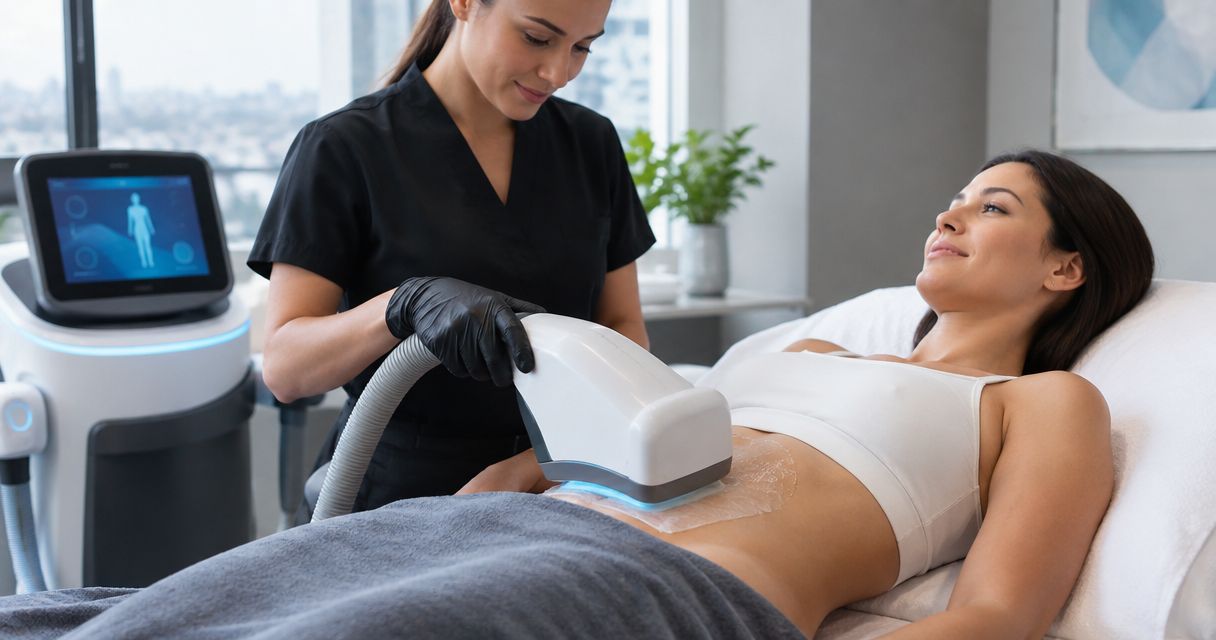
Cryo body contouring is worth considering in 2026 if you want a modest change to a localized fat bulge, not weight loss or a substitute for surgery. Its value depends on the exact device, your suitability, and whether the expected improvement justifies the treatment burden and risks—including the possibility of an unwanted increase in treated fat after cryolipolysis.
- Is cryo body contouring worth it? Consider it for localized fat reduction, not weight loss or loose skin.
- Ammonite Laser Spa offers cryo body contouring in Downtown Brooklyn; confirm the exact device before choosing treatment.
- Cryolipolysis results develop gradually; the FDA describes fat clearance over 2 to 3 months.
- Skip treatment until you understand cold-related contraindications, side effects, and paradoxical adipose hyperplasia.
Why this matters
A smaller waist measurement, tighter skin, and a lower number on the scale are different goals. A treatment marketed for body contouring does not automatically deliver all of them. Choosing the wrong treatment for your concern is a poor investment even when the procedure works as intended.
Ammonite Laser Spa lists cryo body contouring among its personalized treatments in Downtown Brooklyn. Review the available services, then ask what the proposed procedure actually uses: controlled fat freezing, another cooling technology, or a combination. The service name alone does not establish its mechanism, regulatory status, or expected result.
Is cryo body contouring worth it in 2026?
Consider cryolipolysis when your goal is a limited contour improvement and you accept gradual results and procedure-specific risks. Skip it as a strategy for substantial weight loss. If excess skin is your main concern, get that assessed separately before choosing a fat-reduction treatment.
The FDA's patient guidance on non-invasive body contouring describes cryolipolysis as controlled cooling intended to reduce fat bulges. It also states that non-invasive body contouring does not treat obesity or provide the health benefits associated with weight loss. That distinction is central to a sensible 2026 decision.
| Option | Best for | Main advantage | Main limitation |
|---|---|---|---|
| Cryolipolysis | A localized, treatable fat bulge | Targets an area without surgical incisions | Gradual, variable improvement; cold-related risks and possible paradoxical adipose hyperplasia |
| Lifestyle-based weight management | Overall weight and metabolic health goals | Addresses broader health needs rather than one treatment area | Does not let you choose exactly where fat is lost |
| Liposuction assessment | A larger contour change or discussion of surgical fat removal | Allows a surgeon to assess direct fat removal | Involves surgery, recovery, and surgical risks |
| Skin-laxity assessment | Loose or hanging skin as the main concern | Identifies whether skin, rather than fat, needs treatment | Fat reduction alone does not remove excess skin |
| No procedure | An uncertain goal or unacceptable treatment risk | Avoids procedural complications | Leaves the original contour concern untreated |
These are different routes, not interchangeable packages. A medical assessment is especially important when a bulge is painful, changes unexpectedly, or might represent something other than superficial fat.
Localized fat: a reasonable reason to consider treatment
A defined area of pinchable fat is closer to the purpose of cryolipolysis than a general wish to become smaller. You still need an assessment of the tissue, treatment area, and device suitability. Being able to pinch an area yourself does not establish eligibility.
Describe the change you want in plain language. For example, explain whether a particular clothing seam presses against a small bulge or whether you want a major change in body shape. Those expectations require different conversations.
Weight loss or excess skin: reasons to choose another assessment
Cryolipolysis is not an obesity treatment. It also does not remove loose skin, so a reduction in underlying fat should not be presented as a guaranteed tightening result.
If your concern includes both fat and laxity, ask the practitioner to separate those findings. Do not accept a single promise of “slimming and tightening” without an explanation of which technology addresses each concern.
What results should you expect—and when?
For cryolipolysis specifically, the FDA describes the body's clearance of damaged fat cells over 2 to 3 months. That is a biological process, not a guarantee that every person will achieve a visible or satisfying change within that window. Other procedures sold under a cryo label should be judged against their own evidence.
Avoid deciding whether treatment worked from photographs taken immediately afterward. Swelling, posture, camera angle, lighting, and abdominal tension can change how an area looks. A fair comparison keeps those conditions consistent.
For your 2026 treatment plan, agree on the following before proceeding:
- Target area: Specify the bulge being treated rather than using a vague whole-body goal.
- Expected change: Ask what improvement the practitioner expects for your anatomy and why.
- Review point: Set a follow-up that fits the device's expected response timeline.
- Success measure: Choose consistent photographs, examination, or another appropriate assessment rather than scale weight alone.
- Stopping rule: Agree when to reassess instead of automatically adding treatments.
Session count is a separate question from whether treatment is worthwhile. Read the guide to how many cryo body contouring sessions you need, then request a device-specific plan rather than assuming a standard course applies to everyone.
Why cryo body contouring value varies
The same treatment description can cover very different decisions. These factors determine whether the proposal matches your concern:
- Technology: Evidence for a named cryolipolysis device does not automatically apply to every cold-based treatment.
- Anatomy: Superficial fat, deeper abdominal fullness, loose skin, and muscle separation are not the same problem.
- Treatment area: The device must be appropriate for the proposed body site and tissue configuration.
- Health history: Cold-sensitive conditions and other medical concerns change the risk assessment.
- Expectations: A modest contour improvement is different from substantial reshaping or weight reduction.
- Follow-up: You need a clear route for reviewing results and investigating persistent or unexpected changes.
Ask for a written plan that connects these factors. A package name or a photograph of someone else's result does not explain what is appropriate for your body.
What are the risks of cryolipolysis?
Temporary redness, swelling, bruising, discomfort, and altered sensation are recognized effects of fat-freezing procedures. Non-invasive does not mean risk-free. Ask how the proposed device's risks apply to your treatment area and medical history.
A distinctive complication is paradoxical adipose hyperplasia, often shortened to PAH. Instead of shrinking, the treated fat develops into an enlarged, firm bulge. The FDA describes this as appearing 2 to 5 months after treatment and notes that it does not resolve on its own and may require surgery.
For a 2026 decision, that delayed risk matters as much as your immediate recovery. Feeling well after the appointment does not rule out a later complication. An enlarging or firm treatment-area bulge needs medical assessment rather than an assumption that more cooling will fix it.
Cold-sensitive conditions need explicit screening
The FDA identifies cryoglobulinemia, cold agglutinin disease, and paroxysmal cold hemoglobinuria as conditions for which cryolipolysis should not be performed. These are medical contraindications, not ordinary discomfort with cold weather.
Tell the practitioner about medical conditions, medications, previous procedures, altered sensation, and any known hernia or concern in the proposed area. The practitioner should review the specific device's contraindications and precautions. Do not treat a short online checklist as medical clearance.
Know whom to contact after treatment
Before agreeing to treatment, ask who evaluates persistent pain, skin injury, prolonged sensory changes, or a new bulge. Get the follow-up instructions in writing. You should not have to work out the escalation process after a problem develops.
Seek medical advice for unexpected or worsening symptoms. The right response depends on the symptom and its severity, not on whether a procedure was advertised as having little downtime.
How should you decide before booking?
Use a consultation to test the treatment plan, not simply to hear a sales presentation. A useful recommendation explains why your concern fits the procedure and where the procedure's limits begin.
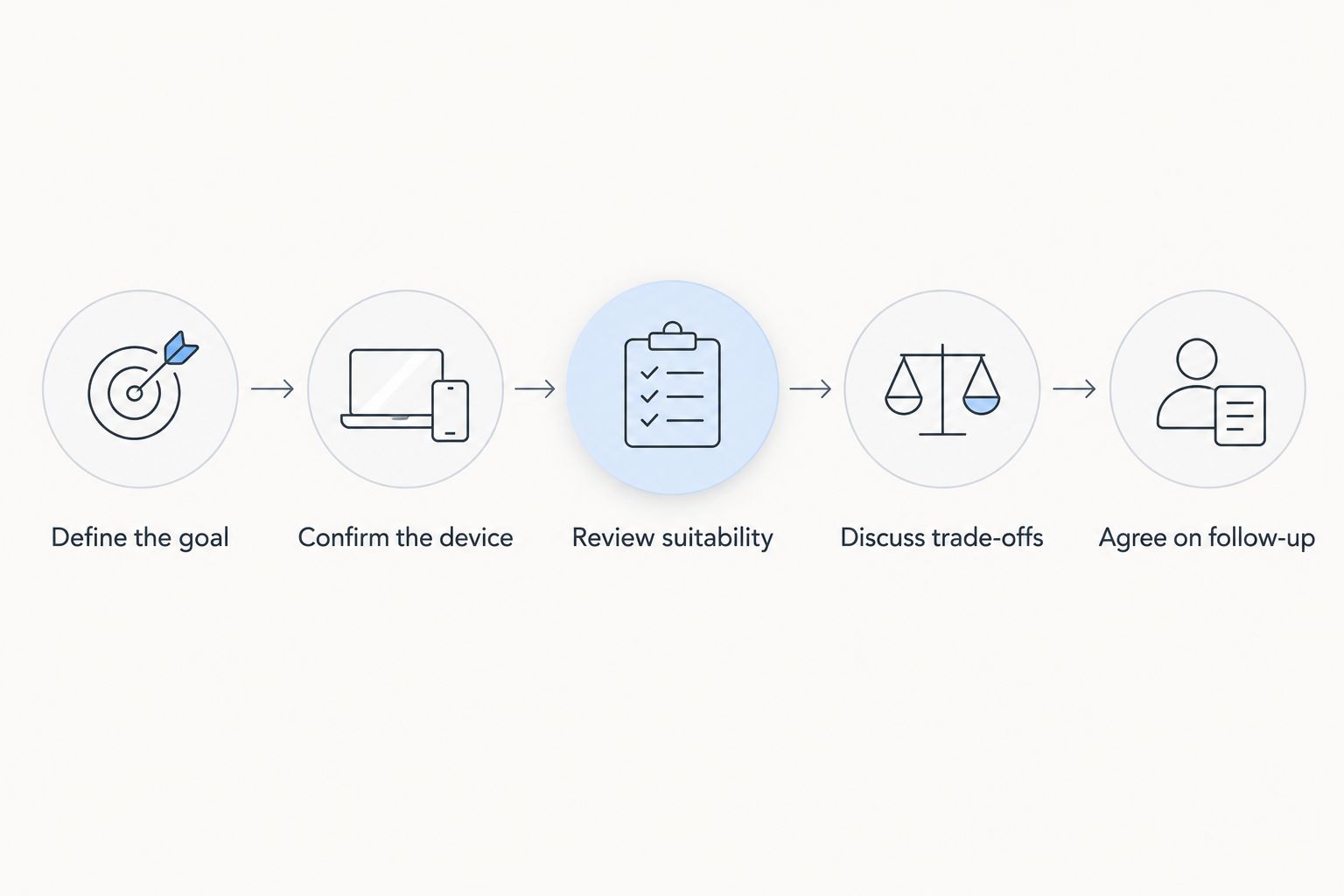
- Define the goal. Identify the area and the change you want. Separate contour improvement from weight loss and skin tightening.
- Confirm the device. Ask for the manufacturer, model, mechanism, and relevant FDA clearance for the proposed use. A generic claim of being FDA-cleared is not enough detail.
- Review suitability. Discuss your medical history and have the treatment area assessed. Ask what findings would make the practitioner recommend against treatment.
- Discuss trade-offs. Cover expected improvement, discomfort, delayed results, side effects, and PAH where cryolipolysis is proposed.
- Agree on follow-up. Establish when results will be reviewed and how concerns will be assessed before considering additional treatment.
A practitioner should be able to explain the difference between a device's regulatory clearance and a prediction about your individual result. Clearance is not a personal outcome guarantee.
Ammonite Laser Spa is best suited to Downtown Brooklyn clients seeking personalized cryo body contouring rather than a weight-loss treatment. Its stated service offering establishes that local relevance; it does not establish which device you will receive or predict your outcome. Confirm both the proposed technology and your suitability directly.
Is cryo body contouring better than liposuction?
Cryo body contouring is not a direct replacement for liposuction. Cryolipolysis targets selected fat bulges without surgical incisions, while liposuction is a surgical fat-removal procedure with its own assessment, recovery, and risks. Neither choice is automatically better without defining the amount and type of change you want.
If you want a substantial contour change, seek a qualified surgical opinion rather than expecting repeated non-invasive treatments to reproduce surgery. If you want to avoid surgery, accept that a non-invasive option has different limits. The comparison is about fit, not simply convenience.
Are cryo body contouring results permanent?
Cryolipolysis is intended to damage targeted fat cells, but permanent improvement in your overall silhouette is not guaranteed. Weight changes, aging, skin changes, and untreated areas still affect your shape. “Permanent fat-cell reduction” and “a permanently unchanged body” are different claims.
For a 2026 treatment decision, ask what long-term result is realistic for your anatomy and what would prompt reassessment. Avoid treating permanence as a reason to overlook suitability or risk.
Is it worth doing before a special event?
Allow for the 2 to 3 months the FDA describes for fat clearance after cryolipolysis; do not expect an immediate finished result. Even that timeline does not guarantee a particular appearance by an event date. Swelling, uneven response, or dissatisfaction can complicate a deadline-driven plan.
If an event is close, waiting is a valid choice. A fixed date is not a reason to compress assessment, skip risk discussions, or repeat treatment before the response can be judged.
FAQ
Is cryo body contouring worth it for belly fat?
Cryolipolysis is worth considering for a suitable localized belly-fat bulge, not for general weight loss. An assessment must distinguish superficial fat from loose skin, deeper abdominal fullness, or another cause of the bulge.
How long does cryo body contouring take to show results?
For cryolipolysis, the FDA describes clearance of damaged fat cells over 2 to 3 months. That timeline does not guarantee a visible result, and other cold-based procedures require their own evidence.
Can fat freezing make the treated area bigger?
Yes, cryolipolysis can cause paradoxical adipose hyperplasia, in which treated fat becomes an enlarged, firm bulge. The FDA describes onset 2 to 5 months after treatment; the condition does not resolve on its own and may require surgery.
Does cryo body contouring tighten loose skin?
Fat reduction does not remove excess skin. If loose skin is your main concern, request a separate skin-laxity assessment rather than assuming cryolipolysis will correct it.
How many cryo body contouring sessions do I need?
Your session plan depends on the exact device, treatment area, anatomy, and response. Ask for an individualized recommendation and a review point rather than accepting a universal session count.
Who should avoid fat freezing?
The FDA states that cryolipolysis should not be performed in people with cryoglobulinemia, cold agglutinin disease, or paroxysmal cold hemoglobinuria. A practitioner must also review the device's other contraindications and your medical history.
Does Ammonite Laser Spa offer cryo body contouring in Brooklyn?
Ammonite Laser Spa offers personalized cryo body contouring in Downtown Brooklyn. Confirm the exact device, treatment-area suitability, expected outcome, and follow-up arrangements before proceeding.
One last thing
Ask this before committing: What finding would make you advise me not to have this treatment? A useful answer identifies specific limits, such as unsuitable anatomy, a contraindication, or a goal the procedure cannot meet. That conversation tells you more than a promise that everyone is a candidate.
Keep your baseline photographs and written treatment details. If you later notice an unexpected change, knowing the device, treated area, and treatment date helps a clinician assess what happened. Your decision should remain sensible even if the cosmetic improvement is smaller than you hoped.