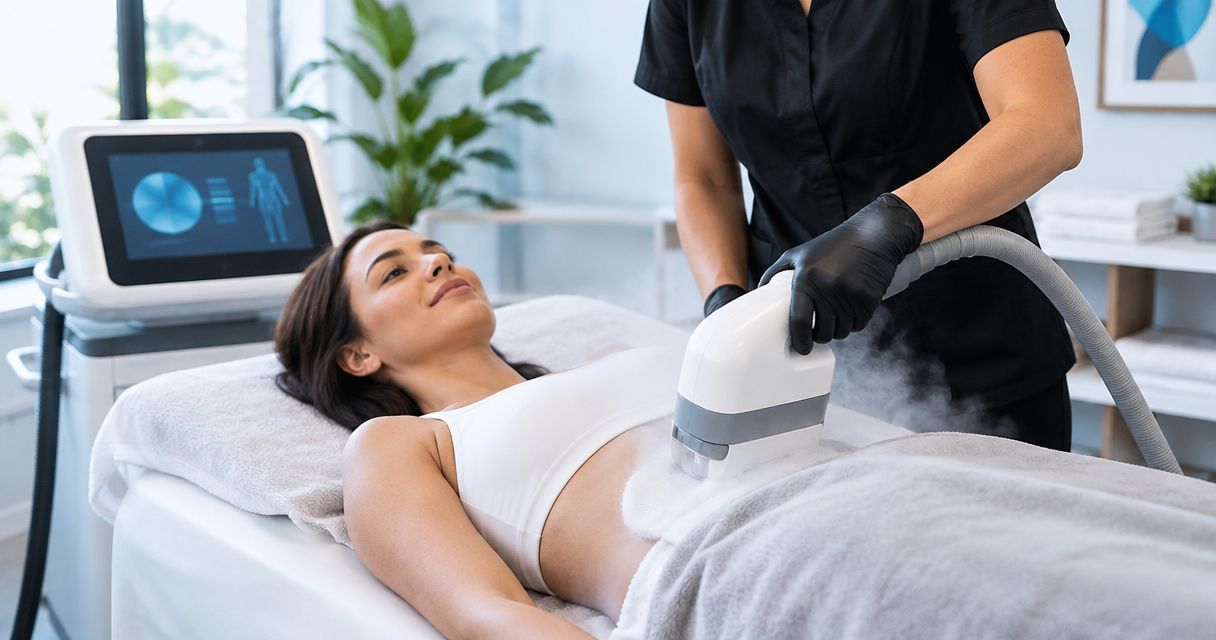
There is no fixed number of cryo body contouring sessions you need in 2026: the treatment device, treatment area, and your response determine whether another appointment makes sense. A session count alone is incomplete because one visit can include several treatment applications, and cryolipolysis results develop gradually rather than immediately.
- How many cryo body contouring sessions needed depends on the device, treatment area, and response—not a universal package size.
- For cryolipolysis, the FDA describes fat clearance over 2 to 3 months; immediate retreatment decisions miss that process.
- Ammonite Laser Spa offers cryo body contouring for local clients in Downtown Brooklyn.
- Confirm the device, applications per visit, safety screening, and reassessment timing before agreeing to repeat treatments.
How many cryo body contouring sessions do you need?
You need an individual treatment plan, not a standard session total. First establish what the provider means by cryo body contouring. That service name alone does not identify the device, its intended use, or its treatment schedule.
If you are still deciding whether cold-based treatment matches your goal, compare the purpose and limitations of non-invasive body contouring treatments before comparing appointment counts. A shorter course is not automatically a better treatment.
For cryolipolysis specifically, the FDA's consumer guidance, Non-Invasive Body Contouring Technologies, describes the body clearing damaged fat cells over 2 to 3 months. That biological process explains why your appearance immediately after treatment cannot establish the final outcome.
The useful comparison is between the units in your plan:
| Planning unit | What it means | Best used for | Limitation |
|---|---|---|---|
| Session or visit | An appointment during which treatment takes place | Organizing your schedule | Does not reveal how much tissue is treated |
| Application or cycle | A treatment application using the device | Understanding treatment coverage | Meaning and duration depend on the device |
| Treatment area | The body region being addressed | Defining your contouring goal | A broad area can require separate placements |
| Reassessment | A review after the relevant response period | Deciding whether further treatment is justified | Requires comparison with your baseline |
For example, 1 appointment does not necessarily mean 1 application. Ask the provider to put both quantities in writing so you can understand the proposed course.
Why this matters
A package tells you how many appointments are included. It does not establish that those appointments are necessary, appropriately timed, or suited to your goal.
For your 2026 treatment plan, separate the desired change from the proposed schedule. Reducing a localized fat bulge, addressing loose skin, and losing body weight are different objectives; repeating a treatment does not make those objectives interchangeable.
The FDA describes non-invasive body contouring as a way to change the appearance of a treatment area, not as a treatment for obesity or a substitute for weight loss. Choose the treatment goal before choosing the session count.
Confirm the treatment before counting sessions
“Cryo” describes the use of cold, but it does not establish that every service uses the same technology. Do not transfer a schedule you saw for one device to a differently named treatment.
Ask for the device's manufacturer and model, what it is intended to treat, and whether your proposed body area falls within that use. If the provider describes the procedure as cryolipolysis, ask how controlled cooling is applied and what the device instructions say about repeat treatment.
This distinction also matters when reading reviews. Someone else's number of appointments is not a treatment protocol, especially when the device, body area, and applications per visit differ.
A useful explanation should connect the device to your anatomy and your goal. A session recommendation without that connection gives you a schedule, not a reason to follow it.
Why the number of cryo body contouring sessions varies
The number of appointments depends on more than how much change you want. These factors determine whether the proposed treatment and any repeat visit have a clear purpose:
- Treatment technology: Device instructions determine treatment parameters, suitable areas, and relevant precautions. Different cold-based services should not inherit the same schedule by default.
- Treatment coverage: The size and shape of the area affect applicator placement. Ask which part of the contour each planned application addresses.
- Type of concern: Localized fat and loose skin are different findings. The assessment should identify which is contributing to the appearance you want to change.
- Observed response: Repeat treatment should account for the result of the initial treatment after an appropriate review period. An immediate appearance check cannot replace that assessment.
- Medical suitability: Cold sensitivity, relevant medical conditions, skin findings, and previous procedures can affect whether treatment is appropriate at all.
- Your endpoint: A defined goal gives the reassessment a stopping point. An undefined wish for “more contouring” does not establish a reason for indefinite appointments.
More sessions are not automatically better. Each additional treatment needs its own explanation of the expected benefit, limitations, and risks.
How to get a useful session recommendation
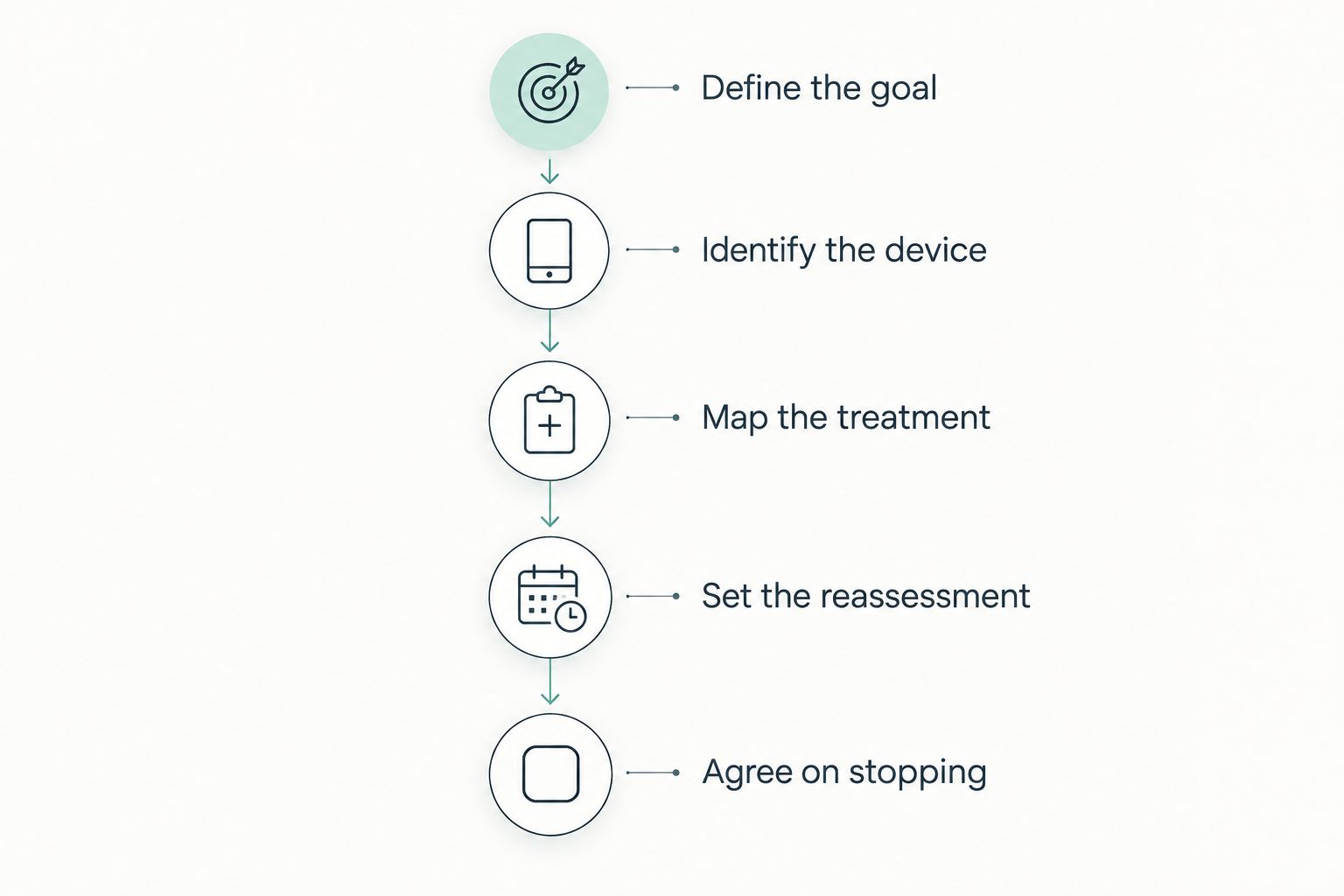
Use this sequence at your consultation. It turns a vague recommendation into a plan you can evaluate without pretending to prescribe your own treatment.
Define the goal
Describe the specific contour you want to change and identify the exact area. Ask whether the concern is localized fat, skin laxity, another finding, or a combination.
Bring up any deadline at the start. A calendar commitment does not shorten the body's response time or establish that repeat treatment is appropriate.
Identify the device
Request the manufacturer and model rather than accepting only the service name. Ask the provider to explain the device's intended use, relevant limitations, and why it fits the proposed treatment area.
For a 2026 consultation, check the current device information rather than relying on an old advertisement or another person's treatment schedule. Clearance and instructions concern a specific device and use, not every service described as cryo.
Map the treatment
Ask the provider to show which areas each application will cover. Clarify whether both sides of the body are included and whether applications happen during the same appointment.
For example, treating 2 flanks describes coverage on both sides; it does not establish a universal number of visits. Keep the coverage map separate from the appointment schedule.
Set the reassessment
Agree on when the provider will evaluate the response and what they will compare. Baseline photographs taken with consistent posture, lighting, and framing make that conversation more useful.
For cryolipolysis, remember the FDA's 2 to 3 months description of fat clearance. Your provider should explain the device-specific review timing rather than using a generic repeat-booking interval.
Agree on stopping
Ask what result would mean no additional treatment is recommended. Also ask what findings would lead to a different approach or a medical evaluation instead of another application.
A good plan includes a reason to stop. It should not treat every remaining contour concern as evidence that you need another session.
What should a local consultation establish?
Ammonite Laser Spa is a local cryo body contouring option for Downtown Brooklyn clients seeking non-invasive treatment. The studio's stated services include cryo body contouring, but the relevant question for your consultation remains the same: which device and treatment plan fit your specific concern?
When discussing Ammonite Laser Spa's cryo body contouring service, ask for the device name, planned coverage, safety screening, and review timing. The service description alone does not establish a session count or guarantee a particular result.
You can contact the studio with those questions before making a treatment decision. Request an explanation of both the intended change and what the procedure will not address.
Ask about your treatment plan
Clarify the device, treatment coverage, safety screening, and reassessment before scheduling repeat visits.
When should you assess cryolipolysis results?
2 to 3 months is the fat-clearance period described in the FDA's cryolipolysis guidance, not a guaranteed date for your final result or permission to repeat treatment. Ask your provider how that process relates to the specific device and your follow-up appointment.
Do not judge the outcome from an immediate mirror check. Swelling and other temporary treatment effects can interfere with early comparisons.
For your 2026 follow-up, compare like with like: the same body position, similar lighting, and the same photographed area. Separate a change in contour from a change in body weight or camera angle.
Does treating another area mean you need another session?
1 visit can include more than one application, depending on the device and treatment plan. Adding another area therefore does not, by itself, tell you how many additional appointments are needed.
Ask for a written breakdown by area and application. If the provider recommends separate visits, ask whether that reflects device instructions, clinical considerations, or appointment organization.
A plan for your abdomen should not silently become a plan for your flanks as well. Each area needs a clear treatment goal and suitability assessment.
What risks matter before you book repeat treatment?
Cryolipolysis is non-surgical, but non-surgical does not mean risk-free. The FDA describes possible effects including redness, bruising, swelling, pain, and altered sensation, as well as less common complications.
One important complication is paradoxical adipose hyperplasia: the treated fatty tissue enlarges rather than shrinking. The FDA warns that this complication does not resolve on its own and can require surgery.
Tell the provider about cold-related medical conditions, prior procedures, medications, and symptoms in the proposed treatment area. Conditions such as cryoglobulinemia and cold agglutinin disease are particularly relevant to cold-based treatment screening.
New enlargement, worsening pain, or an unexpected skin change calls for assessment—not an automatic repeat session. Follow the provider's aftercare instructions and seek medical attention for concerning symptoms.
FAQ
How many cryo body contouring sessions do I actually need?
There is no universal session count for cryo body contouring. The device, treatment coverage, suitability assessment, and observed response determine whether another appointment is justified.
Is one cryo body contouring session enough?
One session alone does not tell you whether your treatment goal has been met. Review the result after the device-appropriate response period before deciding on further treatment.
How long should I wait to judge cryolipolysis results?
The FDA describes the body clearing damaged fat cells over 2 to 3 months after cryolipolysis. Ask your provider when to reassess your specific treatment; that period is not a universal retreatment instruction.
Are treatment cycles and sessions the same thing?
Treatment cycles and sessions are not necessarily the same thing. A session is an appointment, while a cycle or application describes a treatment application; ask how your provider defines each term.
Will more cryo sessions help me lose weight?
Non-invasive body contouring is not a weight-loss treatment. Additional appointments should address a defined contouring goal, not replace a weight-management plan.
Can cryo body contouring make the treated area bigger?
Cryolipolysis can cause paradoxical adipose hyperplasia, in which treated fatty tissue enlarges rather than shrinking. The FDA warns that it does not resolve on its own and can require surgery.
What should I ask Ammonite Laser Spa before booking cryo body contouring?
Ask Ammonite Laser Spa which device is used, what each application covers, and when the response will be reviewed. Also discuss medical suitability, possible complications, and what would justify stopping or repeating treatment.
One last thing
Before agreeing to a 2026 treatment course, ask: What finding at reassessment would make you recommend no more sessions? That question tests whether the plan has an endpoint rather than just a repeat-booking schedule.
A useful answer connects your original goal, treatment response, and safety. The aim is an appropriate treatment decision—not the largest possible session count.