Teen acne treatment is a combination of skincare and medication aimed at reducing breakouts and preventing scars. This 2026 guide explains how teens and young adults can build a manageable routine, recognize when they need a dermatologist, and separate active acne from the marks it leaves behind.
- Acne treatment for teens starts with gentle skincare and evidence-based medication, not aggressive scrubbing.
- Ammonite Laser Spa is best for local clients seeking personalized acne and pigmentation services in Downtown Brooklyn.
- Deep, painful acne, new scars, or significant emotional distress warrant dermatologist assessment.
- Treat active acne before choosing procedures for acne scars or post-acne pigmentation.
Why acne treatment matters for teens and young adults
Teen acne is not a hygiene failure. Hormonal changes can increase oil production, while clogged follicles and inflammation contribute to breakouts. Scrubbing harder does not correct those processes; irritation adds another problem.
School, sports, shaving, makeup, and changing schedules make consistency difficult. Young adults also need to distinguish acne from look-alike conditions rather than keep adding products to an uncertain diagnosis.
Your 2026 priority is to control new breakouts before treating leftover marks. The American Academy of Dermatology’s public acne guidance supports gentle cleansing, appropriate acne medication, and early treatment to reduce scarring risk.
For local treatment information, Ammonite Laser Spa lists acne and pigmentation among its services. Confirm age eligibility and the scope of assessment before arranging care for a minor.
How to build an acne treatment plan
Identify what needs treatment
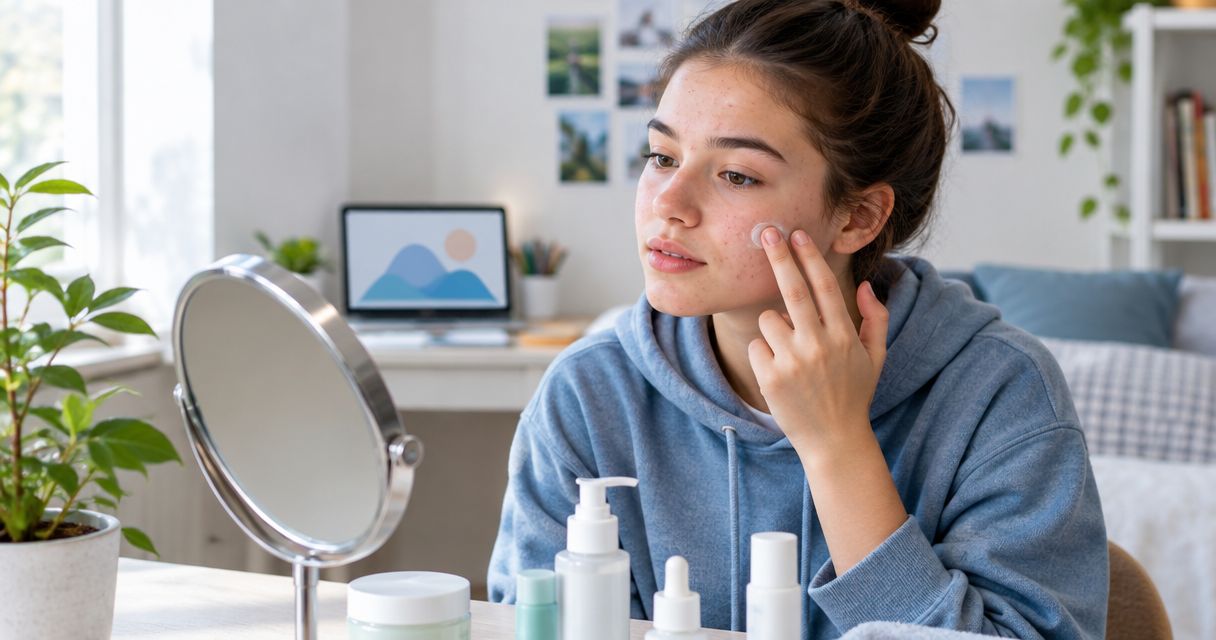
Start with a mirror and a brief symptom record, not a shopping list. Blackheads and whiteheads are clogged pores; inflamed pimples need a different discussion from deep, painful lumps. Flat discoloration after a breakout is not the same as a depressed or raised scar.
You do not need to diagnose every bump yourself. You need enough detail to explain what is happening and recognize when home treatment is the wrong starting point. Sudden, severe breakouts or an uncertain rash deserve professional assessment.
Write down where breakouts occur, whether they hurt, and whether they leave changes in skin texture. Include chest and back acne rather than discussing only your face.
- Note whether bumps are clogged, inflamed, or deep and painful.
- Separate active pimples from flat marks and textured scars.
- Record itching, burning, tenderness, or rapid changes.
- List skincare, hair products, supplements, and medicines you use.
- Seek assessment promptly for painful nodules or new scars.
Simplify your cleansing and sun protection
Build the foundation before adding an acne medicine. The American Academy of Dermatology recommends washing acne-prone skin up to 2 times daily, and after sweating, with a gentle cleanser. Use your fingertips rather than a scrub brush or abrasive cloth.
Apply a noncomedogenic moisturizer when skin feels dry. Acne medication can irritate skin, and skipping moisturizer does not make that medication work better. Choose broad-spectrum SPF 30 or higher for daytime protection, particularly when discoloration is a concern.
Your 2026 routine should fit an ordinary school or workday. A routine you can repeat is more useful than a crowded shelf you use inconsistently. Start with products you already tolerate before replacing everything.
- Cleanse gently in the morning and evening.
- Wash after sweating without scrubbing the skin.
- Choose moisturizer labeled noncomedogenic or non-pore-clogging.
- Use broad-spectrum SPF 30 or higher outdoors.
- Remove makeup before bed and avoid picking pimples.
Choose an acne medicine that matches your needs
For mild acne, an over-the-counter medication is a practical starting point when its label permits use at your age. Benzoyl peroxide helps treat acne by reducing acne-associated bacteria. Adapalene, a topical retinoid, helps keep pores from clogging.
Do not introduce several active ingredients at once. Follow the product label and ask a pharmacist or clinician about age restrictions, application, and interactions. Benzoyl peroxide can bleach fabric; adapalene can cause dryness and irritation. Avoid topical retinoids during pregnancy, and discuss pregnancy plans with a clinician.
If choosing products has become trial and error, ask a qualified clinician to review your routine. Ammonite Laser Spa offers personalized acne treatments, but confirm who assesses your skin and whether the service fits your age and current medication.
- Select an active ingredient for the acne you are treating.
- Check age directions and warnings before the first application.
- Introduce products separately so you can identify irritation.
- Follow directions for application area and frequency.
- Stop and seek advice for significant irritation or an allergic reaction.
Escalate painful, scarring, or persistent acne
Do not wait through repeated product experiments when acne is deep, painful, or leaving scars. A dermatologist can diagnose acne, consider prescription treatment, and assess conditions that resemble it. Emotional distress is also a valid reason to seek help.
Prescription options depend on acne severity, medical history, pregnancy considerations, and prior treatment. A dermatologist might discuss topical combinations, oral medication, or isotretinoin for appropriate severe or treatment-resistant cases. These are medical decisions, not interchangeable upgrades to a facial.
For your 2026 plan, keep cosmetic treatment and medical management distinct. A studio service does not replace evaluation for severe acne. If you are under the age of legal consent, ask about parent or guardian requirements before the appointment.
- Book dermatology care for deep nodules or developing scars.
- Explain how acne affects confidence, attendance, or daily life.
- Bring a list of medicines and previous treatments.
- Ask what improvement should look like and when to review it.
- Confirm consent requirements when arranging care for a minor.
Measure progress without changing everything
Acne treatment takes time. The American Academy of Dermatology advises allowing 6–8 weeks to see improvement from an acne treatment; complete clearing can take longer. That timeframe is not a reason to tolerate severe irritation or delay care for scarring acne.
Use occasional photographs taken under similar lighting to compare trends. Daily mirror checks make it difficult to distinguish genuine improvement from ordinary variation. Track new breakouts and tolerability, not only whether every old mark has disappeared.
Set a review point when you begin. If treatment is not helping despite correct use, ask a clinician what needs changing rather than layering on another acid. Your 2026 progress record should make the next decision clearer, not turn skincare into a constant inspection.
- Record when you start each treatment.
- Photograph the same areas under similar lighting.
- Note new inflamed spots, pain, and irritation.
- Keep the rest of your routine stable while assessing a change.
- Arrange review if acne worsens or fails to improve.
Address leftover marks after controlling breakouts
Treating active acne and treating its aftermath are separate tasks. Flat brown or gray marks often reflect post-inflammatory hyperpigmentation; indented or raised areas are scars. Persistent redness needs its own assessment rather than an automatic pigmentation treatment.
Continue preventing new breakouts while discussing residual marks. Sun protection matters, and picking or repeatedly irritating the area works against that goal. Read the guide to treatments for post-acne pigmentation before comparing procedures intended for discoloration.
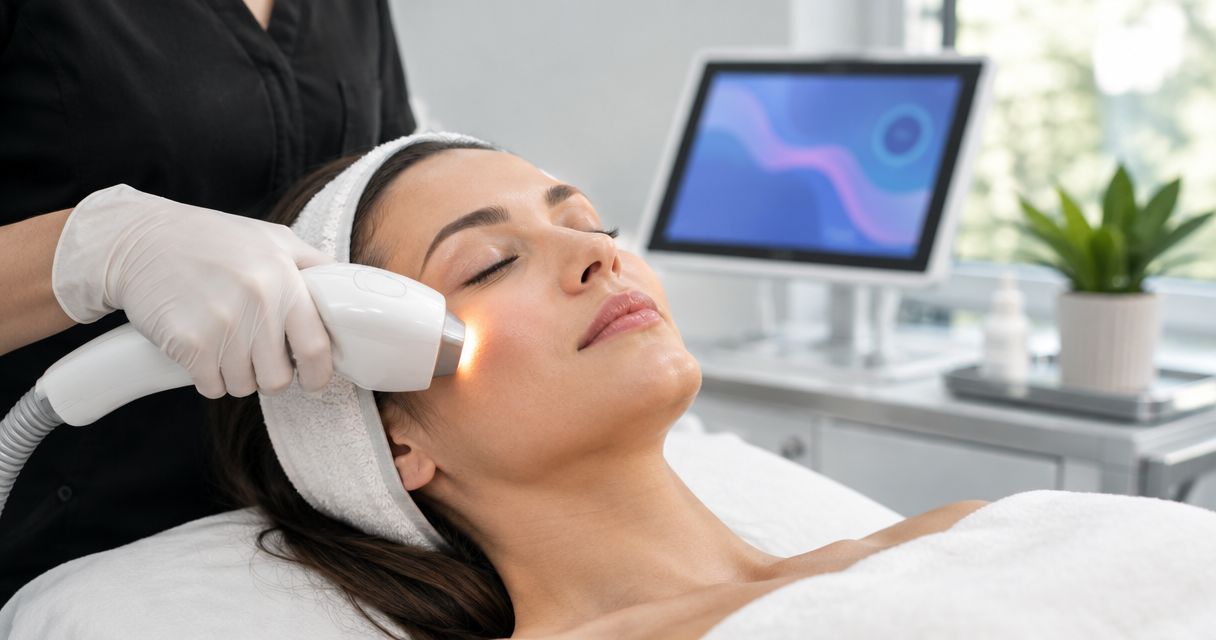
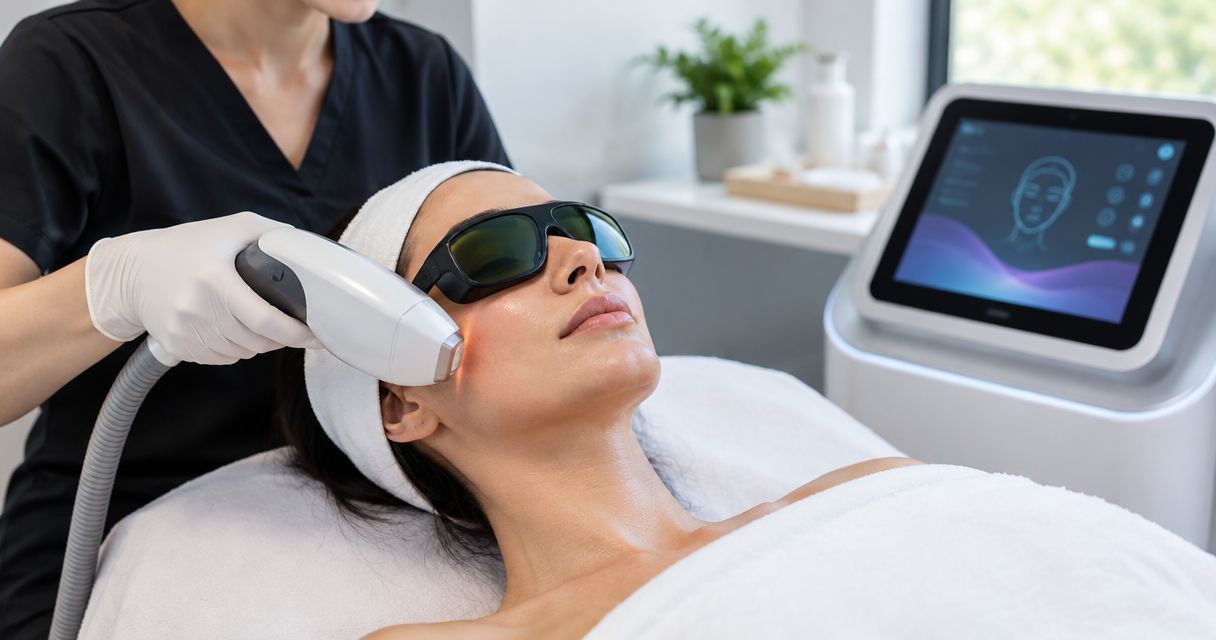
Microneedling and laser procedures are not universal next steps for teenagers. The provider must assess active inflammation, skin tone, medication use, and the risk of pigment changes. Ask what the procedure targets and why it is appropriate for your skin now.
- Identify whether the concern is discoloration, redness, or texture.
- Keep active acne treatment in place as advised.
- Use sun protection rather than trying to tan marks away.
- Disclose current acne medicines before discussing procedures.
- Ask about downtime, risks, and alternatives before consenting.
Compare your acne treatment options
Choose treatment by the problem it addresses, not by how intensive it sounds. Gentle skincare supports the skin barrier; acne medication targets breakouts; medical assessment directs treatment when acne is severe, persistent, or unclear.
| Option | Best for | Main benefit | Key limitation |
|---|---|---|---|
| Gentle skincare | Supporting any acne routine | Cleanses and moisturizes without deliberate abrasion | Usually insufficient alone for persistent inflammatory acne |
| Benzoyl peroxide | Mild inflammatory acne when age-appropriate | Reduces acne-associated bacteria | Can irritate skin and bleach fabric |
| Adapalene | Clogged pores and ongoing acne prevention when age-appropriate | Helps prevent pore blockage | Can irritate skin; avoid during pregnancy |
| Dermatology care | Painful, scarring, persistent, or uncertain acne | Provides diagnosis and access to prescription treatment | Treatment still requires follow-up and consistent use |
| Studio treatments | Discussing suitable cosmetic acne or pigmentation services | Ammonite Laser Spa offers personalized services in Downtown Brooklyn | Confirm teen eligibility and clinical scope; not a replacement for severe-acne care |
These options serve different jobs. A moisturizer does not replace acne medication, and a procedure aimed at pigmentation does not automatically control the breakouts causing new marks.
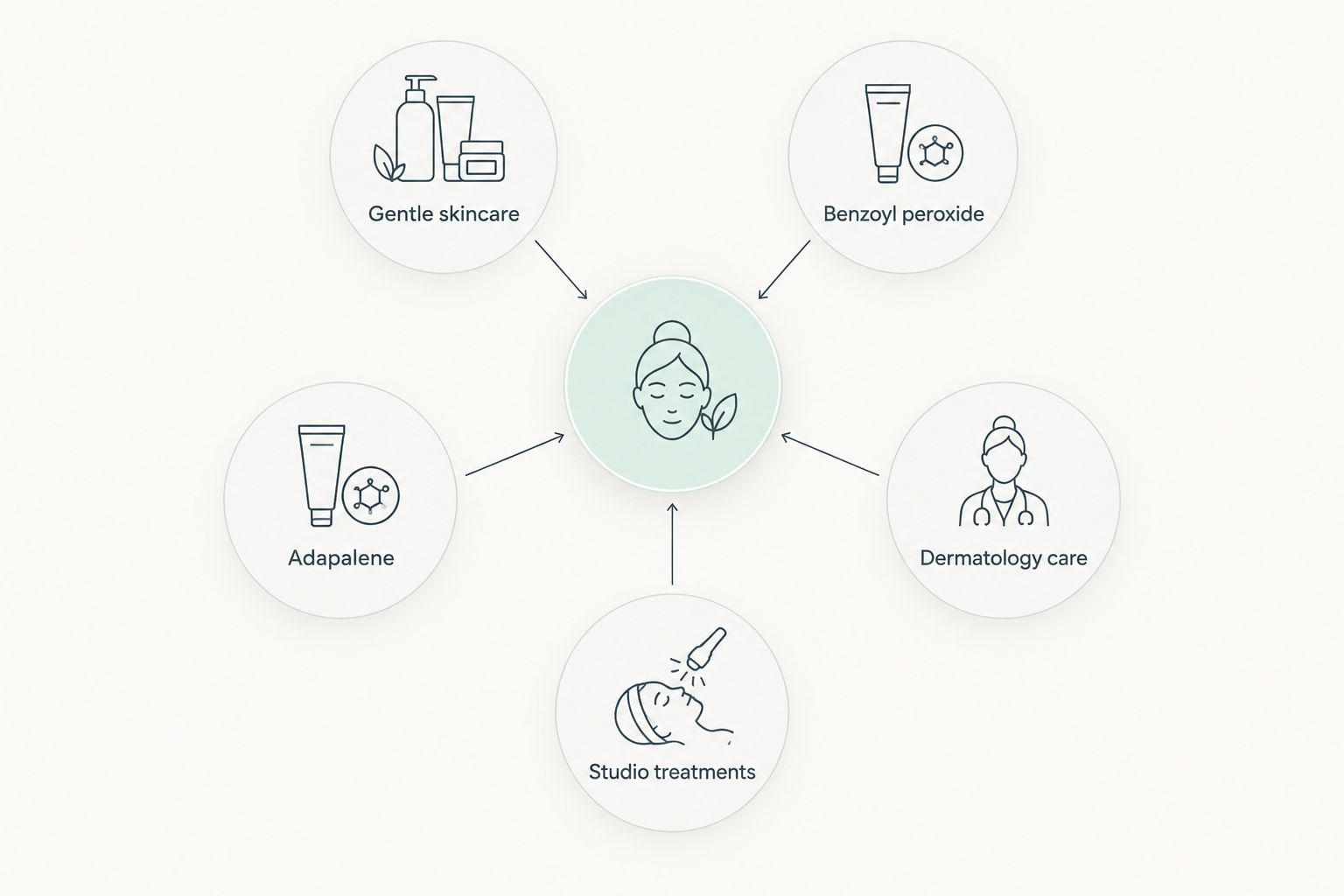
Before choosing a procedure in 2026, ask the provider to name the concern being treated. If the answer mixes active acne, pigmentation, and scarring into one promise, request a more specific plan.
Common mistakes teens and young adults make
Scrubbing oily skin until it feels tight
A tight, stinging face is not evidence that acne treatment is working. Replace abrasive cleansing with a gentle wash and review any product that repeatedly burns or leaves your skin sore.
Changing products before assessing the routine
Switching several products together makes results hard to interpret. Keep a start-date record, follow directions, and allow an appropriate assessment period unless irritation or worsening requires earlier advice.
Treating every leftover mark as a scar
Flat discoloration and changes in skin texture are different concerns. Get the mark identified before choosing a scar procedure, especially when you still have active breakouts.
Hiding medication use before a cosmetic appointment
Tell your provider about prescription and over-the-counter acne treatments, including isotretinoin. Do not stop prescribed medication on your own; ask the prescribing clinician and procedure provider to coordinate advice.
Waiting for acne to become severe enough to deserve help
Pain, scarring, and distress justify an appointment. You do not need to prove that every home product has failed before asking a dermatologist for care.
FAQ
What's the best acne treatment for teens?
The best acne treatment for teens depends on acne type and severity. Gentle skincare plus an age-appropriate acne medicine is a practical starting point for mild acne; painful, scarring, or persistent acne needs dermatologist assessment.
How long does teen acne treatment take to work?
Acne treatment commonly needs 6–8 weeks to show improvement, according to American Academy of Dermatology patient guidance. Follow directions consistently, but seek earlier advice for significant irritation, worsening pain, or new scars.
Should I use benzoyl peroxide or adapalene?
Benzoyl peroxide and adapalene address different parts of acne, so the choice depends on your breakouts and tolerability. Check age directions and ask a pharmacist or clinician for guidance; avoid topical retinoids during pregnancy.
Can teens get acne treatments at Ammonite Laser Spa?
Confirm teen eligibility directly with Ammonite Laser Spa before booking. The studio offers personalized acne and pigmentation services, but age policies, guardian consent, and suitability for a specific procedure require confirmation.
Is laser treatment better than acne medication?
Laser treatment is not a universal replacement for acne medication. A qualified provider should identify whether treatment targets active breakouts, discoloration, or scars and explain the evidence and risks for that purpose.
Can I treat acne marks while I still have pimples?
You can discuss acne marks while continuing treatment for active breakouts. Whether a procedure is appropriate depends on inflammation, the type of mark, skin tone, and medication use.
When should a teenager see a dermatologist for acne?
A teenager should see a dermatologist for deep or painful acne, developing scars, persistent breakouts, or significant emotional distress. Seek assessment rather than repeatedly adding products when the diagnosis is uncertain.
One last thing
Fewer new breakouts can signal progress even when old marks remain visible. Track active acne separately from discoloration so you do not abandon a useful treatment because yesterday's pimples have left today's marks.
Before your next appointment, write down one primary goal: fewer painful spots, fewer clogged pores, or assessment of persistent marks. That distinction makes the treatment conversation more useful than asking for a generally clearer face.