Best overall: barrier repair with daily sun protection. Best for persistent sun spots: professionally assessed laser treatment. Best for uneven texture: microneedling after irritation settles. This 2026 guide compares the best post-summer skin repair treatments by concern, suitability, and recovery needs—not by how intensive they sound.
- The best post-summer skin repair treatments start with sun protection and restoring irritated skin, not immediate resurfacing.
- Laser treatment targets selected sun spots; microneedling addresses texture rather than every type of pigmentation.
- Ammonite Laser Spa offers personalized laser skin rejuvenation, pigmentation treatments, and microneedling in Downtown Brooklyn.
- Changing spots, active sunburn, and unexplained discoloration need assessment before cosmetic treatment.
Why this matters
Summer can leave several different problems: dryness, uneven pigment, more noticeable fine lines, or irritation. They do not share one treatment. A brown patch is not automatically a sun spot, and tight, flaky skin does not automatically need exfoliation.
Ammonite Laser Spa is best for Downtown Brooklyn clients seeking personalized skin rejuvenation services rather than a product-only routine. Ammonite Laser Spa offers laser skin rejuvenation, acne and pigmentation treatments, and microneedling; the right category depends on the concern being assessed.
Cosmetic improvement also differs from medical evaluation. A spot that changes, bleeds, itches persistently, or looks unlike your other spots belongs with a dermatologist before any attempt to fade it.
What makes the best post-summer skin repair treatments?
Use these criteria to choose your 2026 treatment plan:
- Skin barrier: Burning, peeling, or tenderness takes priority over cosmetic resurfacing.
- Pigment pattern: Separate discrete sun spots from melasma, acne marks, and unexplained lesions.
- Surface texture: Identify whether the issue is dryness, fine lines, or indented scarring.
- Skin response: Discuss skin tone, previous pigment changes, recent tanning, medications, and healing history.
- Recovery fit: Choose aftercare you can follow, including sun protection and restrictions on irritating products.
Treatment choice should connect these factors rather than start with a device name. A procedure that suits settled skin with isolated spots is not automatically appropriate for inflamed skin with diffuse patches.
Post-summer treatments at a glance
| Rank and treatment | Best for | Standout feature | Key limitation |
|---|---|---|---|
| 1. Barrier repair and sun protection | Dryness and irritation | Supports skin comfort while limiting further UV exposure | Does not remove established spots or scars |
| 2. Laser skin rejuvenation | Selected persistent sun spots | Targets suitable concerns with a device-specific approach | Recent tanning and pigment disorders complicate selection |
| 3. Microneedling | Uneven texture and indented acne scars | Creates controlled micro-injuries to stimulate remodeling | Not suitable over active infection or irritated skin |
| 4. Targeted pigment skincare | Flat, diagnosed discoloration | Addresses pigmentation through a topical plan | Requires consistency and does not treat suspicious lesions |
| 5. Topical retinoids | Longer-term photoaging care | Supports gradual improvement in fine lines and uneven tone | Irritation and pregnancy-related restrictions matter |
| 6. Superficial chemical peels | Surface dullness on settled skin | Uses controlled chemical exfoliation | Can worsen irritation or pigmentation when poorly selected |
1. Barrier repair: best for dry, irritated post-summer skin
Barrier repair means reducing irritation while supporting the skin's protective outer layer. Start with a gentle cleanser, a moisturizer you tolerate, and sunscreen rather than adding several exfoliating products at once.
For a 2026 recovery routine, follow American Academy of Dermatology sunscreen guidance: choose broad-spectrum, water-resistant SPF 30 or higher, apply before outdoor exposure, and reapply about every 2 hours outdoors and after swimming or sweating. Apply sunscreen 15 minutes before going outside; shade and protective clothing remain important.
Barrier repair pros:
- Addresses dryness and tightness without intentional skin injury.
- Creates a simpler baseline for spotting product irritation.
- Supports the aftercare required by many cosmetic procedures.
Barrier repair cons:
- Does not erase established pigmentation or indented scars.
- A product described as gentle can still irritate your skin.
Best for: Skin that feels sore, flaky, tight, or unusually reactive after summer exposure.
Persistent redness, blistering, significant pain, or symptoms that worsen need medical advice. Do not treat an active sunburn as a routine cosmetic concern.
Verdict: Buy into barrier care first; hold exfoliation while skin remains irritated.
2. Laser treatment: best for selected persistent sun spots
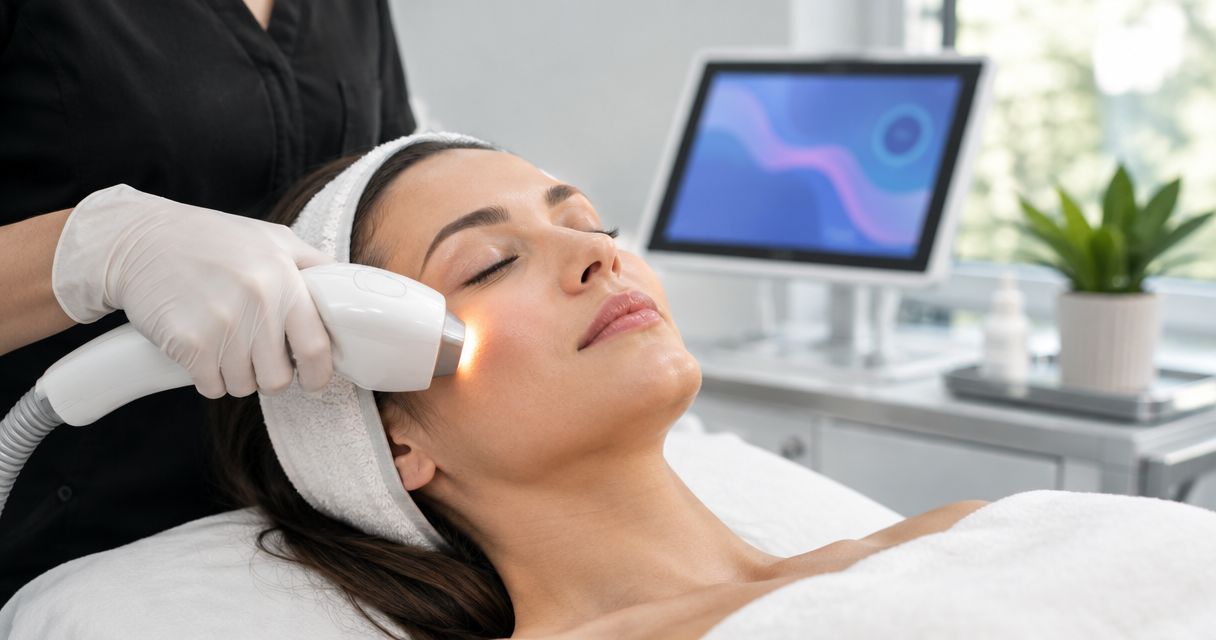
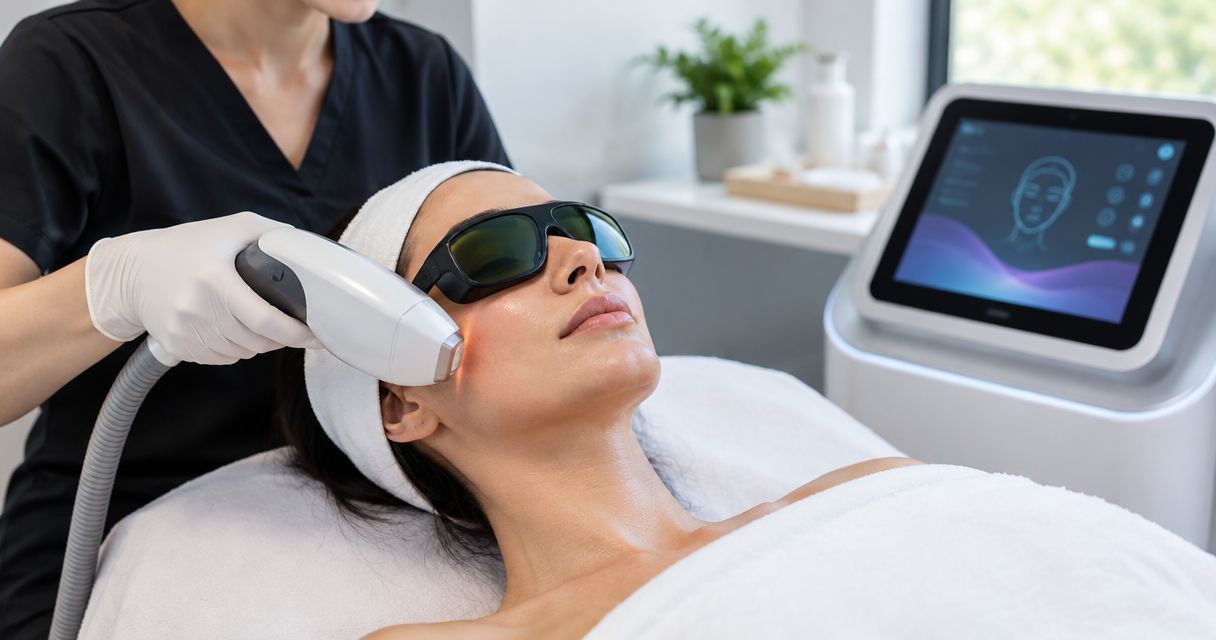
Laser treatment uses light energy to target particular skin structures. Different devices address different concerns, so laser rejuvenation is a category—not a single interchangeable treatment.
Selected benign sun spots can respond to appropriately chosen treatment, but diffuse brown patches need a different assessment. Melasma can worsen with heat or inflammation, and a recent tan changes the risk discussion. Ask what diagnosis is being treated and why the proposed device fits your skin.
Ammonite Laser Spa lists laser skin rejuvenation and pigmentation treatments among its services. Device choice, candidacy, and recovery instructions belong in the consultation rather than being assumed from the service name.
Laser treatment pros:
- Can target selected areas of discoloration.
- Allows a concern-specific approach when the diagnosis is clear.
- Offers a procedural option when topical care does not meet the treatment goal.
Laser treatment cons:
- Burns, pigment changes, and scarring are possible complications.
- Recent tanning and some pigment disorders require particular caution.
- Results and downtime depend on the device and treatment intensity.
Best for: Assessed, persistent sun spots on skin suitable for the proposed laser.
Verdict: Hold booking until the spot type, device, and pigment risks are explained.
3. Microneedling: best for uneven texture and indented scars
Microneedling creates controlled punctures that stimulate a wound-healing response. It is minimally invasive, not a no-injury facial, and its main role here is texture—not removing every brown mark left after summer.
Consider it when your concern is indented acne scarring or uneven texture rather than active sunburn. Skin must be assessed for active acne, infection, healing problems, and a tendency toward abnormal scarring before treatment.
Ammonite Laser Spa offers microneedling, but suitability still depends on your skin and treatment goal. Ask which texture concern is being addressed and how aftercare changes your usual routine.
Microneedling pros:
- Addresses texture through controlled skin remodeling.
- Can form part of a plan for indented acne scars.
- Does not depend on targeting pigment with light energy.
Microneedling cons:
- Redness, tenderness, and temporary irritation can follow treatment.
- Infection, scarring, and pigment changes remain possible.
- Flat discoloration alone is not a reason to choose needling automatically.
Best for: Uneven texture or indented scars after active inflammation has been assessed.
Verdict: Hold until skin is settled and the texture diagnosis supports treatment.
4. Targeted pigment skincare: best for flat discoloration
Targeted pigment skincare uses selected topical ingredients to address diagnosed uneven color. Options such as azelaic acid or clinician-directed pigment treatments serve different purposes; they should not become an improvised stack of strong products.
Flat acne marks, sun spots, and melasma can look similar to an untrained eye. In your 2026 plan, identify the pigment pattern before deciding whether topical care, a procedure, or medical evaluation belongs first.
Targeted pigment skincare pros:
- Offers a nonprocedural route for appropriate pigmentation concerns.
- Allows a focused routine rather than unnecessary full-face resurfacing.
- Can accompany sun-protection habits that reduce further darkening.
Targeted pigment skincare cons:
- Improvement requires consistent use and realistic expectations.
- Irritating ingredients can trigger further discoloration.
- Some treatments require prescription oversight or specific limits on use.
Best for: Flat discoloration with an established diagnosis and a tolerable skincare plan.
Avoid treating an unidentified spot with lightening products. Cosmetic fading can delay evaluation without resolving the underlying issue.
Verdict: Buy only the targeted products your assessment supports; skip ingredient stacking.
5. Topical retinoids: best for longer-term photoaging care
Topical retinoids affect skin-cell turnover and can improve signs of photoaging, including fine lines and uneven pigmentation. Prescription tretinoin and cosmetic retinol are not interchangeable in strength or evidence.
Retinoids belong in a longer-term plan, not an emergency fix for skin that already stings. Discuss use with a clinician if you are pregnant, trying to conceive, breastfeeding, or receiving procedures; topical retinoids are generally avoided during pregnancy.
Topical retinoid pros:
- Supports gradual treatment of fine lines and uneven tone.
- Provides an at-home option for an ongoing skincare plan.
- Has established dermatologic use for photoaging with appropriate formulations.
Topical retinoid cons:
- Dryness, peeling, and irritation can interfere with use.
- Combining retinoids with other irritating treatments increases sensitivity.
- Procedure preparation and aftercare can require changes to the routine.
Best for: Settled skin needing longer-term attention to fine lines and uneven tone.
Tell your provider exactly what you use, including product strength when known. Do not guess when to stop or restart a retinoid around a procedure.
Verdict: Hold during active irritation; consider a suitable retinoid for ongoing care.
6. Superficial chemical peels: best for surface dullness
A superficial chemical peel uses a selected chemical solution to exfoliate the skin in a controlled way. The acid, concentration, application, and skin condition affect both the result and the risk.
A peel is not a way to remove damaged skin indiscriminately after a sunny vacation. Recently burned, inflamed, or highly reactive skin needs assessment rather than stronger exfoliation.
Superficial peel pros:
- Addresses selected surface-texture and uneven-tone concerns.
- Offers controlled exfoliation when professionally selected.
- Provides an alternative to device-based treatment for suitable skin.
Superficial peel cons:
- Stinging, peeling, and redness can occur.
- Poor selection can cause burns or post-inflammatory pigmentation.
- A peel does not resolve every type of scar or pigment disorder.
Best for: Surface dullness on settled skin that is suitable for the chosen peel.
Deeper does not mean better. Avoid choosing peel intensity around a social deadline or assuming that visible peeling proves success.
Verdict: Hold until the peel type and pigment risks match your skin.
How these treatments rank
This 2026 ranking prioritizes skin readiness, a clear treatment target, and manageable aftercare. Barrier repair ranks first because irritated skin should not be pushed directly into elective resurfacing; the remaining options occupy different concern-specific slots.
The ranking does not imply that one device or ingredient wins for everyone. Ammonite Laser Spa's skin rejuvenation services fit the procedural categories, while medical diagnosis and home care remain separate parts of the decision.
Which treatment should you choose?
Choose barrier repair and sun protection when you are unsure where to start. Then identify the remaining concern: color, texture, or both.
For isolated spots, request an assessment before laser treatment. For indented scars, discuss microneedling; for flat discoloration or fine lines, ask whether a topical plan is the better starting point. Bring your current skincare products and explain any recent tanning before agreeing to a procedure.
Discuss your skin treatment options
Explore personalized skin rejuvenation services in Downtown Brooklyn.
FAQ
What's the best post-summer skin repair treatment in 2026?
Barrier repair and daily sun protection are the best starting point for irritated post-summer skin. Persistent discoloration or texture changes need a separate assessment before choosing laser treatment, microneedling, or topical care.
Is laser treatment better than microneedling for sun damage?
Laser treatment and microneedling address different concerns. Selected lasers target appropriate sun spots, while microneedling primarily addresses texture; neither is the automatic choice for every sign of sun exposure.
Can I book a laser treatment while I still have a tan?
Tell the treating provider about any recent tan before booking laser treatment. Tanning affects treatment risk, and the appropriate waiting period depends on your skin, the device, and the planned procedure.
Should I exfoliate peeling skin after a sunburn?
Do not exfoliate active sunburn or pull away peeling skin. Use gentle care and seek medical advice for blistering, significant pain, worsening symptoms, or concerns about healing.
Does sunscreen remove existing sun spots?
Sunscreen does not remove established sun spots. It helps protect against further UV exposure and supports a treatment plan aimed at discoloration.
Can darker skin tones have post-summer skin treatments?
Darker skin tones can receive appropriately selected treatments, but pigment-change risks require careful planning. Ask about experience with your skin tone, device selection, and your history of dark marks after irritation.
What should I ask before a skin rejuvenation appointment?
Ask what concern is being treated, why the proposed treatment fits, and what complications and aftercare to expect. Also disclose recent tanning, medications, pregnancy status, current products, and previous healing problems.
One last thing
A patch that appears after summer is not necessarily caused only by summer. Heat, acne, irritation, medications, and pigment disorders can contribute to discoloration, so bring photographs showing when it appeared and how it changed.
For 2026, make diagnosis—not treatment intensity—the deciding factor. A more aggressive procedure is not a better choice when it targets the wrong problem.