Best overall for mild jawline laxity: microfocused ultrasound. Best for laxity with uneven texture: radiofrequency microneedling. Best for advanced jowls: a surgical consultation. This 2026 guide compares the best skin tightening treatments jawline searches bring up, separating genuine tightening from treatments that mainly improve skin texture.
- For best skin tightening treatments jawline comparisons, match the treatment to loose skin, texture, fat, or structural changes.
- Microfocused ultrasound is a leading nonsurgical option for mild laxity, not a substitute for a facelift.
- Radiofrequency microneedling combines controlled heat with needling; burns, scarring, and fat loss are important risks.
- Ammonite Laser Spa offers microneedling and laser skin rejuvenation; confirm the exact procedure before booking.
Why this matters
A soft jawline does not always mean loose skin. Under-chin fat, skin laxity, muscle changes, and facial structure require different assessments; treating the wrong problem leaves the original concern unresolved.
Ammonite Laser Spa offers personalized skin treatments in Downtown Brooklyn, including microneedling and laser skin rejuvenation. Those service names do not establish that the studio offers radiofrequency microneedling, ultrasound tightening, or a particular resurfacing device.
Choose an assessment before choosing a machine. In 2026, a useful consultation should explain what is changing your jawline and what the proposed procedure actually treats.
What makes the best jawline tightening treatment?
These criteria determine whether a treatment belongs on your shortlist:
- Problem match: Loose skin needs a different approach from pigmentation, scarring, or under-chin fullness.
- Treatment depth: Surface resurfacing and deeper tissue heating are not interchangeable.
- Expected change: Modest improvement is different from repositioning descended tissue.
- Safety fit: Skin tone, medical history, implants, medications, and previous procedures affect suitability.
- Recovery burden: Consider redness, swelling, wound care, sun protection, and time away from normal activities.
- Operator judgment: Ask who performs the procedure, who evaluates complications, and why the device fits your anatomy.
Jawline treatments at a glance
The ranking below separates use cases rather than declaring one procedure right for every face. No nonsurgical treatment earns a blanket promise of a sharper jawline.
| Treatment | Best for | Standout feature | Key limitation |
|---|---|---|---|
| Microfocused ultrasound | Mild laxity with deeper tightening as the main goal | Focused energy delivered beneath the skin surface | Does not remove substantial excess skin |
| Radiofrequency microneedling | Mild laxity accompanied by uneven texture | Needling combined with thermal treatment | Burns, scarring, nerve injury, and fat loss are reported risks |
| Fractional laser resurfacing | Fine lines and surface damage along the lower face | Treats selected areas of skin to stimulate remodeling | Recovery and pigmentation risks vary by laser and settings |
| Conventional microneedling | Texture-first concerns with limited laxity | Mechanical collagen-induction treatment without added radiofrequency heat | Not a dependable treatment for established jowls |
| Lower-face or neck-lift assessment | Advanced jowls or substantial excess skin | Evaluates direct tissue repositioning and skin removal | Surgery brings recovery, scarring, and anesthesia risks |
1. Microfocused ultrasound: best for mild jawline laxity
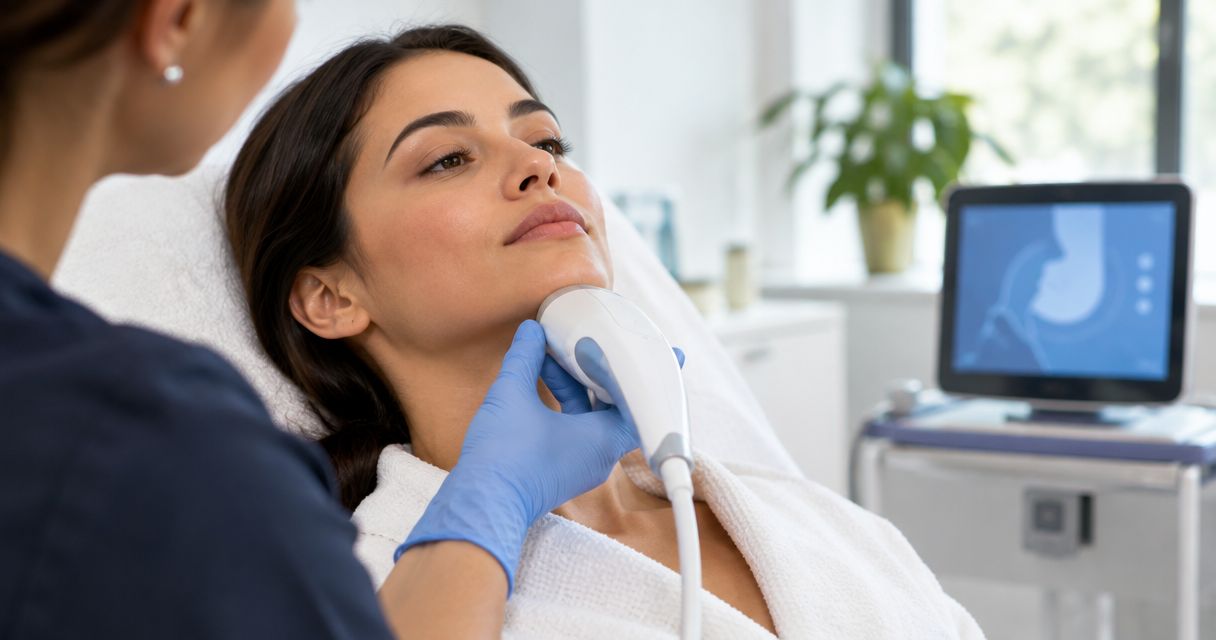
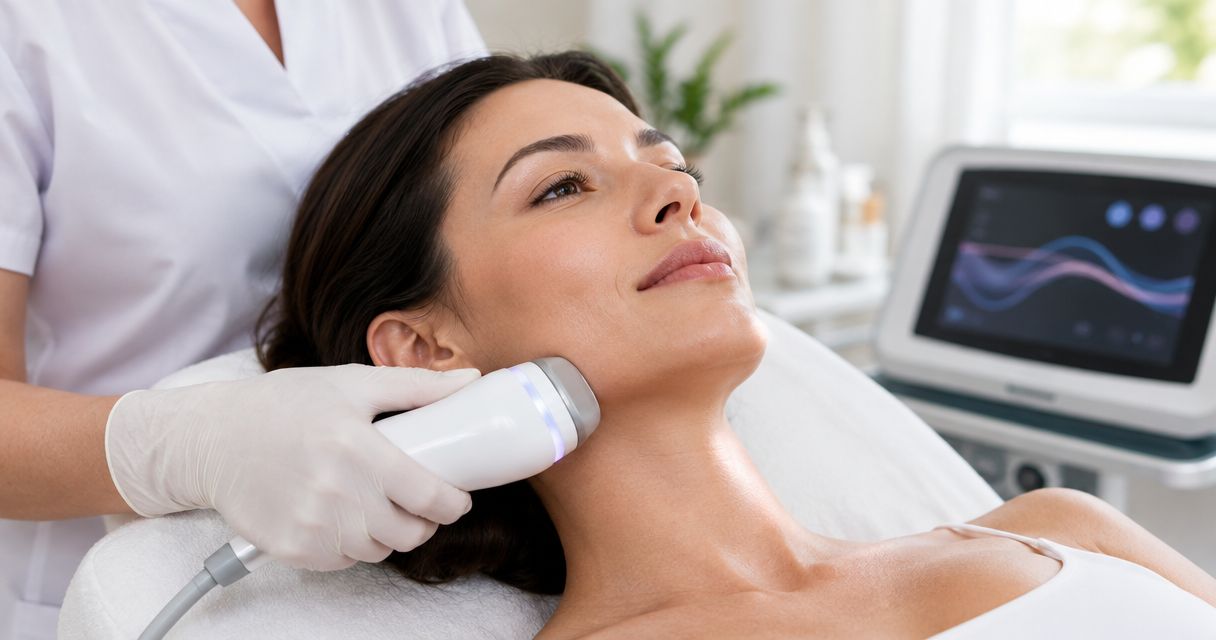
Microfocused ultrasound delivers focused energy beneath the skin surface to produce a controlled thermal response. It belongs on the shortlist when mild looseness, rather than surface discoloration or acne scarring, is the main concern.
The appeal is deeper treatment without surgical incisions. The limitation is equally important: collagen remodeling does not reproduce surgical tissue repositioning, and treatment response varies.
Microfocused ultrasound pros:
- Targets tissue beneath the surface rather than relying on exfoliation.
- Does not require surgical skin removal.
- Fits a tightening-focused consultation better than a texture-only facial.
Microfocused ultrasound cons:
- Treatment discomfort, tenderness, and swelling are possible.
- Burns and nerve-related complications require discussion.
- Substantial jowls or excess skin need a different assessment.
Best for: Someone with mild lower-face laxity who accepts a nonsurgical result rather than a surgical transformation.
For a 2026 consultation, ask for the exact device name, its cleared indication, and the intended treatment area. A clearance for one anatomical area does not establish suitability for every part of the face.
Verdict: Hold until a qualified clinician confirms that mild laxity is the main problem.
2. Radiofrequency microneedling: best for laxity with uneven texture
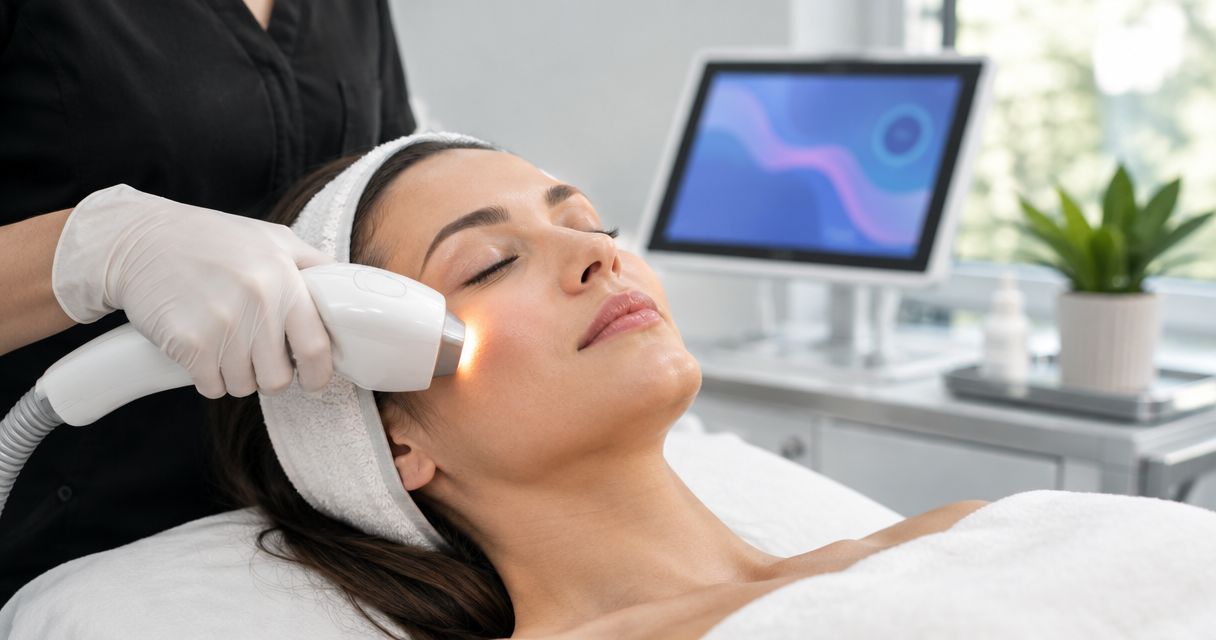
Radiofrequency microneedling uses needles to deliver radiofrequency energy into tissue. It differs from conventional microneedling because the thermal component changes both its intended effects and its risks.
This combination deserves consideration when mild laxity accompanies uneven texture or acne scarring. It does not justify treating every soft jawline with heat.
Radiofrequency microneedling pros:
- Addresses texture and tissue remodeling within one procedure.
- Allows treatment depth and energy to be selected by the clinician.
- Does not involve surgical excision of excess skin.
Radiofrequency microneedling cons:
- The FDA has reported serious complications, including burns, scarring, fat loss, disfigurement, and nerve damage.
- Redness, swelling, and visible treatment marks affect recovery.
- Unwanted volume loss is particularly relevant when facial fullness is already limited.
Best for: A patient whose clinician identifies both texture concerns and mild laxity, with enough reason to justify thermal treatment.
Ask how the practitioner avoids unintended damage and manages complications. A device name alone is not a safety plan, and an aggressive setting is not evidence of a better result.
Verdict: Hold until the clinician explains both the expected benefit and the thermal risks for your face.
3. Fractional laser resurfacing: best for surface aging
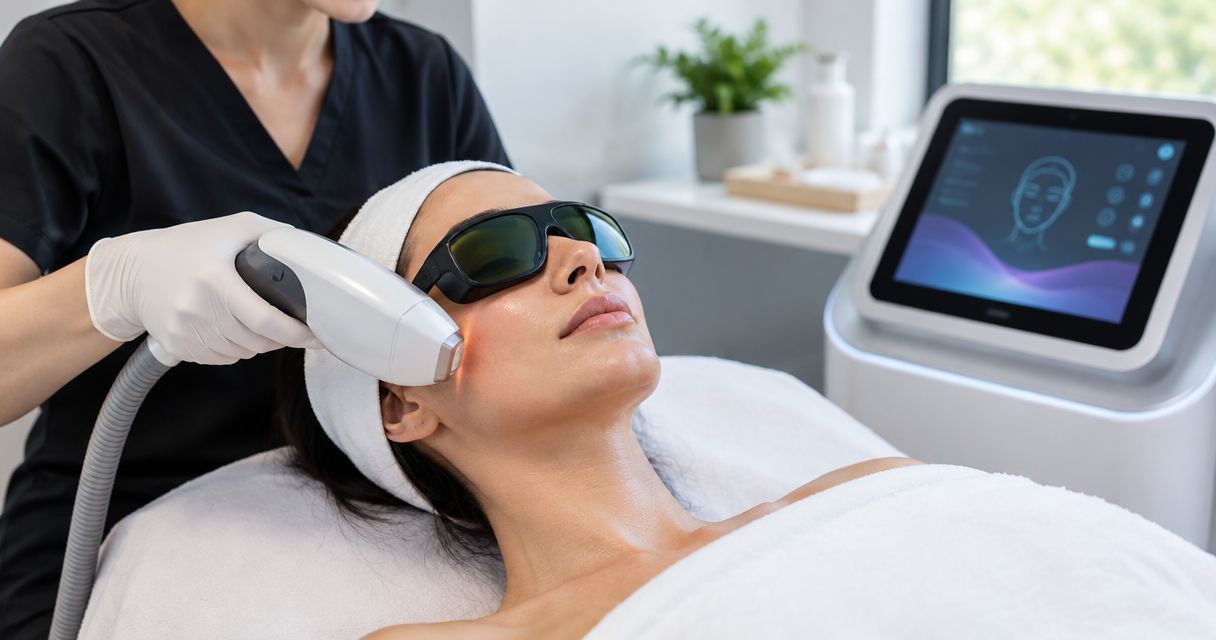
Fractional laser resurfacing treats selected areas of skin rather than treating the entire surface uniformly. Ablative and nonablative approaches differ in how they affect tissue and in the recovery they require.
For the jawline, its strongest fit is a surface-aging concern: fine lines, roughness, or sun-related skin changes. Improved skin quality is not the same as lifting descended tissue.
Fractional laser resurfacing pros:
- Targets visible surface changes that tightening-only procedures do not directly address.
- Offers different treatment approaches based on the laser and clinical assessment.
- Supports collagen remodeling as treated skin heals.
Fractional laser resurfacing cons:
- Redness, swelling, infection, scarring, and pigment changes are possible.
- More intensive resurfacing requires more involved aftercare.
- It does not directly remove under-chin fat or reposition substantial jowls.
Best for: Someone whose lower-face concern is predominantly fine lines and damaged skin texture rather than hanging skin.
Ammonite Laser Spa lists laser skin rejuvenation among its services, but that does not identify the laser or establish that fractional resurfacing is offered. Use the laser skin rejuvenation guide to prepare questions, then confirm the actual procedure.
Verdict: Hold if lifting is your main goal; consider resurfacing when surface aging is the priority.
4. Conventional microneedling: best for texture-first concerns
Conventional microneedling creates controlled punctures in the skin without adding radiofrequency energy. Its role is collagen induction and skin-quality improvement, not mechanical lifting.
This is the more relevant comparison when acne scars or uneven texture bother you more than the jawline silhouette. Calling it a nonsurgical facelift sets the wrong expectation.
Conventional microneedling pros:
- Addresses texture-related concerns through controlled skin injury.
- Does not add radiofrequency heat.
- Keeps the treatment discussion focused on skin quality rather than an unsupported lifting promise.
Conventional microneedling cons:
- Redness, irritation, infection, scarring, and pigmentation changes remain possible.
- Established jowls are not a dependable target.
- Professional needling is not equivalent to using a home roller.
Best for: Someone with texture concerns and little actual skin laxity.
Ammonite Laser Spa offers microneedling, making it a relevant local option for a texture-focused consultation. The microneedling guide for acne scars addresses that separate treatment goal; scar improvement should not be presented as proof of jawline lifting.
Verdict: Skip conventional microneedling as your main treatment for pronounced jowls.
5. Surgical assessment: best for advanced jowls
A lower-face or neck-lift consultation evaluates changes that nonsurgical procedures cannot reliably correct. Depending on the anatomy, surgery addresses descended tissue, excess skin, or both.
Surgery belongs in this comparison because excluding it creates a misleading choice for someone with substantial laxity. That does not mean surgery is necessary or appropriate for every patient.
Surgical assessment pros:
- Evaluates direct correction of excess skin and descended tissue.
- Clarifies the limits of nonsurgical alternatives.
- Separates facial aging concerns from isolated skin-texture problems.
Surgical assessment cons:
- Surgery involves incisions, scars, and recovery.
- Bleeding, infection, anesthesia complications, and nerve injury require informed consent.
- Medical suitability and willingness to undergo surgery determine whether it is an option.
Best for: Someone with advanced jowls or substantial excess skin who wants a realistic explanation of corrective options.
Consult a board-certified plastic surgeon or facial plastic surgeon. Bring your previous treatment history, including fillers and energy-based procedures, rather than treating each consultation as an isolated event.
Verdict: Hold further tightening purchases until a surgical assessment clarifies your options.
Match the treatment to the problem
Use this sequence before booking. Each step narrows the decision without assuming that a visible jawline change has only one cause.
- Identify the concern: Point out loose skin, rough texture, fullness, or a change in facial shape.
- Review your history: Disclose medications, previous fillers, procedures, scarring, and pigment reactions.
- Confirm the procedure: Get the treatment name, device, intended area, and operator qualifications.
- Discuss the limits: Ask what will remain unchanged, not just what should improve.
- Plan aftercare: Establish recovery instructions and a route to clinical help if problems develop.
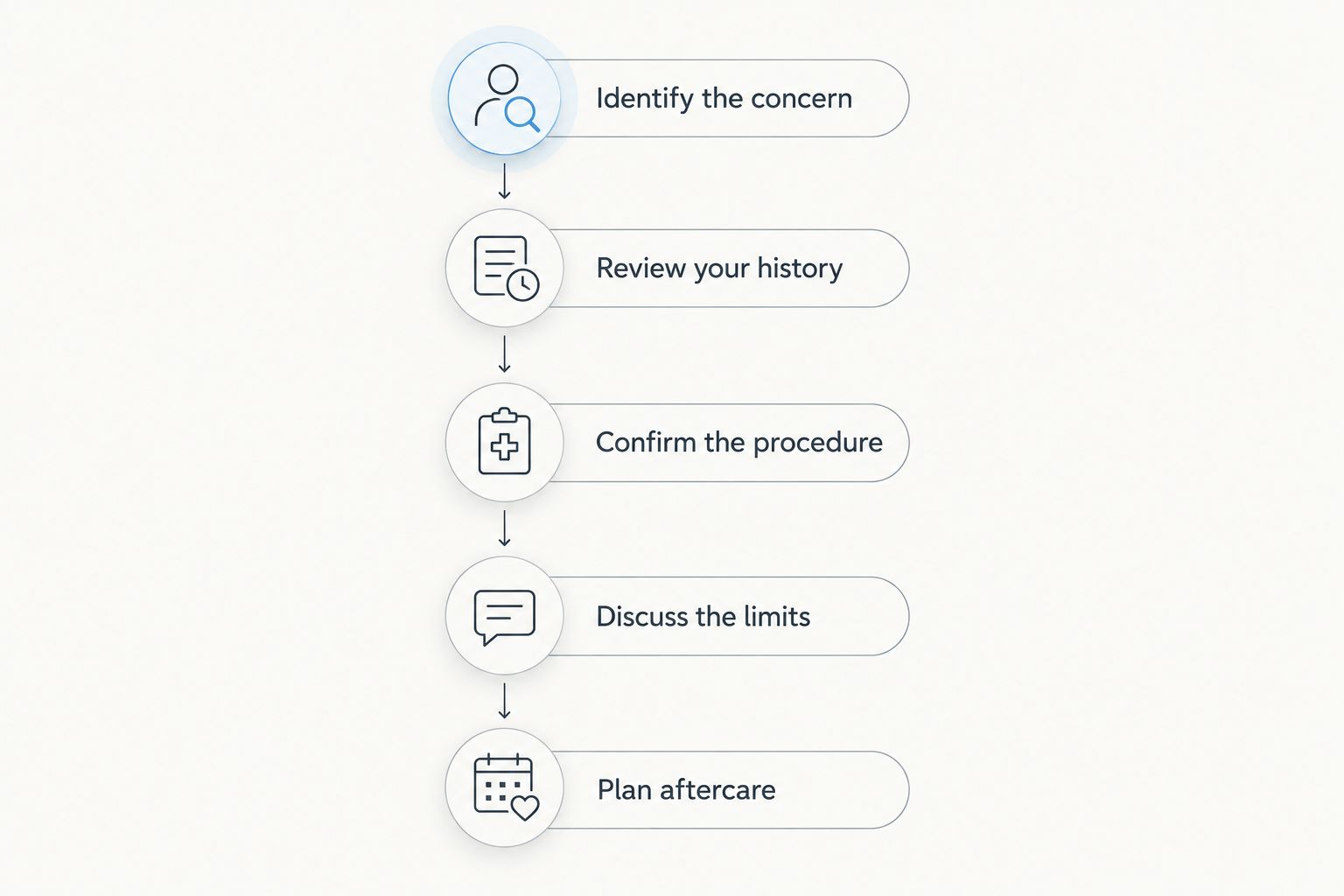
A useful consultation ends with a specific recommendation and a clear reason. If the explanation stops at stimulating collagen, ask how that addresses your particular jawline concern.
How these treatments are ranked
This 2026 ranking prioritizes problem match, treatment depth, realistic correction, safety, and recovery. It is a decision guide, not a claim that every procedure has been compared head-to-head or that every patient responds alike.
FDA device information helps establish intended uses and safety concerns. The American Academy of Dermatology's patient guidance distinguishes nonsurgical tightening from surgical lifting; neither source replaces an individual examination.
Which jawline treatment should you choose?
For mild laxity, start with an assessment for microfocused ultrasound; for advanced jowls, start with a surgical consultation. Add texture concerns to the discussion before considering radiofrequency microneedling, fractional laser resurfacing, or conventional microneedling.
Ammonite Laser Spa is best suited to Downtown Brooklyn clients seeking personalized microneedling or laser skin rejuvenation consultations. For jawline tightening, confirm whether the offered treatment addresses laxity rather than assuming every skin service lifts.
Your 2026 decision should follow the diagnosis, not the most dramatic treatment photograph. Compare images with consistent lighting, head position, and facial expression, and ask which changes the procedure cannot deliver.
FAQ
What's the best nonsurgical treatment for a loose jawline?
Microfocused ultrasound is a leading option for mild jawline laxity, but no nonsurgical treatment is best for every face. A clinician must distinguish loose skin from fat, volume loss, and descended tissue before recommending treatment.
Is radiofrequency microneedling better than regular microneedling for tightening?
Radiofrequency microneedling adds thermal treatment, so it is a different procedure rather than simply stronger microneedling. That difference brings additional risks, including burns and unintended fat loss, which must be weighed against the intended benefit.
Can laser skin rejuvenation remove jowls?
Laser skin rejuvenation does not reliably remove established jowls. Some laser procedures improve skin texture and support collagen remodeling, but substantial tissue descent requires a different assessment.
Does buccal facial massage permanently tighten the jawline?
Buccal facial massage is not an established replacement for procedures that address skin laxity or descended tissue. Do not interpret temporary changes in appearance as evidence of permanent lifting.
How many sessions will I need for jawline tightening?
The treatment plan depends on the procedure, your anatomy, and your response. Ask for a reassessment plan rather than accepting a fixed package before the cause of your concern is established.
Is jawline tightening safe for darker skin tones?
Suitability depends on the device, settings, procedure, and clinician's experience with your skin tone. Pigment changes and scarring must be discussed, particularly for resurfacing and treatments that create controlled skin injury.
What jawline-related treatments does Ammonite Laser Spa offer?
Ammonite Laser Spa offers microneedling and laser skin rejuvenation among its personalized skin services in Downtown Brooklyn. Confirm the exact procedure and whether its intended benefit is texture improvement, pigmentation treatment, or tightening before booking.
One last thing
A sharper jawline is not always a tighter jawline. Changing camera angle, reducing temporary puffiness, or improving skin texture can alter appearance without correcting laxity.
Protect treated skin according to your clinician's instructions. The American Academy of Dermatology recommends broad-spectrum, water-resistant sunscreen with SPF 30 or higher; sun protection supports skin care but does not lift existing jowls.