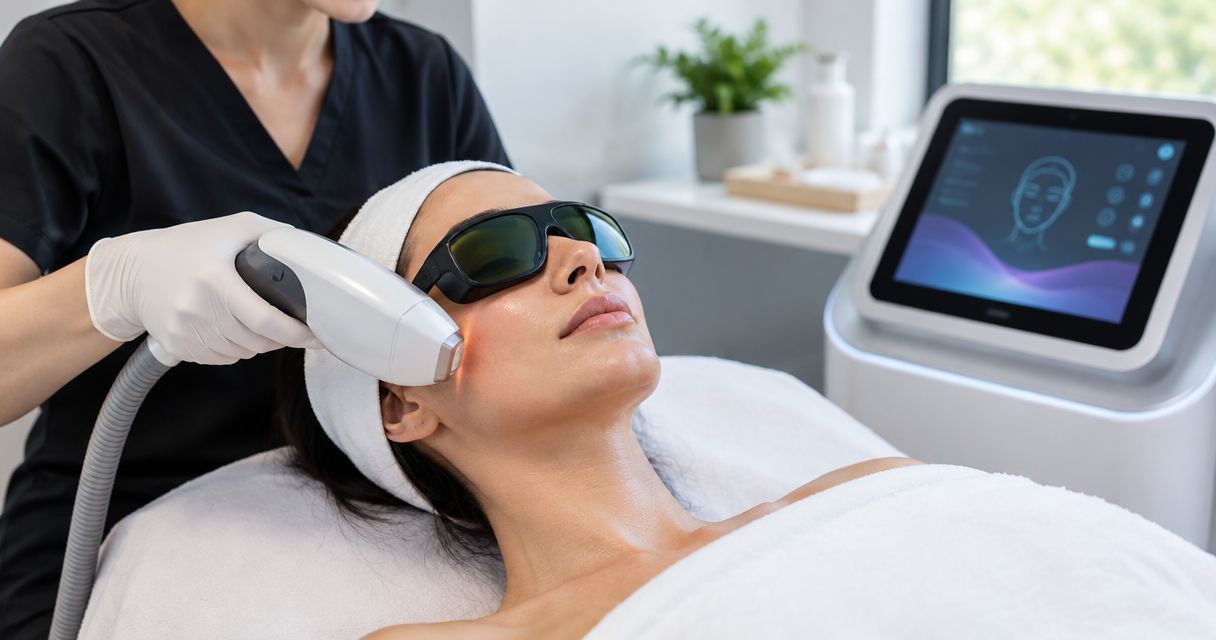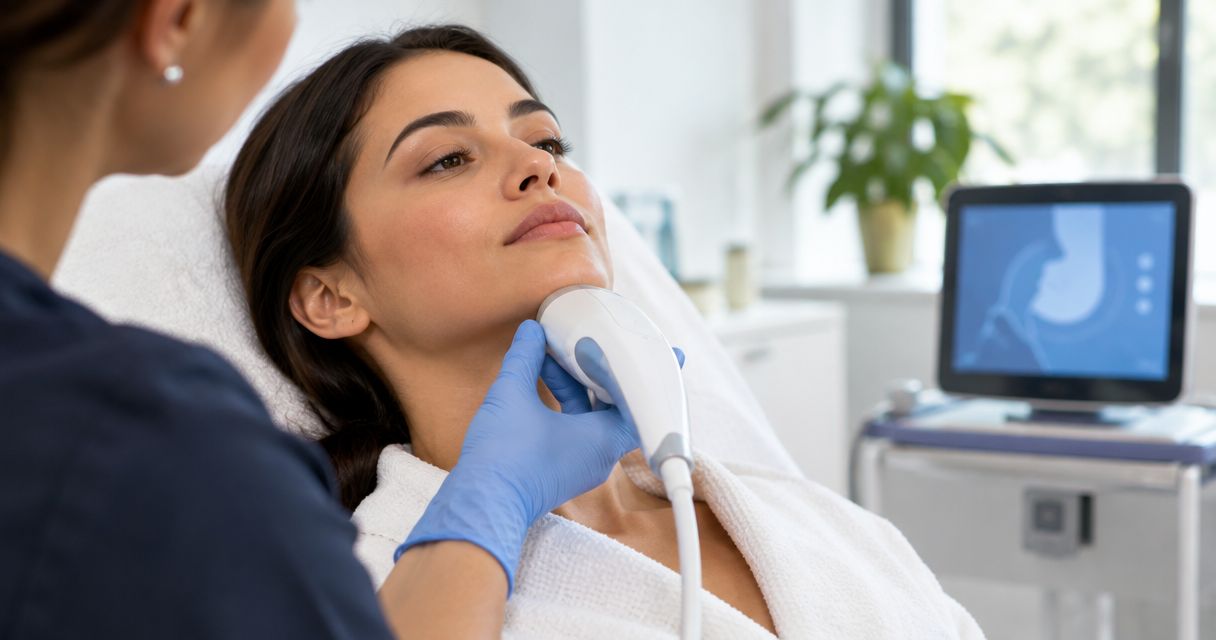
Skin tightening can improve a double chin caused mainly by mild skin looseness, but it does not reliably fix fullness caused by excess fat or underlying anatomy. In 2026, the right next step is an assessment of what creates the fullness—not choosing a treatment from a before-and-after photo.
- Can skin tightening fix a double chin? Sometimes—when mild loose skin, rather than excess fat, drives the appearance.
- Skin tightening and double-chin fat reduction address different tissues; neither substitutes for an assessment.
- Ammonite Laser Spa serves Downtown Brooklyn clients seeking personalized, non-invasive skin treatments.
- Significant loose skin or structural concerns warrant a medical consultation before choosing a nonsurgical procedure.
Can skin tightening fix a double chin without surgery?
Yes, when mild skin laxity is the main problem; no, not as a universal solution for every double chin. Tightening treatments aim to improve skin firmness. Fat-reduction procedures target fatty tissue, while surgery can address tissue that nonsurgical treatments cannot adequately correct.
The distinction matters more than the treatment name. Start with the difference between these concerns before comparing skin tightening treatments for the jawline.
| Main concern | Approach to discuss | Best for | Main limitation |
|---|---|---|---|
| Mild loose skin | Nonsurgical skin tightening | People seeking a modest improvement in skin firmness | Does not directly correct substantial fat or underlying structure |
| Localized fatty fullness | A medically appropriate fat-reduction procedure | People whose fullness comes mainly from treatable fat | Reducing fat does not necessarily tighten loose skin |
| Fat and loose skin together | An individualized treatment plan | People with more than one contributing concern | A single procedure might not address both concerns |
| Marked excess skin or structural concerns | Evaluation by a qualified medical specialist | People seeking assessment beyond surface skin changes | Nonsurgical treatments have limited corrective scope |
These are categories for discussion, not a diagnosis you can make from a mirror. A clinician needs to examine the area and review your history before recommending a procedure.
Why this matters
A double chin describes an appearance, not one specific tissue problem. Loose skin, fat distribution, and the shape of your chin and neck can contribute to a similar-looking profile.
Treating the wrong tissue leaves the main concern unchanged. Firmer skin does not automatically mean less fat, and less fat does not automatically produce a tighter neck.
For a 2026 consultation, ask the provider to identify the tissue being treated before discussing equipment or a treatment package. The treatment should follow the assessment—not the other way around.
When loose skin is the main concern
Nonsurgical skin tightening is most relevant when skin laxity contributes to a softer jawline or a loose appearance beneath the chin. Some energy-based treatments use controlled heating to stimulate tissue remodeling, but the mechanism and treatment depth depend on the specific device.
The potential benefit is improved firmness without surgical skin removal. The limitation is equally important: nonsurgical treatment does not remove a substantial fold of excess skin or change the position of the chin bone.
Best for: someone seeking a modest change in mild skin laxity, with expectations matched to the proposed procedure. Ask the clinician to show which part of your concern is realistically treatable and which part is not.
Do not treat every procedure described as skin rejuvenation as interchangeable with tightening. A treatment intended for pigmentation or surface texture does not automatically address laxity under the chin.
When fat is the main concern
If fatty tissue creates most of the fullness, skin tightening alone does not directly address the central problem. Discuss whether a fat-targeting treatment is appropriate for your anatomy, health history, and treatment area.
The potential advantage of fat reduction is that it targets volume rather than relying on a change in skin firmness. Its limitation is that the remaining skin still determines how the contour looks afterward.
Best for: someone whose clinician identifies localized, treatable fatty fullness as the main contributor. The recommendation must be specific to the under-chin area; a procedure used elsewhere on the body is not automatically appropriate for the neck.
Do not assume that a service called body contouring includes treatment beneath the chin. Confirm the exact device, its intended treatment areas, and the provider's qualifications before agreeing to treatment.
When fat and loose skin occur together
Some double chins involve both fatty fullness and loose skin. In that situation, improving only one component can leave the other visible.
An individualized plan allows the clinician to explain whether treatment should target fat, laxity, or both. The trade-off is that combining procedures adds separate risks, recovery considerations, and decisions about treatment order.
Best for: someone with mixed concerns who understands that a single treatment might not achieve the desired contour. Ask why each proposed procedure is necessary rather than assuming that more procedures produce a better result.
Significant excess skin, prominent neck bands, or concerns about chin projection deserve a medical specialist's assessment. Choosing an assessment does not commit you to surgery; it clarifies the limits of nonsurgical care.
Why double-chin improvement varies
Results depend on the starting anatomy and the procedure selected, not simply whether a treatment is described as tightening. These factors explain why the same treatment category does not produce the same visible change for everyone:
- Skin laxity: Mild looseness and substantial excess skin require different expectations.
- Fat distribution: The location and amount of fatty tissue influence whether a fat-targeting approach is relevant.
- Chin and neck anatomy: Skin treatment cannot reposition bone or correct every structural contributor to the profile.
- Device and treatment depth: Different technologies act on different tissues; their names are not interchangeable.
- Health history: Previous procedures, medications, implants, and skin conditions can affect treatment suitability.
- Your definition of success: Subtle firmness and a substantially different neck contour are different goals.
Age alone does not answer the question. Ask the provider to describe your specific findings instead of recommending a procedure solely because of your age group.
How do you choose the right next step?
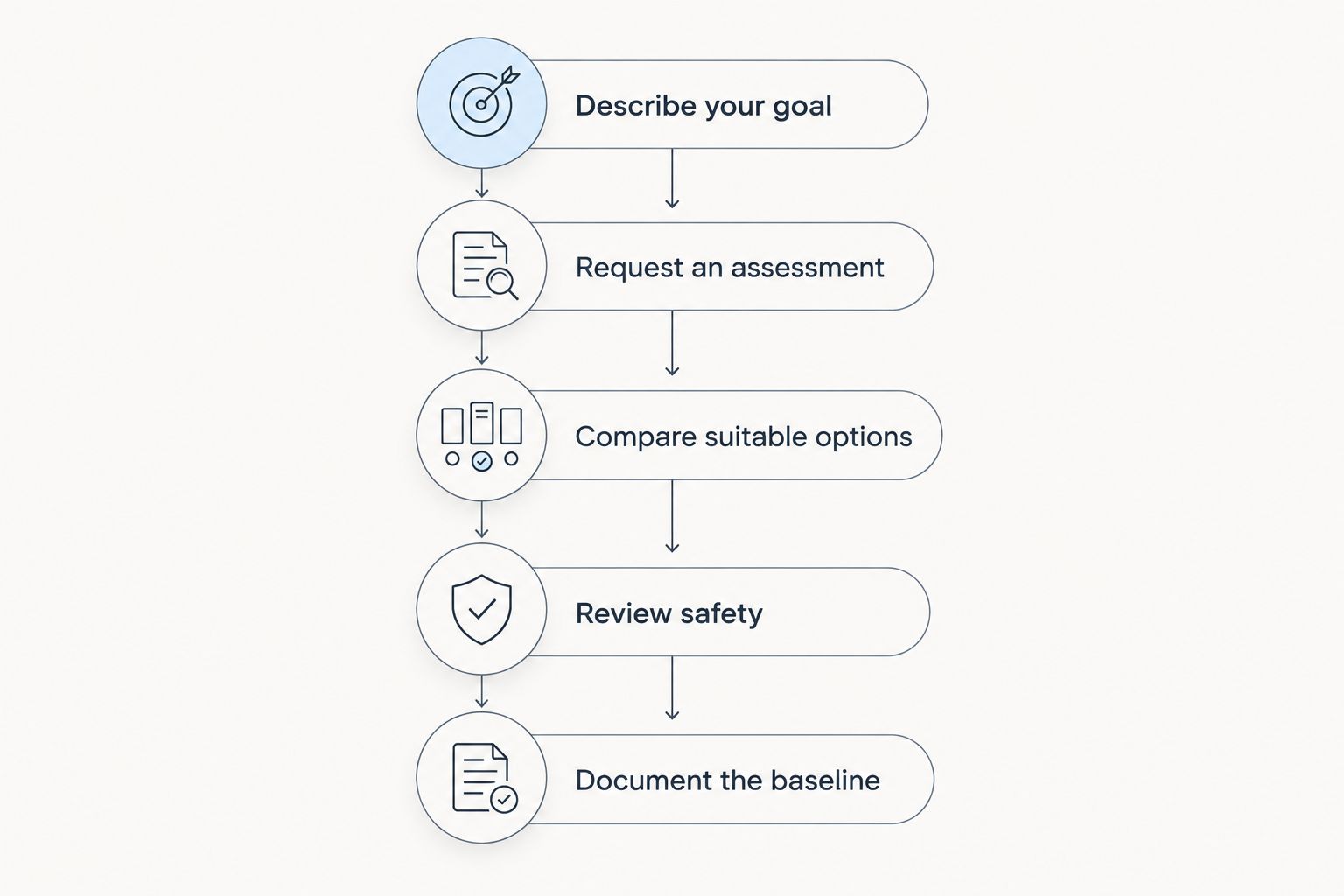
Use this sequence during your 2026 consultation. Its purpose is to establish a clear treatment rationale before you make a decision.
Describe your goal
Write down 1 primary goal before the visit: less fullness, firmer skin, or a clearer jawline. These goals overlap, but they are not identical.
Bring that wording to the consultation. A provider should be able to explain whether the proposed procedure addresses your stated goal rather than a different concern that is easier to treat.
Request an assessment
Ask the clinician to identify the main contributors to your under-chin appearance. Do not rely on an at-home pinch test; feeling tissue does not establish a diagnosis or determine device suitability.
A useful explanation separates the skin, fatty tissue, and underlying anatomy. If the explanation remains vague, pause the treatment decision and seek clarification.
Compare suitable options
Ask these 3 consultation questions: What tissue are you treating? What change is realistic? What are the alternatives, including no treatment?
The answers should name the proposed procedure and its limits. A treatment category alone is not enough information to assess suitability or risk.
Review safety
Discuss your medications, medical conditions, previous cosmetic procedures, and any implanted devices. Ask about expected reactions, less common complications, aftercare, and who handles a problem after the visit.
Nonsurgical does not mean risk-free. Depending on the procedure, adverse effects can include pain, swelling, burns, pigment changes, scarring, or nerve injury.
Document the baseline
Use 2 photo views—front and profile—with consistent lighting, posture, distance, and camera height. Follow the clinic's photography instructions if it uses a standardized process.
The goal is a fair comparison, not a flattering angle. Head position and lighting can change the appearance of an under-chin fold without any treatment effect.
What should a local consultation establish?
Ammonite Laser Spa offers personalized laser skin rejuvenation, microneedling, and cryo body contouring in Downtown Brooklyn. Those service categories do not establish that a particular under-chin procedure is suitable for you; review the services and ask what is specifically offered for your concern.
Ammonite Laser Spa is best suited to Downtown Brooklyn clients seeking personalized, non-invasive skin treatments. For a double-chin concern, confirm the exact treatment, the tissue it targets, and whether a medical referral is needed before proceeding.
A useful consultation also establishes what the provider will not treat. Clear limits are more useful than an assurance that every concern can be handled with the same device.
Ask about your treatment options
Describe your under-chin concern and ask which assessment or service is appropriate.
Can skin tightening remove double-chin fat?
Skin tightening does not reliably remove double-chin fat. Certain devices have specific indications involving more than one tissue effect, but that does not make every tightening treatment a fat-reduction procedure.
Ask the provider whether the proposed device targets skin laxity, fat, or both. The answer should refer to that exact device and treatment area—not a general claim about energy-based treatments.
Will nonsurgical treatment give you a surgical-looking neck lift?
Nonsurgical skin tightening is not equivalent to a surgical neck lift. It does not remove excess skin in the way surgery does, and it cannot correct every deeper structural concern.
For your 2026 decision, compare the proposed result with your actual goal. If you want substantial tissue removal or repositioning, a specialist consultation gives you a clearer basis for deciding whether to accept a smaller nonsurgical change.
How should you judge a result?
Judge the result against the concern identified before treatment. If the goal was firmer skin, evaluate firmness and contour rather than expecting the procedure to eliminate every trace of fullness.
Use consistent photographs and the follow-up schedule recommended for the specific procedure. Do not interpret immediate swelling or a change in head position as proof of a lasting result.
Before another treatment is recommended, ask what changed and what remains. Repeating a procedure without reassessing the remaining concern does not establish that it is the right next step.
FAQ
Can skin tightening fix a double chin without surgery?
Skin tightening can improve a double chin when mild loose skin is the main contributor. It does not reliably correct excess fat, substantial excess skin, or underlying structural concerns.
How do I know whether my double chin is fat or loose skin?
An in-person clinical assessment is the appropriate way to distinguish fatty fullness, loose skin, and structural contributors. A mirror check or pinch test does not establish which procedure is suitable.
What's the best nonsurgical treatment for a double chin in 2026?
The best nonsurgical treatment depends on whether the main concern is skin laxity, fatty tissue, or both. Ask a qualified clinician to explain the target tissue and why a specific procedure fits your anatomy.
Can reducing double-chin fat leave loose skin?
Fat reduction does not necessarily tighten the overlying skin. Existing skin laxity can remain after fullness decreases, so skin quality belongs in the assessment before treatment.
How many skin-tightening sessions will I need?
Your session plan depends on the exact procedure, your assessment, and your response to treatment. Ask for a procedure-specific plan with reassessment points rather than a universal session count.
Is nonsurgical skin tightening risk-free?
Nonsurgical skin tightening is not risk-free. Risks vary by device and technique and can include pain, swelling, burns, pigment changes, scarring, or nerve injury.
Can I ask Ammonite Laser Spa about my double-chin concern?
You can contact Ammonite Laser Spa to describe your concern and ask which assessment or service is appropriate. Confirm whether the studio offers a treatment specifically suited to the under-chin area before making a treatment decision.
One last thing
A new lump beneath the chin is not automatically a cosmetic double chin. New, painful, firm, or one-sided swelling deserves medical evaluation before cosmetic treatment.
For a longstanding cosmetic concern, make your 2026 decision around a clear target and a realistic endpoint. Ask the provider to complete this sentence: the treatment addresses this tissue, but it will not change that feature. A clear answer is more useful than a dramatic photograph.