Non-surgical skin tightening is worth considering in 2026 if you have mild skin laxity and would be satisfied with a modest, gradual improvement—not a surgical lift. The trade-off is that results vary, maintenance adds to the commitment, and treatment cannot remove substantial excess skin.
- Is non-surgical skin tightening worth it? For mild laxity and modest expectations, yes; for substantial excess skin, no.
- The American Academy of Dermatology describes nonsurgical tightening results as more modest than surgical results.
- Match the treatment to loose skin, not just wrinkles, pigmentation, or unwanted fat.
- Ask for the exact device, expected improvement, risks, and reassessment plan before committing.
Is non-surgical skin tightening worth it in 2026?
The strongest reason to choose non-surgical skin tightening is that you want a smaller change without surgical incisions. The strongest reason to decline it is that only a substantial lift would satisfy you. A treatment can produce a visible improvement and still disappoint if your starting expectation is wrong.
The American Academy of Dermatology’s patient guidance on skin tightening distinguishes modest nonsurgical improvement from the more dramatic results of surgery. That distinction is the basis for this 2026 decision guide—not the suggestion that every tightening device produces the same outcome.
| Approach | Best for | Main advantage | Main limitation |
|---|---|---|---|
| Non-surgical tightening | Mild laxity with realistic expectations | Avoids surgical incisions | Does not remove excess skin; improvement is limited |
| Surgical assessment | Substantial loose skin or a goal of pronounced lifting | Evaluates whether tissue removal or repositioning fits the goal | Surgery involves recovery and surgical risks |
| No procedure | Anyone whose expected benefit does not justify treatment | Avoids procedural risks and ongoing treatment commitments | Does not directly correct existing laxity |
For a location-specific discussion, read the guide to skin tightening treatments for the jawline. A sharper jawline can involve skin, fat, facial structure, or a combination; treating the wrong component limits the result.
Why this matters
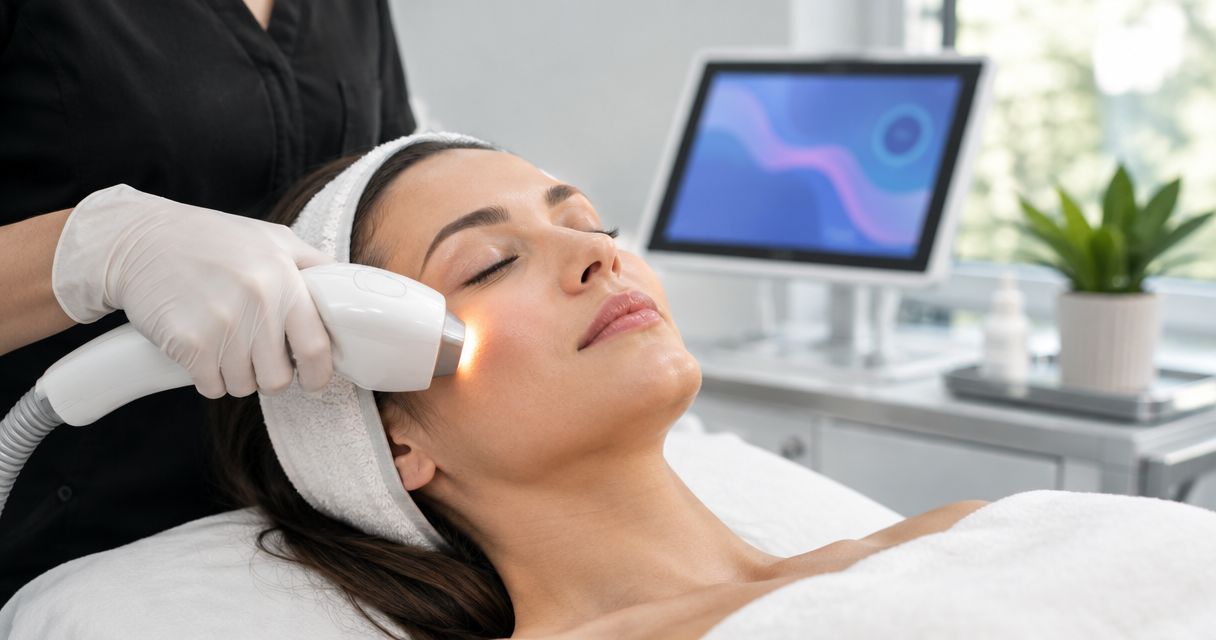
The phrase skin tightening describes a goal, not a single procedure. Ultrasound, radiofrequency, and some laser treatments use different technologies, and a familiar treatment name does not tell you whether a particular device suits your skin or concern.
You also need to separate loose skin from other changes. Fine lines, uneven pigmentation, acne scars, and localized fullness are different targets. Improving skin texture does not establish that a procedure will lift a loose neck.
Choose the target before choosing the treatment. Otherwise, you risk judging an effective texture treatment against a lifting result it was never suited to deliver.
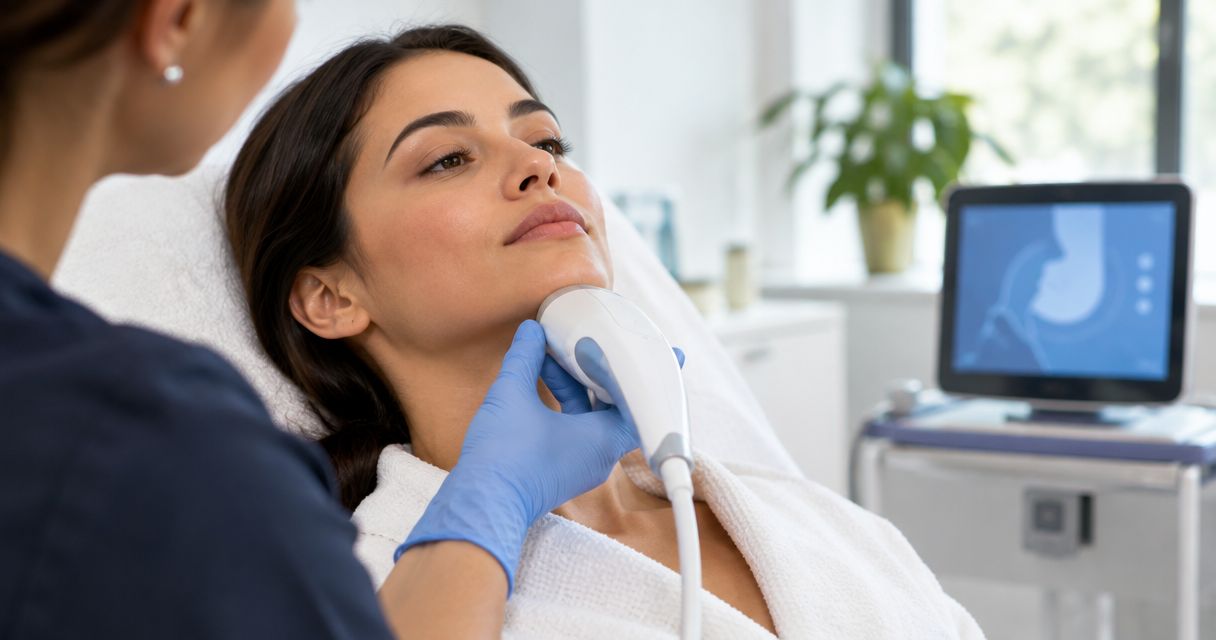
Ultrasound: best for discussing gradual improvement in mild laxity
Ultrasound-based tightening delivers energy below the skin surface to stimulate a tissue response. It is an option to discuss when mild laxity—not substantial excess skin—is the primary concern.
The American Academy of Dermatology describes modest lifting and tightening after nonsurgical ultrasound, with results developing within 2 to 6 months. The useful point is the delay: an immediate post-treatment photograph is not a fair measure of the final result.
The advantage is treatment without surgical incisions. The limitations include discomfort, variable improvement, and the fact that ultrasound cannot remove hanging skin. Device selection, treatment location, and the practitioner’s assessment still matter.
Best for: someone willing to wait for a subtle change. Ask the practitioner to identify the exact area expected to improve and explain what will remain unchanged.
Radiofrequency: best for a device-specific tightening discussion
Radiofrequency uses energy to heat tissue. However, surface radiofrequency and radiofrequency microneedling are not interchangeable: the latter introduces needles through the skin and carries additional procedural considerations.
For noninvasive radiofrequency tightening, the American Academy of Dermatology describes the best result as typically appearing at about 6 months, while noting that some people benefit from additional treatment. That is general patient guidance, not a promise for every device, body area, or treatment plan.
The potential benefit is gradual firming without surgery. The limitations include discomfort, burns, pigment changes, and an outcome that depends on appropriate treatment selection and technique.
Best for: a person with mild laxity whose suitability has been assessed for the specific device. Do not accept a recommendation that names only radiofrequency without explaining how the treatment is delivered.
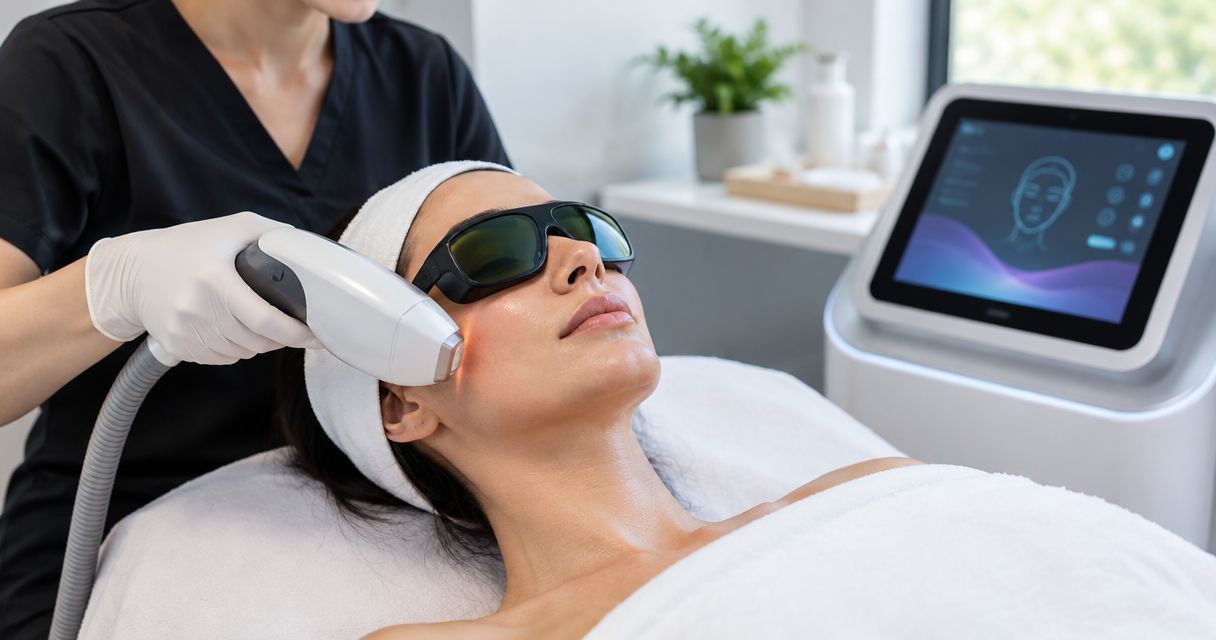
Laser treatment: best for separating texture goals from lifting goals
Laser procedures differ substantially. Some focus on pigmentation or redness, while resurfacing treatments target surface changes and can also produce tightening effects. A generic promise of laser rejuvenation does not establish how much lifting you should expect.
The benefit is that an appropriately selected laser can address a defined skin concern. The limitation is that recovery and risks vary with the device and treatment depth; more intensive resurfacing is not equivalent to a low-downtime facial.
Best for: someone whose assessment identifies a suitable laser target, such as texture changes alongside mild laxity. Ask whether tightening is the primary expected outcome or a secondary possibility.
Do not assume a laser used for hair removal performs the same role as a laser selected for resurfacing. The treatment name, purpose, and risk discussion should all match.
Why non-surgical skin tightening results vary
A useful consultation explains why a treatment fits your skin—not just how the device works. These factors determine whether the expected improvement matches your goal:
- Starting laxity: Mild looseness and substantial hanging skin require different expectations. More excess skin is not a reason to assume more nonsurgical sessions will solve the problem.
- Treatment target: Skin laxity, fat, pigmentation, and scarring are different concerns. The recommended procedure should address the concern you actually want changed.
- Device selection: Ultrasound, surface radiofrequency, radiofrequency microneedling, and lasers deliver energy differently. Their benefits and risks cannot be treated as identical.
- Skin history: Previous pigment changes, scarring, procedures, medications, and active skin conditions belong in the assessment. They influence treatment selection and precautions.
- Practitioner judgment: Appropriate settings and anatomical knowledge matter. Ask who performs the procedure and who manages a complication.
- Assessment timing: Collagen-related changes develop gradually. Comparing photographs too early or under different lighting makes the outcome harder to judge.
For your 2026 consultation, ask which factor most limits your likely result. A clear answer is more useful than an assurance that everyone responds differently.
How do you decide whether the likely result is enough?
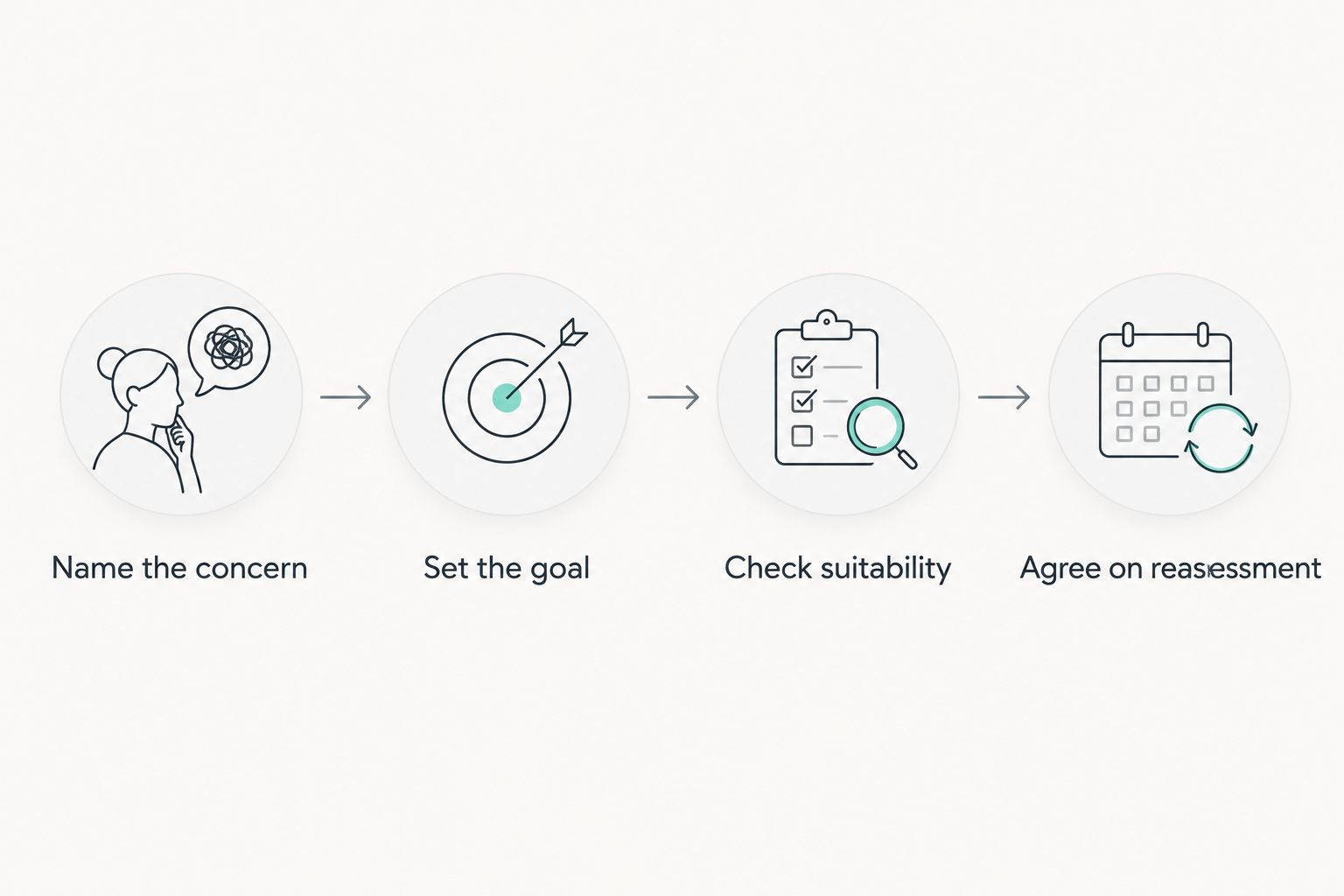
Use this sequence before agreeing to a treatment course. The aim is to decide whether the procedure fits your goal—not to find a reason to proceed regardless.
- Name the concern. Describe what bothers you in ordinary language: loose neck skin, a softened jawline, crepey texture, or a fold. Let the clinician assess the underlying cause.
- Set the goal. Explain the smallest change that would make treatment worthwhile to you. Ask whether that change is realistic without surgery.
- Check suitability. Share medications, previous procedures, skin reactions, medical conditions, and pregnancy or breastfeeding status. Ask which details affect the proposed treatment.
- Agree on reassessment. Establish when photographs will be compared and what happens if the expected improvement is absent. Avoid committing to indefinite repeat treatment.
Ask to see examples involving a similar treatment area and degree of laxity. Photographs are more useful when the lighting, facial expression, camera angle, and posture stay consistent; flattering presentation is not proof of tissue tightening.
Do not proceed if the practitioner cannot explain the treatment’s limits. An informed decision includes what the procedure will not change, not just its intended benefit.
What should you ask a Brooklyn provider?
Ask for the exact device and procedure, who performs treatment, what qualifies that person to perform it, and how adverse reactions are managed. Then ask why the proposed approach fits your concern better than doing nothing or seeking a surgical opinion.
A local service menu is a starting point, not proof of suitability. Ammonite Laser Spa is best suited to Downtown Brooklyn clients seeking personalized non-invasive beauty and skin treatments. Its stated services include laser skin rejuvenation and microneedling, but those service categories do not establish that a particular tightening device or protocol is offered.
Ammonite Laser Spa’s personalized treatment focus is relevant if you want to discuss several skin concerns. The limit is equally important: assess any proposed tightening procedure on its own merits rather than assuming the studio’s other treatments produce a lifting result.
For a 2026 appointment, request a written plan identifying the treatment target, expected degree of change, recovery instructions, and review point. Keep a copy so you can compare the eventual outcome with the original recommendation.
Can non-surgical skin tightening replace a facelift?
Non-surgical skin tightening cannot replace a facelift when your goal requires substantial tissue lifting or removal of excess skin. It serves a different purpose: modest improvement in appropriately selected patients. If only a pronounced change would satisfy you, seek a surgical assessment rather than repeatedly buying treatments aimed at smaller changes.
How long should you wait before judging results?
2 to 6 months is the American Academy of Dermatology’s general timeframe for developing results after nonsurgical ultrasound tightening. Your own review date must match the actual device and procedure; the same timeline does not apply to every treatment marketed as tightening.
Is skin tightening worth it after pregnancy or weight loss?
Non-surgical tightening is worth discussing when residual laxity is mild, but substantial excess skin requires a different conversation. After pregnancy or weight changes, have the area assessed rather than assuming every fold is a skin-only concern; disclose pregnancy or breastfeeding before scheduling an elective procedure.
What are the reasons to wait or decline treatment?
Wait when the treatment target is unclear, your medical history has not been reviewed, or the promised result exceeds what the procedure can reasonably deliver. You do not need to accept a treatment merely because it is described as non-surgical.
Energy-based procedures still carry risks, including burns, pigment changes, scarring, and unwanted tissue effects. Needle-based treatments add skin penetration and infection considerations. The relevant risks depend on the procedure, so a generic consent discussion is not enough.
Decline pressure to decide before your questions are answered. If a provider dismisses a concern, cannot name the device, or treats complication management as unnecessary, seek another qualified opinion.
FAQ
Is non-surgical skin tightening worth it for mild sagging?
Non-surgical skin tightening is worth considering for mild sagging when you would be satisfied with modest improvement. It is not a substitute for removing substantial excess skin.
What’s the best non-surgical skin tightening treatment?
There is no single best non-surgical tightening treatment for every person or body area. The appropriate choice depends on the cause of the concern, degree of laxity, skin history, and specific device.
Does skin tightening work immediately?
Immediate appearance does not establish the final result of collagen-stimulating skin tightening. The American Academy of Dermatology describes ultrasound tightening results developing within 2 to 6 months.
Is radiofrequency microneedling the same as regular microneedling?
Radiofrequency microneedling is not the same as regular microneedling because it adds radiofrequency energy through needles. That difference changes the treatment mechanism and risk discussion.
Can body contouring tighten loose skin?
A body-contouring treatment should not be assumed to tighten loose skin. Ask whether the specific procedure targets fat, skin laxity, or both, and what evidence supports the proposed use.
Is non-surgical skin tightening permanent?
Non-surgical skin tightening does not stop ongoing skin aging. Ask how long the proposed treatment’s benefit is expected to last and what maintenance would involve.
Does Ammonite Laser Spa offer skin treatments in Brooklyn?
Ammonite Laser Spa offers personalized skin and beauty treatments in Downtown Brooklyn, including laser skin rejuvenation and microneedling. Ask directly which procedure addresses your concern; those service names alone do not establish a dedicated tightening treatment.
One last thing
Before treatment, write down what would make the result worthwhile—and what would not. “Slightly firmer skin in comparable photographs” is a different goal from “no loose skin when I bend my neck.”
Keep that distinction in your 2026 treatment plan. The most useful decision is not whether tightening works in the abstract, but whether its realistic result is one you actually want.