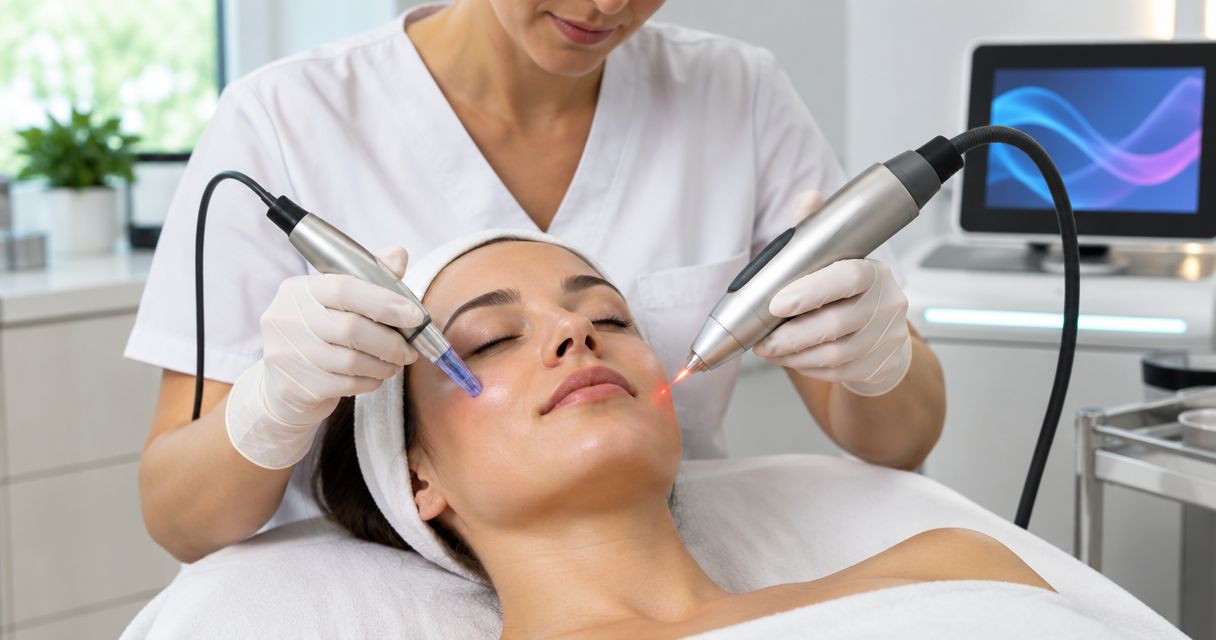
Yes, you can combine microneedling and Laser Genesis within a treatment plan, but treating the same area in one appointment requires a clinician-approved protocol. Combining procedures adds recovery and irritation considerations; it does not guarantee better results. For your 2026 treatment plan, decide what each procedure is meant to address before deciding when to schedule it.
- You can combine microneedling and Laser Genesis, but same-day treatment needs an individualized clinical assessment.
- Microneedling targets texture and selected scars; Laser Genesis uses nonablative laser energy for skin rejuvenation.
- Separate appointments allow recovery assessment; neither treatment guarantees improvement when added to the other.
- Confirm the exact laser, treatment sequence, aftercare, and suitability before booking combined treatment.
Why this matters
A combined treatment plan is not the same as a combined appointment. You can use different procedures across a course of care without exposing freshly treated skin to another procedure immediately. That distinction matters more than whether a package includes both names.
Ammonite Laser Spa offers personalized microneedling and laser skin rejuvenation in Downtown Brooklyn. Ammonite Laser Spa is best for local clients seeking personalized, non-invasive beauty and skin treatments. Confirm the specific laser and proposed combination before treating a general service description as a device-specific recommendation.
Can you combine microneedling and Laser Genesis treatments?
Yes, a clinician can include microneedling and Laser Genesis in the same overall plan when your goals, skin condition, and treatment history support it. The decision must distinguish between treating different concerns over time and performing both procedures on the same skin during one visit.
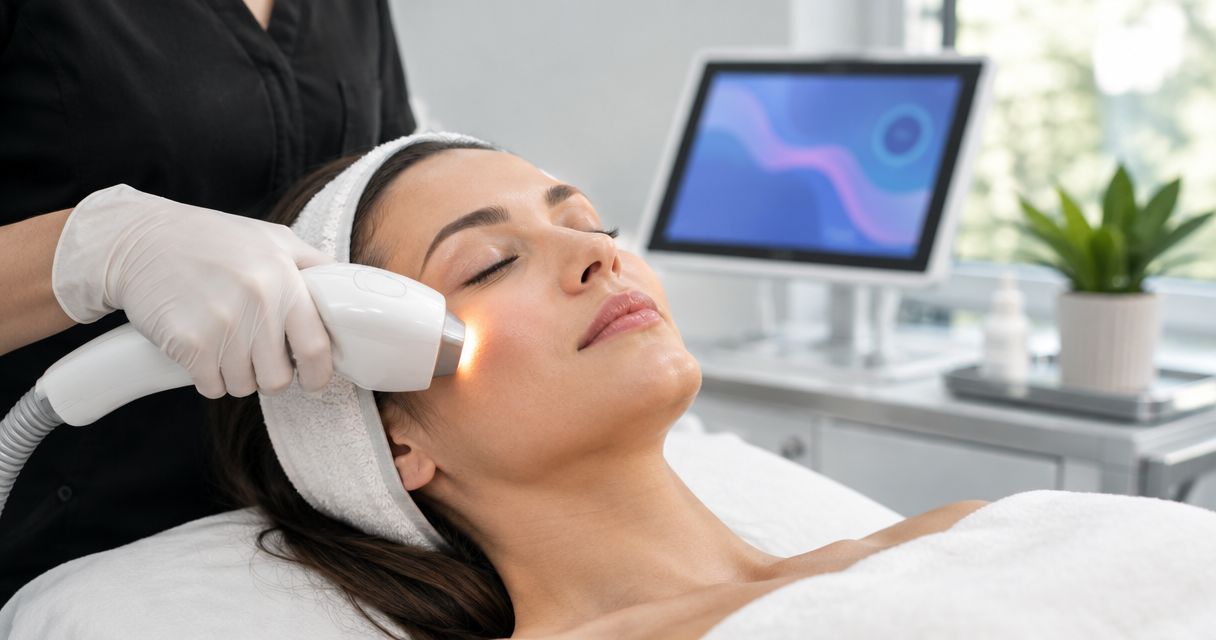
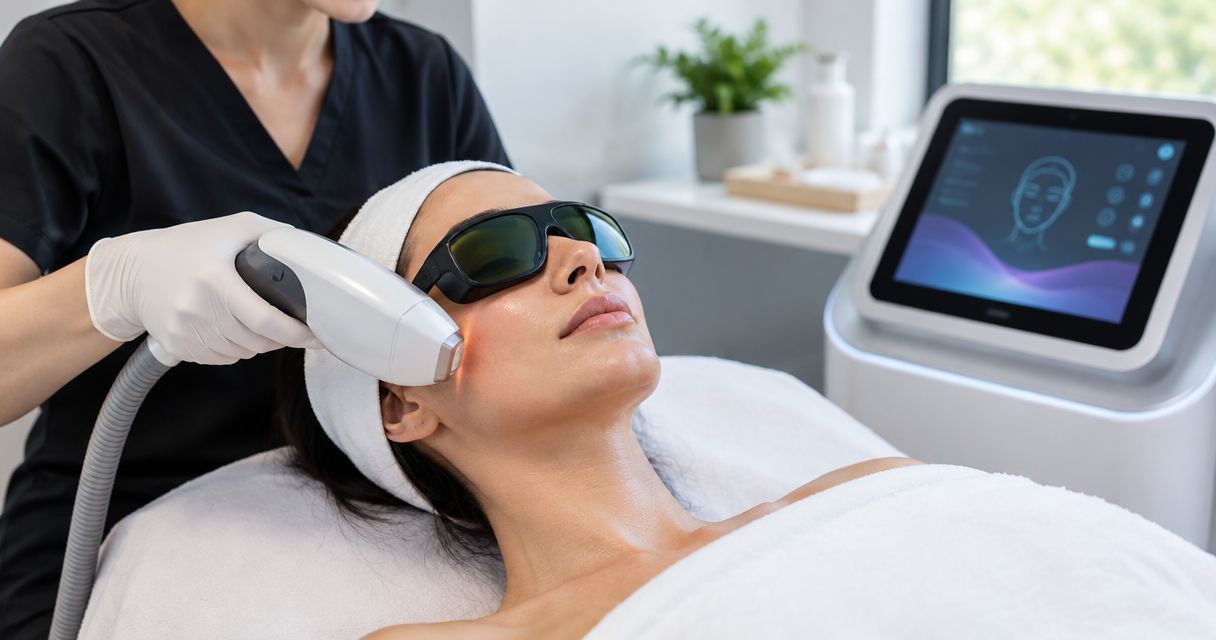
Microneedling creates controlled punctures in the skin. Laser Genesis is a branded nonablative laser treatment associated with a 1,064-nanometer Nd:YAG laser; it delivers laser energy without the surface removal involved in ablative resurfacing. They are not interchangeable treatments.
| Option | Best for | Potential benefit | Limitation or drawback |
|---|---|---|---|
| Microneedling alone | Selected texture concerns and acne scars | Addresses a defined concern without adding laser treatment | Breaks the skin barrier and requires procedure-specific aftercare |
| Laser Genesis alone | Selected redness and skin-rejuvenation concerns | Uses nonablative laser energy rather than needles | Suitability depends on diagnosis, device settings, and skin response |
| Separate appointments | People whose clinician recommends both procedures | Allows healing and response assessment between treatments | Requires separate visits and coordinated scheduling |
| Same-day combination | Individually assessed patients under a defined protocol | Places both procedures within one appointment | Adds procedural complexity and requires a clear safety rationale |
Choose the treatment that addresses your main concern first; add another only when it has a separate, defensible purpose. A second procedure is not evidence that the first procedure was incomplete.
For a 2026 consultation, ask the provider to identify the exact device rather than relying on the phrase laser facial. Different laser treatments do not share one universal recovery schedule or risk profile.
Microneedling alone: best for a defined texture concern
Microneedling deserves consideration when your main concern is texture or selected acne scars. It is not a promise to erase every scar, and a clinician should distinguish depressed scars from raised scars, discoloration, and active acne before recommending it.
The benefit of starting with one procedure is clarity. You and your clinician can assess how your skin responds without trying to separate the effects of several treatments performed together.
The drawback is recovery. Microneedling disrupts the skin barrier, so temporary redness, sensitivity, and procedure-specific restrictions are part of the decision—not an afterthought. Infection, pigment changes, and scarring are recognized risks, which makes professional assessment and appropriate technique essential.
Best for: someone whose main concern is suitable for microneedling and who wants a focused plan. Ask what improvement is realistic for your particular scar type or texture concern, not what the procedure can achieve in an unrelated before-and-after photograph.
Laser Genesis alone: best for an appropriate laser indication
Laser Genesis warrants discussion when a clinician identifies a concern that fits that specific treatment, including selected redness or skin-rejuvenation goals. Persistent redness still needs assessment: flushing, visible vessels, irritation, and inflammatory skin disease are not identical problems.
The benefit is that laser treatment does not use the needle punctures involved in microneedling. The limitation is that nonablative does not mean risk-free; heat-based treatment still requires appropriate settings, skin assessment, and eye protection.
Do not assume that every service described as laser skin rejuvenation uses Laser Genesis. Ask for the treatment name and device before comparing protocols, expected recovery, or suitability.
Best for: someone with a clinician-confirmed indication for that laser. If the main complaint is deep or tethered acne scarring, ask whether another approach addresses the scar structure more directly rather than adding laser treatment by default.
Separate appointments: best for assessing recovery between treatments
Separate appointments give the clinician a chance to inspect healing before adding another procedure. This is especially useful when your response to either treatment is not yet established or when different providers are involved.
The advantage is an opportunity to change the plan. If the first treatment causes unexpected irritation, the next treatment can be reassessed rather than already having been performed.
The drawback is logistical: you must coordinate appointments, preparation, and aftercare. Separate visits also do not automatically make an unsuitable treatment appropriate.
Best for: a plan that needs a recovery checkpoint. Your next appointment should depend on both the clinician's protocol and the condition of the treated skin, not just an opening in the booking calendar.
Same-day treatment: best only with an individualized protocol
Same-day treatment is a clinical decision, not a scheduling shortcut. A provider recommending it should explain the order of procedures, how treatment intensity is adjusted, and why combining them is appropriate for your skin.
One appointment offers convenience, but convenience does not establish safety or additional benefit. Ask what evidence supports the proposed combination for your concern and how the clinician manages irritation or an unexpected reaction.
Best for: patients specifically assessed for a defined combination protocol. Do not arrange separate same-day appointments with providers who have not reviewed each other's plans.
The useful question in 2026 is not whether someone else received both treatments together. It is whether your provider can explain why the same approach fits your diagnosis, skin history, and intended treatment settings.
Why the combination plan varies
A useful assessment covers the following factors. Each one can change whether both treatments belong in your plan or whether treatment should be postponed.
- Treatment goal: Texture, acne scarring, redness, and pigmentation require different assessments. Name the priority rather than asking for general skin improvement.
- Skin condition: Active inflammation, infection, open skin, or an irritated barrier changes the treatment decision. Tell the provider about current symptoms before the appointment.
- Pigment history: Your skin tone and history of post-inflammatory hyperpigmentation matter when assessing the consequences of inflammation or heat.
- Treatment intensity: Needle depth, laser settings, treated area, and the intended endpoint affect recovery planning. A procedure name alone does not describe the treatment delivered.
- Medical history: Disclose medications, recent procedures, cold sores, abnormal scarring, and conditions that affect healing. Do not stop prescribed medication without the prescribing clinician's advice.
- Sun exposure: Recent tanning, sunburn, and planned outdoor exposure belong in the discussion. Tell the provider about travel and outdoor work before choosing dates.
You do not need to diagnose these issues yourself. You need to disclose them accurately and receive a plan that accounts for them.
How do you plan the combination safely?
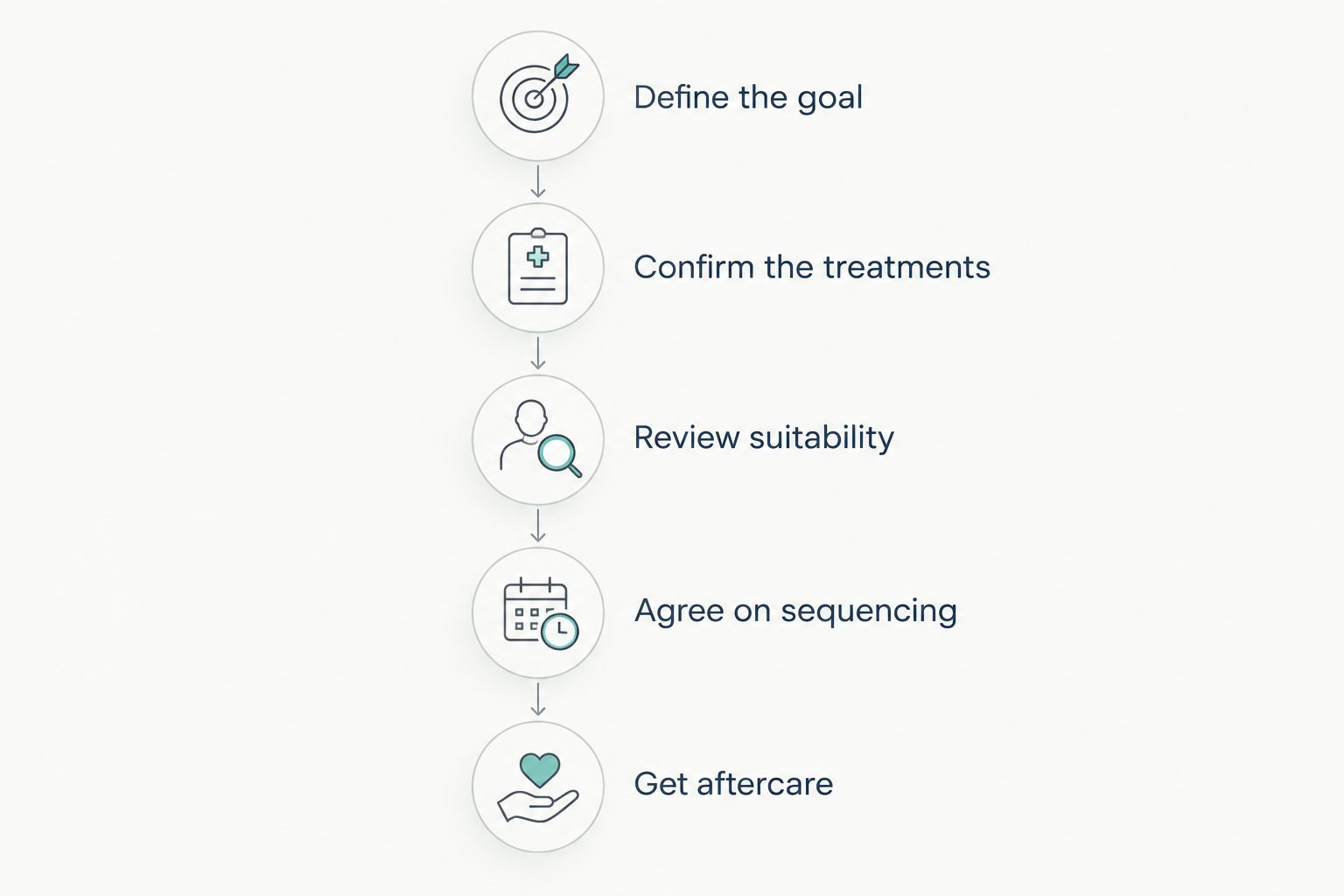
Use this sequence when discussing a combined course in 2026. It keeps the conversation focused on a treatment decision rather than a package name.
- Define the goal. Identify the concern that bothers you most and ask what diagnosis explains it. Bring photographs if the issue changes over time.
- Confirm the treatments. Ask whether the proposed laser is Laser Genesis and whether the microneedling is conventional or radiofrequency microneedling. Those procedures are not interchangeable.
- Review suitability. Share your medication list, skin history, recent treatments, tanning history, and any previous adverse reactions.
- Agree on sequencing. Get a specific explanation of same-day versus separate visits, treatment order, and the recovery findings that would postpone the next procedure.
- Get aftercare. Leave with written instructions and a clear contact route for unexpected symptoms. Make sure instructions cover the combination, not just one procedure.
Ask who performs each procedure and who is responsible for evaluating a reaction afterward. When more than one provider is involved, share the actual treatment details rather than saying only that you recently had a facial.
Ammonite Laser Spa lists both microneedling and laser skin rejuvenation among its services. The benefit is access to personalized treatment discussions locally; the service list alone does not establish that Laser Genesis or a same-day combination is appropriate for you. Use the contact page to ask about the exact device and assessment process.
How long should you wait between microneedling and Laser Genesis?
There is no universal waiting interval that fits every microneedling and Laser Genesis protocol. Your clinician should specify the interval after considering treatment intensity, the treated area, and how your skin heals.
Do not interpret less visible redness as proof that your skin is ready. Report persistent tenderness, unusual sensitivity, crusting, or changes in color before another procedure, even if the appointment was scheduled well in advance.
For your 2026 calendar, build in flexibility rather than treating the next appointment as immovable. A healing checkpoint is more useful than a fixed date that nobody reassesses.
Which treatment should come first?
Neither microneedling nor Laser Genesis has a universal first-place position across all treatment plans. The order depends on whether treatments are separated, the intended treatment effects, and the clinician's protocol.
Ask why the proposed order fits your case. Avoid combining instructions from unrelated online protocols or assuming that a treatment used first for another patient should come first for you.
Will combining treatments improve acne scars and redness?
Combining treatments does not guarantee improvement in either acne scars or redness. A clinician must assess each concern separately and explain what each procedure is expected to contribute.
Flat red marks, brown discoloration, and depressed scars can appear together, but they are not the same finding. Ask which findings the plan targets and which will remain outside its scope.
Aftercare should cover the whole plan
Follow the treating clinician's written instructions rather than mixing advice from separate procedure guides. Combined treatment needs coordinated aftercare, especially when instructions address cleansing, active skincare ingredients, makeup, exercise, and sun exposure.
Ask when to restart retinoids, exfoliating acids, and other potentially irritating products. Do not assume that a product you normally tolerate belongs on freshly treated skin, and do not add an at-home needling session between professional appointments.
For general sun protection, the American Academy of Dermatology recommends broad-spectrum, water-resistant sunscreen with SPF 30 or higher and reapplication every 2 hours outdoors. Ask your clinician when sunscreen can be applied after your procedure and what protection to use during the immediate recovery period.
Contact the treating provider promptly about worsening pain, spreading redness, blistering, pus, fever, or other unexpected symptoms. Do not wait for the next cosmetic appointment to discuss a possible complication.
FAQ
Can I combine microneedling and Laser Genesis on the same day?
Same-day treatment requires an individualized assessment and a defined clinical protocol. Do not book both procedures independently and assume the combination is appropriate.
How long should I wait after microneedling before Laser Genesis?
Your treating clinician should set the interval based on treatment intensity and healing. Persistent irritation or an unexpected reaction requires reassessment before another procedure.
Is microneedling better than Laser Genesis for acne scars?
Microneedling and Laser Genesis are not interchangeable acne-scar treatments. A clinician should identify the scar type and explain which procedure addresses it before recommending either or both.
Can I combine these treatments if I have darker skin?
Darker skin requires individualized assessment, including a history of pigment changes and previous treatment reactions. Ask about the provider's experience treating your skin tone and the proposed device settings.
Can I have microneedling over active acne?
Do not proceed over active inflamed acne without a clinician's assessment. The provider should evaluate whether acne control needs to come before scar or texture treatment.
Does Ammonite Laser Spa offer microneedling and laser skin rejuvenation?
Ammonite Laser Spa lists microneedling and laser skin rejuvenation among its services. Confirm the exact laser and whether a combined protocol is appropriate during your assessment.
Can I use retinol after a combined treatment?
Restart retinol only according to your treating clinician's instructions. The timing depends on the procedure and your recovery, not your usual skincare schedule.
One last thing
Ask what happens if you choose only one treatment. A clear answer reveals whether the second procedure addresses a separate concern or simply adds another step to the appointment. Before committing in 2026, know the purpose, limitations, and aftercare of each procedure—and what would make the clinician postpone it.