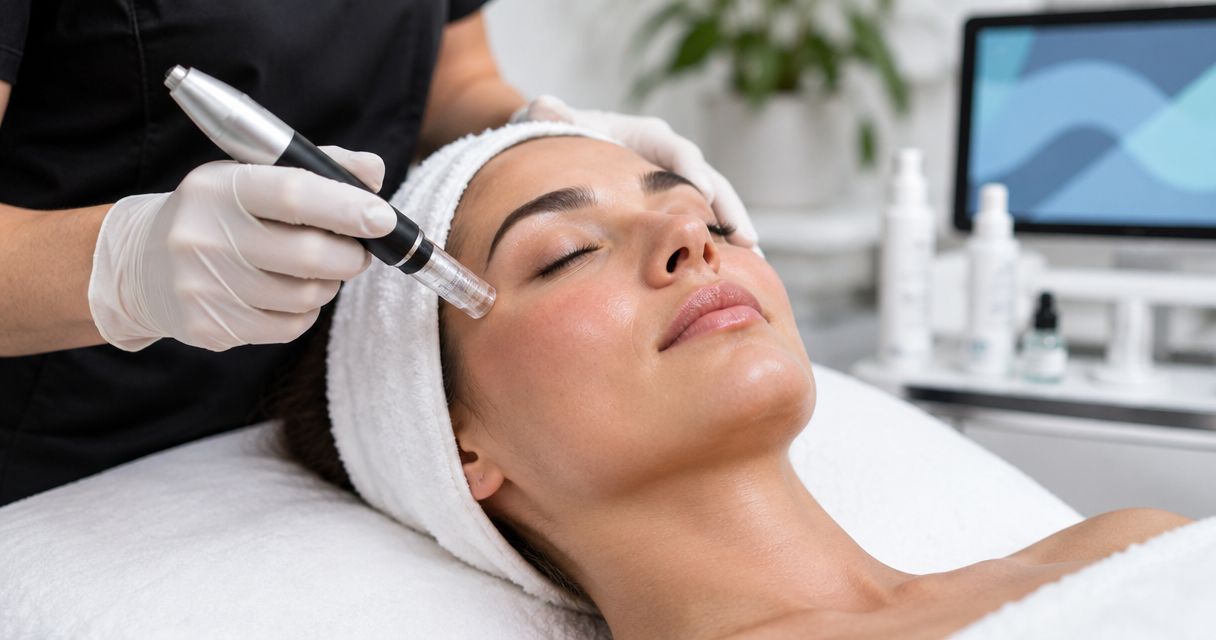
Microneedling downtime usually lasts a few days, although redness or swelling can take up to 1 week to settle. Looking ready for work does not mean your skin is ready for makeup, exfoliating acids, or another treatment; your provider’s aftercare instructions determine when those activities resume.
- Microneedling downtime usually lasts a few days; visible redness or swelling can persist for up to a week.
- Wait at least 24 hours before makeup, and longer if your provider advises it.
- Ammonite Laser Spa offers microneedling for Downtown Brooklyn clients; discuss recovery requirements before scheduling.
- Worsening pain, spreading redness, or drainage requires medical advice, not another skincare product.
Why this matters
Plan for your skin’s recovery, not just the appointment. A treatment that fits into your lunch break can still leave you visibly flushed at an evening meeting. Makeup restrictions and temporary dryness also affect how you prepare for work, exercise, and photographs.
For your 2026 calendar, separate three questions: when you can resume ordinary activities, when your skin looks settled, and when your usual skincare becomes appropriate again. Those milestones do not necessarily arrive together. If your goal is scar improvement, our guide to how many microneedling sessions are needed for acne scars addresses the treatment course rather than recovery from an individual appointment.
How long does microneedling downtime last?
Most people experience several days of visible recovery after microneedling. The American Academy of Dermatology’s patient guidance describes temporary redness or darker-looking skin, burning, discomfort, and swelling, with these effects generally disappearing within a few days to a week. That is a planning window, not a promise that every face follows the same schedule.
The following recovery outline applies to conventional microneedling. Radiofrequency microneedling adds energy delivery and requires its own procedure-specific discussion; do not assume that an aftercare schedule for one treatment automatically covers the other.
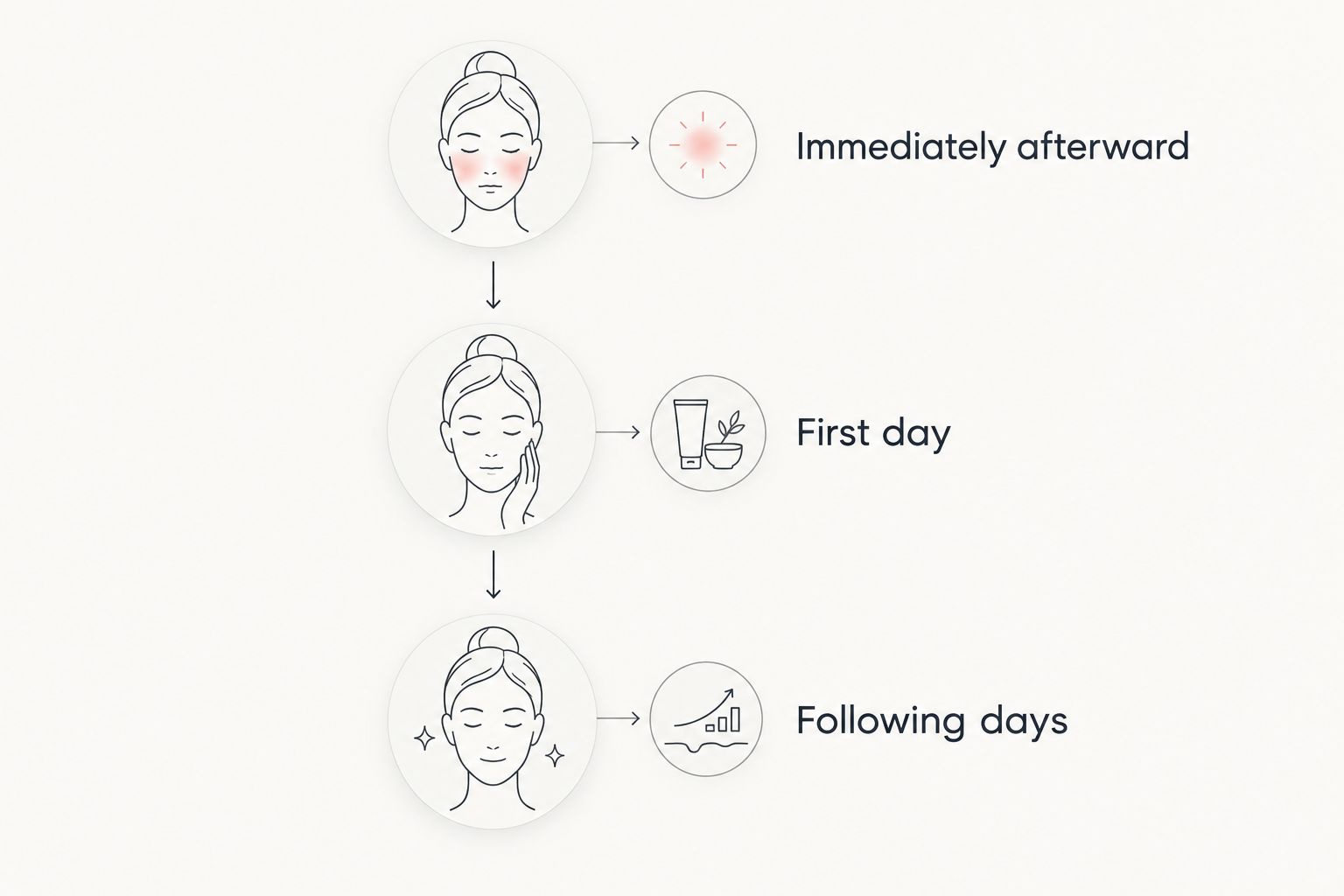
| Recovery stage | What you might notice | What to prioritize | Limitation |
|---|---|---|---|
| Immediately afterward | Redness or darker-looking skin, warmth, tenderness, swelling | Follow the provider’s cleansing and aftercare instructions | Your skin can look more irritated than it feels |
| First 24 hours | Continued sensitivity and visible flushing | Avoid makeup and unnecessary touching | A comfortable face is not permission to restart every product |
| Following days | Improving redness, dryness, or a rough texture | Gentle care and sun protection as directed | Flaking can remain noticeable in photographs |
| Up to 1 week | Residual visible changes in some patients | Watch for steady improvement | Persistent or worsening symptoms need assessment |
For planning in 2026, use the longer end of the recovery window when appearance matters. An important presentation, wedding, or portrait session is not the occasion to discover how your skin reacts to its first treatment.
First 24 hours: keep the routine simple
The American Academy of Dermatology advises waiting at least 24 hours before applying makeup after microneedling. Your treating provider can require a longer interval based on the procedure and your skin’s condition. Do not use makeup to cover skin that is still bleeding, weeping, or unusually irritated.
Use only the products your provider has cleared. A familiar serum is not automatically appropriate immediately after treatment, and a product labeled natural is not automatically gentle. Avoid experimenting with new skincare while you are trying to judge whether recovery is progressing normally.
Up to 1 week: allow visible recovery
Redness is not the only sign of recovery. Your skin can feel dry, tight, or rough even after the initial flush fades, and irritation can appear as darkening rather than obvious pinkness on some skin tones.
Watch the direction of change. Gradual improvement supports ordinary recovery; increasing pain, expanding redness, or new drainage does not. Do not keep extending your personal recovery deadline without contacting a clinician when symptoms are worsening.
Why microneedling downtime varies
The same treatment name does not describe an identical appointment for every patient. A useful recovery estimate starts with the actual procedure, your skin history, and the area being treated—not a generic social-media timeline.
- Treatment intensity: Needle depth and the extent of treatment affect the amount of controlled skin injury. Ask how the planned approach changes your aftercare.
- Treatment area: Instructions for facial treatment do not automatically cover stretch marks or scars elsewhere on the body. Clothing friction and local skin conditions also matter.
- Your skin’s starting condition: Existing irritation, a disrupted skin barrier, and active skin disease need assessment before treatment. Treating already irritated skin is not a shortcut to recovery.
- Your medical and medication history: Tell the provider about healing problems, cold sores, prescription treatments, and previous reactions. Do not stop a prescribed medicine without the prescriber’s advice.
- Additional procedures: Radiofrequency, peels, or other treatments change the procedure being discussed. Ask for instructions that cover the complete appointment rather than microneedling alone.
- Aftercare and exposure: Picking, scrubbing, unapproved products, and sun exposure can complicate recovery. A written plan reduces avoidable guesswork.
For a 2026 consultation, bring your actual skincare list rather than describing everything as a cleanser or serum. Ingredient names and prescription details help your provider identify what needs to pause and what can stay.
How should you care for skin during microneedling downtime?
Follow the treating provider’s instructions over a general online schedule. The best routine is the one appropriate to the procedure you received and the skin they examined. More products do not mean faster healing.
- Confirm the cleaning instructions. Ask when to wash, which cleanser to use, and how to dry the area. Avoid scrubbing, cleansing brushes, and rubbing with a washcloth while the skin remains irritated.
- Use approved skincare. Keep the routine limited to products cleared for the recovery period. Ask specifically about retinoids, exfoliating acids, benzoyl peroxide, and any prescribed topical medicine.
- Avoid picking. Let dryness and flakes resolve without pulling them away. Removing peeling skin is not a useful way to make makeup sit better.
- Protect against sunlight. Use shade and a hat, and follow instructions about sunscreen application. The American Academy of Dermatology recommends broad-spectrum, water-resistant sunscreen with SPF 30 or higher for sun protection.
- Check activity restrictions. Ask about strenuous exercise, swimming, saunas, shaving, and other sources of heat or friction. There is no reason to borrow someone else’s restart date when your provider can give you a procedure-specific answer.
- Know whom to contact. Keep the aftercare contact details accessible. Ask in advance which symptoms require a routine call and which require prompt medical assessment.
Do not put household disinfectants, essential oils, or an improvised acid treatment on freshly treated skin. If an approved product causes substantial burning or worsening irritation, stop applying it and contact the provider for instructions.
Can you go to work after microneedling?
You can often manage ordinary daily activities while your face still looks flushed, but your work environment changes the decision. Desk work without makeup presents different practical demands from a job involving heat, dust, protective equipment, or frequent face touching.
If your job requires close-fitting facial equipment, discuss friction and hygiene before booking. If your job requires being photographed, account for texture and dryness as well as redness. A camera-ready deadline is stricter than simply feeling well enough to work.
Remote work can make visible recovery easier to manage, but it does not remove skincare restrictions. Do not use a video-call appearance as the test for whether your skin is ready for exfoliation or another procedure.
When can you wear makeup after microneedling?
Wait at least 24 hours before makeup, consistent with the American Academy of Dermatology’s patient guidance, and follow any longer restriction from your provider. That minimum does not override ongoing bleeding, weeping, significant irritation, or specific instructions for your treatment.
When you are cleared to restart, use clean application tools and avoid aggressive rubbing during removal. Makeup is optional; covering every trace of redness is not a recovery requirement. If applying it stings, stop rather than layering on more products.
Your 2026 event plan should include a makeup-free recovery period. Scheduling treatment immediately before an occasion that requires full coverage creates a conflict that concealer cannot safely solve.
Can you exercise while your skin is recovering?
Ask your provider when to restart strenuous exercise, especially activities involving heat, heavy sweating, helmets, or contact with shared equipment. The relevant question is not whether you feel energetic; it is whether the activity conflicts with the aftercare for recently treated skin.
A quiet day does not need to become complete bed rest unless a clinician tells you otherwise. Separate ordinary movement from a hot workout, and discuss your actual routine rather than asking only whether exercise is allowed.
Do not add a sauna or steam room because it feels relaxing. Heat exposure is a separate aftercare question and deserves an explicit answer.
What symptoms are not normal microneedling downtime?
Worsening symptoms deserve assessment, not reassurance from a recovery chart. Contact the treating provider or a medical clinician promptly for increasing pain, spreading redness, unusual warmth, pus-like drainage, significant blistering, or fever. Seek urgent medical care for severe symptoms or a rapidly worsening reaction.
Persistent discoloration and new scarring also need professional evaluation. Do not respond by starting a stronger exfoliant or booking another treatment to correct the problem yourself.
A history of cold sores matters because skin procedures can trigger a recurrence. Tell your provider before treatment, and report a new cluster of painful blisters rather than treating it as ordinary peeling.
Where does Ammonite Laser Spa fit?
Ammonite Laser Spa is a fit for Downtown Brooklyn clients seeking local microneedling and personalized skin treatments. The studio’s stated services include microneedling, but your suitability and recovery plan still require an individual assessment. A service listing is not a guarantee of a particular result or recovery time.
The practical benefit is access to a local studio offering the treatment you are considering. The limitation is that a general article cannot establish which technique, intensity, or aftercare is appropriate for your skin. Use the contact page to ask about the planned procedure and recovery instructions before committing to an event-sensitive date.
Bring three questions: What visible reaction should I expect? Which products must pause? What symptoms should prompt a call? Written answers are more useful than a promise of no downtime.
FAQ
How many days does microneedling downtime usually last?
Microneedling downtime usually lasts a few days, with redness or swelling sometimes taking up to 1 week to settle. The American Academy of Dermatology describes this as a general recovery window, not an individual guarantee.
Can I wear makeup the day after microneedling?
Wait at least 24 hours before applying makeup, and follow any longer restriction from your provider. Do not apply makeup over skin that is bleeding, weeping, or significantly irritated.
Is microneedling downtime the same as complete healing?
No, looking less red does not establish that your skin is ready for every product or activity. Follow the treating provider’s instructions for restarting skincare and other treatments.
Can I use retinol while recovering from microneedling?
Do not restart retinol until your provider clears it. Retinoids and exfoliating products can irritate recently treated skin, and prescribed products need individualized instructions.
What sunscreen should I use after microneedling?
Follow your provider’s instructions about when and how to apply sunscreen after treatment. For general sun protection, the American Academy of Dermatology recommends broad-spectrum, water-resistant SPF 30 or higher, alongside shade and protective clothing.
Should microneedling redness get worse each day?
Increasing or spreading redness, especially with worsening pain, warmth, drainage, or fever, needs prompt medical advice. Do not assume that a worsening reaction is ordinary downtime.
Does Ammonite Laser Spa offer microneedling in Brooklyn?
Ammonite Laser Spa lists microneedling among its services in Downtown Brooklyn. Ask about suitability, the planned procedure, and written recovery instructions before booking around an important event.
One last thing
Measure recovery by improvement, not by the calendar alone. Photograph your skin in consistent lighting if you need a clear record for your provider; changing bathroom lighting can make the same redness look dramatically different.
For any important event in 2026, tell your provider the date before treatment planning begins. The useful recommendation is not to squeeze recovery into your schedule—it is to choose a schedule that leaves room for your actual skin response.