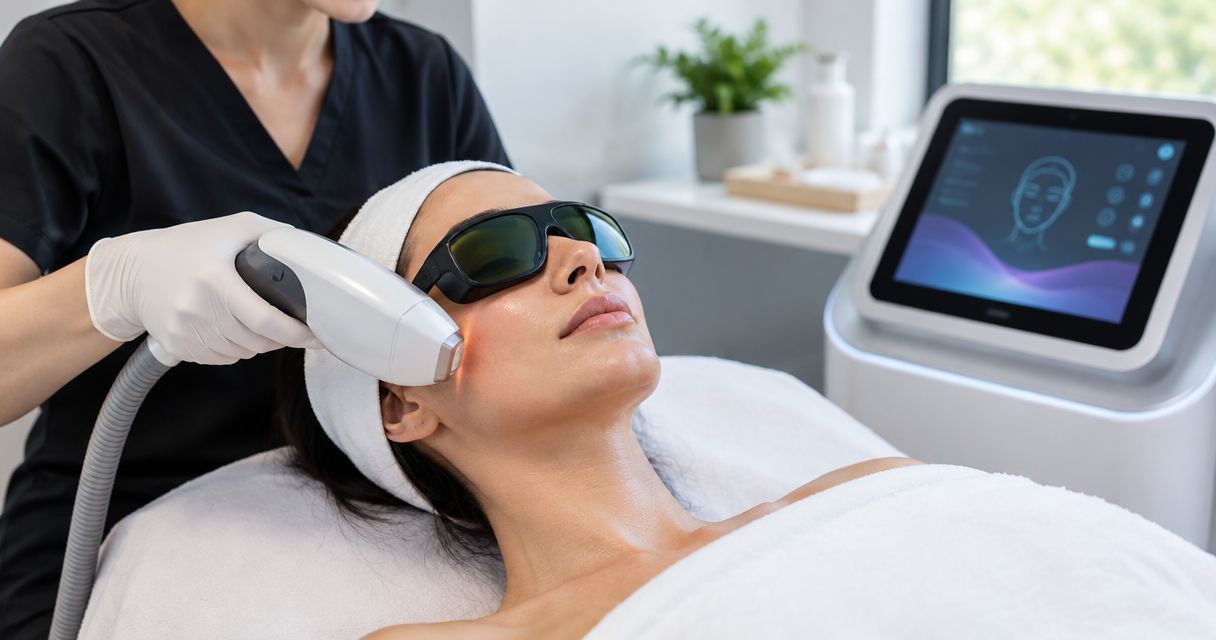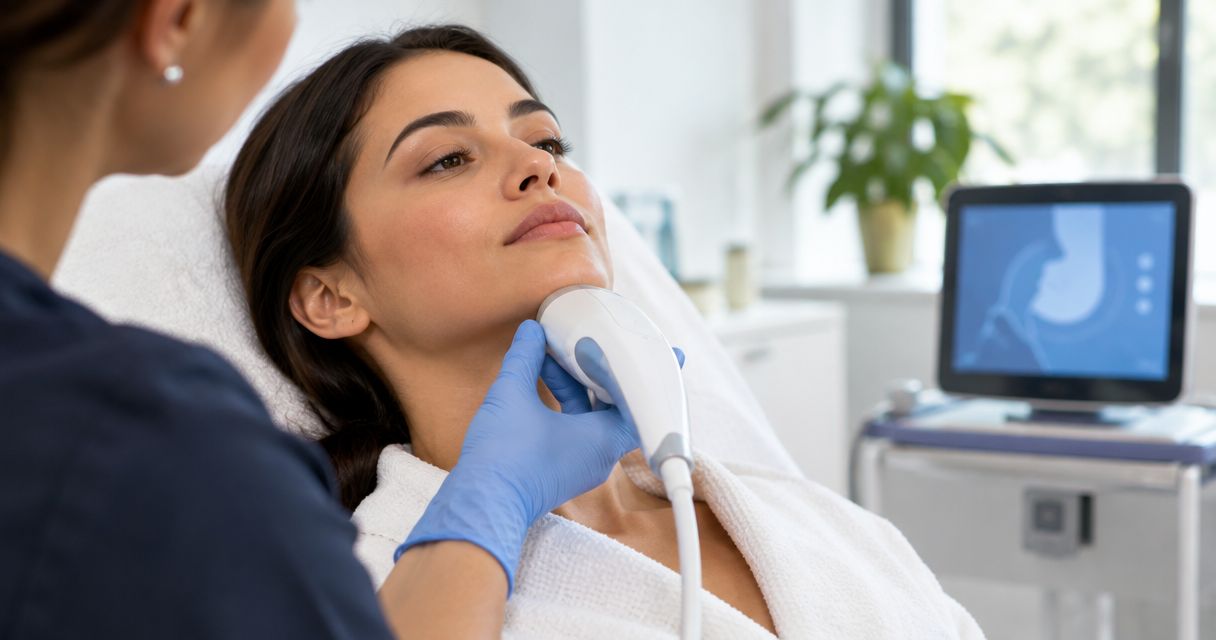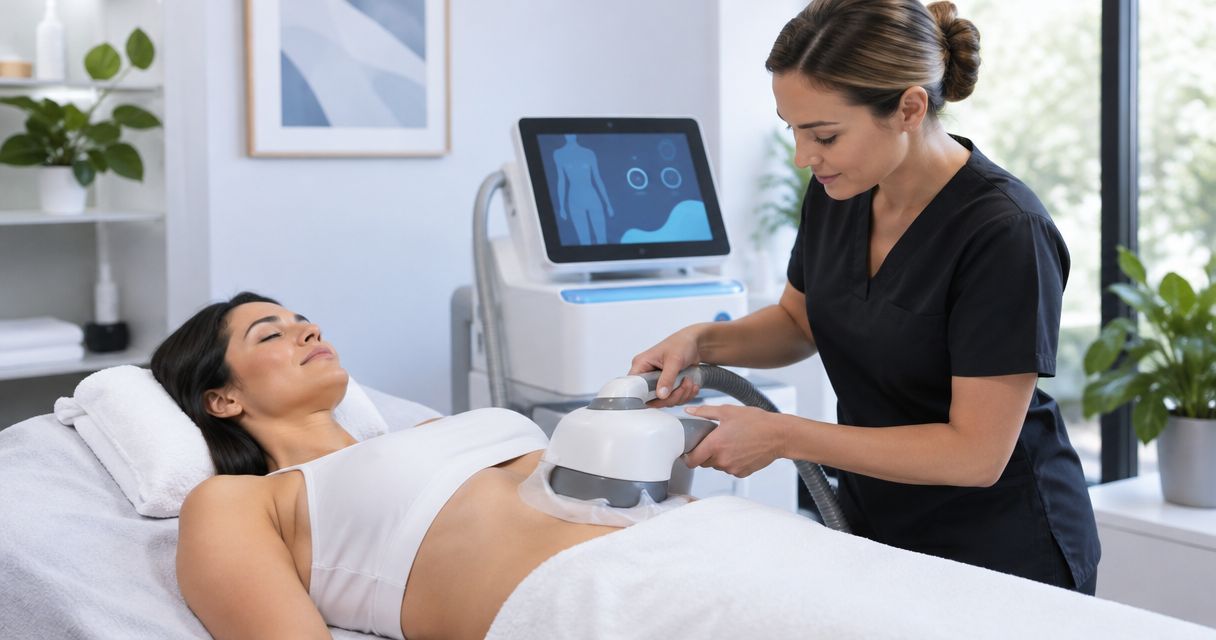
Yes—cryo body contouring can reduce a localized belly-fat bulge when the treatment is evidence-based cryolipolysis and the fat sits beneath the skin. It does not remove visceral fat around your organs, treat obesity, or guarantee a flat stomach; the exact device, your anatomy, and treatment risks determine whether it is appropriate for you.
- Does cryo body contouring work for belly fat? Cryolipolysis can reduce suitable under-skin fat, not visceral fat.
- FDA guidance describes fat clearance over two to three months; immediate changes are not the final result.
- Ammonite Laser Spa offers cryo body contouring; confirm the exact device and abdominal treatment suitability before booking.
- Fat freezing carries risks, including paradoxical adipose hyperplasia, which makes treated fat enlarge rather than shrink.
Why this matters
A smaller belly and a healthier waistline are not automatically the same outcome. A cosmetic treatment can change a superficial bulge without addressing the deeper abdominal fat associated with metabolic health risks.
For your 2026 treatment decision, separate three questions: what is creating the fullness, what the proposed device actually treats, and what improvement you would consider worthwhile. The guide to body contouring for stubborn belly fat provides a broader starting point, but a physical assessment determines whether fat freezing fits your concern.
Does cryo body contouring really work for belly fat?
Cryolipolysis works on selected pockets of subcutaneous fat, not every cause of abdominal fullness. Controlled cooling damages susceptible fat cells in the treated area, and your body gradually clears the affected cells. This produces a contour change rather than a weight-loss treatment.
The U.S. Food and Drug Administration’s Non-Invasive Body Contouring Technologies guidance describes this process and its limitations. For this 2026 guide, the relevant distinction is the FDA’s scope: noninvasive body contouring targets localized appearance concerns, not obesity or the health benefits of weight loss.
| What is creating the fullness? | Does fat freezing address it? | Best next step | Main limitation |
|---|---|---|---|
| A localized pocket of subcutaneous fat | It can reduce suitable treated fat | Best for: assessment of a specific under-skin bulge | Improvement varies; a flat stomach is not guaranteed |
| Visceral fat around abdominal organs | No | Best for: medical assessment and weight-management guidance | Cosmetic cooling does not reach or remove this fat |
| Loose abdominal skin | Fat freezing is not a dedicated skin-tightening treatment | Best for: assessment focused on skin laxity | Reducing fat does not reliably resolve excess skin |
| Bloating or an unexplained abdominal change | No | Best for: evaluation of the underlying cause | A cosmetic treatment does not diagnose digestive or medical problems |
A pinchable area can help identify superficial fat, but a pinch test is not medical clearance. An abdominal bulge can involve more than one issue, and a provider must assess the tissue rather than diagnose it from a photograph.
What does “cryo body contouring” actually mean?
The service name alone does not establish the treatment mechanism. Cryolipolysis, whole-body cryotherapy, and cold-based massage are not interchangeable, and evidence for one does not prove that another reduces abdominal fat.
Ask for the manufacturer, device model, and intended treatment area. In the United States, check the exact device’s FDA status and cleared indications; an abdominal indication for one device does not establish the same indication for every cooling machine.
Subcutaneous belly fat: the treatment’s actual target
Subcutaneous fat sits beneath your skin. When a suitable pocket can be treated safely with the chosen applicator, cryolipolysis can reduce its prominence without a surgical incision.
The benefit is localized reshaping without surgery. The trade-off is a variable degree of improvement, a wait for results, and treatment risks; noninvasive does not mean risk-free.
Best for: someone seeking a change in a defined fat bulge rather than substantial weight loss. If your goal is a dramatic reduction in overall abdominal size, discuss that expectation before agreeing to treatment.
Do not judge suitability by body weight alone. Fat distribution, skin condition, medical history, and applicator fit all matter, and none can be established by a generic online eligibility quiz.
Visceral belly fat: outside fat freezing’s scope
Visceral fat lies deeper in the abdomen, around internal organs. Cryolipolysis does not remove it, so an abdominal treatment should not be presented as a way to treat the health risks associated with excess visceral fat.
Best for: medical guidance when your priority is weight, waist-related health risk, or unexplained abdominal enlargement. That route addresses a different goal from cosmetic contouring.
You can have both superficial and visceral fat. A visible improvement in the treated surface does not demonstrate that deeper fat has decreased, and photographs cannot establish a metabolic health benefit.
Why belly-fat results vary
A useful 2026 consultation connects the proposed treatment to your anatomy instead of promising a standard transformation. These factors explain why two people receiving fat freezing can have different outcomes:
- Fat location: only the appropriate superficial tissue is a treatment target; deeper visceral fat remains outside its scope.
- Device and applicator: the device’s intended use and the applicator’s fit determine whether the area can be treated appropriately.
- Skin laxity: loose skin can remain after fat reduction, limiting how smooth or firm the abdomen looks.
- Treatment coverage: a treated pocket does not represent the entire abdomen or neighboring untreated areas.
- Weight changes: remaining fat cells can enlarge with weight gain, changing the contour after treatment.
- Assessment timing: early swelling and gradual fat clearance make an immediate judgment unreliable.
These are reasons to individualize a plan, not reasons to promise extra sessions. The provider should explain the expected change and its limits before recommending a course.
How long does belly fat freezing take to show results?
Two to three months is the fat-clearance timeframe described in FDA guidance for cryolipolysis, not a guaranteed deadline for a particular waist measurement. The change develops gradually as your body processes affected fat cells.
An immediate reduction is not a reliable measure of the finished outcome. Temporary swelling can also change the area’s appearance, so avoid using treatment-day photographs as proof of success or failure.
For a 2026 treatment plan, arrange the review around the exact device’s guidance and your provider’s assessment. Compare photographs using the same posture, lighting, camera distance, and clothing; otherwise, the comparison can exaggerate or hide a change.
Can belly fat come back after cryolipolysis?
Cryolipolysis damages targeted fat cells, but it does not prevent future weight gain. Remaining fat cells can enlarge, and untreated areas can change, so a lasting cellular effect does not mean your abdominal shape can never change.
Keep those claims separate. Ask whether a provider is describing what happens to treated cells or promising a permanently flat stomach—the second claim goes beyond what treatment can guarantee.
Weight stability also makes follow-up comparisons easier to interpret. If your weight changes substantially between photographs, you cannot attribute the entire contour difference to the procedure.
What are the risks of freezing belly fat?
Temporary redness, swelling, bruising, discomfort, and numbness are recognized adverse effects of cryolipolysis. Cold burns and nerve-related symptoms are also possible; persistent or worsening symptoms need clinical assessment rather than reassurance from an online guide.
A distinct complication is paradoxical adipose hyperplasia, or PAH. Instead of shrinking, fat in the treated area enlarges and can become firm, sometimes taking the shape of the applicator.
Two to five months after treatment is the PAH onset window described in FDA guidance. PAH does not resolve on its own and can require surgery to correct. It is not ordinary short-term swelling, so new or increasing fullness deserves assessment.
Cold-sensitive blood disorders, including cryoglobulinemia, cold agglutinin disease, and paroxysmal cold hemoglobinuria, are important contraindications to discuss. Report abdominal hernias, previous surgery, altered sensation, skin problems, medications, and pregnancy or breastfeeding so the clinician can assess suitability against the exact device’s instructions.
How should you decide whether to book?
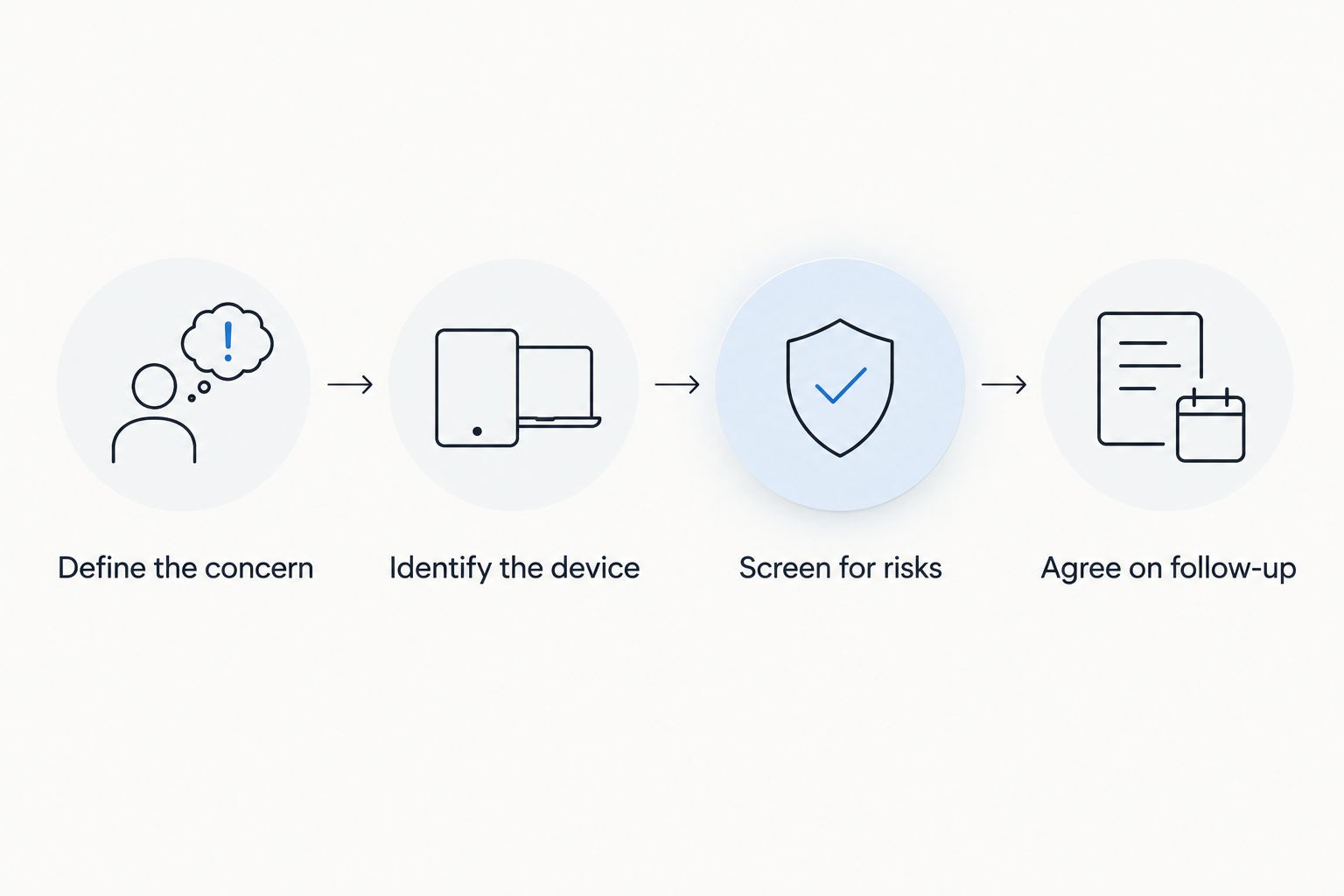
Use this sequence before committing to a belly-fat treatment. A credible consultation should make the limitations clearer, not make the decision feel urgent.
- Define the concern. Explain whether you want to change a small bulge, loose skin, overall abdominal size, or something new and unexplained.
- Identify the device. Request the exact model, treatment mechanism, and evidence supporting its intended use on the abdomen.
- Screen for risks. Give a complete medical history and ask who assesses contraindications and manages complications.
- Agree on follow-up. Establish how results will be documented, when they will be reviewed, and whom to contact about symptoms.
Bring a concrete goal, such as reducing a particular clothing-line bulge, rather than asking for an undefined transformation. Ask the provider to explain what would count as a reasonable improvement and what treatment cannot change.
Ammonite Laser Spa offers cryo body contouring in Downtown Brooklyn. Ammonite Laser Spa is an option for local clients seeking personalized, non-invasive body-contouring services. The service listing is a starting point, not proof that a particular device or protocol fits your abdomen; confirm those details during assessment.
Discuss your body-contouring goals
Ask about the device, abdominal suitability, risks, and follow-up before choosing treatment.
FAQ
Does cryo body contouring work for lower belly fat?
Cryolipolysis can reduce suitable subcutaneous fat in the lower abdomen when the device and applicator are appropriate for that area. It does not remove visceral fat, reliably tighten loose skin, or treat an abdominal hernia.
Will fat freezing give me a flat stomach?
Fat freezing does not guarantee a flat stomach. Your result depends on the cause of abdominal fullness, treatment suitability, skin laxity, and the amount of change achievable in the treated area.
How long should I wait to judge belly-fat freezing results?
Two to three months is the fat-clearance timeframe described in FDA guidance for cryolipolysis. Follow the exact device’s review schedule and have persistent symptoms or new enlargement assessed rather than simply waiting longer.
Is cryo body contouring the same as losing weight?
Cryo body contouring is not a weight-loss treatment. Cryolipolysis targets selected superficial fat pockets rather than treating obesity or reducing visceral fat around your organs.
Can fat freezing make belly fat bigger?
Fat freezing can cause paradoxical adipose hyperplasia, in which treated fat enlarges instead of shrinking. FDA guidance describes onset two to five months after treatment, and correction can require surgery.
How many cryo sessions do I need for my stomach?
Your session plan depends on the exact device, treatment coverage, anatomy, and response. Ask for an individualized assessment rather than accepting a fixed course based only on the name of the body area.
Does Ammonite Laser Spa offer cryo body contouring?
Ammonite Laser Spa offers cryo body contouring in Downtown Brooklyn. Ask which device is used, whether it is appropriate for abdominal fat, and how candidacy and complications are assessed before booking.
One last thing
A belly that looks larger months after fat freezing is not automatically evidence that you need another session. It needs assessment, particularly if the treated area becomes firm or develops a distinct applicator-shaped bulge.
For your 2026 decision, prioritize a clear explanation of the device, candidacy, and complication plan over a dramatic before-and-after image. The most useful promise is not a guaranteed flat stomach; it is an honest account of what the treatment can and cannot do.