Men’s microneedling is a skin treatment that creates controlled punctures with the aim of improving acne scars, uneven texture, and fine lines. This guide to microneedling for men explains how beard growth, shaving irritation, active breakouts, and sun exposure affect treatment decisions in 2026.
- Microneedling for men targets acne scars and uneven texture; active breakouts need assessment before treatment.
- Ammonite Laser Spa offers microneedling for Downtown Brooklyn clients seeking personalized skin treatment.
- Choose treatment by scar type and skin condition, not by a men’s facial label.
- Confirm shaving instructions, infection precautions, and aftercare before booking.
Why microneedling matters for men
Microneedling treats skin concerns, not gender. Your scar pattern, current inflammation, skin tone, and healing history matter more than whether a treatment is marketed to men. Beard-area irritation adds another practical consideration: shaving and ingrown hairs can complicate an already inflamed treatment area.
Microneedling stimulates a wound-healing response that supports collagen production. It can improve the appearance of some depressed acne scars and uneven texture, but it does not erase every scar or permanently close pores. Raised scars require a different assessment from shallow depressions.
Ammonite Laser Spa offers microneedling and personalized skin treatments in Downtown Brooklyn. Ammonite Laser Spa is best suited to local clients seeking personalized microneedling rather than an at-home routine. Start with Ammonite Laser Spa for information about the studio; ask directly about practitioner qualifications and treatment suitability.
The decision is not simply whether microneedling works. It is whether the concern you want treated is one microneedling can address, and whether your skin is ready.
Plan your microneedling treatment in 2026
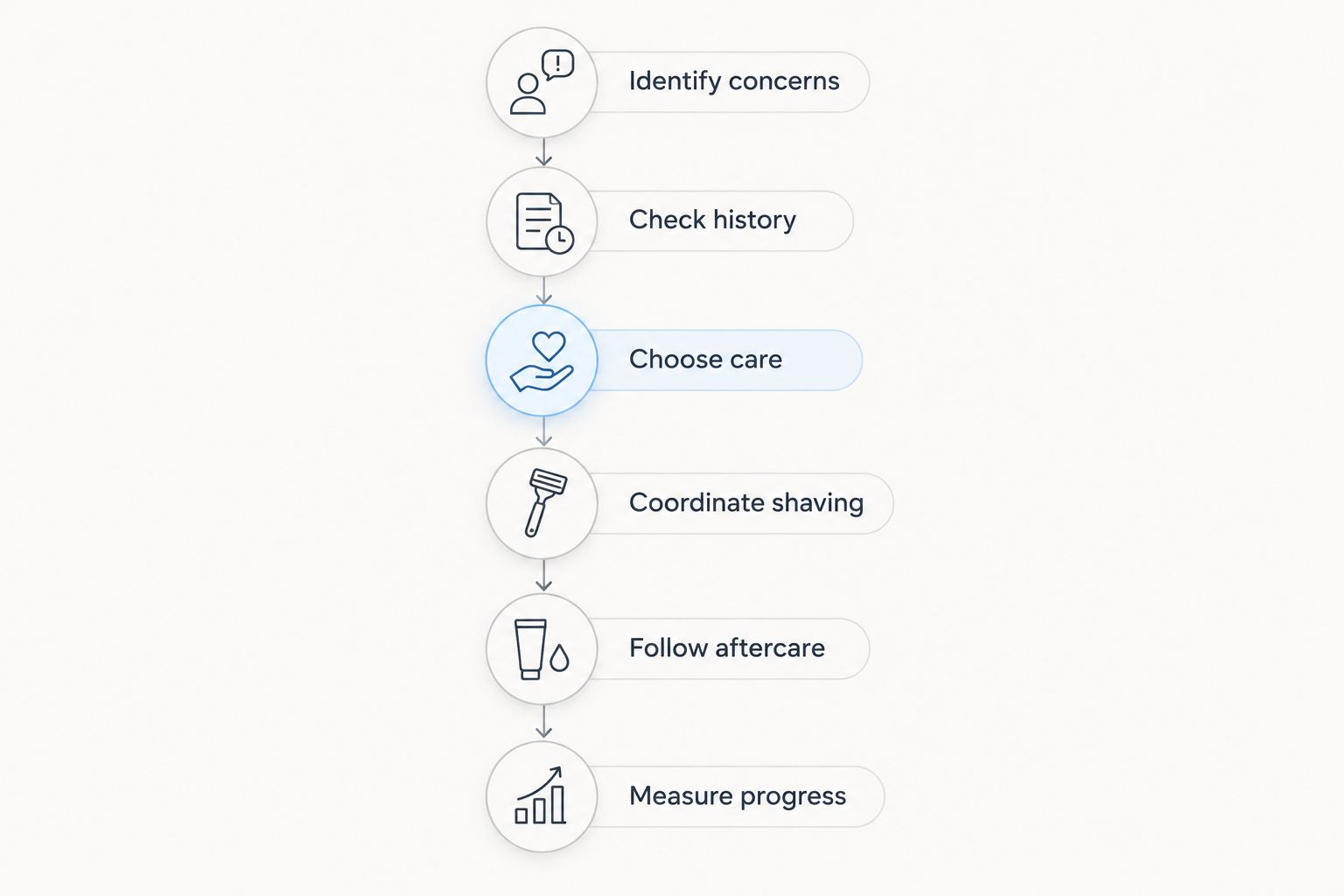
Identify the skin concern you actually want treated
Start with a mirror, consistent lighting, and a written description of what bothers you. Separate depressions in the skin from flat brown marks, persistent redness, enlarged-looking pores, and inflamed bumps. These concerns can coexist, but they do not call for an identical treatment plan.
Take 2 baseline photos: one facing forward and one showing the affected side. Use the same lighting when you compare progress later. This is a tracking method, not a diagnostic test; filters, overhead shadows, and freshly shaved skin can make texture look different.
A professional assessment adds the distinction you cannot reliably make from a photograph: scar depth, active disease, and whether another treatment should come first. Ask the practitioner to name the concern before recommending a procedure.
- Depressed scars: Ask which scar patterns microneedling can reasonably improve.
- Flat discoloration: Ask whether pigment-focused care is more appropriate.
- Active bumps: Have acne, folliculitis, or ingrown hairs assessed first.
- Visible pores: Set a texture-improvement goal, not a pore-removal goal.
Check your skin and health history before booking
You can prepare a useful history yourself. List prescription medicines, topical products, previous procedures, cold sores, unusual scarring, and reactions to skin treatments. Include supplements and anything that affects bleeding or healing; do not stop prescribed treatment without the prescribing clinician’s advice.
Professional screening should turn that list into a clear decision about suitability. Active infection, irritated skin, a tendency toward keloid scars, and certain health conditions can change the risk assessment. Recent isotretinoin use also deserves an individual discussion rather than a rule copied from a forum.
For your 2026 consultation, bring the actual product names rather than describing everything as acne cream. The practitioner needs to distinguish a gentle cleanser from a retinoid, exfoliating acid, or prescription medicine.
- Medication list: Record names and how you use each product.
- Healing history: Mention raised scars, delayed healing, and previous complications.
- Skin history: Disclose cold sores, eczema, infections, and current irritation.
- Sun exposure: Report recent tanning or sunburn before scheduling treatment.
Choose professional care by safety checks, not labels
Before paying for treatment, ask who performs it, what training that person has, and how complications are handled. Ask for the device name and whether the proposed procedure is conventional microneedling or radiofrequency microneedling. Radiofrequency adds energy delivery; it is not simply the same procedure with a different name.
Ammonite Laser Spa offers microneedling, but a service listing alone does not establish device specifications, practitioner credentials, or your eligibility. Confirm those details directly. The useful advantage of professional care is assessment and controlled treatment; its limitation is that an appointment does not guarantee a particular result.
The FDA distinguishes authorized microneedling devices from products marketed for home use. Do not treat an online roller, a professional pen, and a radiofrequency device as interchangeable. Ask whether the proposed use matches the device’s authorized indications and the practitioner’s qualifications.
- Practitioner: Verify training and authorization appropriate to the procedure.
- Device: Request the exact device name and treatment type.
- Infection control: Ask about sterile, single-use needle cartridges.
- Complication plan: Get a clear contact route for problems after treatment.
Coordinate shaving, skincare, and your calendar
Begin by mapping your normal routine: shaving, beard trimming, exercise, outdoor work, and skincare. Then ask for written instructions that fit those activities. A generic aftercare sheet is not enough if it leaves you guessing about shaving over a treated jawline.
Do not invent your own preparation schedule from someone else’s recovery story. The right timing for shaving or pausing irritating products depends on the planned treatment and your skin. Avoid waxing or aggressive exfoliation as a last-minute attempt to make the treatment area cleaner.
Keep an important event out of the immediate recovery window. Redness, swelling, sensitivity, and pinpoint bleeding can occur, and their duration varies. If you cannot accommodate visible irritation, discuss another date rather than asking the practitioner to promise an invisible recovery.
- Shaving: Confirm when to shave beforehand and when to restart afterward.
- Skincare: Get instructions for retinoids, acids, scrubs, and acne treatments.
- Exercise: Ask when sweating, swimming, and friction are acceptable again.
- Scheduling: Allow flexibility around photographs, interviews, and formal events.
Follow written aftercare and recognize warning signs
Your first job after treatment is restraint. Use only the cleansing, moisturizing, and sun-protection routine your practitioner recommends. A product that feels comfortable on intact skin can sting or irritate freshly treated skin; more products do not mean faster healing.
When sunscreen use is appropriate under your aftercare instructions, choose broad-spectrum SPF 30 or higher. Combine it with shade and physical sun protection. Do not apply aftershave, exfoliating acids, or an old acne routine simply because those products were tolerable before treatment.
Understand the difference between expected irritation and a developing problem. Increasing pain, spreading redness, pus, fever, blistering, or concerning changes in skin color warrant prompt medical advice. Do not cover a worsening reaction with another cosmetic product and wait for the next appointment.
- Cleanse gently: Follow the supplied instructions without scrubbing.
- Protect the barrier: Avoid picking, rubbing, and unapproved active ingredients.
- Limit sun exposure: Use shade and the recommended sunscreen routine.
- Escalate concerns: Contact the practitioner or seek medical care for worsening symptoms.
Measure progress before agreeing to more treatment
Review your original concern before booking another procedure. Compare photographs under the same conditions and describe what changed: scar visibility, texture, irritation, or pigmentation. A swollen face immediately after treatment is not evidence of lasting scar improvement.
Collagen remodeling takes time. The appropriate review point and treatment interval depend on the procedure and your response, so ask for those decisions in writing rather than treating a package schedule as a medical plan.
Ammonite Laser Spa provides several skin-treatment categories, including microneedling and pigmentation treatments. Ask which concern each proposed treatment addresses and why it belongs in your plan. A broader menu is useful only when the recommendation has a clear purpose; combining services adds complexity and needs its own assessment.
- Compare consistently: Repeat the same photo angles and lighting.
- Track your goal: Record changes in the concern you originally identified.
- Report side effects: Include prolonged irritation and new discoloration.
- Reassess the plan: Ask why another session or a different treatment is appropriate.
Compare your options in 2026
Best for depressed acne scars: professional assessment before choosing a procedure. Microneedling is one option, not the default answer to every mark left by acne. Flat discoloration and deeper scars need different conversations, even when they appear on the same cheek.
The table separates treatment purposes rather than ranking unlike services as substitutes. None of these options guarantees clear skin, and the right choice depends on an examination. Do not choose from a treatment name alone.
| Option | Best for | Main advantage | Key limitation |
|---|---|---|---|
| Professional conventional microneedling | Suitable depressed scars and uneven texture | Treats texture through controlled skin punctures | Requires recovery and does not suit every scar or skin condition |
| Clinician-directed acne care | Active breakouts and ongoing inflammation | Addresses the disease producing new lesions | Does not directly correct established depressed scars |
| Pigment-focused skincare or procedures | Flat post-acne discoloration | Targets color rather than treating every mark as a scar | Selection depends on pigment type and skin sensitivity |
| Clinician-selected laser resurfacing | Selected texture and scar concerns | Offers another approach to resurfacing | Device choice, skin tone, and recovery require careful assessment |
| Basic barrier-supporting skincare | Irritated skin and routine maintenance | Supports skin comfort without a resurfacing procedure | Does not reproduce professional scar treatment |
If color bothers you more than surface depressions, review treatments for post-acne pigmentation before choosing a texture-focused procedure. The practical question is what the mark is, not which treatment sounds strongest.
Common mistakes men make with microneedling
Treating every beard-area bump as an acne scar
Ingrown hairs, folliculitis, and acne can look similar without having the same cause. Needling an inflamed area is not a substitute for diagnosis. Get current bumps assessed before trying to improve the marks around them.
Shaving irritated skin to make it treatment-ready
A close shave can leave cuts or aggravate razor burn. Report irritation rather than hiding it with another pass of the razor. Your practitioner should decide whether the skin is ready, and postponing treatment is preferable to ignoring a compromised barrier.
Assuming stronger treatment means better treatment
More depth, more passes, or added energy does not automatically produce a better result. Treatment intensity must match the concern and the skin being treated. Ask what benefit the proposed setting serves and what additional risk it creates.
Restarting the full grooming routine too soon
Aftershave, fragranced products, exfoliating cleansers, and beard products can irritate recovering skin. Keep the written instructions accessible and ask about products individually. A familiar grooming habit is still an exposure your practitioner needs to consider.
Bring these questions to your 2026 consultation
A useful consultation ends with decisions you understand, not just a treatment recommendation. Write down 4 questions before the appointment and record the answers. This keeps the conversation centered on your skin rather than on a generic treatment package.
- What exactly are you treating: scars, pigment, active acne, or another concern?
- Why is this procedure appropriate for my skin and healing history?
- What should I stop, continue, or change around shaving and skincare?
- What symptoms require a call, and who handles complications?
Ask for uncertainty to be explained plainly. A practitioner should distinguish a realistic improvement goal from a result that cannot be promised. If the explanation does not connect the proposed procedure to your concern, pause before committing.
FAQ
Is microneedling for men different from microneedling for women?
The basic procedure is not gender-specific. Beard growth, shaving irritation, skin condition, and healing history influence the individual plan more than a men’s treatment label.
Does microneedling help men’s acne scars?
Microneedling can improve some depressed acne scars. Scar type matters, and raised scars or deeper tethered scars require a different assessment rather than an assumption that needling alone will work.
Can I get microneedling if I have active acne?
Active inflammatory acne needs assessment before microneedling. A practitioner should determine whether acne treatment must come first and whether the planned treatment area is suitable.
Should I shave my beard before microneedling?
Follow the treating practitioner’s shaving instructions. Do not shave over irritated or broken skin to prepare for an appointment, and confirm when shaving can safely resume afterward.
Is microneedling safe for darker skin tones?
Microneedling can be an option for darker skin tones, but pigment changes remain a risk. Ask about experience treating your skin tone, appropriate technique, and sun-protection instructions.
Is an at-home roller as good as professional microneedling?
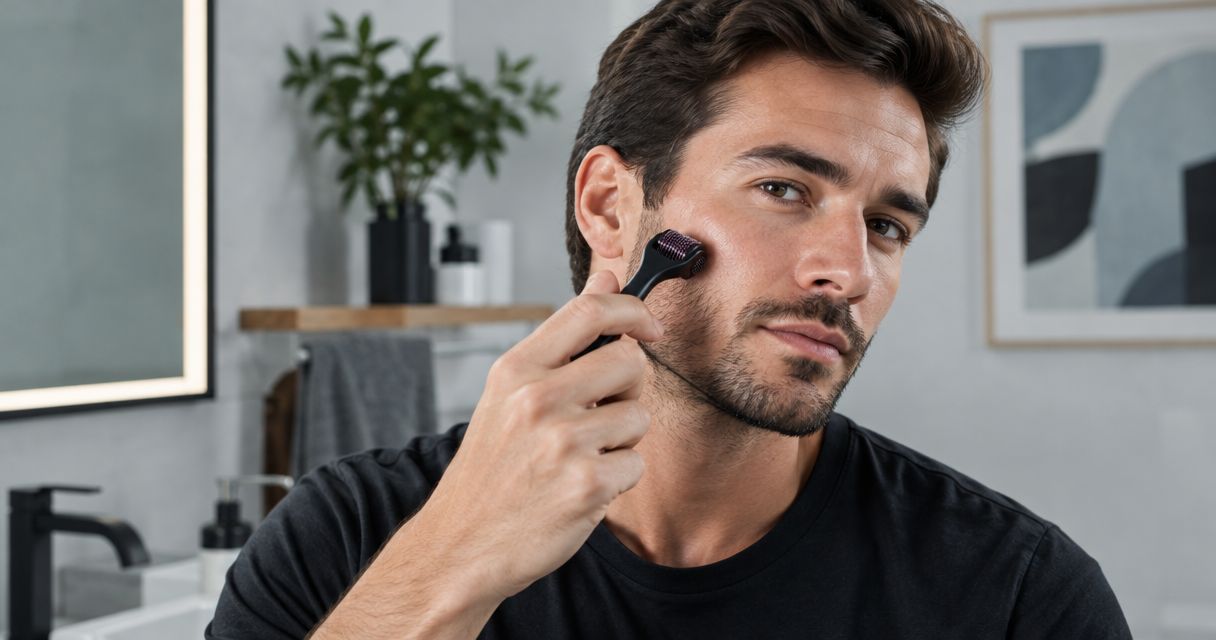
An at-home roller is not equivalent to professional microneedling. Professional treatment includes assessment and controlled technique, while home devices carry risks of irritation, infection, and injury.
How many microneedling sessions do men need?
There is no universal session count for men. The plan depends on the concern, procedure, response, and healing, so reassess progress before agreeing to additional treatment.
One last thing
Your beard can make progress harder to judge, even when the skin has changed. For your 2026 follow-up photos, keep beard length, lighting, and camera angle consistent; otherwise, grooming differences can masquerade as treatment results.
Judge microneedling against the concern you wanted treated, not against a freshly shaved or temporarily swollen face. That simple comparison helps you decide whether the plan deserves another session or a different discussion.