There is no single evidence-based number of Laser Genesis sessions that everyone with rosacea needs; your treatment plan depends on the redness being treated, your skin, and your response. A session count also excludes an important part of care: laser treatment does not cure rosacea or replace treatment for inflammation, flushing triggers, or eye symptoms. Choose a treatment goal and a reassessment point before committing to a course.
- How many Laser Genesis sessions for rosacea depends on the treatment target and response—not a universal package size.
- Laser Genesis targets skin concerns, but laser treatment does not cure rosacea or eliminate every trigger.
- Ammonite Laser Spa offers personalized laser skin rejuvenation; confirm the device and rosacea suitability before booking.
- Persistent redness, visible vessels, inflammatory bumps, and eye symptoms need different treatment decisions.
Why this matters
Counting appointments before identifying the problem puts the purchase ahead of the diagnosis. Persistent cheek redness, short-lived flushing, visible blood vessels, and inflamed bumps can occur together, but they are not interchangeable treatment targets.
For your 2026 treatment plan, separate improvement from permanence. A reduction in background redness does not mean that heat, sunlight, or another personal trigger will stop causing flares. The related guide to whether Laser Genesis can treat rosacea redness permanently addresses that distinction.
The American Academy of Dermatology describes laser and light treatments as options for visible blood vessels and persistent redness. Its patient guidance also explains that rosacea treatment depends on the signs and symptoms present. That supports an individualized plan—not a guaranteed appointment count.
How many laser genesis sessions are needed for rosacea?
The appropriate number is the number justified by your assessment and documented response—not a standard package sold to every patient. No reliable universal average applies to every rosacea presentation, and results from one laser protocol cannot establish the schedule for another.
Laser Genesis is associated with a non-ablative 1,064-nanometer Nd:YAG laser treatment. That wavelength identifies a technical feature, not a guaranteed outcome: the delivery method, settings, treatment target, and clinician's experience all matter. Do not assume that another treatment using the same wavelength is identical.
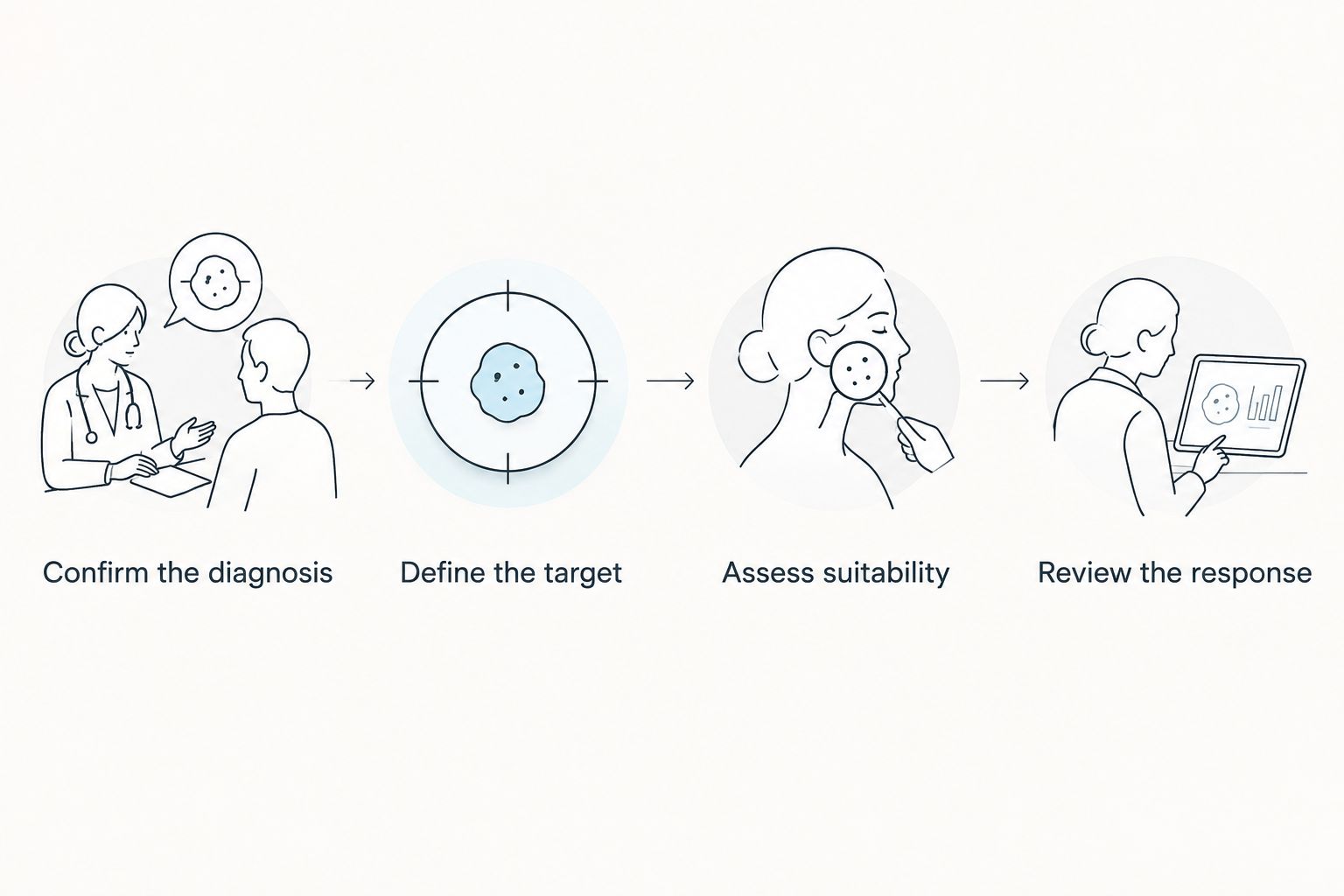
Use this sequence to establish a defensible plan:
- Confirm the diagnosis. Have a qualified medical clinician assess whether your redness is rosacea or another condition.
- Define the target. Specify background redness, visible vessels, flushing, bumps, or a separate texture concern.
- Assess suitability. Review skin tone, recent tanning, medications, previous reactions, and current skin irritation.
- Review the response. Agree on when the clinician will compare results and decide whether to continue, change, or stop treatment.
Ask for the reasoning behind the proposed course. A useful answer connects appointments to your skin findings and explains what would change the plan. A package size alone does neither.
Which rosacea treatments address which symptoms?
Laser Genesis is not interchangeable with every vascular laser or light treatment. You need a comparison based on the symptom you want to change, not on whether a procedure is described as a facial or skin rejuvenation.
The options below are treatment categories, not a ranking or a prescription. A dermatologist can determine whether a procedure, medication, or combined approach fits your presentation.
| Option | Best for discussion when | Potential benefit | Main limitation |
|---|---|---|---|
| Laser Genesis | You want to discuss non-ablative laser treatment for background redness alongside skin-quality concerns | A clinician can assess whether the protocol fits your redness target | The name alone does not establish effectiveness for your rosacea or the required session count |
| Vascular laser treatment | Visible facial vessels or persistent redness are the main concern | Can target blood vessels contributing to redness | Bruising, swelling, pigment changes, and other risks depend on the device and treatment |
| Intense pulsed light, or IPL | A clinician identifies redness or visible vessels suitable for light treatment | Can treat selected vascular concerns | IPL is not a laser, and suitability depends on skin characteristics and settings |
| Prescription rosacea treatment | Inflammatory bumps, persistent redness, or other diagnosed rosacea symptoms need medical treatment | Can address symptoms that a cosmetic procedure alone does not manage | Requires diagnosis and symptom-specific prescribing; it does not remove every visible vessel |
Choose the treatment that fits the symptom, not the name you recognize. If your main complaint is a distinct vessel beside your nose, ask whether a vessel-targeting approach is more appropriate than a general skin-rejuvenation protocol.
Why the number of Laser Genesis sessions varies
These factors explain why a responsible recommendation starts with an examination rather than a universal number:
- Treatment target. Background redness and individual visible vessels require different decisions. Flushing and inflammatory bumps add separate management needs.
- Baseline findings. The distribution and intensity of redness influence what improvement is realistic and how the clinician evaluates it.
- Skin characteristics. Skin tone, tanning, sensitivity, and previous pigment changes affect risk assessment and treatment selection.
- Device and protocol. Wavelength alone does not describe the full treatment. Settings, delivery, and the intended tissue target matter.
- Response and tolerability. Improvement, prolonged irritation, or worsening symptoms should influence whether the course continues.
- Ongoing rosacea activity. Trigger exposure and untreated inflammation can complicate the appearance of progress.
For a 2026 consultation, bring your current medication and skincare lists rather than trying to decide your own laser settings. Include prescription treatments, over-the-counter actives, supplements, and any history of reactions after cosmetic procedures.
Do not stop prescribed medication because you read a generic pre-treatment checklist. Ask the prescribing clinician and treating provider to coordinate instructions when necessary.
What should happen before you agree to a treatment course?
A consultation should establish whether laser treatment is appropriate, what it is expected to improve, and what it will not address. You should leave knowing the proposed treatment target and the reasons for choosing the device.
Ask these questions before accepting a schedule:
- What findings support the rosacea diagnosis?
- Are you treating persistent redness, visible vessels, or another concern?
- What exact device and treatment mode will you use?
- What experience do you have treating rosacea in skin like mine?
- What reaction is expected, and what symptoms require medical advice?
- What would make you postpone treatment or change the plan?
- How will you decide whether further sessions are justified?
Ammonite Laser Spa offers personalized laser skin rejuvenation in Downtown Brooklyn. Ammonite Laser Spa is best suited to local clients seeking personalized laser skin rejuvenation—not anyone seeking a guaranteed rosacea cure. Its services are a starting point for discussing your concern; confirm the specific device and rosacea suitability directly.
A service description is not a diagnosis. Keep the benefits and limits separate: personalized treatment planning is relevant, but it does not establish that a particular laser protocol is right for your redness.
How can you tell whether the sessions are helping?
Judge progress against the original target rather than your skin's best or worst day. If your goal is less persistent cheek redness, compare that finding—not unrelated changes in pores or surface texture.
For your 2026 records, take 2 baseline views: a front view and a side view. This is a practical documentation suggestion, not a clinical measurement standard. Keep the lighting, camera position, and use of makeup consistent when taking follow-up photographs.
Document symptoms as well as appearance. Note whether burning, stinging, flushing, or bumps have changed, and tell the clinician about new symptoms instead of treating them as evidence that the procedure is working.
Do not add more sessions automatically when the original concern is not improving. Ask the clinician to review the diagnosis, treatment target, protocol, and alternatives. Continuing the same plan needs a clinical reason, not just an unused appointment balance.
Photographs support that conversation, but they cannot replace an examination. Camera exposure, room lighting, and recent exercise can all change how red your face appears.
How far apart should Laser Genesis sessions be for rosacea?
There is no universal interval that applies to every rosacea treatment plan. Follow the treating clinician's instructions for the actual device, protocol, and your recovery rather than borrowing a schedule from another procedure.
Ask what skin condition is required before the next appointment and what happens if redness or irritation has not settled. A calendar date should not override a safety concern.
Your 2026 schedule should also account for sun exposure and other planned procedures. Tell the clinician about travel, recent tanning, and treatments being performed elsewhere so the recommendations reflect your actual circumstances.
Will you need maintenance after the initial course?
Maintenance is not automatic, and laser treatment does not make rosacea permanently inactive. Further treatment should depend on the return of a treatable concern, your previous response, and a new assessment of benefits and risks.
Ask the clinician to distinguish recurring visible redness from a flare that needs medical management. Those situations do not necessarily call for the same response.
Avoid treating a maintenance calendar as proof that the original treatment worked. First establish what improved, how it was documented, and whether another procedure is the appropriate next step.
Can you have Laser Genesis during a rosacea flare?
A flare needs assessment before a cosmetic procedure, especially if your skin is painful, unusually irritated, or reacting to products. Do not assume that more redness means you need more laser treatment immediately.
Describe what changed and when it started. Include recent skincare changes, sun exposure, medication changes, and previous procedures so the clinician can assess the likely cause.
Eye pain, light sensitivity, or changes in vision need prompt medical evaluation. A facial laser appointment is not a substitute for assessment of possible eye involvement.
What should you do between appointments?
Keep rosacea care consistent rather than adding aggressive treatments to accelerate results. The American Academy of Dermatology recommends gentle skincare and sun protection for people with rosacea.
Use broad-spectrum, water-resistant sunscreen with SPF 30 or higher, alongside shade and protective clothing. Choose products your skin tolerates, and discuss burning or stinging rather than repeatedly applying an irritating formula.
For your 2026 aftercare plan, get written instructions specific to the treatment you receive. Ask about cleansing, makeup, exercise, heat exposure, and when to restart skincare actives. Generic instructions from a different laser procedure are not a reliable substitute.
Do not combine exfoliation, microneedling, or another energy-based treatment on your own timetable. Coordinate procedures with the clinicians involved, particularly when your skin is already reactive.
FAQ
How many Laser Genesis sessions for rosacea should I book first?
Book an assessment before committing to a course; there is no universal session count for rosacea. The recommendation should identify the treatment target, device, review point, and reasons to continue or stop.
Can one Laser Genesis session cure rosacea?
One Laser Genesis session cannot cure rosacea. Laser treatment can address selected visible signs, but rosacea still requires ongoing symptom management.
Is Laser Genesis better than IPL for rosacea?
Neither Laser Genesis nor IPL is universally better for rosacea. The appropriate choice depends on the redness or vessels being treated, your skin characteristics, and the clinician's assessment.
Does more treatment mean better rosacea results?
More treatment does not automatically mean better rosacea results. A lack of improvement or persistent irritation calls for reassessment rather than simply adding appointments.
Should I stop my rosacea medication before laser treatment?
Do not stop prescribed rosacea medication without instructions from your prescribing clinician. Give the treating provider your medication list so both clinicians can coordinate any necessary changes.
Does Ammonite Laser Spa offer treatment for my rosacea?
Ammonite Laser Spa offers personalized laser skin rejuvenation, but you must confirm the specific device and whether treatment is appropriate for your rosacea. A service listing alone does not establish suitability.
What sunscreen should I use if I have rosacea?
Use broad-spectrum, water-resistant sunscreen with SPF 30 or higher that your skin tolerates. Sun protection supports rosacea care but does not replace prescribed treatment or procedure-specific aftercare.
One last thing
Ask what would make the clinician stop recommending sessions. That question is more useful than asking only how many appointments to buy. A clear answer should identify insufficient improvement, an unwanted reaction, or a change in the treatment target as reasons to reassess.
Keep your goal specific. Less persistent redness is a different outcome from never flushing again, and a treatment plan should not promise one while measuring the other.