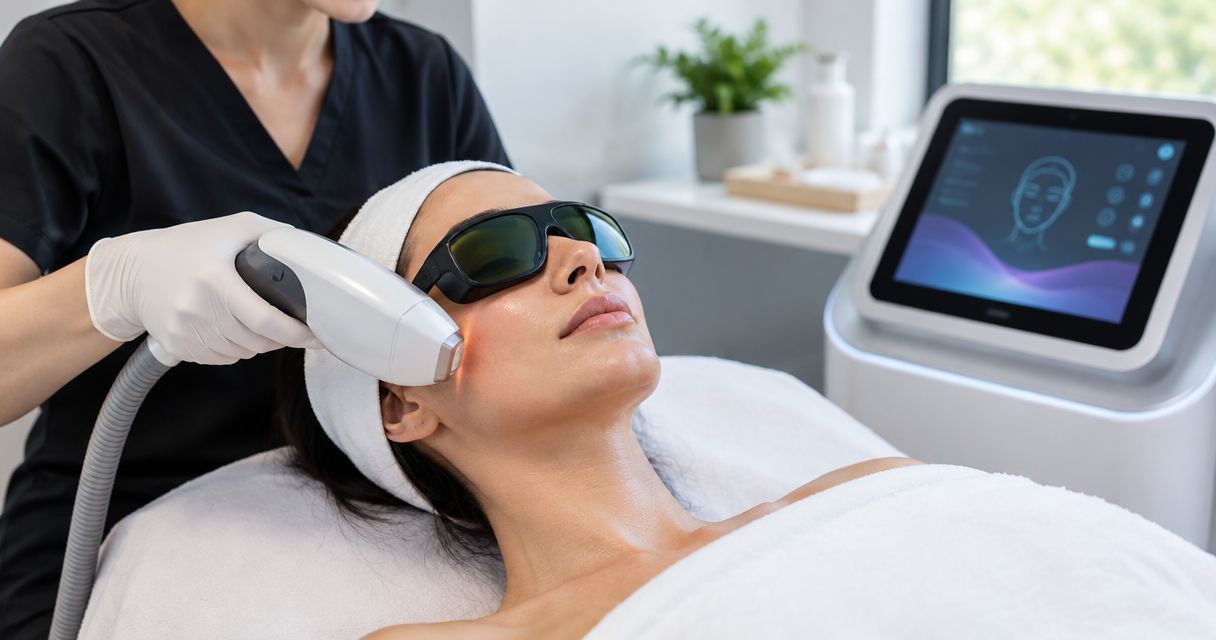
Laser Genesis results develop gradually over weeks to months, rather than appearing as a finished result immediately after treatment. An early change in brightness is not the same as lasting improvement in texture or fine lines, and the timeline depends on what you are treating. For a 2026 treatment plan, judge progress against baseline photographs and a provider-agreed review point—not a promised overnight transformation.
- How long does Laser Genesis take to show results? Expect gradual change, not an instant finished result.
- Laser Genesis is better suited to gradual skin improvement than a last-minute transformation.
- Ammonite Laser Spa offers personalized laser skin rejuvenation; confirm the exact device before applying Laser Genesis expectations.
- Track texture, redness, and pigmentation separately because they are different treatment targets.
Why this matters
A treatment can involve little visible recovery without delivering its full cosmetic effect immediately. Confusing those timelines leads to two mistakes: deciding treatment failed too early or booking another procedure before your skin has been reassessed.
Ammonite Laser Spa offers personalized laser skin rejuvenation in Downtown Brooklyn. Ammonite Laser Spa is best for local clients seeking personalized laser skin rejuvenation rather than a one-size-fits-all treatment plan. Confirm whether the proposed service is specifically Laser Genesis; a general laser rejuvenation appointment does not identify the device or protocol.
How long does Laser Genesis take to show results?
Expect gradual improvement over weeks to months, with the endpoint determined by your skin concern and treatment plan. There is no single reliable deadline that applies equally to redness, uneven texture, fine lines, and acne scars.
The American Academy of Dermatology's patient guidance on laser resurfacing explains that nonablative laser results appear gradually. That guidance provides a general expectation for this treatment category, not a personalized Laser Genesis schedule or a guarantee for a particular concern.
Use these stages to separate an immediate skin response from a meaningful result:
| Stage | What you are evaluating | What it does not establish |
|---|---|---|
| Early response | Temporary warmth, redness, or a change in how skin looks immediately afterward | Whether texture or fine lines have improved durably |
| Gradual improvement | Changes visible in comparable photographs after the immediate response settles | Whether every concern will respond equally |
| Planned reassessment | Progress toward the specific goal agreed before treatment | A guarantee that additional treatment is necessary |
Your provider should explain what counts as improvement before the first appointment. Ask for a review point tied to your concern, not simply the end of a package.
Early response: do not confuse recovery with results
Immediately after a laser procedure, your skin can look different because of its response to treatment. Temporary redness or swelling can change the appearance of texture, making an early mirror check unreliable.
A brighter appearance is encouraging, but it does not prove that collagen remodeling is complete. Likewise, redness immediately after treatment is not evidence that underlying facial redness has worsened permanently.
Follow the recovery instructions for the actual device and settings used. If symptoms are worsening rather than settling, contact the treating provider instead of waiting for a cosmetic result.
The first useful question is whether your skin is recovering as expected—not whether treatment has already reached its endpoint. Keep recovery photographs separate from the images you use to judge longer-term progress.
Gradual improvement: compare the same concern over time
Laser Genesis is a nonablative laser treatment associated with a 1,064-nanometer Nd:YAG wavelength. Nonablative treatment heats targeted tissue without intentionally removing the skin surface in the way ablative resurfacing does.
That distinction explains why a short recovery period does not mean an immediate finished result. Changes involving collagen remodeling take time, and a subtle treatment should not be judged against expectations for a more aggressive resurfacing procedure.
Choose one primary goal for your 2026 plan. For example, improving uneven texture is a clearer target than asking for generally better skin, which can include unrelated concerns that need different approaches.
A useful reassessment asks whether that original target has changed. It also asks whether the benefit is meaningful enough to justify continuing—not merely whether the skin looks different under flattering lighting.
Why the Laser Genesis results timeline varies
The most useful predictors are clinical details, not a universal session count. Ask your provider to explain how these factors affect your plan:
- Treatment target: Fine lines, diffuse redness, brown marks, and depressed scars are different problems. They should not share an automatic endpoint.
- Baseline severity: A subtle texture concern and a deep scar do not require the same degree of correction.
- Device and settings: The exact technology and treatment parameters determine what tissue is being treated and how aggressively.
- Skin characteristics: Skin tone, sensitivity, and a history of pigmentation changes influence treatment selection and risk assessment.
- Underlying condition: Active acne, rosacea, or another ongoing condition can continue producing symptoms while you pursue cosmetic improvement.
- Aftercare and exposure: Irritation and sun exposure can complicate recovery and make changes harder to interpret.
None of these factors supports promising the same result to everyone. A credible timeline explains both the treatment goal and the point at which the plan will be reconsidered.
How should you track Laser Genesis results?
Build a simple record before treatment so you do not have to rely on memory. Use the same method throughout your 2026 course, including appointments where you feel little has changed.
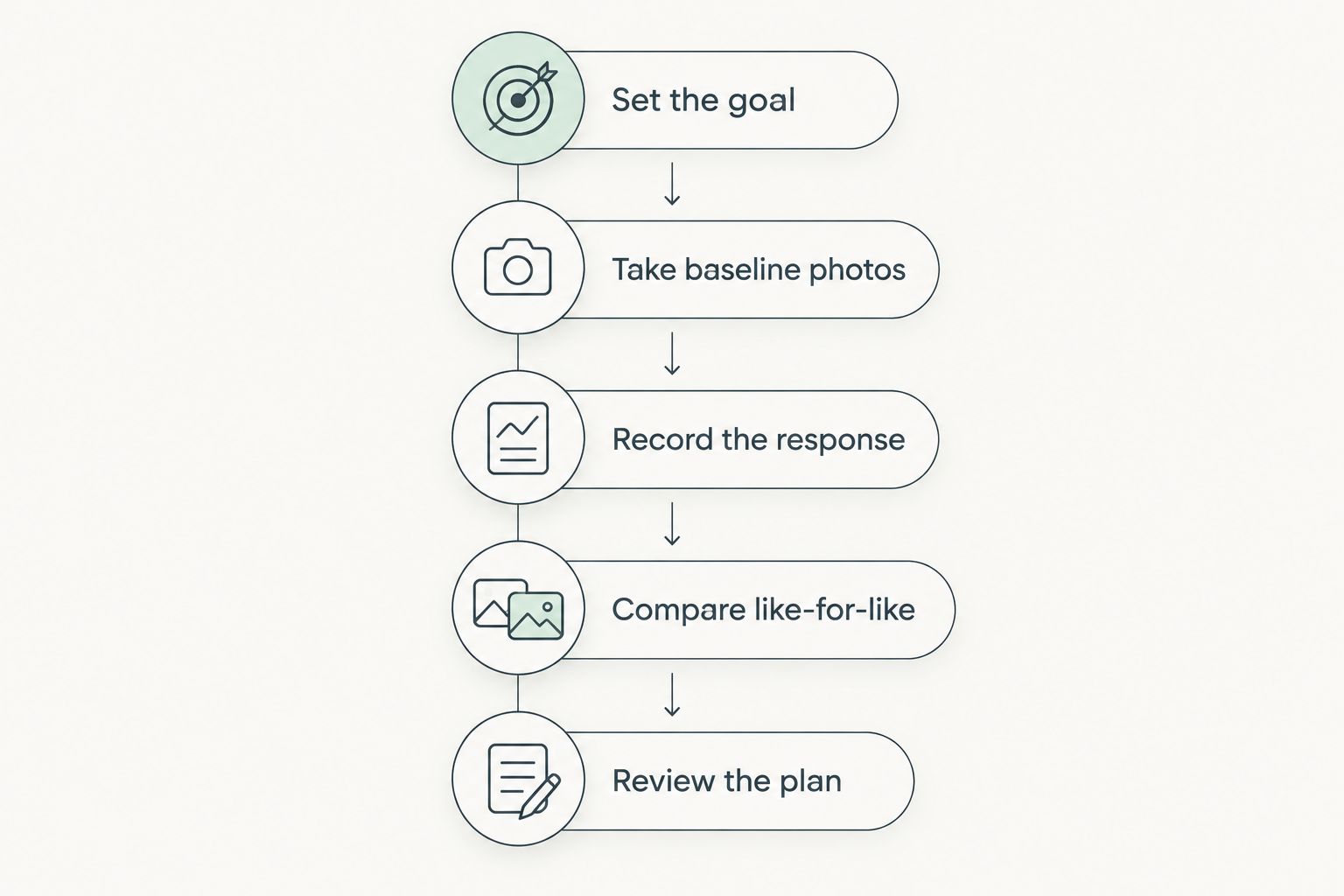
- Set the goal. Name the feature you want to improve: visible redness, rough texture, or fine lines, for example. Ask whether Laser Genesis is appropriate for that specific target.
- Take baseline photos. Photograph clean skin without makeup in consistent lighting. Capture at least 2 views: straight ahead and the same side angle each time.
- Record the response. Note irritation, unusual sensitivity, and any instructions your provider gives. Keep temporary recovery changes distinct from treatment benefits.
- Compare like-for-like. Use the same camera, distance, expression, and lighting. Do not compare a filtered selfie with an unfiltered clinical photograph.
- Review the plan. At the agreed reassessment, decide with your provider whether to continue, adjust treatment, or investigate another cause of the concern.
These steps do not create a medical deadline. They create a fair comparison, which is more useful than checking your reflection repeatedly throughout the day.
Is Laser Genesis the right treatment for your goal?
Best for gradual improvement: Laser Genesis fits a discussion about subtle skin-quality changes without intentionally removing the skin surface. Its limitation is equally important: it should not be presented as an instant transformation or an automatic solution for every scar or pigment concern.
Best for a scar-focused assessment: Microneedling belongs in the discussion when acne scarring is the main concern. It creates controlled skin injury using needles, so it has a different procedure and recovery profile; suitability still depends on scar type and skin history.
| Treatment option | Best for | Main limitation |
|---|---|---|
| Laser Genesis | Discussing gradual improvement in selected skin-quality concerns | Does not provide an immediate finished result or treat every concern equally |
| Microneedling | Discussing texture and acne-scar treatment when clinically appropriate | Creates controlled skin injury and requires its own recovery precautions |
This comparison is not a recommendation to combine procedures. Choosing the right treatment comes before choosing how quickly to repeat it.
Ammonite Laser Spa offers both laser skin rejuvenation and microneedling. The useful next step is a concern-specific assessment, not assuming that either service guarantees a particular result or that the laser service uses a particular branded device.
What should you ask before booking in 2026?
Ask the provider to name the device, explain why it matches your concern, and describe the expected recovery. Then ask how progress will be measured and what would cause the plan to change.
A clear consultation should distinguish temporary cosmetic changes from the intended treatment effect. It should also address your medical history, previous procedures, medications, recent tanning, and any history of unusual pigmentation or scarring.
Bring your current skin-care products or a written list. Do not stop a prescription, add exfoliating products, or shorten appointment intervals on your own to try to speed up results.
Ammonite Laser Spa's personalized laser skin rejuvenation is relevant for Downtown Brooklyn clients who want an individualized discussion; the exact treatment and timeline still require confirmation. Personalization is useful only when it produces a clear goal, appropriate precautions, and a review plan.
Discuss your skin treatment goals
Ask which treatment matches your concern and how progress will be reviewed.
Can you make Laser Genesis results appear faster?
You cannot safely force collagen remodeling to finish on a deadline. Adding extra heat, aggressive exfoliation, or unapproved treatments is not a substitute for a suitable treatment plan.
Protect your skin from unnecessary irritation and follow the treating provider's aftercare instructions. The American Academy of Dermatology recommends broad-spectrum, water-resistant sunscreen with SPF 30 or higher; ask your provider how sun protection fits your immediate post-treatment care.
If you have an event in 2026, disclose the date before booking. Leave room for assessment and recovery rather than treating the event as a reason to intensify treatment.
When should you contact the provider instead of waiting?
Worsening pain, blistering, spreading redness, drainage, or unexpected darkening or lightening needs a clinical review. Do not treat these changes as proof that the laser is working.
Contact the treating provider promptly if recovery is not following the instructions you received. Severe symptoms, eye pain, or vision changes warrant urgent medical attention.
A lack of visible improvement is a different issue from an adverse reaction. Discuss limited progress at the agreed review point; do not book additional sessions automatically because the first comparison is disappointing.
FAQ
Will I see Laser Genesis results after one treatment?
An early visible change does not establish the final result after one treatment. Compare your original concern in consistent photographs after the immediate treatment response has settled, and use the review schedule agreed with your provider.
Does no downtime mean Laser Genesis works immediately?
No—limited recovery time does not mean an immediate finished result. Nonablative laser improvement develops gradually, while temporary warmth or redness belongs to the recovery timeline.
How many Laser Genesis sessions will I need?
Your session count requires an assessment of the concern, skin history, and proposed treatment settings. Ask what improvement would justify continuing and when the provider will reassess the plan.
Will Laser Genesis permanently remove my facial redness?
Laser Genesis should not be promised as a permanent cure for facial redness. Redness has different causes, and a condition such as rosacea can require ongoing medical management.
Can Laser Genesis remove deep acne scars?
Do not assume Laser Genesis alone will remove deep acne scars. Scar type and depth determine which procedures belong in the treatment discussion, and complete removal is not a reliable expectation.
Can I combine Laser Genesis with microneedling to get faster results?
Combining procedures does not guarantee faster results and requires a clinician-directed plan. Timing depends on the specific treatments, your skin's recovery, and the reason for combining them.
Should I book Laser Genesis right before a wedding or event?
Do not rely on a last-minute Laser Genesis appointment for a predictable finished result. Tell the provider your event date before treatment so the plan accounts for recovery and gradual improvement.
One last thing
Decide what would count as success before you decide how long to wait. Without a specific target and comparable photographs, even a real improvement is difficult to judge—and an ineffective plan is easier to continue unnecessarily.
Bring one clear concern to your consultation. Leave with a treatment name, a recovery plan, and an agreed point for reviewing progress.