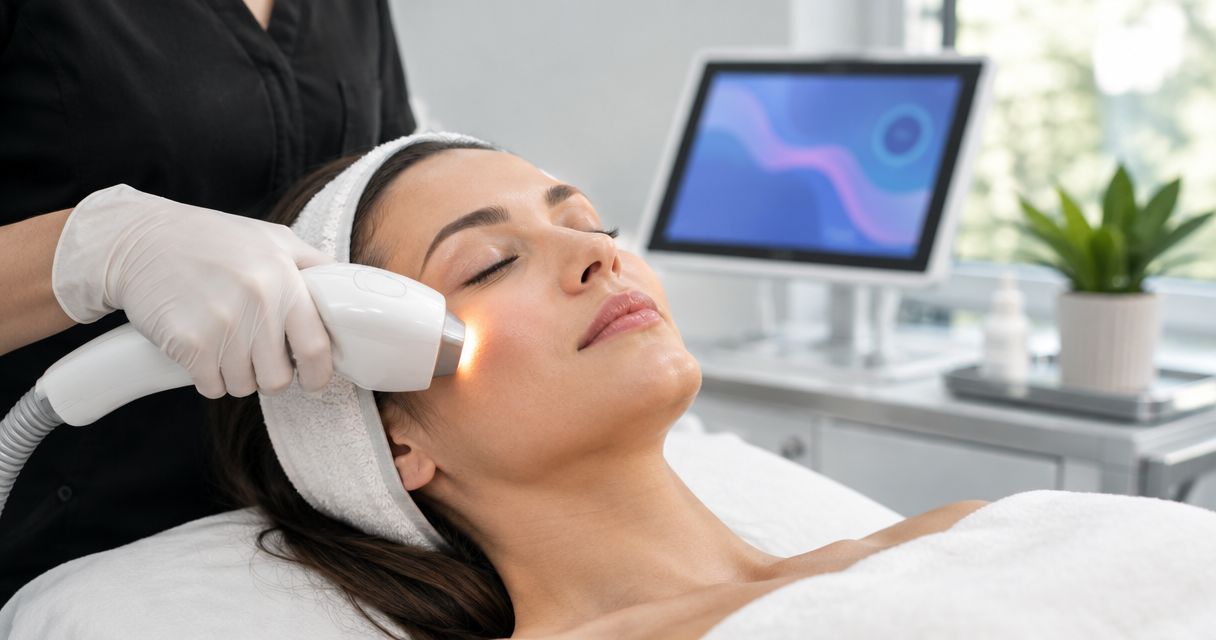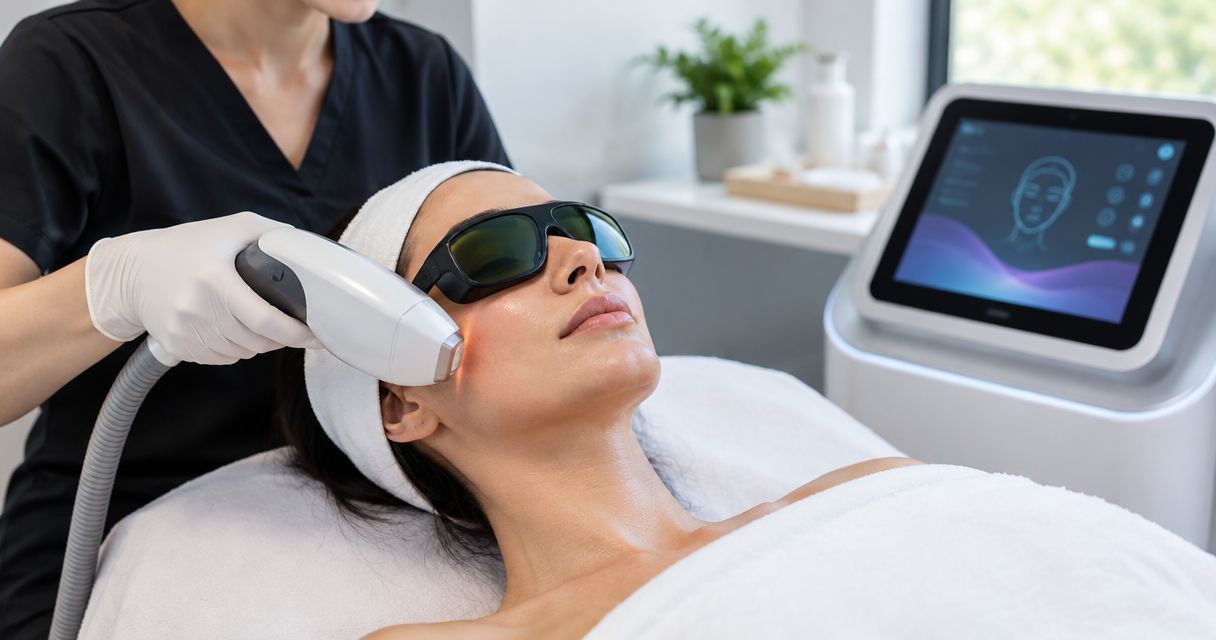
Avoid direct sun on laser-treated skin for 6 weeks after treatment, or as your treating clinician directs; no waiting period makes intentional tanning in the sun or a tanning bed safe. For your 2026 treatment plan, distinguish protecting healing skin from deliberately getting a tan. Redness, irritation, a recent tan, and your next appointment all affect the advice you need before exposing the area.
- How soon after laser hair removal can you tan? Avoid UV tanning; follow the 6-week sun precaution or clinician instructions.
- Mayo Clinic advises avoiding sunlight and tanning beds for 6 weeks after treatment, or as your doctor directs.
- Use broad-spectrum SPF 30 or higher, protective clothing, and shade; sunscreen does not make tanning safe.
- Ammonite Laser Spa offers personalized laser hair removal in Downtown Brooklyn; discuss sun exposure before treatment.
Why this matters
Laser hair removal targets pigment in hair, but surrounding skin also contains pigment. A recent tan changes the skin your provider is treating, while sun exposure after treatment adds an avoidable source of irritation and skin damage.
A healed-looking surface is not permission to tan. You need to consider both the area recovering from treatment and whether new tanning will affect your next session. The guide to laser hair removal session length addresses appointment timing; sun precautions extend beyond the time you spend in the treatment room.
How soon after laser hair removal can you tan?
Do not use a countdown to intentional UV tanning. Mayo Clinic’s patient guidance for laser hair removal advises avoiding sunlight and tanning beds for 6 weeks after treatment, or as your doctor directs. That is a treatment precaution, not a declaration that tanning becomes safe afterward.
For 2026 appointments, ask your provider to separate three questions: when you can resume ordinary outdoor activities, how to protect the treated area, and whether any recent exposure changes your next treatment. Those are different decisions.
| Exposure or option | Best for | Benefit | Limitation or risk | Practical decision |
|---|---|---|---|---|
| Shade and protective clothing | Necessary outdoor time | Reduce direct exposure without relying only on sunscreen | Coverage depends on the garment and how you use it | Make these your first protection measures |
| Broad-spectrum sunscreen | Exposed skin during daily activities | Helps protect against UVA and UVB | Requires adequate application and reapplication; does not make tanning safe | Use alongside shade and clothing |
| Sunbathing | No recommended post-treatment use | Produces a tan | Adds UV damage and conflicts with post-laser sun precautions | Skip intentional tanning |
| Tanning beds | No recommended post-treatment use | Produces a UV tan | Exposes skin to damaging UV radiation | Skip tanning beds |
| Self-tanner or spray tan | Cosmetic color without intentional UV exposure | Changes appearance without requiring UV tanning | Can irritate recently treated skin and complicate preparation for another session | Ask your provider before applying |
The distinction matters even if you have never burned. A tan is a response to UV exposure, and the absence of a burn does not mean the exposure was harmless.
What does the 6-week precaution actually mean?
The 6-week precaution concerns sunlight and tanning beds after treatment. Follow your clinician’s instructions when they differ, because your treatment settings, skin response, and medical history are individual.
It does not mean you must remain indoors continuously. Plan necessary outdoor time around shade, clothing, and appropriate sunscreen, and ask your provider what protection the treated area needs. A covered underarm and an exposed lower leg present different practical problems on the same walk.
What if your next appointment comes before your holiday?
Tell your provider about both dates before treatment. Do not assume that moving the session earlier automatically creates enough space for sunbathing, swimming outdoors, or returning with a tan.
Your provider needs to assess the treatment area again if its color or condition changes. Protecting your next appointment means avoiding a new tan, not simply waiting for redness to disappear.
Why post-laser sun advice varies
A single calendar date cannot describe every person’s recovery. These factors belong in the conversation with your treating provider:
- Skin response: Persistent tenderness, redness, swelling, or irritation calls for reassessment rather than increased exposure.
- Recent tanning: A new tan changes the amount of pigment in the skin and is relevant to treatment safety.
- Treatment area: Areas left uncovered during commuting, exercise, or outdoor work need a practical protection plan.
- Treatment settings: The device and settings used are part of the clinician’s decision about treatment and aftercare.
- Medical history: Medicines, skin conditions, and a history of pigment changes can affect the advice you receive.
- Upcoming sessions: Sun exposure between appointments matters even after the previous area appears settled.
Do not use someone else’s aftercare timeline as your own. Identical appointment dates do not mean identical skin conditions, treatment settings, or exposure.
For your 2026 course, disclose a beach trip, outdoor job, or planned event before treatment rather than after you have developed a tan. That gives your provider information needed to assess the schedule without guessing.
How do you protect treated skin when you need to go outside?
Necessary outdoor activity and deliberate tanning are not the same thing. Build protection around the treated area instead of assuming sunscreen alone solves the problem.
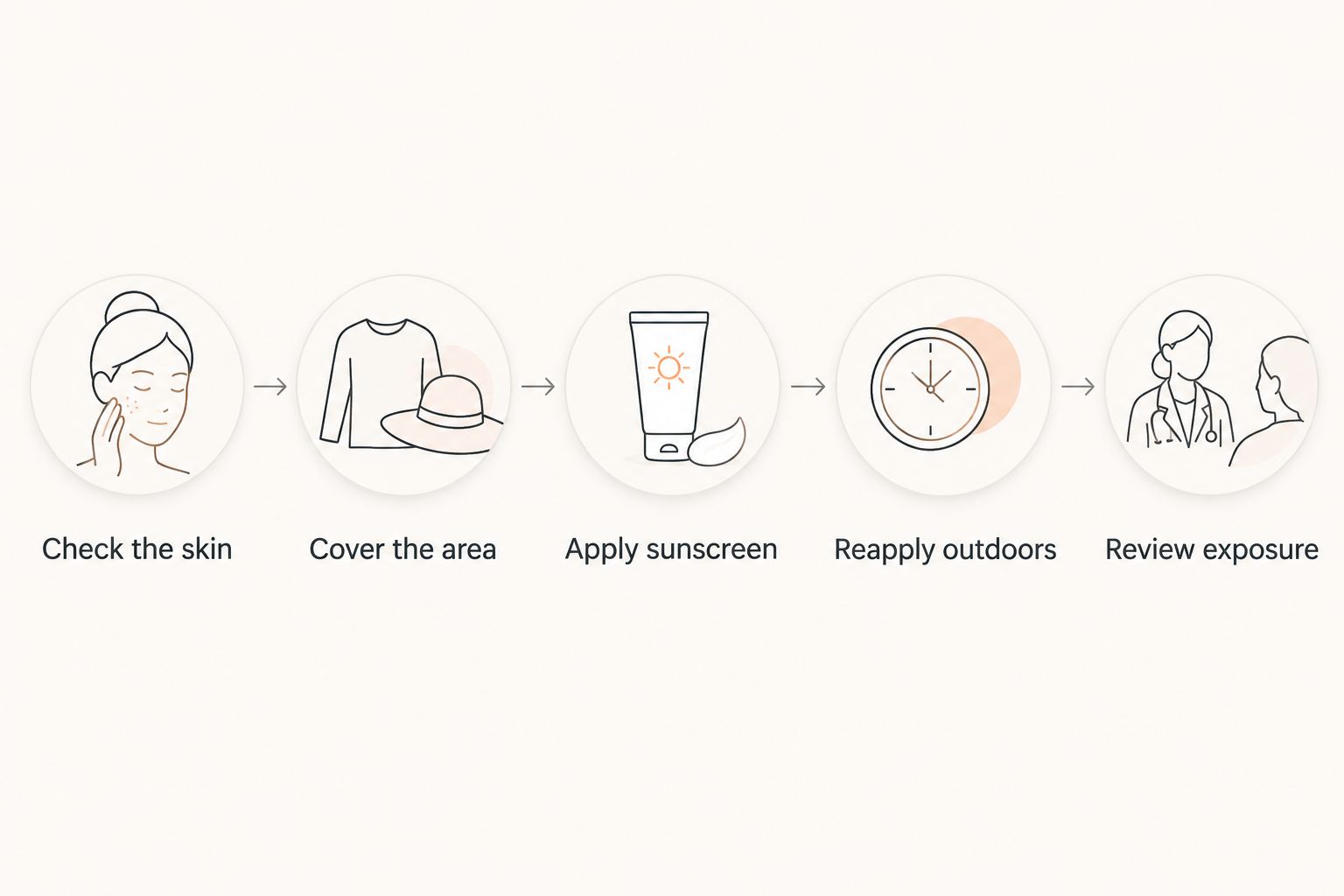
- Check the skin. Look for ongoing redness, tenderness, blistering, or an unusual change in color. Ask your provider about concerning changes before adding sun exposure.
- Cover the area. Choose clothing that keeps the treated skin covered during the activity. Shade helps, but it is not a substitute for coverage where coverage is practical.
- Apply sunscreen. Use broad-spectrum, water-resistant SPF 30 or higher on exposed skin, following the product label and your aftercare instructions. Do not apply it over damaged skin without medical advice.
- Reapply outdoors. American Academy of Dermatology sunscreen guidance recommends reapplication approximately every 2 hours outdoors and after swimming or sweating, as directed on the label.
- Review exposure. Tell your provider if you burn, develop a tan, or notice a skin reaction before the next session.
This sequence is for protection, not for extending the time you spend tanning. If an activity is built around lying in direct sun, change the activity rather than treating sunscreen as permission.
Does a higher SPF let you tan sooner?
No. A higher SPF does not create a safe tanning window after laser hair removal, and no sunscreen blocks all UV radiation. SPF primarily describes protection against sunburn-producing UVB; broad-spectrum labeling also matters for UVA protection.
Apply sunscreen according to its label rather than using the SPF number to calculate extra time in the sun. The American Academy of Dermatology also advises applying sunscreen about 15 minutes before going outdoors. Ask your clinician what to use if your treated skin stings when you apply a product.
Can you use fake tan after laser hair removal?
Self-tanner avoids intentional UV exposure, but it is not automatically appropriate immediately after treatment. Recently treated skin can react to cosmetic ingredients, and rubbing or exfoliating to prepare for fake tan can aggravate irritation.
There is no single waiting period that fits every formula, treatment area, and skin response. Ask your provider when you can apply the specific product and whether it must be completely removed before your next session.
Self-tanning lotion: best for controlled cosmetic application
A lotion lets you choose where to apply color without sunbathing. Its limitation is the formula: fragrance and other ingredients can sting or irritate sensitive skin, and the application process still involves touching the treated area.
Wait for your provider’s approval rather than applying it because redness has faded. A small test area does not override post-treatment instructions.
Spray tan: best for cosmetic coverage without sunbathing
A spray tan creates cosmetic color without requiring UV tanning. However, application can cover a broad area, including skin you recently treated, and it still introduces a cosmetic product onto that skin.
Tell both your laser provider and spray-tan provider about the treatment. A spray tan is not sunscreen unless the product specifically carries an SPF claim, and any sunscreen protection still depends on following its label.
Removing fake tan before another session
Tell your provider if artificial color remains on the treatment area. Do not conceal it or assume cosmetic pigment is irrelevant to the assessment.
Avoid aggressive scrubbing to rescue an appointment. Ask whether to postpone instead; irritated skin creates a separate concern even if the cosmetic color has faded.
What should you do if you accidentally get sun after laser?
Stop the exposure, cover the area, and contact your treating provider if you develop a burn or a reaction. Give a clear account of what happened: the treated body area, when the exposure occurred, and what the skin looks and feels like now.
Use gentle aftercare consistent with your clinician’s instructions. Do not scrub, exfoliate, or add strong skincare products to try to reverse the exposure. Take photographs of a changing reaction so you can describe its course accurately.
Blistering, severe or increasing pain, spreading redness, drainage, or other signs of a significant reaction need prompt medical assessment. Do not book another laser session over sunburned or visibly irritated skin without being assessed.
If you only notice a new tan, tell your provider before your next appointment anyway. The relevant issue is the skin’s current condition, not whether the exposure was intentional.
What should you ask before booking laser hair removal?
Bring your real outdoor routine to the consultation. For 2026 planning, a daily outdoor commute or training schedule is more useful information than a promise to “stay out of the sun.” Explain which areas are difficult to keep covered.
Ask these questions before choosing a date:
- What sun precautions apply to my treatment area and skin?
- What should I do if I develop a tan between appointments?
- Which sunscreen should I use if my skin is sensitive?
- When can I use my usual body products or self-tanner?
- Which symptoms should prompt a call or medical assessment?
Ammonite Laser Spa is best for Downtown Brooklyn clients seeking personalized laser hair removal. The studio offers this service, but your individual sun-exposure plan still needs discussion before treatment; a service description cannot establish your suitability or recovery timeline.
Ask Ammonite Laser Spa about your planned travel and outdoor activities before selecting treatment dates. Do not assume a particular device, protocol, or waiting period without confirming it.
Discuss your laser treatment timing
Ask Ammonite Laser Spa how your outdoor plans fit with laser hair removal and aftercare.
FAQ
Can I tan a week after laser hair removal?
Do not treat one week as clearance to tan. Mayo Clinic advises avoiding sunlight and tanning beds for 6 weeks after treatment, or as your doctor directs, and intentional UV tanning remains harmful afterward.
Can I go outside after laser hair removal if I wear sunscreen?
Necessary outdoor activity requires protection, not an assumption that sunscreen makes exposure harmless. Follow your provider’s instructions and combine broad-spectrum SPF 30 or higher with clothing and shade.
Is a tanning bed safer than the sun after laser hair removal?
No. Tanning beds expose skin to damaging UV radiation and are not a safe substitute for sunlight after laser hair removal.
Can I use self-tanner after my laser appointment?
Ask your provider before applying self-tanner to treated skin. The formula and application can irritate the area, and artificial color may need to be removed before another treatment.
How often should I reapply sunscreen outdoors?
Reapply sunscreen approximately every 2 hours outdoors and after swimming or sweating, following the product label. Use it with shade and clothing rather than as permission to tan.
What if I get a tan before my next laser appointment?
Tell your provider before the appointment so the treatment area can be reassessed. Do not assume the previous settings or schedule remain appropriate for newly tanned skin.
Does this advice change for my 2026 summer holiday?
A 2026 holiday does not change the need to avoid intentional UV tanning and follow post-laser sun precautions. Discuss travel dates and expected exposure before booking treatment.
One last thing
The tan you get after one session becomes part of the skin assessment before the next. Aftercare and preparation overlap throughout a course of laser hair removal; they are not separate tasks.
When planning laser hair removal with Ammonite Laser Spa in 2026, put outdoor commitments on the calendar alongside appointments. Protecting the treated area consistently is more useful than searching for the earliest possible tanning date.