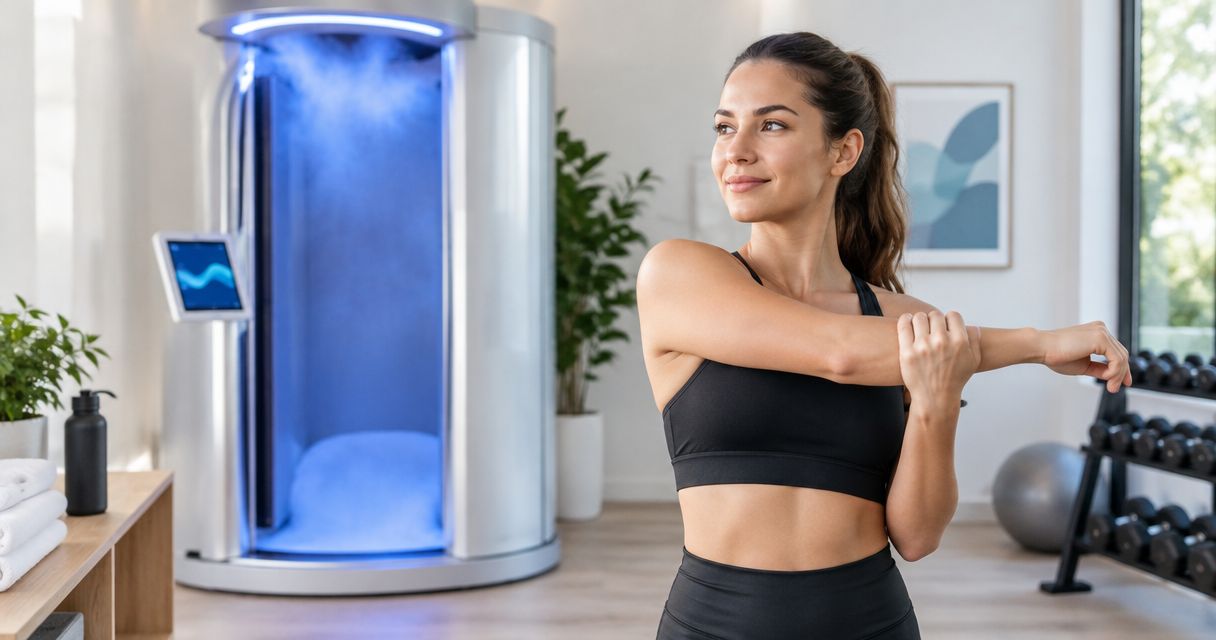
You can often return to light activity the same day after cryolipolysis, but exercise after cryo body contouring depends on the device used, your symptoms, and your provider’s instructions. That does not mean you should immediately resume hard training: tenderness, swelling, bruising, or altered sensation can make a workout uncomfortable. Follow your treatment-specific aftercare instructions rather than a universal waiting period.
- Exercise after cryo body contouring depends on the procedure, treated area, symptoms, and written aftercare instructions.
- Light walking is a gentler starting point than heavy lifting or high-intensity training after cryolipolysis.
- Ammonite Laser Spa offers cryo body contouring for Downtown Brooklyn clients seeking non-invasive treatment.
- Do not use extra sweating, aggressive massage, or harder workouts to try to accelerate fat removal.
How soon can you exercise after cryo body contouring?
Light activity and strenuous exercise are different decisions. For non-surgical fat freezing, professional patient guidance from the American Society of Plastic Surgeons describes a return to normal activities without surgical recovery. That is not individual clearance for sprinting, heavy lifting, or exercising through pain.
Start by confirming what your appointment actually involved. Cryolipolysis uses controlled cooling to target localized fat; the broader phrase “cryo body contouring” does not identify a particular device or treatment protocol. Do not transfer instructions from another cooling treatment to yours.
For your 2026 workout schedule, the useful distinction is between ordinary movement and training that presses, rubs, or heavily loads the treated area. The guide to cryo body contouring downtime addresses that broader recovery question.
| Activity | Best for | Practical advantage | Limitation after treatment |
|---|---|---|---|
| Gentle walking | Restarting ordinary movement when comfortable | Easy to stop or adjust | Clothing can still rub a sensitive area |
| Easy stationary cycling | Returning to low-impact cardio when positioning is comfortable | You control resistance and pace | Waistbands, hip flexion, and seating can create pressure |
| Resistance training | Returning to strength work once movement is comfortable and permitted | Exercises can be selected around symptoms | Bracing and equipment contact can stress a treated area |
| High-intensity training | Returning to demanding workouts after easier activity feels normal | Restores your usual training demands | Fast movements and fatigue make adjustment harder |
These are activity comparisons, not a prescribed rehabilitation program. Your provider’s restrictions take priority over every option in the table.
Why this matters
A non-invasive procedure can still leave the treated tissue sore. The FDA’s consumer guidance on non-invasive body contouring identifies pain, redness, swelling, bruising, and nodules among possible complications; its fat-freezing guidance also describes changes in sensation.
A lack of incisions does not prove that a hard workout will feel normal. Running shorts, a lifting belt, a bicycle saddle, or repeated bending can expose discomfort that you did not notice while sitting still.
Plan your return around the treatment and your response, not the promise of “no downtime.” In 2026, that remains a more useful rule than treating a generic online recovery timeline as personal medical advice.
Light activity: start with comfortable movement
Gentle walking is a reasonable starting point when your provider permits activity and you feel well. You should be able to move normally without guarding the treated area, changing your posture, or pushing through increasing discomfort.
Keep the first attempt easy to interrupt. A short route near home gives you more control than a long run or a group class that makes stopping inconvenient.
Check how the area feels during movement and afterward. If discomfort increases, stop rather than treating pain as evidence that the treatment is working.
Normal movement is not a requirement to force activity immediately. If you feel unwell or the area is painful, ask your provider what level of activity is appropriate before resuming exercise.
Strength training: check pressure and bracing
Heavy lifting involves more than the muscles named in an exercise. Squats, deadlifts, presses, and loaded carries can require substantial trunk bracing, while benches and machine pads can press directly against a treated area.
Before returning to strength work, identify those contact points. An abdominal treatment deserves particular attention when you use a tight waistband or lifting belt; a thigh treatment deserves attention when equipment or clothing rubs the same skin.
Do not use a heavy working set to test whether you are ready. If your provider has cleared you, begin with comfortable, controlled movement and stop if the treated area hurts or your technique changes to avoid discomfort.
Training a different body part does not automatically remove the issue. An upper-body exercise can still require abdominal bracing, and a lower-body exercise can still put pressure on a sensitive treatment site.
Running and intense cardio: avoid an all-or-nothing return
Running, intervals, and demanding classes add repeated motion, friction, and fewer opportunities to adjust. They are a different test from walking around your home without discomfort.
Before resuming your usual session, consider whether easier movement feels normal in the clothing and position that activity requires. A comfortable walk does not establish that a long run, cycling session, or high-intensity class will also be comfortable.
For a 2026 race or training block, discuss the actual workout with your provider before treatment. “Can I exercise?” is less useful than explaining that your plan includes hill repeats, heavy squats, prolonged cycling, or contact sport.
Avoid placing an important event immediately after an unfamiliar procedure. You cannot know your individual response before your first treatment, and a generic low-downtime description does not guarantee event readiness.
Why the return to exercise varies
The right activity decision depends on details that a single waiting period cannot capture:
- Treatment method: Confirm whether you received cryolipolysis and obtain the instructions for that procedure and device.
- Treated area: Exercise can place different amounts of pressure, friction, and movement across the abdomen, thighs, arms, or other areas.
- Current symptoms: Tenderness, swelling, bruising, and altered sensation affect comfort and deserve attention.
- Workout demands: Walking, lifting, running, and cycling involve different contact points and movement patterns.
- Individual health: Share relevant conditions, medications, and previous reactions so your provider can assess your circumstances.
- Additional procedures: If your visit included another treatment, follow its restrictions as well; fat-freezing guidance does not replace them.
Do not choose the shortest timeline you find online. Choose the instructions that match your actual appointment.
How should you decide whether to train today?
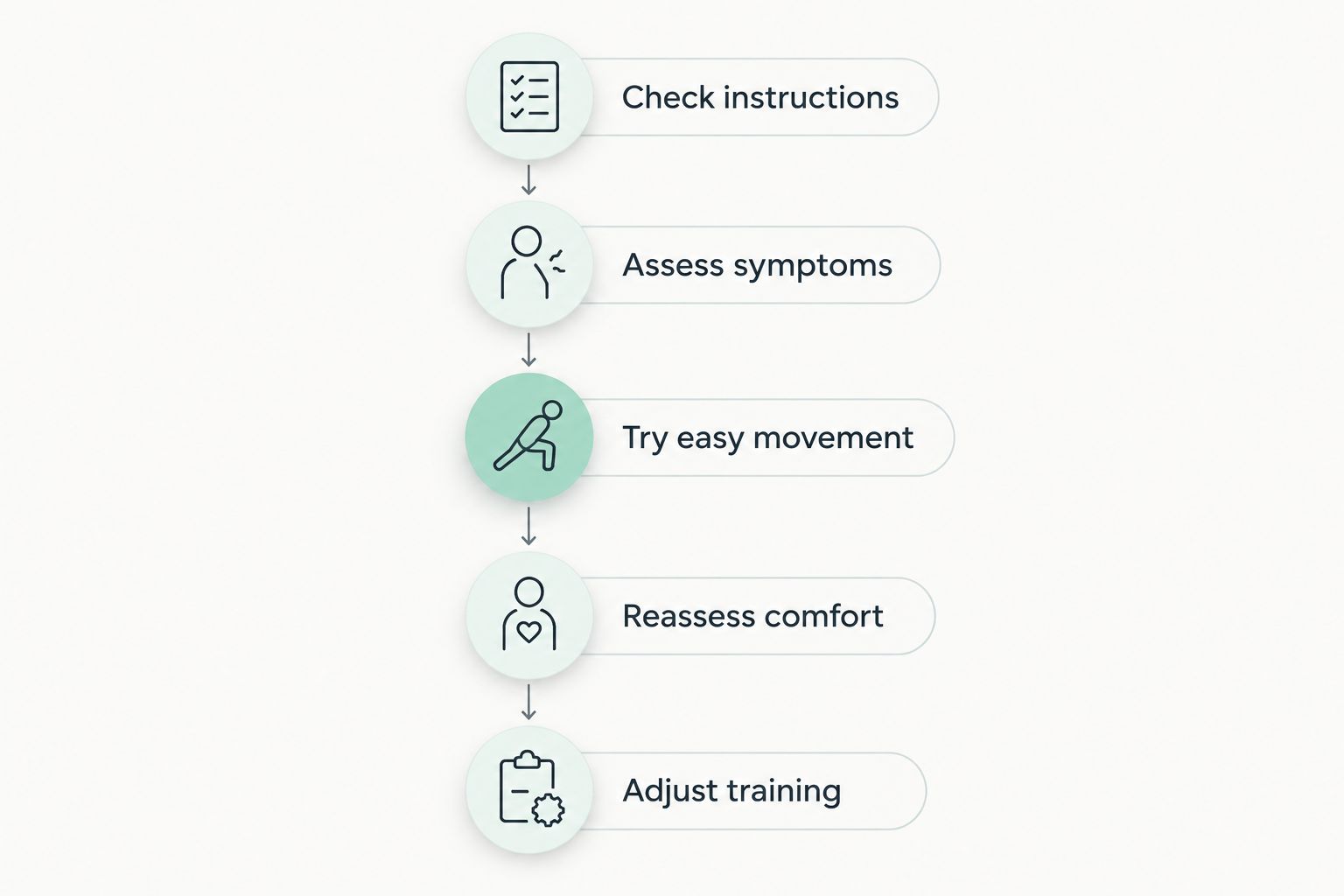
Use this sequence before your first workout back. It supports a conversation with your provider; it does not replace clearance or override written restrictions.
- Check instructions. Read the aftercare information for your treatment. If it does not address your planned workout, ask before assuming permission.
- Assess symptoms. Notice pain, swelling, skin changes, and altered sensation before adding exercise demands.
- Try easy movement. If activity is permitted, begin with a comfortable version of ordinary movement rather than your hardest session.
- Reassess comfort. Check for increasing discomfort, rubbing, pressure, or changes in movement during and after activity.
- Adjust training. Stop or reduce the session if symptoms appear, and contact your provider when something is unexpected or worsening.
The goal is a comfortable return, not proving that you can tolerate discomfort. If you need to change your stride, avoid bending, or hold your breath differently because of treatment-site pain, stop the workout.
Can exercise make cryo body contouring results appear faster?
Exercise is not a proven shortcut to faster cryolipolysis results. The treatment targets localized fat, and the body processes affected cells over time; a harder workout is not an established way to accelerate that process.
Keep exercise connected to your wider health and fitness goals. Do not add punishing sessions, deliberate overheating, or dehydration because someone describes sweating as “flushing out” treated fat.
For 2026 treatment planning, separate recovery from results. Being comfortable enough to exercise does not mean the contouring result is complete, and a visible change does not determine whether a particular workout is appropriate.
Should you massage the area before going to the gym?
Do not improvise an aggressive massage routine to prepare for exercise. Some treatment protocols include provider-performed massage, but that does not establish that repeated or forceful self-massage is appropriate for you.
Ask whether any home massage is recommended, how it should be performed, and when to stop. Avoid using a massage gun, roller, or other forceful tool on a sensitive treatment site unless your provider specifically directs it.
The same principle applies to compression clothing. Follow the instructions you received instead of assuming tighter clothing will improve results or make exercise safer.
When should you stop exercising and contact a clinician?
Stop exercising if pain increases, movement becomes abnormal, or the treated skin develops concerning changes. Contact your treating provider promptly for severe or worsening pain, blistering, unusual discoloration, or symptoms that do not match your aftercare guidance.
Do not dismiss a persistent or enlarging firm bulge as ordinary post-workout swelling. The FDA identifies paradoxical adipose hyperplasia, an uncommon enlargement of fat in a treated area, as a complication of fat freezing that requires medical assessment.
Seek urgent medical care for severe symptoms such as difficulty breathing, fainting, or rapidly worsening illness. Exercise decisions are secondary when symptoms need evaluation.
What should you ask before booking a treatment?
Bring your training schedule to the consultation, including the movements and equipment involved. Ask which device will be used, what symptoms to expect, what restrictions apply, and whom to contact if recovery does not follow the expected course.
Ammonite Laser Spa is suited to Downtown Brooklyn clients seeking personalized, non-invasive beauty and skin treatments, including cryo body contouring. Its services information is a starting point for discussing treatment options, not a substitute for individual exercise instructions.
The practical benefit is planning your cosmetic treatment around daily life. The limitation is equally important: non-invasive body contouring is not weight-loss treatment, and the service category alone cannot establish your personal return-to-training date.
Before your 2026 appointment, get the exercise advice in writing. Save the contact details supplied by the provider so you do not have to search for help while deciding whether a symptom is expected.
FAQ
Can I work out the same day after cryo body contouring?
Light activity is often possible the same day after cryolipolysis, but that is not automatic clearance for a strenuous workout. Follow your device-specific aftercare instructions and stop if activity causes pain or increasing discomfort.
Do I have to wait a full day before exercising?
There is no universal full-day waiting rule for every procedure described as cryo body contouring. Your provider should base the advice on the actual treatment, treated area, symptoms, and planned activity.
Can I lift weights after fat freezing on my stomach?
Weightlifting after abdominal fat freezing depends on your provider’s instructions and whether bracing or equipment pressure causes discomfort. A lifting belt and exercises that heavily load your trunk deserve specific discussion before you resume them.
Is walking better than running immediately after treatment?
Gentle walking is an easier activity to adjust or stop than running when you are checking comfort after treatment. It is still subject to your aftercare instructions and should not cause increasing pain.
Does sweating help remove fat after cryo body contouring?
Sweating is not an established method for accelerating fat removal after cryolipolysis. Do not add heat exposure, dehydration, or harder exercise to try to speed up the result.
Should numbness stop me from exercising?
Altered sensation needs to be considered before exercise because comfort alone is an incomplete guide when an area feels numb. Tell your provider about the symptom and ask how to manage pressure, friction, and activity.
What should I ask Ammonite Laser Spa about returning to the gym?
Ask Ammonite Laser Spa which cryo body contouring procedure you will receive and what exercise restrictions apply to it. Describe your actual workout, including lifting belts, cycling positions, running, or contact sport, rather than asking only about general activity.
One last thing
Your first workout back is not a useful test of whether body contouring worked. Treat exercise readiness and cosmetic results as separate questions.
When discussing cryo body contouring with Ammonite Laser Spa, describe the most demanding part of your routine—not just the fact that you go to the gym. That detail makes the aftercare conversation more useful than asking for a single universal waiting period.