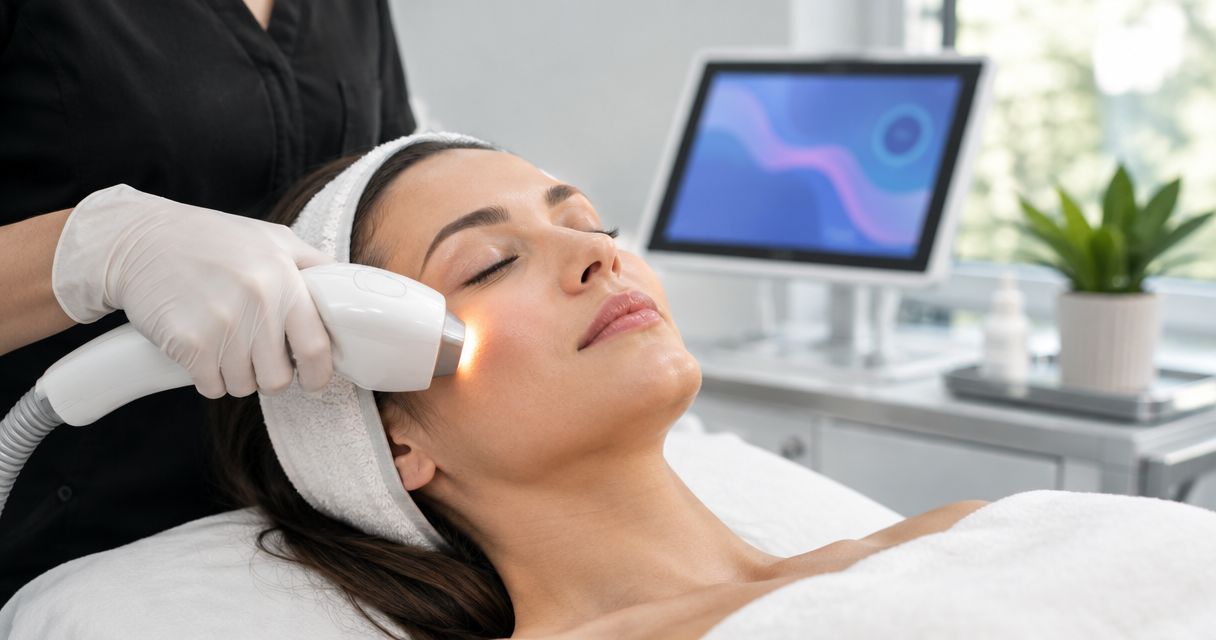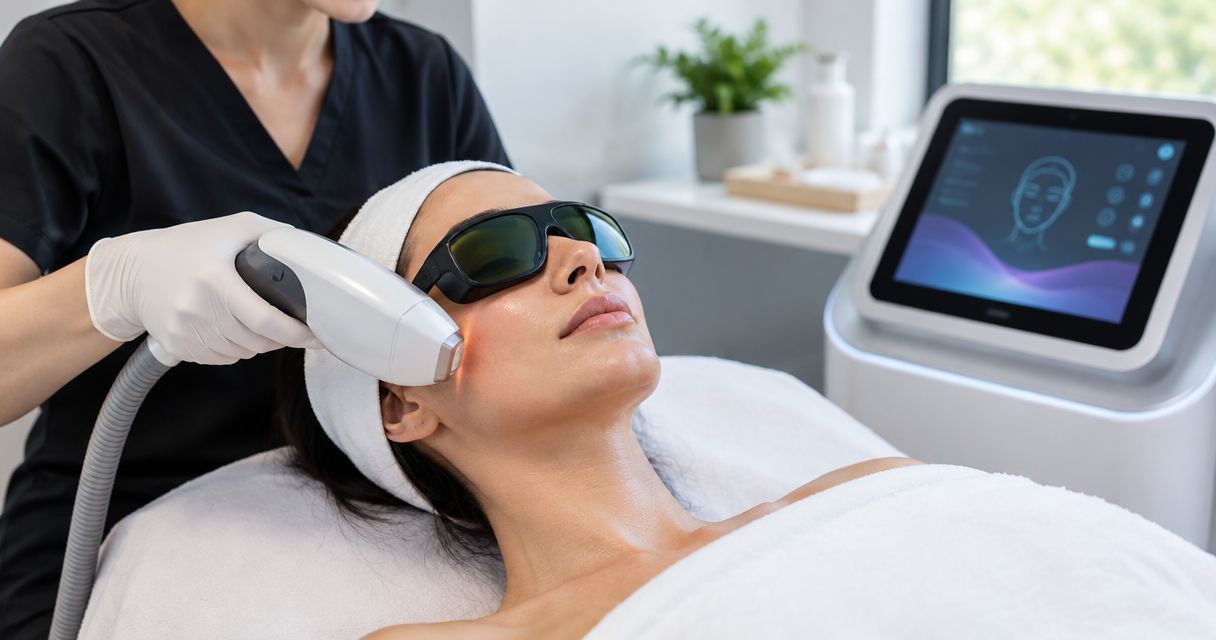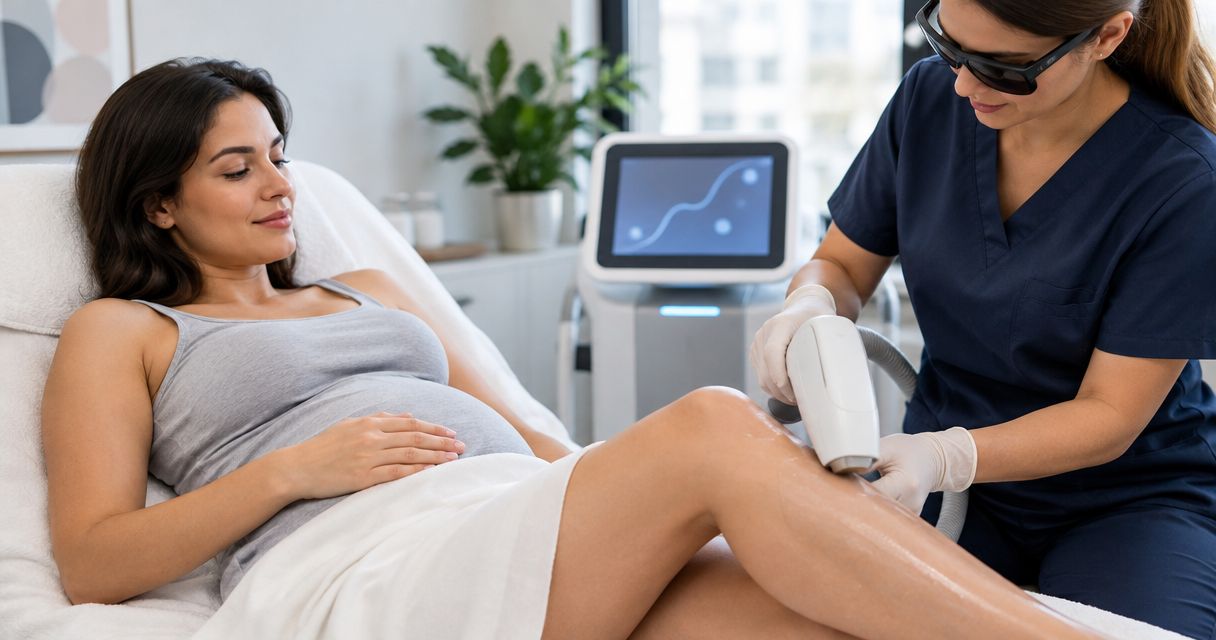
Laser hair removal is not recommended during pregnancy because adequate safety research in pregnant patients is lacking—not because fetal harm has been established. In 2026, the practical choice is to pause elective laser and intense pulsed light hair removal, use a suitable temporary method, and discuss any accidental treatment with your prenatal clinician.
- Is laser hair removal safe during pregnancy? Safety is unproven; postpone elective sessions until after pregnancy.
- ACOG recommends temporary hair removal methods rather than permanent hair removal during pregnancy.
- An accidental laser session does not establish fetal harm; tell your prenatal clinician what treatment you received.
- Home IPL devices are not a pregnancy-safe substitute for professional laser hair removal.
Why this matters
Pregnancy can change hair growth, skin pigmentation, and sensitivity. Those changes affect what you see in the mirror, but they do not create a medical need to continue cosmetic treatment. Unproven safety is enough reason to postpone an elective procedure.
If you already receive laser hair removal at Ammonite Laser Spa, tell the studio about your pregnancy before your next appointment. Ask how to pause your treatment plan; do not assume that an appointment reminder means treatment is appropriate.
This is general health information, not individual medical clearance. Your obstetric clinician should assess symptoms, medication exposure, and any concerns about treatment received before you knew you were pregnant.
Is laser hair removal safe during pregnancy?
Laser hair removal has not been established as safe during pregnancy, so defer it until after pregnancy. The American College of Obstetricians and Gynecologists, in its patient guidance Skin Conditions During Pregnancy, recommends temporary methods such as shaving and waxing rather than permanent hair removal methods during pregnancy.
That distinction matters. A treatment can lack adequate pregnancy research without being proven harmful. Neither a reassuring explanation of how a laser works nor a history of successful treatment outside pregnancy fills that evidence gap.
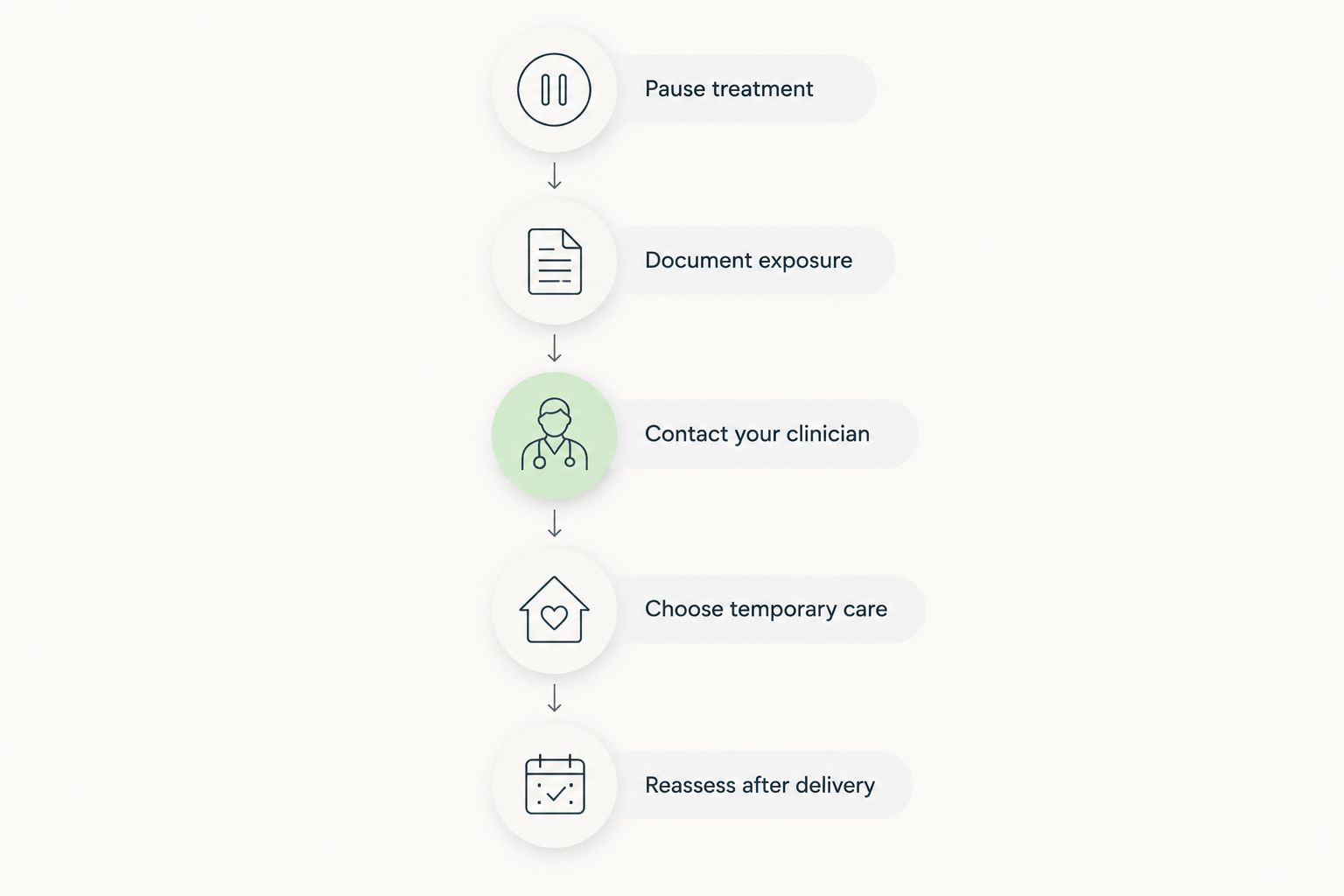
Use this sequence if you are pregnant or have just learned you are pregnant:
- Pause treatment. Stop scheduled cosmetic laser and IPL hair removal sessions while you discuss your circumstances with your prenatal clinician.
- Document exposure. If treatment already happened, record the date, body area, and any products applied before or afterward.
- Contact your clinician. Share those details with your obstetric clinician, especially if you have burns, significant pain, or another reaction.
- Choose temporary care. Use a method appropriate for your current skin condition rather than replacing one light-based device with another.
- Reassess after delivery. Review skin changes, hair growth, breastfeeding considerations, and treatment suitability before restarting.
A clinician's advice about accidental exposure answers a different question from permission to continue an elective series. Keep those decisions separate.
Which hair removal options make sense during pregnancy?
For your 2026 hair removal plan, separate temporary grooming from procedures intended to reduce hair growth over time. The table below compares practical uses and limitations; it does not replace advice about irritated skin, a skin condition, or a medication you use.
| Option | Best for | Main advantage | Main limitation during pregnancy |
|---|---|---|---|
| Shaving | Temporary removal on accessible areas | Removes hair without light-based treatment | Cuts, razor irritation, and ingrown hairs remain possible |
| Guarded trimming | Shortening hair without seeking a close finish | Avoids the need for a close shave | Leaves visible hair and can still nick skin |
| Waxing | Temporary removal when skin tolerates it | Removes hair from the root | Can cause pain, irritation, or skin injury |
| Professional laser hair removal | Longer-term reduction outside pregnancy | Targets hair follicles to reduce growth | Pregnancy safety is not established; postpone treatment |
| Home IPL | Light-based reduction outside pregnancy, subject to device instructions | Allows home use for suitable users | Home use does not establish pregnancy safety; postpone treatment |
Shaving and guarded trimming
Shaving is a practical first choice when you want temporary hair removal during pregnancy. Use a clean razor, lubrication, and gentle pressure. Skip broken or inflamed skin rather than repeatedly passing a blade over it.
Guarded trimming suits areas where a close finish is less important than comfort. As your reach changes, avoid awkward positioning or working where you cannot see the skin clearly. Leaving hair alone is also a valid option.
Waxing
Waxing is an option when your skin tolerates it, not a requirement to replace laser. ACOG includes waxing among temporary hair removal methods during pregnancy. Its main drawback is local discomfort and irritation, especially on already sensitive skin.
Tell the provider about your pregnancy, current skin treatments, and any irritation. Do not wax over damaged skin or assume that a previously comfortable appointment guarantees the same experience now.
Professional laser and home IPL
Postpone both professional laser and home IPL during pregnancy. Laser and IPL are different technologies, but that difference does not make IPL a pregnancy-safe workaround.
Professional treatment offers assessment and controlled operation, but those features do not resolve the lack of pregnancy safety evidence. Home treatment adds the responsibility of following device instructions and recognizing skin reactions yourself. Neither setting supplies a reason to continue elective treatment while pregnant.
Why pregnancy changes the treatment decision
The decision in 2026 rests on evidence and your current skin—not on how many sessions remain in a package. These factors explain why continuing your usual schedule is not the right default:
- Limited pregnancy research. Evidence from people who are not pregnant does not establish safety during pregnancy.
- Changing pigmentation. Pregnancy can cause darker patches and other pigment changes. A laser assessment must account for the skin as it looks now, not only at an earlier consultation.
- Changing hair growth. Hormonal changes can alter hair growth. A new patch of hair does not automatically call for a permanent treatment decision.
- Skin irritation. Laser hair removal can cause redness, swelling, burns, or pigment changes. Pregnancy does not remove those local treatment risks.
- Additional products. Numbing creams and aftercare products have their own ingredients and precautions; the device is not the whole exposure.
- Elective timing. Cosmetic hair reduction can wait. Postponement avoids an exposure that is not needed to manage a medical condition.
The American Academy of Dermatology's laser hair removal patient guidance describes both expected skin reactions and possible complications. Those general treatment risks matter alongside—not instead of—the pregnancy-specific evidence gap.
A patch test does not establish pregnancy safety. It assesses a local skin response under particular conditions; it cannot answer questions about pregnancy outcomes or justify treating another body area.
What if I had laser hair removal before I knew I was pregnant?
An accidental session does not mean that fetal harm occurred. Stop further elective sessions and tell your prenatal clinician what happened. Do not interpret precautionary advice to avoid treatment as proof that an earlier exposure caused damage.
Hair removal lasers use non-ionizing light, which differs from the ionizing radiation used in X-rays. The treatment targets structures in the skin. That distinction helps explain the exposure, but it does not establish pregnancy safety or replace an individual assessment.
Gather information that helps your clinician understand the appointment:
- The treatment date and the body area treated.
- Whether the treatment used laser or IPL, if the provider can confirm it.
- Any topical anesthetic or other product applied.
- Any blistering, persistent pain, spreading redness, or other symptoms afterward.
Ask the treatment provider for the appointment record if you do not remember the details. Your prenatal clinician can determine whether anything beyond your usual care is appropriate; an internet answer cannot make that decision for you.
For a skin injury, seek medical advice promptly. Significant burns, worsening pain, or signs of infection need attention regardless of pregnancy.
Is laser hair removal safer in the second or third trimester?
No trimester has been established as safe for elective laser hair removal. Waiting until later in pregnancy does not solve the lack of adequate research. The precaution applies across all 3 trimesters.
The same distinction applies to the treatment area. There is no established pregnancy-safe exception for the face, underarms, legs, or bikini area. Distance from the abdomen is not sufficient evidence to approve a cosmetic session.
For your 2026 plan, keep the rule simple: pause during pregnancy rather than trying to identify a safer month, a smaller area, or a lower setting yourself.
When can I restart laser hair removal after giving birth?
There is no universal postpartum waiting period that fits every patient. Arrange a fresh assessment after delivery rather than treating your previous schedule as automatic clearance. Healing, skin condition, hair growth changes, breastfeeding, and products used during treatment all belong in that discussion.
Ask your clinician and treatment provider separate, specific questions:
- Has the intended treatment area healed, including any incision, tear, rash, or irritation?
- Has pigmentation changed since the last assessment?
- Does breastfeeding affect the proposed treatment area or any numbing product?
- Does the provider need to revise the plan for your current hair growth?
- What preparation and aftercare apply to your skin now?
Breastfeeding is not identical to pregnancy, and the evidence questions are not interchangeable. Do not assume that a pregnancy precaution automatically answers every breastfeeding question—or that delivery automatically clears every treatment area.
Ammonite Laser Spa is best for Downtown Brooklyn clients seeking personalized laser hair removal outside pregnancy. The studio's stated focus fits a local, individualized treatment discussion; it does not replace prenatal medical advice. Its laser hair removal service is relevant when you are ready for reassessment, not as a reason to continue during pregnancy.
If your skin tone or pigmentation has changed, the laser hair removal for skin of color guide provides a related topic to discuss at that later assessment. Device suitability and skin evaluation still require an individual consultation.
FAQ
Can I get laser hair removal while pregnant if my doctor says it is okay?
Pregnancy safety remains unestablished even after a discussion with your doctor. Ask what the advice covers, and distinguish reassurance about a past exposure from a recommendation to continue an elective procedure.
Is bikini laser hair removal safe during pregnancy?
Bikini laser hair removal has not been established as safe during pregnancy. Postpone it rather than assuming that a smaller treatment area removes the uncertainty.
Can laser hair removal cause a miscarriage?
Available evidence does not establish that cosmetic laser hair removal causes miscarriage. That does not prove pregnancy safety; discuss an exposure with your prenatal clinician instead of drawing conclusions from timing alone.
Can I use an at-home IPL device while pregnant?
Postpone at-home IPL during pregnancy. Home use does not establish pregnancy safety, and a lower setting is not proof that treatment is appropriate.
Is shaving better than laser hair removal during pregnancy?
Shaving is the more practical temporary choice during pregnancy because it avoids elective light-based treatment. Use clean equipment and avoid broken or irritated skin.
Can I use numbing cream before hair removal while pregnant?
Check the exact product with your prenatal clinician before using numbing cream during pregnancy. Ingredients, application area, and how the product is used matter; numbing cream does not make laser treatment pregnancy-safe.
Does Ammonite Laser Spa offer pregnancy-safe laser hair removal?
Do not treat any laser hair removal service as established pregnancy-safe. Ammonite Laser Spa offers personalized laser hair removal, but pregnancy-specific treatment clearance cannot be inferred from that service description.
Will I need to restart my entire laser course after pregnancy?
A pregnancy pause does not automatically determine whether you need to restart a course. Your provider should reassess current growth, prior response, and skin condition before recommending further sessions.
One last thing
Do not confuse a new hair pattern with a permanent problem. Pregnancy-related hair changes can shift again after delivery. Waiting gives you a chance to assess what still needs treatment rather than committing to a procedure while your body is changing.
Your 2026 plan can be straightforward: pause light-based hair removal, choose comfortable temporary grooming, and keep a record of previous sessions. A later consultation should start with your current skin and goals—not pressure to recover a missed appointment.