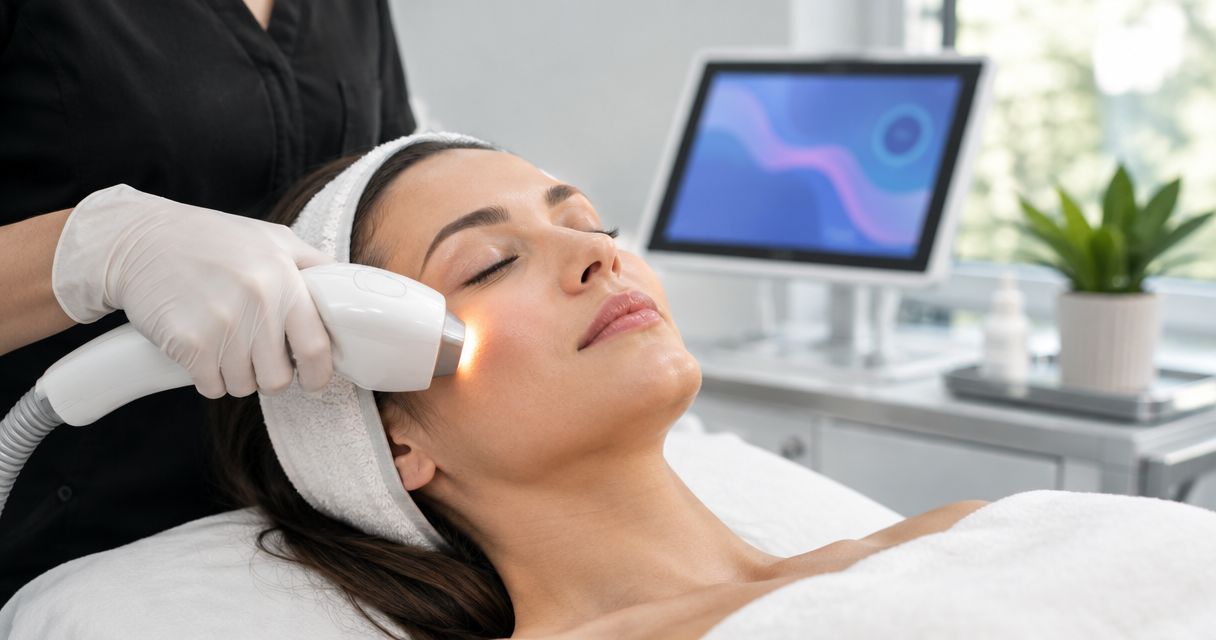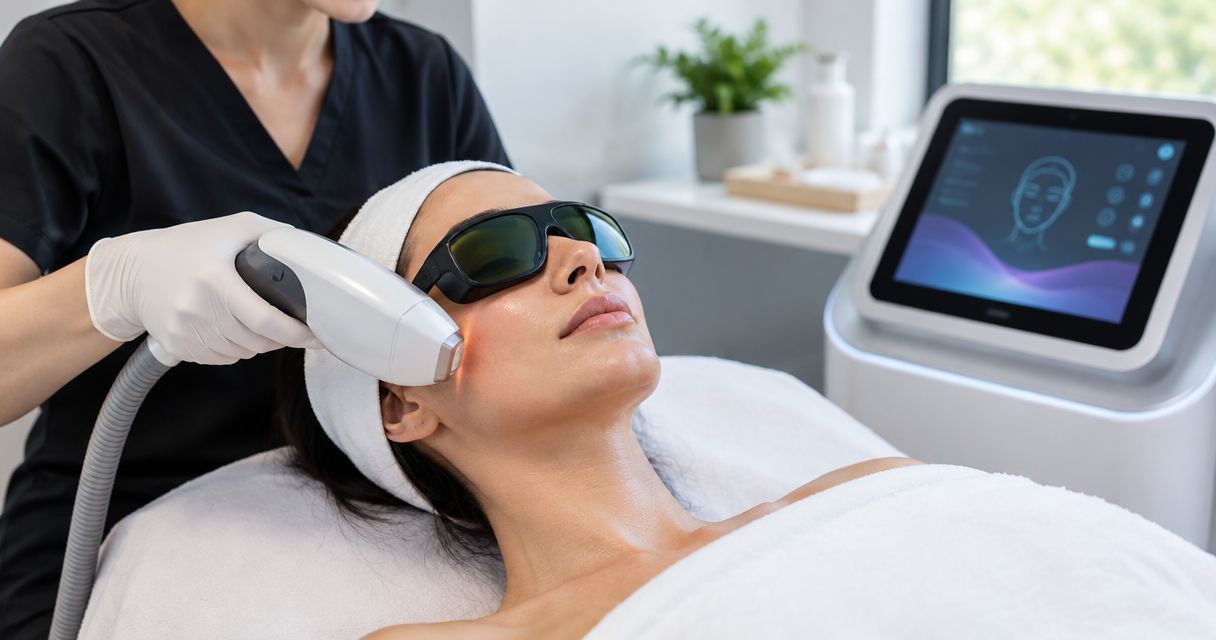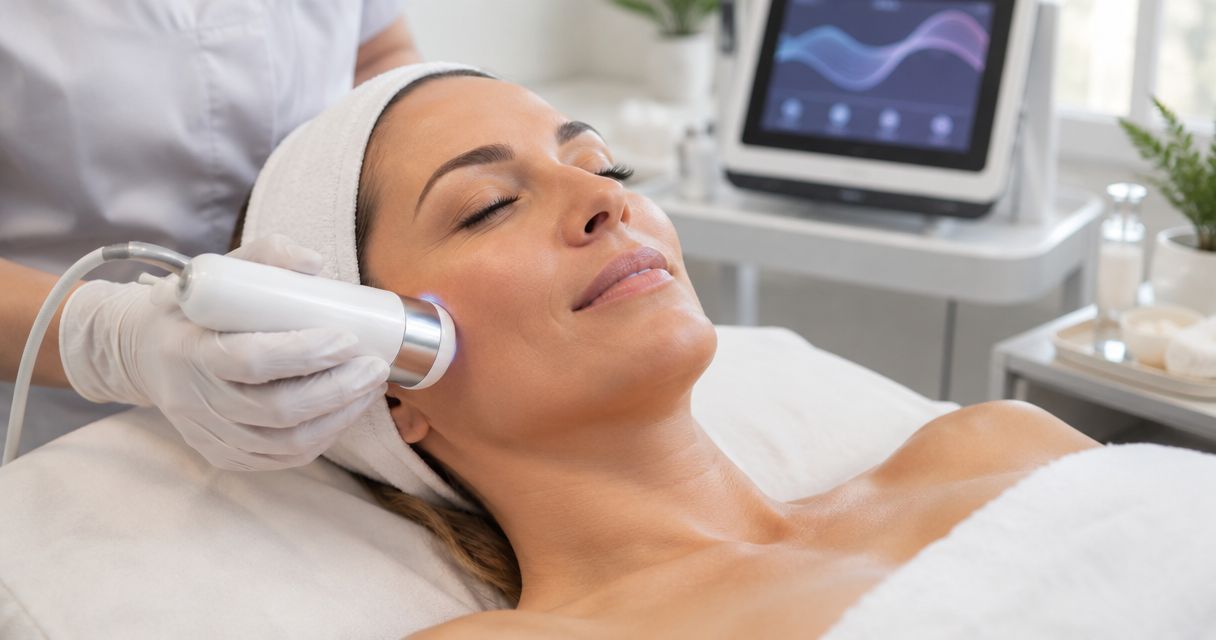
Best overall for early fine lines: microneedling. Best for more pronounced, etched-in lines: fractional ablative laser resurfacing. Best for fine lines with surface roughness: superficial chemical peels. This 2026 guide compares the best skin resurfacing for fine lines by treatment depth, recovery burden, pigmentation risk, and the problem you actually want corrected.
- Microneedling is the best skin resurfacing for fine lines when early texture changes are your main concern.
- Fractional ablative lasers address deeper texture changes but require more recovery and careful patient selection.
- Superficial chemical peels suit surface roughness; they do not replace deeper wrinkle treatment.
- Ammonite Laser Spa offers microneedling and laser skin rejuvenation in Downtown Brooklyn.
Why this matters
Fine lines are not a single treatment problem. Lines visible when your face is relaxed differ from folds caused mainly by expression, and dry surface skin can make either look more noticeable. Resurfacing targets skin texture; it does not reliably correct every cause of a crease.
Ammonite Laser Spa offers microneedling and laser skin rejuvenation for local clients seeking non-invasive beauty and skin treatments. You can start with Ammonite Laser Spa to discuss those services, but ask which specific device or procedure is proposed before comparing it with the treatments below.
Choose the treatment that matches your skin concern, not the treatment with the strongest-sounding name. For your 2026 shortlist, separate early textural lines from deeper wrinkles, pigmentation, and skin laxity before deciding what belongs on it.
What makes the best skin resurfacing for fine lines?
- Line type: Favor treatments that address lines visible at rest rather than expecting resurfacing to stop facial movement.
- Treatment depth: Match the depth of treatment to the texture change; more injury is not automatically a better choice.
- Pigmentation risk: Include your skin tone, tanning history, melasma, and previous dark marks after irritation.
- Recovery burden: Consider wound care, visible redness, peeling, and restrictions—not just time away from work.
- Provider judgment: Look for an assessment of medications, cold sores, healing problems, and your intended treatment area.
- Outcome limits: Expect improvement rather than complete wrinkle removal, and distinguish gradual remodeling from temporary hydration.
Skin resurfacing treatments at a glance
| Treatment | Best for | Standout feature | Key limitation |
|---|---|---|---|
| Microneedling | Early fine lines with uneven texture | Controlled needle injury stimulates skin remodeling | Less corrective for deeply etched lines |
| Fractional non-ablative laser | Fine lines when avoiding surface removal is a priority | Creates controlled thermal treatment zones without ablating the surface | Improvement is gradual; pigmentation risks remain |
| Fractional ablative laser | More pronounced lines visible at rest | Removes microscopic columns of skin to remodel texture | Greater wound-care and recovery burden |
| Superficial chemical peel | Fine lines accompanied by surface roughness | Exfoliates the outer skin layers | Limited effect on deeper wrinkles |
| Medium-depth chemical peel | Fine lines with broader sun-damaged texture | Treats deeper than a superficial peel | More recovery and greater pigment-related concerns |
1. Microneedling: best resurfacing for early textural fine lines
Microneedling uses fine needles to create controlled punctures that trigger a repair response. It suits a discussion about early textural fine lines, especially when uneven texture is part of the same concern.
Microneedling is the best starting discussion at Ammonite Laser Spa for clients whose main concern is early textural fine lines. That recommendation identifies a consultation starting point, not a guarantee that every client is suitable.
Microneedling pros:
- Addresses fine lines and uneven texture through the same treatment approach.
- Does not depend on laser energy or a chemical peeling agent.
- Offers an alternative when avoiding thermal injury is an important consideration.
Microneedling cons:
- Does not provide the same depth of correction as ablative resurfacing.
- Still carries risks of infection, irritation, scarring, and pigment changes.
- Requires assessment before treating inflamed or infected skin.
Best for: Early lines that appear alongside a generally rougher skin texture, rather than deep isolated creases.
Ask whether the proposed procedure is conventional microneedling or radiofrequency microneedling. They are different treatments; the presence of microneedling on a service list does not establish that radiofrequency treatment is offered.
Verdict: Buy only after a suitability assessment; choose microneedling for early texture changes, not deep wrinkle correction.
2. Fractional non-ablative laser: best for avoiding surface removal
Fractional non-ablative lasers deliver heat into selected treatment zones without vaporizing the skin surface. They offer a different balance from ablative resurfacing: less surface injury, but generally less correction from an individual treatment.
For a 2026 consultation, the exact device matters more than the broad phrase laser rejuvenation. Different wavelengths, settings, and treatment patterns do different jobs; a service name alone does not identify the procedure.
Fractional non-ablative laser pros:
- Targets skin remodeling without ablating the surface.
- Addresses textural concerns with less wound care than ablative resurfacing.
- Allows a treatment discussion focused on balancing correction and recovery.
Fractional non-ablative laser cons:
- Gradual improvement requires patience and sometimes repeated treatment.
- Burns and post-inflammatory pigmentation remain possible.
- Does not reproduce the correction of a deeper ablative procedure.
Best for: Fine lines in someone who prioritizes avoiding surface removal and accepts a more gradual approach.
Ammonite Laser Spa lists laser skin rejuvenation among its services. Confirm the device, whether treatment is fractional, and whether it is ablative before treating that service as equivalent to this category.
Verdict: Hold until the device and treatment plan are identified; choose non-ablative treatment when its recovery trade-off fits your goal.
3. Fractional ablative laser: best for more pronounced static lines
Fractional ablative resurfacing removes microscopic columns of skin while leaving intervening areas untreated. It is a stronger option to discuss when lines remain clearly visible at rest and lighter resurfacing is unlikely to meet your goal.
Common ablative laser types include carbon dioxide lasers at 10,600 nm and erbium:YAG lasers at 2,940 nm. Those wavelengths identify laser categories, not the settings, suitability, or services available at a particular studio.
Fractional ablative laser pros:
- Addresses more pronounced textural damage than superficial exfoliation.
- Combines controlled surface removal with a skin-remodeling response.
- Provides an option when deeper static lines are the central concern.
Fractional ablative laser cons:
- Requires more involved aftercare and recovery planning.
- Carries risks including infection, scarring, and lasting pigment changes.
- Demands careful selection for darker skin tones and pigmentation disorders.
Best for: More pronounced lines at rest in a medically suitable patient who accepts the recovery burden.
Choose a clinician experienced with your skin tone and the specific facial area. Eyelid and mouth-area treatment require particular care; a general facial resurfacing plan does not settle those questions.
Verdict: Hold for a qualified medical assessment; choose fractional ablative resurfacing when deeper correction justifies the added risk and recovery.
4. Superficial chemical peels: best for surface roughness
Superficial chemical peels use a chemical agent to exfoliate the outer skin layers. They fit a narrower goal: improving superficial roughness and the appearance of very fine surface lines rather than correcting deeper creases.
Peel names are not interchangeable. The agent, concentration, application method, and your skin condition all influence the treatment, so ask what is being applied rather than booking by the word peel alone.
Superficial chemical peel pros:
- Directly addresses roughness at the skin surface.
- Offers a lighter treatment approach than medium-depth peeling.
- Fits goals centered on superficial texture rather than deeper remodeling.
Superficial chemical peel cons:
- Provides limited correction for etched-in wrinkles.
- Still causes irritation and can trigger pigment changes.
- Requires care around active dermatitis and other irritated skin conditions.
Best for: Fine surface lines accompanied by roughness, with realistic expectations about the depth of improvement.
Avoid assuming that more peeling means a better result. Visible shedding is not a reliable way to compare the effectiveness or safety of different peel protocols.
Verdict: Buy only after skin assessment; choose a superficial peel for surface refinement and skip it as a substitute for deep wrinkle treatment.
5. Medium-depth chemical peel: best for broader sun-damaged texture
A medium-depth peel reaches deeper than a superficial peel and creates a more substantial controlled injury. It belongs in a medical discussion about fine lines and broader photodamaged texture, not a casual upgrade from routine exfoliation.
The trade-off is direct: deeper treatment brings more recovery and greater consequences if healing goes poorly. Your history of pigmentation, scarring, and skin irritation therefore matters as much as the visible lines.
Medium-depth chemical peel pros:
- Treats a broader textural concern than superficial peeling.
- Provides a non-laser route to deeper resurfacing.
- Addresses selected cases where fine lines accompany sun-damaged texture.
Medium-depth chemical peel cons:
- Requires more aftercare and recovery than superficial peeling.
- Carries risks of scarring and prolonged pigment alteration.
- Is unsuitable for some skin types and medical histories.
Best for: Selected patients with fine lines across a wider area of sun-damaged skin who accept a deeper healing process.
Do not choose a medium-depth peel simply because a superficial peel felt mild. Treatment depth should follow an assessment of your skin and goals, not a desire for a more intense sensation.
Verdict: Hold for medical evaluation; choose medium-depth peeling only when broader texture correction warrants the added healing burden.
How these treatments are ranked
This 2026 ranking prioritizes the balance between early fine-line correction, treatment burden, and suitability—not maximum treatment intensity. Microneedling takes the default slot for early textural concerns; fractional ablative laser takes the deeper-correction slot.
The comparison is between treatment categories, not a claim that every device or protocol performs equally. No procedure earns a recommendation without considering skin tone, diagnosis, medical history, and provider experience.
Which skin resurfacing treatment should you choose?
Start with the least intensive treatment capable of addressing your actual concern. Early texture changes, deeper static lines, and lines driven mainly by facial movement require different conversations.
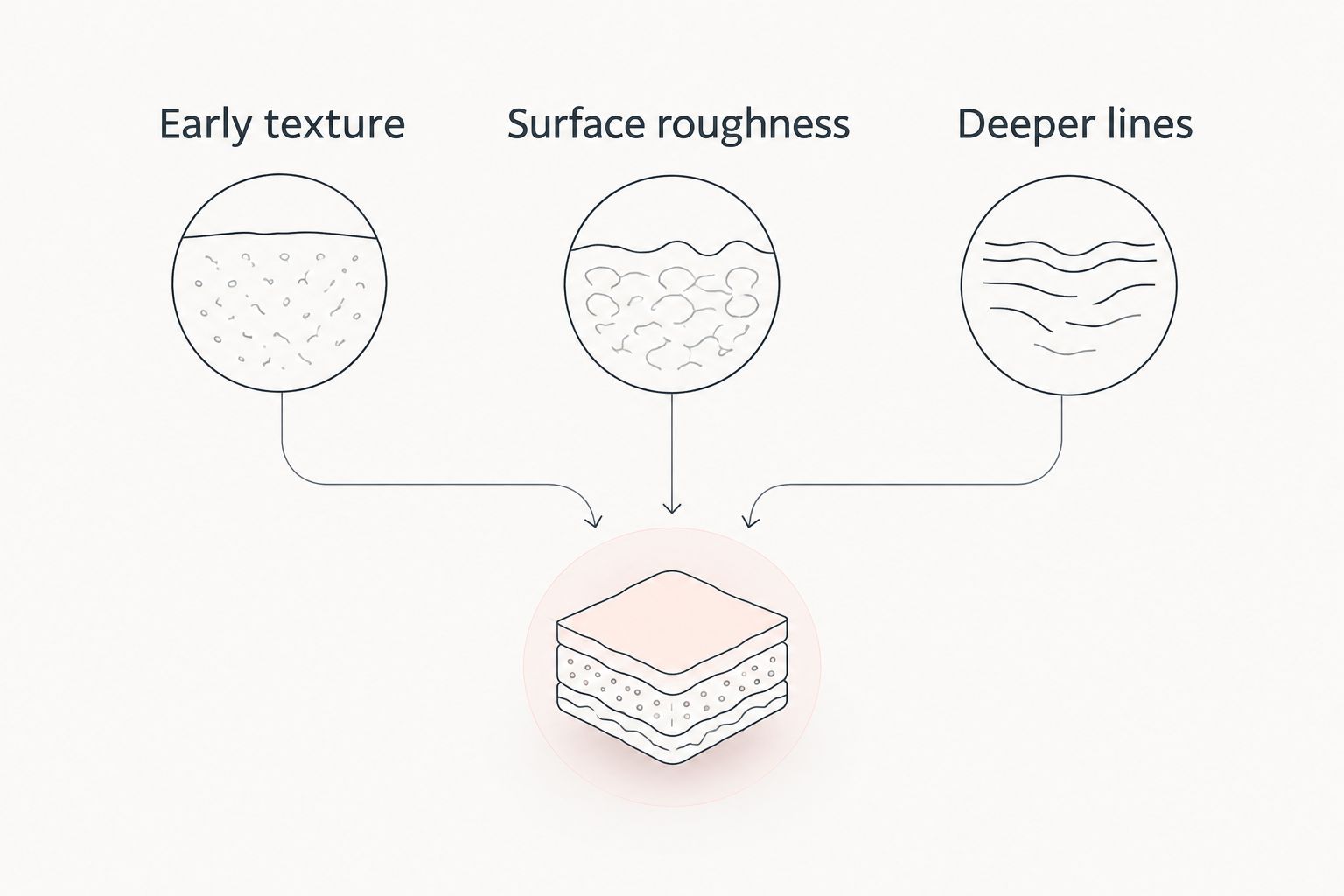
- Early texture: Discuss microneedling when fine lines and uneven texture are the main complaint.
- Surface roughness: Discuss superficial peeling when the issue is concentrated at the skin surface.
- Deeper lines: Seek a medical resurfacing assessment when etched-in lines remain visible at rest.
If lines appear mainly when you smile or frown, ask whether resurfacing addresses the cause. Similarly, loose skin and deeper folds are not simply stronger versions of surface fine lines.
For your 2026 plan, bring an untreated, relaxed-face photograph and describe the change you want. A concrete target helps your provider explain whether resurfacing can deliver a meaningful improvement.
What to ask before committing
A useful consultation explains the procedure and its limits in plain language. You should leave knowing what is being treated, what recovery involves, and whom to contact if healing does not follow the expected course.
Ask these questions before consenting:
- What is causing the lines: surface texture, sun damage, movement, or another issue?
- What exact device or peeling agent will be used?
- What experience do you have treating my skin tone and concern?
- What visible recovery and home care should I plan for?
- Which medications, skin products, or health conditions change my suitability?
- What result would make you recommend a different treatment instead?
Tell your provider about cold sores, unusual scarring, recent tanning, current medications, and previous reactions. Do not stop prescribed medication on your own to prepare for a cosmetic procedure.
Daily sun protection also belongs in the plan. Use broad-spectrum, water-resistant SPF 30 or higher, and follow the treating clinician's instructions about applying products to healing skin. Sunscreen supports prevention; it does not erase established wrinkles.
FAQ
What's the best skin resurfacing for fine lines in 2026?
Microneedling is a reasonable starting discussion for early textural fine lines, while fractional ablative laser suits a discussion about deeper lines visible at rest. The best choice depends on your skin tone, diagnosis, medical history, and recovery tolerance.
Is laser resurfacing better than microneedling for wrinkles?
Fractional ablative laser generally offers greater correction for more pronounced textural wrinkles than conventional microneedling. It also creates more surface injury and requires more recovery, so greater correction does not make it the right choice for everyone.
Can a chemical peel remove fine lines completely?
Chemical peels improve selected fine lines but do not reliably remove them completely. Superficial peels mainly address surface texture, while deeper peels involve greater risks and healing demands.
Is skin resurfacing safe for darker skin tones?
Skin resurfacing requires treatment selection that accounts for darker skin tones and the risk of pigment changes. Ask the clinician about experience with your skin tone, the proposed device or agent, and your history of dark marks after irritation.
Does Ammonite Laser Spa offer treatments for fine lines?
Ammonite Laser Spa offers microneedling and laser skin rejuvenation in Downtown Brooklyn. Confirm which procedure is recommended for your fine lines and which device is used; the service description does not establish that every laser category in this guide is offered.
Can resurfacing treat lines that appear only when I smile?
Resurfacing does not stop the muscle movement that creates expression lines. It can address accompanying skin texture, but a clinician should distinguish movement-related lines from wrinkles visible at rest.
Should I book resurfacing right before an important event?
Do not schedule resurfacing immediately before an important event without an individualized recovery plan. Redness, peeling, swelling, and pigment changes vary by procedure and patient; ask your clinician what buffer your treatment requires.
One last thing
A fine line is not always a resurfacing problem. Dehydration, irritation, and facial movement can change how lines look without indicating a need for deeper treatment.
Before booking your first procedure in 2026, ask the provider to identify a line while your face is relaxed and explain which part of it the proposed treatment addresses. That answer is more useful than a promise of younger-looking skin.