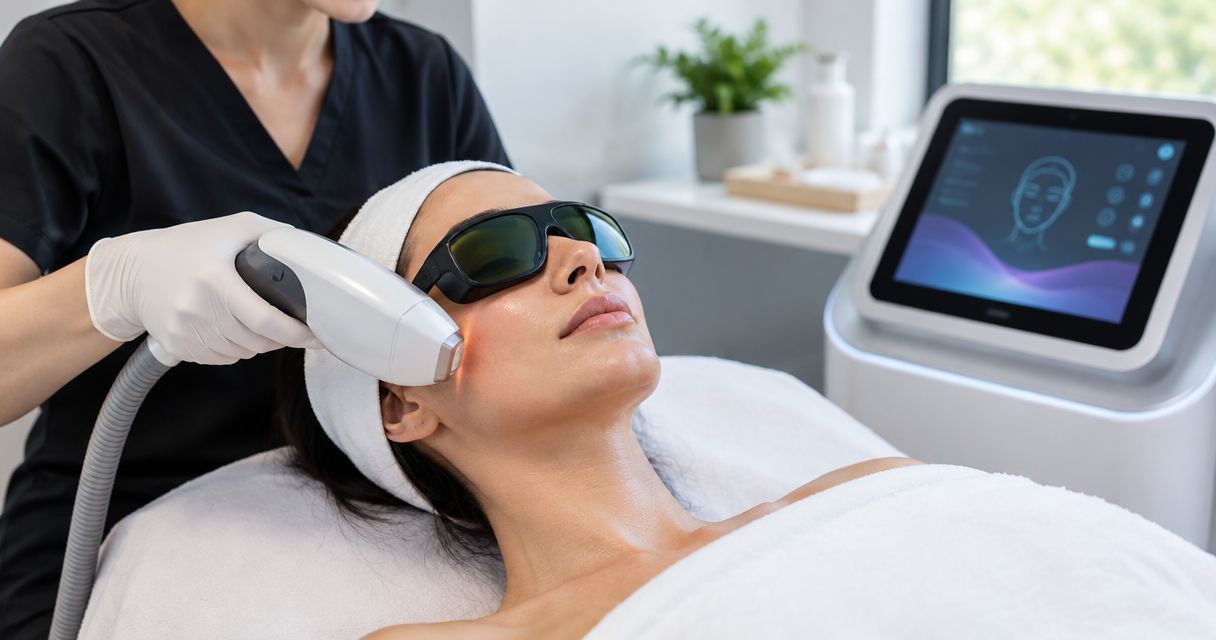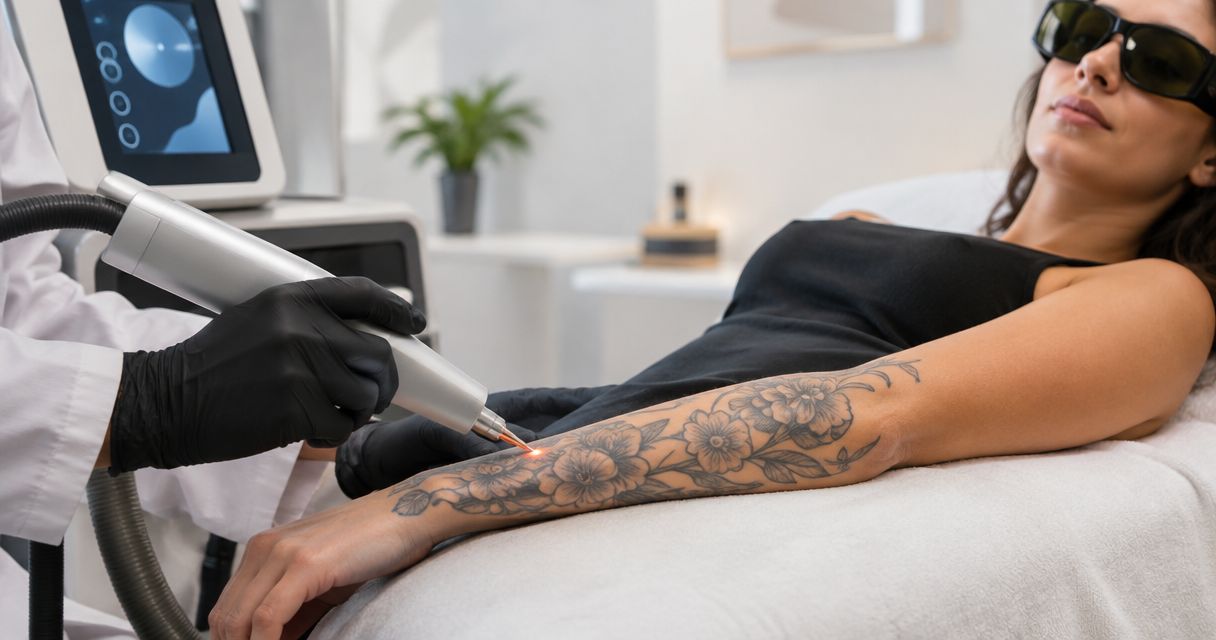
No—laser hair removal should not be performed directly over tattooed skin. Tattoo pigment can absorb the laser’s energy, causing burns, blistering, scarring, or changes to the tattoo. You can still be assessed for treatment on nearby untattooed skin, but the practitioner must exclude the tattoo and establish a safe treatment boundary.
- Laser hair removal on tattooed skin risks burns and tattoo damage; keep treatment off the ink.
- A healed or faded tattoo still needs to be excluded from laser hair removal.
- Shaving or careful trimming avoids directing laser energy into tattoo pigment.
- Ammonite Laser Spa offers personalized laser hair removal in Downtown Brooklyn; disclose every tattoo before treatment.
Why this matters
Hair can grow through a tattoo because tattooing does not remove the hair follicles. That leaves you with two separate goals: reducing unwanted hair and protecting the artwork. Treating an entire leg, arm, or back without accounting for ink puts those goals in conflict.
For your 2026 treatment plan, distinguish between treating a body area that contains a tattoo and firing a hair-removal laser onto the tattoo itself. The first requires an individual assessment; the second should be avoided. The guide to laser hair removal for sensitive skin covers another part of treatment planning, but skin sensitivity and tattoo pigment are different safety concerns.
Can laser hair removal be done on tattooed skin?
Laser hair removal should not pass directly over a tattoo, even when the surrounding skin is suitable for treatment. The practitioner needs to identify the ink before starting, not discover it while moving the handpiece across your skin.
A consultation for a tattooed treatment area should follow this sequence:
- Identify every tattoo. Show the practitioner the whole area, including small symbols, faded outlines, cosmetic tattoos, and ink partly hidden by clothing or hair. Mention previous tattoo removal, particularly where pigment remains.
- Assess the surrounding skin. Skin tone, tanning, hair color, irritation, medications, and the device being considered all belong in the assessment. A tattoo does not cancel the need for the usual laser safety checks.
- Set treatment boundaries. Ask the practitioner to explain which skin will be treated and which skin will remain untreated. Do not use an internet measurement as a substitute for a device-specific professional assessment.
- Plan for the remaining hair. Hair growing through the tattoo will need a separate approach. Discuss shaving or trimming rather than expecting the laser session to clear every hair across the artwork.
The practical trade-off is straightforward: excluding the tattoo protects the area from direct laser exposure, but leaves hair within that excluded area. An untreated patch is preferable to a burn or damaged tattoo.
If a practitioner proposes simply reducing the power and treating over the ink, ask for a different plan. Lower settings do not turn tattoo pigment into an appropriate target for hair-removal treatment.
Why tattoo pigment changes the risk
Hair-removal lasers target pigment associated with hair. Tattoo ink introduces another source of pigment within the skin, so energy intended for the hair can also be absorbed by the tattoo.
That unintended absorption can produce heat and injure the skin. Possible consequences include blistering, altered skin pigmentation, scarring, and changes to the tattoo’s appearance. The result is not a controlled tattoo-removal treatment.
Hair-removal lasers and tattoo-removal lasers serve different purposes and use different treatment parameters. A device described as suitable for your skin tone is not automatically suitable for firing over your tattoo. Skin-tone suitability does not override tattoo precautions.
For a 2026 appointment, ask about both issues separately: whether the device is appropriate for your skin and how the practitioner will avoid your ink. An answer about one does not settle the other.
What if the tattoo is old, faded, or very small?
An old tattoo still contains pigment. Fading changes what you see, but it does not establish that a hair-removal laser can safely pass over the area.
Small tattoos also need to be identified. Their size does not remove the possibility of a pulse landing on ink, especially during treatment of a larger surrounding area. Point out tiny initials or fine-line designs before positioning begins.
Fresh tattoos introduce a separate concern: the skin is healing. Do not shave over broken or healing tattooed skin, and postpone treatment near an irritated or unhealed area until it has been assessed. Healing does not eventually make direct laser hair removal over the tattoo acceptable.
Which hair-removal option makes sense over a tattoo?
For healed tattooed skin, shaving or careful trimming avoids the light-energy exposure involved in laser treatment. Neither method provides the longer-term reduction sought from laser hair removal, but both let you manage hair without directing laser energy into the ink.
| Method | Best for | Main advantage | Main limitation |
|---|---|---|---|
| Shaving | Short-term hair removal over healed tattoos | Cuts hair at the surface without targeting tattoo pigment | Hair grows back; cuts and irritation remain possible |
| Careful trimming | Shortening hair while limiting close blade contact | Keeps the cutting edge away from the skin when used appropriately | Leaves visible hair or stubble |
| Professional laser hair removal | Suitable untattooed skin around a tattoo | Offers longer-term hair reduction in eligible areas | Must exclude the tattoo and an assessed surrounding boundary |
| Home IPL | Eligible untattooed areas permitted by the device instructions | Provides an at-home option where the instructions allow treatment | Should not be flashed over tattoos; eligibility depends on the device |
Choose the method according to the exact patch of skin, not just the body part. An arm can contain an eligible treatment area beside a tattoo that must remain excluded.
Avoid treating waxing or depilatory creams as automatic substitutes before a laser appointment. Waxing removes hair from the root, which conflicts with preparation for laser hair removal, while depilatory products can irritate skin. Follow the practitioner’s preparation instructions rather than combining methods independently.
Why the treatment boundary varies
There is no single at-home rule that establishes a safe treatment boundary for every tattoo and device. Do not copy a distance from a social post and assume it applies to your appointment.
The practitioner needs to account for:
- Tattoo coverage: Dense artwork, scattered designs, and fine outlines create different treatment maps.
- Tattoo edges: Faded, irregular, or partly obscured edges need careful identification.
- Device characteristics: The handpiece, treatment spot, and manufacturer’s instructions inform how treatment is planned.
- Skin condition: Recent tanning, irritation, wounds, or an unhealed tattoo can affect whether nearby treatment should proceed.
- Treatment location: Curved or awkward-to-position areas require attention to where the handpiece lands.
These factors guide whether surrounding skin can be treated; they do not justify firing directly onto ink. During your 2026 consultation, ask to see the boundary explained on your own treatment area rather than accepting a general reassurance.
How should you prepare for the consultation?
Start with disclosure, not hair removal. Tell the practitioner where every tattoo sits and whether you have new ink planned during the course of treatment. Include permanent makeup if the proposed treatment area is nearby.
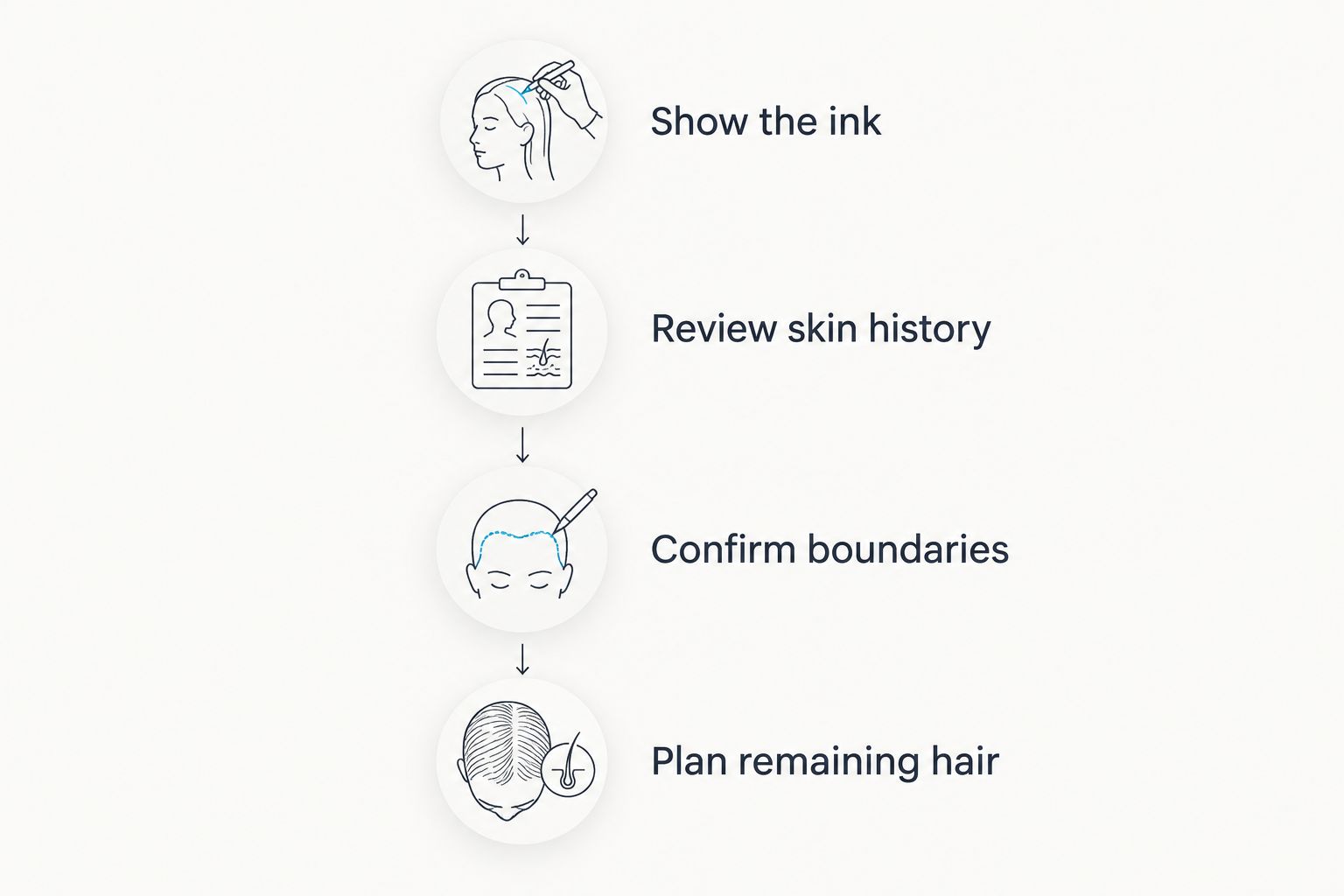
Use this short discussion framework:
- Show the ink: Make the full design and its edges visible for assessment.
- Review skin history: Mention recent tanning, reactions, medications, healing problems, and previous laser treatments.
- Confirm boundaries: Ask which skin will be excluded and how accidental overlap will be prevented.
- Plan remaining hair: Agree on how you will manage hair growing through the tattoo.
These questions make the limits of the appointment clear before treatment starts. They also prevent a common mismatch in expectations: assuming that paying to treat a body area means every part of that area will receive laser exposure.
Do not improvise a covering at home and assume it makes the tattoo safe to treat across. Protective measures belong within the practitioner’s device-specific protocol; a covering is not permission to direct the laser over ink.
A patch test on nearby untattooed skin also does not establish safety over the tattoo. It assesses the tested skin under the tested conditions, not every differently pigmented area beside it.
Can I use an at-home IPL device over my tattoo?
No—do not flash an at-home IPL device over a tattoo. IPL is not the same technology as a laser, but tattoo pigment remains a concern with light-based hair removal.
Read the exact device instructions before treating nearby skin. Do not assume a skin-tone sensor will identify every tattoo or prevent every unsafe flash. For your 2026 home routine, keep tattooed skin outside the treatment area and use a non-light-based method over healed ink instead.
Can I get a tattoo after laser hair removal?
You can discuss a future tattoo and hair-removal plan with the relevant professionals, but do not tattoo skin that is irritated or still recovering from treatment. The timing needs to reflect the condition of your skin and the advice of your treating practitioner and tattoo artist.
If you want longer-term hair reduction where you intend to place a tattoo, discuss that goal before adding the ink. Once the tattoo is present, hair-removal laser treatment should not pass directly over it. Do not assume that finishing a treatment course guarantees you will never need to manage hair there again.
What should I do if a laser accidentally hits my tattoo?
Tell the practitioner immediately and stop treatment on that area. Ask for an assessment and clear aftercare instructions rather than continuing the session to see whether the reaction settles.
Seek prompt medical care for blistering, worsening pain, marked skin changes, or an open wound. Do not pop blisters, pick the skin, apply ice directly, or try to correct altered tattoo pigment yourself. A suspected burn needs skin care first; decisions about tattoo repair come later.
Record the device and treatment details provided by the clinic, along with when symptoms appeared. Those details help a clinician assess what happened without relying on a description of the tattoo alone.
Planning laser hair removal in Downtown Brooklyn
Ammonite Laser Spa suits Downtown Brooklyn clients seeking personalized laser hair removal. The boutique studio also offers other skin and non-invasive beauty treatments, but a tattoo consultation should stay focused on treatment eligibility, boundaries, and skin safety.
When discussing laser hair removal with Ammonite Laser Spa, bring the tattoo into the conversation before agreeing on a treatment area. Ask how the proposed plan handles surrounding skin and the hair that will remain within the inked area. Personalized treatment still has limits; protecting a tattoo means accepting that some skin must stay untreated.
Use your 2026 consultation to agree on a realistic result, not just a body-area label. A plan for a tattooed forearm should explain the excluded artwork as clearly as the skin being treated.
FAQ
Can laser hair removal damage my tattoo?
Yes, direct laser exposure can damage a tattoo and injure the surrounding skin. Possible effects include burns, blistering, scarring, pigment changes, and an altered tattoo appearance.
Can I get laser hair removal around a tattoo?
Nearby untattooed skin can be assessed for treatment, but the tattoo must remain excluded. The practitioner needs to establish the treatment boundary using the device instructions and your individual skin assessment.
Is laser hair removal safe over a faded tattoo?
No, fading does not establish that laser hair removal is safe over a tattoo. Remaining pigment can still absorb energy, so disclose faded tattoos before treatment.
Can I shave hair growing through my tattoo?
You can generally shave healed tattooed skin if it is not irritated or broken. Use care to avoid cuts, and do not shave a fresh or healing tattoo.
Does covering a tattoo make laser hair removal safe?
A covering does not make it acceptable to direct a hair-removal laser over tattooed skin. Any protective measures must form part of a professional protocol that excludes the ink from treatment.
Will laser hair removal remove my tattoo too?
Hair-removal laser treatment is not an appropriate way to remove a tattoo. Direct exposure can cause uncontrolled tattoo changes and skin injury rather than a planned tattoo-removal result.
Can a test patch prove my tattoo is safe to laser?
No, a test patch on untattooed skin does not establish safety over a tattoo. Tattoo pigment changes how energy can be absorbed, so the ink still needs to be excluded.
One last thing
Before booking a course, check whether you intend to expand an existing tattoo. New artwork can change the treatment map between appointments, even when it sits on the same arm or leg. Tell the practitioner before each session if you have added ink, and never assume the previous boundary still applies.