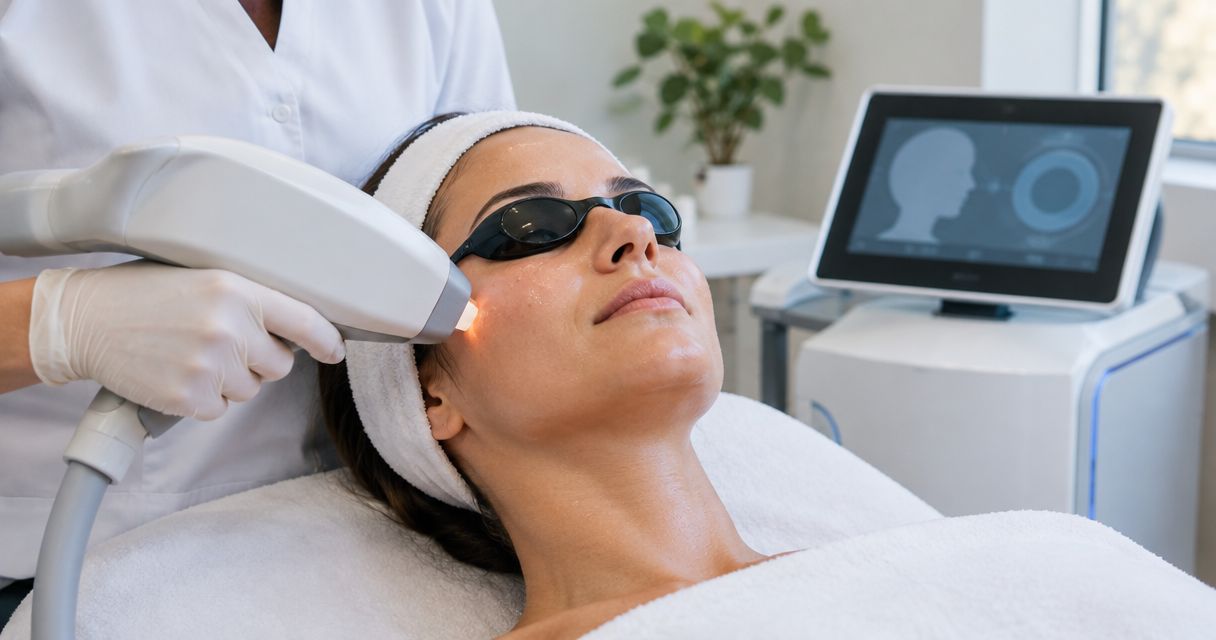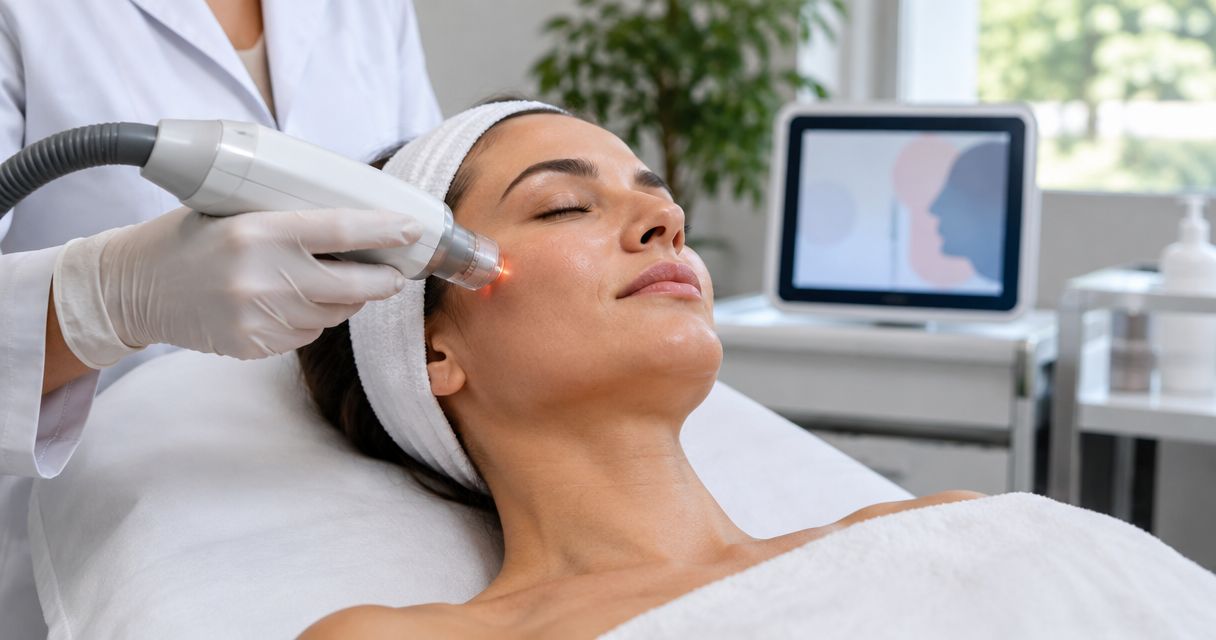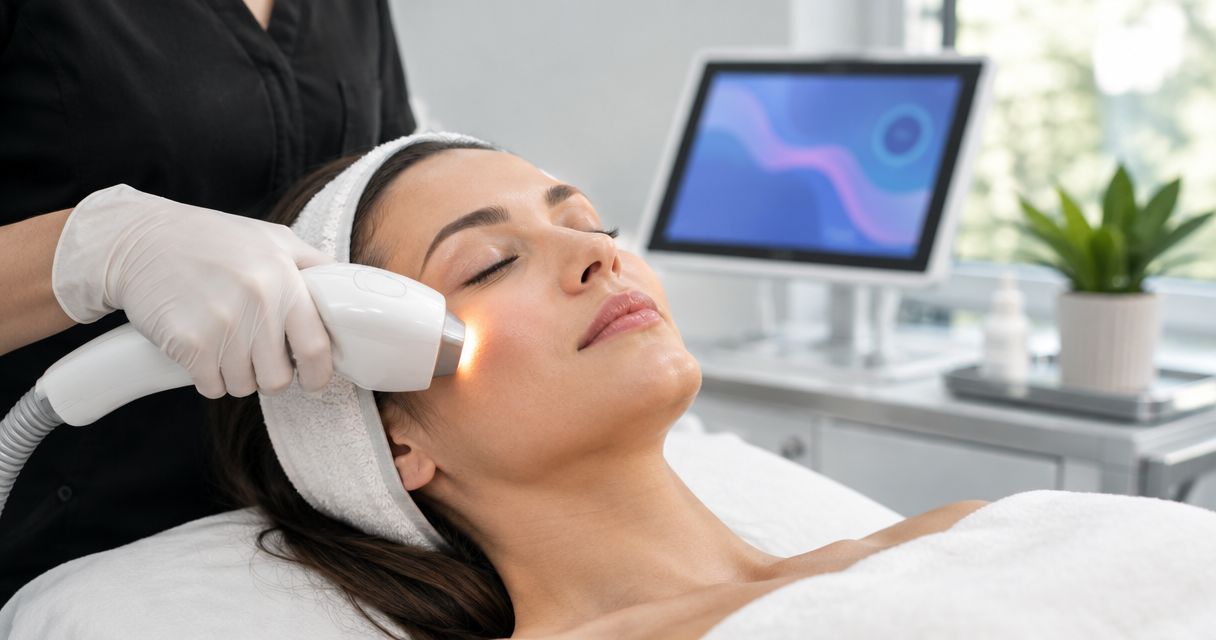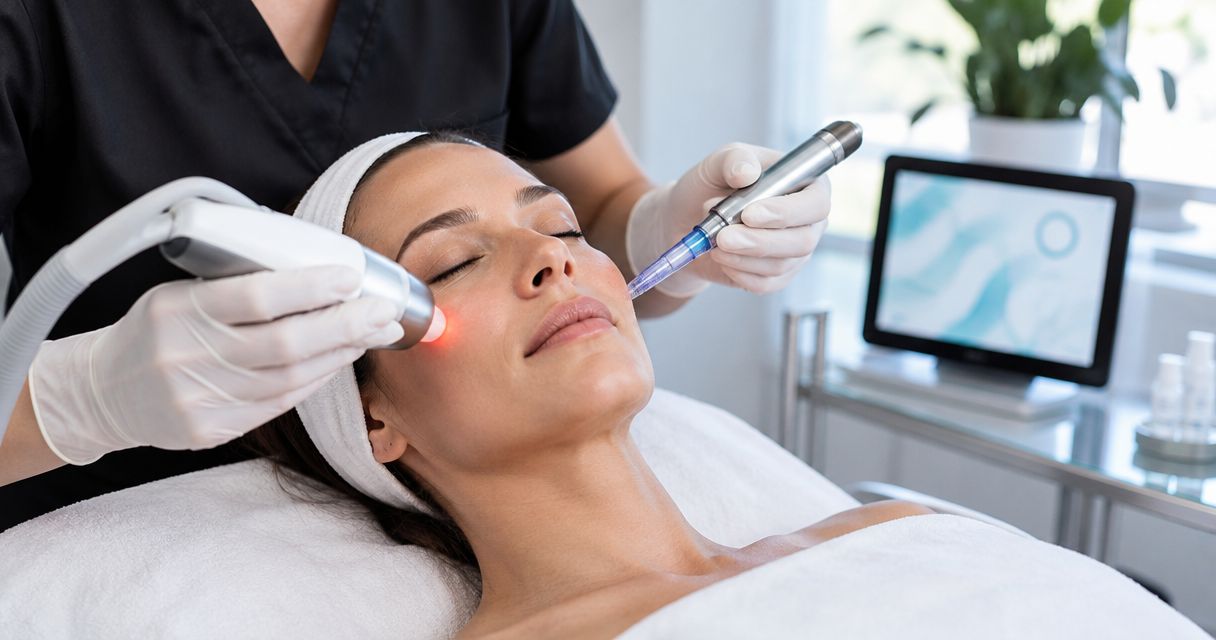
Yes, you can combine laser skin rejuvenation and microneedling in a treatment plan when a qualified clinician confirms that both suit your skin, concerns, and healing history. That does not automatically mean treating the same area on the same day: the laser type, treatment intensity, and your skin’s recovery determine the sequence.
- You can combine laser skin rejuvenation and microneedling, but same-day treatment requires a specific clinical protocol.
- Laser selection, microneedling depth, and skin recovery determine treatment order and spacing.
- Combining treatments does not guarantee better results than choosing one appropriate treatment.
- Ammonite Laser Spa offers personalized laser skin rejuvenation and microneedling in Downtown Brooklyn.
Can laser skin rejuvenation and microneedling be combined?
Yes—combining them in a plan is different from combining them in one appointment. Laser treatments use light energy, while conventional microneedling creates controlled punctures in the skin. Both can affect healing, so the combined plan needs a clear purpose and an individualized schedule.
The comparison below separates the options. When reviewing skin treatment services, ask which exact procedure is proposed rather than relying on the broad label “rejuvenation.”
| Approach | Best for | Potential benefit | Main limitation |
|---|---|---|---|
| Laser skin rejuvenation alone | A concern matched to a specific laser | Can address selected pigment, vascular, or texture concerns, depending on the device | Different lasers have different targets, risks, and recovery requirements |
| Conventional microneedling alone | Selected texture concerns and atrophic acne scars | Stimulates a wound-healing response without laser energy | Does not replace a pigment-specific or vascular treatment |
| A staged combination | Distinct concerns that justify both procedures | Allows each procedure to address a defined treatment goal | Adds treatment exposure and requires coordinated recovery planning |
For your 2026 consultation, request the device name, treatment goal, and reason for adding the second procedure. A combination should solve a specific problem—not simply make the treatment plan longer.
Why this matters
“Laser skin rejuvenation” covers procedures with very different effects on the skin. A gentle nonablative treatment and an ablative resurfacing procedure do not create the same wound or require the same aftercare.
Microneedling varies too. Needle depth, treatment area, technique, and whether radiofrequency energy is involved all affect the clinical decision. Advice about one procedure should not be applied automatically to another.
Choose the treatment that matches the concern before choosing a combination. More treatment is not a reliable shortcut to better skin, and unnecessary inflammation adds risk without establishing a benefit.
A staged combination: separate treatments with reassessment
A staged plan places laser treatment and microneedling in separate appointments, with recovery assessed between them. This gives the clinician an opportunity to evaluate your response before treating the same skin again.
Best for: people whose assessment identifies separate concerns that justify different procedures. For example, a clinician might distinguish depressed acne scars from residual discoloration rather than treating every post-acne mark as the same problem.
The benefit is flexibility. The next treatment can be adjusted, delayed, or removed if your response changes the plan. The limitation is that separate appointments still create separate recovery periods; staging does not make either procedure risk-free.
Your 2026 schedule should remain conditional on healing. A date booked in advance is not proof that your skin is ready.
Same-day treatment: a protocol-specific decision
Same-day treatment requires more than permission to have both procedures generally. A qualified clinician must evaluate the exact devices, settings, treatment areas, sequence, and combined effect on the skin.
Best for: selected patients assessed under a specific clinician-directed protocol. It is not a default choice for convenience or for catching up before an event.
The practical benefit is fewer separate treatment visits. The drawback is that overlapping skin injury can complicate recovery and increase the importance of careful selection and monitoring. Do not assume that a protocol used for one laser applies to every laser marketed for rejuvenation.
Ask what clinical evidence supports the proposed pairing for your concern and skin type. If the explanation does not identify the actual procedures, pause before agreeing.
Why the treatment order and spacing vary
There is no universal interval that applies to every laser and microneedling combination. These factors explain why a responsible plan needs an individual assessment:
- Laser type: Ablative lasers remove tissue; nonablative lasers act without removing the skin surface in the same way. Recovery requirements differ.
- Treatment intensity: Laser settings, treatment coverage, and microneedling depth affect the degree of skin injury.
- Skin condition: Active inflammation, infection, open wounds, or an impaired skin barrier can make treatment inappropriate until addressed.
- Pigmentation history: Previous post-inflammatory hyperpigmentation and melasma affect the risk assessment and treatment choice.
- Healing history: Previous scarring problems, unusual reactions, and slow healing need review before another controlled injury.
- Current exposures and medicines: Recent tanning, irritating skincare, prescription medicines, and recent procedures can change the plan.
These factors are not a checklist for clearing yourself. Use them to give your clinician a complete history and to understand why another person’s schedule is not a prescription for you.
How should you plan the combination?
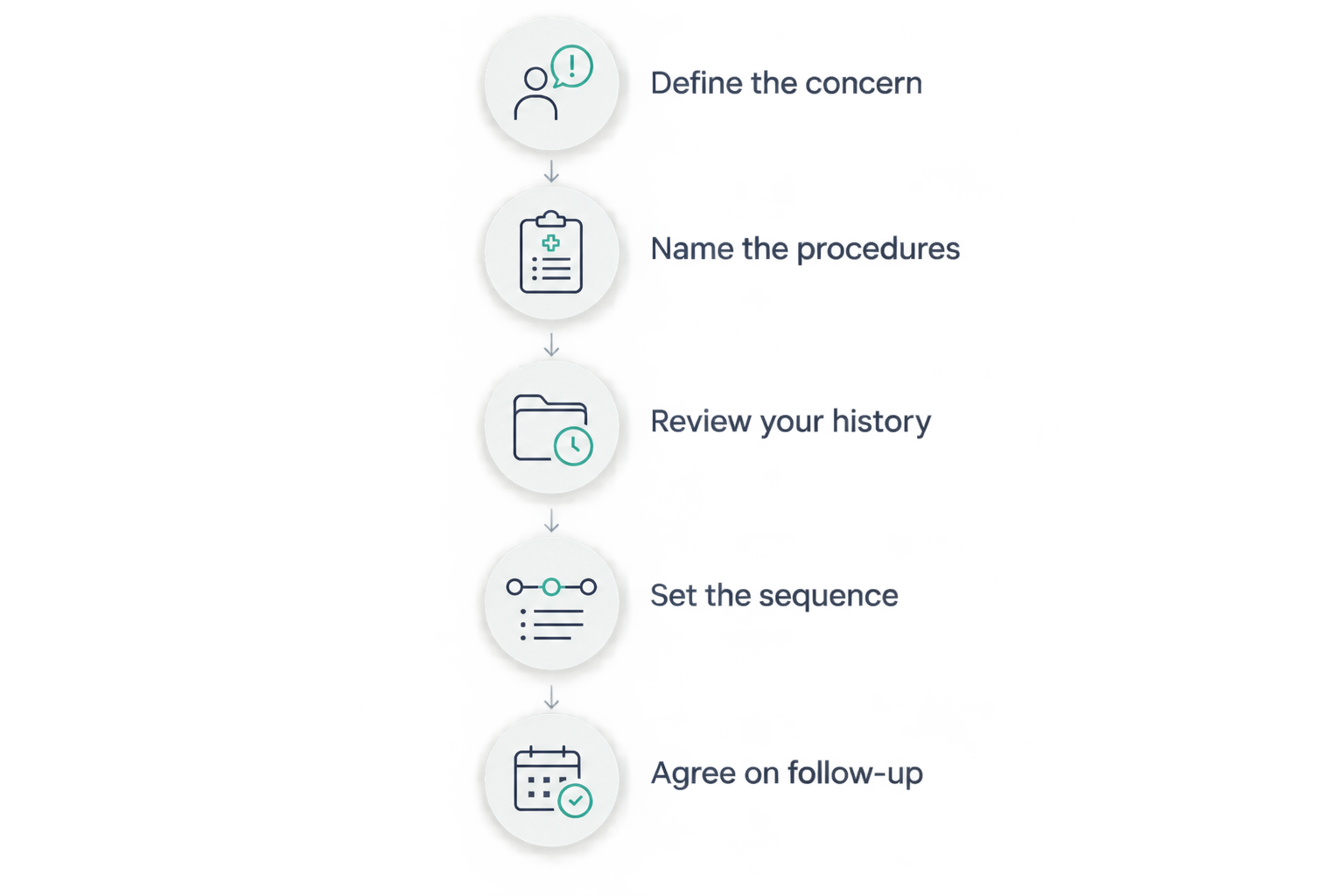
Use this sequence during your 2026 consultation. The aim is a treatment plan with decision points, not an automatic series of procedures.
- Define the concern. Identify whether you want to address depressed scars, uneven texture, redness, dark marks, or a mixture. Ask the clinician to distinguish these findings.
- Name the procedures. Get the laser name and confirm whether the proposed needling is conventional microneedling or radiofrequency microneedling.
- Review your history. Disclose medicines, supplements, previous reactions, cold sores, scarring history, recent tanning, and other cosmetic procedures.
- Set the sequence. Ask why one treatment comes first and which recovery findings determine readiness for the next.
- Agree on follow-up. Establish how to report problems, who assesses healing, and when the plan will be reconsidered.
A useful consultation ends with a clear explanation of what each procedure contributes. If either procedure lacks a distinct purpose, ask whether a single-treatment plan is more appropriate.
What risks should you discuss before combining treatments?
Both procedures can cause temporary redness, swelling, and sensitivity. Potential complications include infection, pigment changes, and scarring; laser procedures also carry burn risks. The specific risk profile depends on the procedure and patient.
Tell the clinician if you have a history of cold sores, keloids, persistent dark marks after irritation, or a previous treatment complication. These details affect assessment and, where appropriate, preventive measures.
Darker skin tones require thoughtful device selection and settings because inflammation can trigger pigment changes. Darker skin is not an automatic reason to reject treatment, but experience treating your skin tone matters. Ask how the clinician assesses and manages that risk.
Do not schedule another procedure over skin that is still painful, raw, crusted, or unusually inflamed. Persistent or worsening symptoms need assessment rather than another cosmetic treatment.
What should aftercare include?
Follow the written instructions for the exact procedures you receive. A generic 2026 skincare routine is not a substitute for procedure-specific wound care, especially after more intensive resurfacing.
Sun protection matters during recovery. The American Academy of Dermatology recommends broad-spectrum, water-resistant sunscreen with SPF 30 or higher; ask your treating clinician when sunscreen can be applied to the treated skin, particularly if the surface is not intact.
Use only the cleansers, moisturizers, and other products your clinician approves for that recovery stage. Do not assume your usual retinoid, exfoliating acid, scrub, or fragranced product belongs on recently treated skin.
Ask for explicit instructions about makeup, exercise, swimming, shaving, and restarting prescription skincare. Increasing pain, spreading redness, pus, fever, or blistering warrants prompt medical assessment—not an attempt to cover the area or exfoliate it.
Which treatment should come first?
Neither treatment always comes first. The order depends on the clinical target, laser characteristics, needling technique, and how your skin responds.
If pigmentation is your main concern, establish the diagnosis before choosing either procedure. Melasma, post-inflammatory hyperpigmentation, and sun-related spots are not interchangeable, and irritation can worsen some pigment problems.
If depressed scars are the main concern, ask which scar types are present and what improvement the proposed treatment can reasonably achieve. Adding a pigment-focused procedure does not automatically improve a scar’s depth.
How long should you wait between laser and microneedling?
There is no single safe waiting period for all laser and microneedling combinations. Your clinician should set the interval using the specific procedures and your recovery, rather than a general calendar rule.
Visible redness is only part of the assessment. Report tenderness, peeling, sensitivity, and changes in pigmentation before the next appointment, even if the scheduled date has arrived.
Is combining treatments better than choosing one?
A combination is justified only when each procedure adds a relevant benefit. Two procedures are not automatically more effective than one well-chosen treatment.
Ask how success will be judged and whether the first procedure should be evaluated before adding another. Consistent photographs under similar lighting can help distinguish a meaningful change from differences in angle, makeup, or temporary swelling.
Choosing a Downtown Brooklyn provider
Ammonite Laser Spa suits Downtown Brooklyn clients seeking personalized laser skin rejuvenation and microneedling. The studio offers both services, but that does not establish that a same-day combination is appropriate for you.
For a 2026 appointment at Ammonite Laser Spa, ask who assesses suitability, who performs each procedure, and how complications are handled. Also confirm the exact devices and whether your proposed combination is offered as part of an individualized plan.
Ammonite Laser Spa’s service range is relevant if you want to discuss both options locally. The limit is clinical: a service menu cannot determine eligibility, treatment order, or a safe recovery interval.
FAQ
Can I combine laser skin rejuvenation and microneedling on the same day?
Same-day treatment is a protocol-specific clinical decision, not a general recommendation. A qualified clinician must assess the exact procedures, settings, skin condition, and combined recovery demands.
Is laser skin rejuvenation or microneedling better for acne scars?
Neither procedure is best for every acne scar. Scar type, depth, skin tone, and associated discoloration determine which treatment or combination deserves consideration.
Can I have microneedling if my skin is still red after laser?
Persistent redness needs assessment before you have microneedling on the same area. Do not treat a scheduled appointment as clearance to proceed while your skin is still recovering.
Is radiofrequency microneedling the same as regular microneedling?
No, radiofrequency microneedling adds radiofrequency energy through needles, while conventional microneedling does not. The additional energy changes the procedure and its risk assessment.
Can combining laser and microneedling make pigmentation worse?
Inflammation from either treatment can trigger post-inflammatory hyperpigmentation. A history of melasma or dark marks after irritation should be reviewed before choosing a combination.
Can I use my usual skincare after both treatments?
Use only the skincare approved in your procedure-specific aftercare instructions. Retinoids, exfoliating acids, scrubs, and other irritating products need a clinician-directed restart plan.
Should I book a combined treatment before a wedding or major event?
Do not use an important event as a reason to compress treatment and recovery. Tell your clinician the event date before booking and ask whether postponing treatment is the safer choice.
One last thing
Ask what would make the clinician cancel your next treatment. A clear answer about incomplete healing, new irritation, or a changed diagnosis tells you more about the plan than a fixed appointment schedule does.
Keep a record of the procedure name, treatment date, aftercare instructions, and any reaction. If different providers are involved, make sure each knows what the other performed before either treats the same area again.
This article provides general education, not personal medical clearance for a combined procedure.