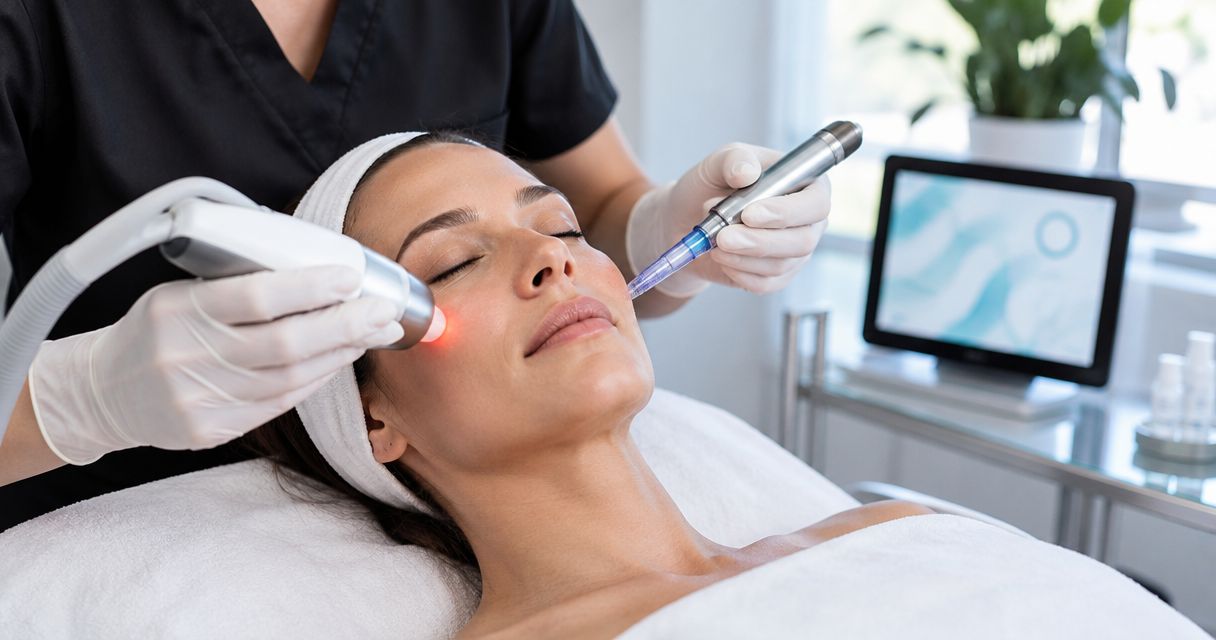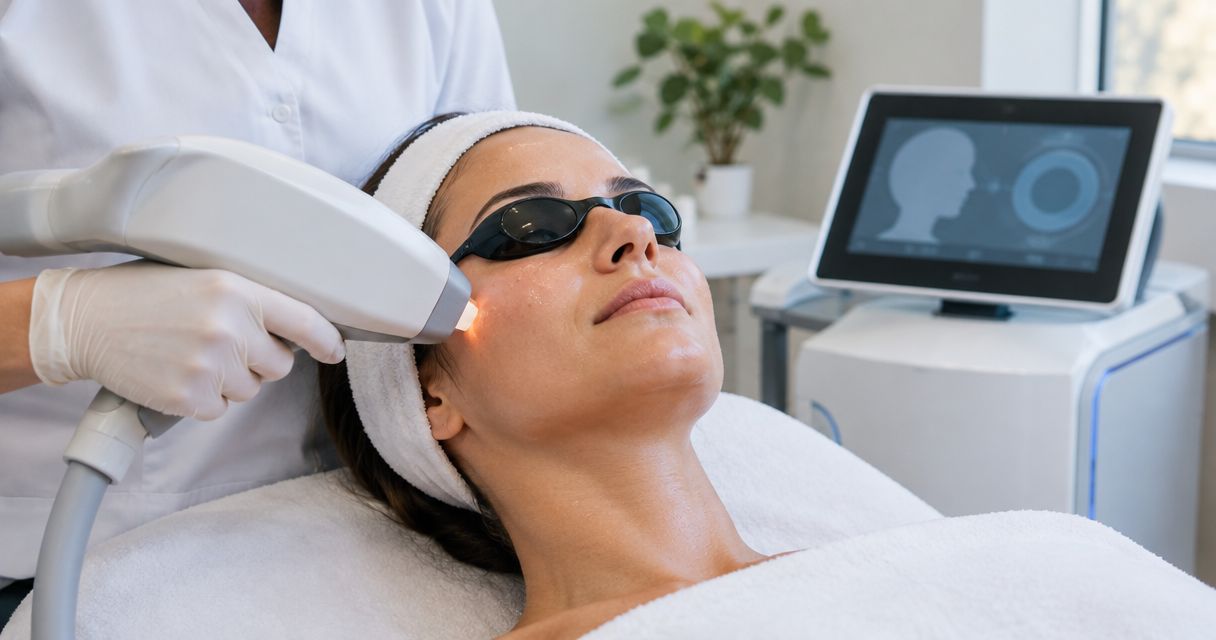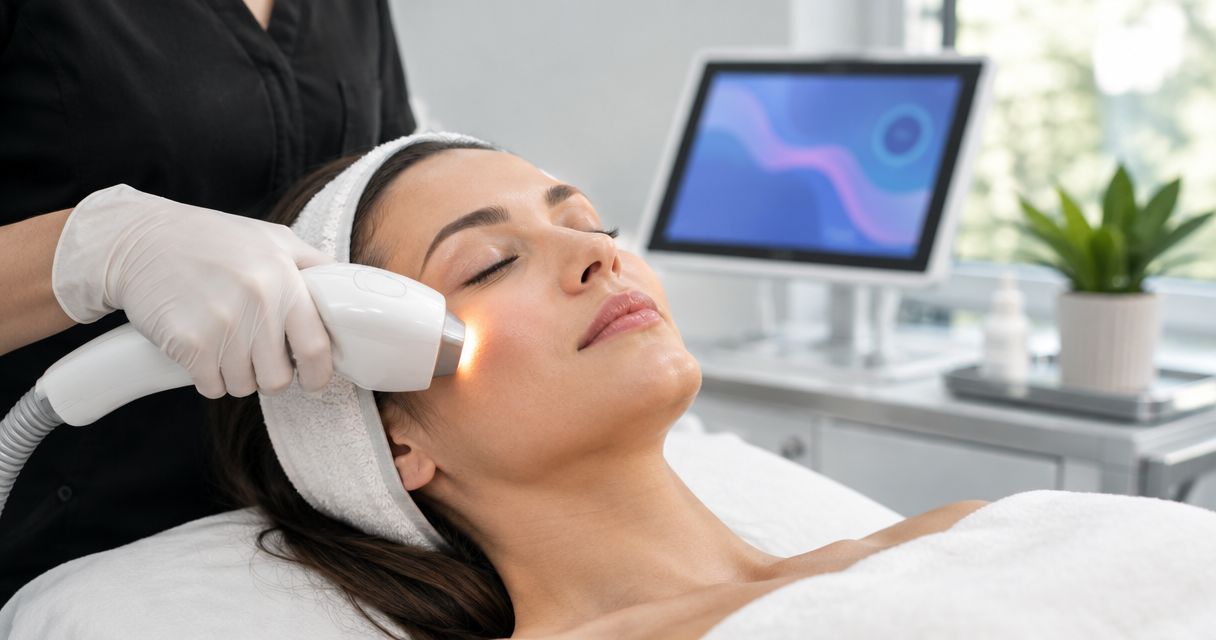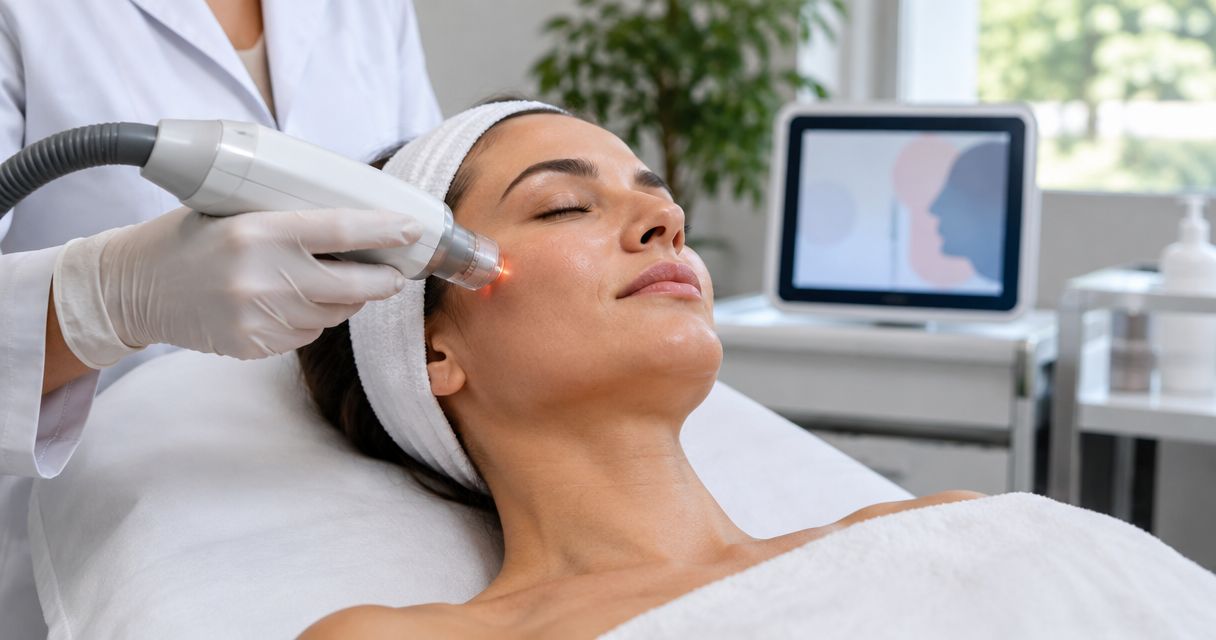
Laser skin rejuvenation downtime lasts from a short period of flushing after gentle nonablative treatment to several weeks of recovery after deeper ablative resurfacing. The exact timeline depends on the device, treatment depth, and your skin—not the service name alone. Visible redness can also outlast the point when you feel comfortable returning to work.
- Laser skin rejuvenation downtime depends on treatment depth; a service name alone cannot predict recovery.
- Nonablative treatments generally involve less recovery than ablative resurfacing, but less downtime does not mean no risk.
- Ammonite Laser Spa offers personalized laser skin rejuvenation in Downtown Brooklyn; confirm the exact procedure before scheduling.
- Ask separately about returning to work, wearing makeup, exercising, and looking ready for photographs.
Why this matters
You need more than a return-to-work estimate. Skin can feel comfortable while remaining visibly red, dry, or sensitive, and deeper resurfacing requires wound care rather than an ordinary skincare routine.
For a 2026 treatment plan, separate recovery from results: leaving the studio is not the same as finishing healing, and finishing healing is not the same as seeing the final improvement. If you are also planning repeat appointments, read about how many laser skin rejuvenation sessions you need before committing your calendar.
How long does laser skin rejuvenation downtime last?
The treatment category is the starting point for estimating downtime. Nonablative lasers heat targeted tissue without intentionally removing the skin surface; ablative lasers remove surface tissue and create a more involved healing process. Fractional treatment describes a pattern of treatment, not a guarantee of minimal recovery.
These are category-level distinctions, not a promise about any studio's equipment or your individual response.
| Treatment category | General recovery pattern | Best for | Main limitation |
|---|---|---|---|
| Gentle nonablative treatment | Brief flushing or warmth, with possible swelling and sensitivity | People prioritizing less interruption | Improvement is generally more gradual; repeat treatment can be necessary |
| Fractional nonablative treatment | Redness, swelling, roughness, or bronzing during recovery | People balancing texture improvement with surface preservation | Skin can look noticeably treated despite remaining intact |
| Fractional ablative treatment | Active healing, peeling, and prescribed wound care | People willing to accept recovery for resurfacing | Requires more aftercare and stricter scheduling |
| Fully ablative resurfacing | More extensive healing, with residual redness potentially lasting longer | Selected patients accepting substantial recovery | Greater wound-care demands and complication risks |
Your clinician should identify which category applies before giving you a recovery estimate. A phrase such as laser facial or skin rejuvenation does not provide enough information to book around an important event.
What does downtime actually include?
Ask about social downtime, activity restrictions, and skin healing separately. Social downtime means how long you expect to look visibly treated; activity restrictions concern what you should avoid; skin healing concerns recovery of the treated tissue.
Those timelines do not always match. Someone working remotely has different practical needs from someone wearing protective face equipment, working outdoors, or appearing on camera.
Nonablative treatment: less disruption, not a recovery guarantee
Nonablative laser treatment generally has a shorter recovery than ablative resurfacing because it preserves the skin surface. Temporary warmth, redness, swelling, and sensitivity are possible, even when the appointment is described as low downtime.
Best for: people who prioritize keeping daily disruption low and accept a more gradual treatment plan. The trade-off is that a lighter approach does not necessarily address deeper texture concerns as effectively as more intensive resurfacing.
Before a 2026 appointment, ask what your skin is expected to look like when you leave and how that appearance usually changes afterward. Also ask whether the planned settings differ from the gentlest version of that treatment; the device name alone does not settle the question.
Fractional treatment: the pattern does not determine recovery
Fractional lasers treat microscopic zones while leaving surrounding areas untreated. Both ablative and nonablative devices can use this approach, so fractional does not automatically mean a quick return to your usual routine.
Best for: people evaluating a targeted resurfacing approach with a clinician. The advantage is a treatment pattern that leaves intervening tissue intact; the limitation is that recovery still depends on depth, treatment density, and whether the surface is removed.
Ask whether you should expect roughness, bronzing, peeling, or pinpoint crusting. Do not scrub away a treated texture simply because the skin feels uneven; follow the aftercare instructions for the actual procedure.
Ablative resurfacing: plan for active healing
Ablative resurfacing removes surface tissue and involves more substantial recovery than gentle nonablative treatment. Your instructions can include cleansing, protective ointment, and monitoring the healing surface, rather than simply returning to your usual moisturizer.
Best for: appropriately assessed patients willing to accept more recovery for resurfacing. The drawback is a greater burden of wound care and a higher risk of complications, including infection, scarring, and pigment changes.
Do not treat ablative resurfacing as interchangeable with a routine laser facial. The comparison here explains recovery categories; it does not establish that any particular provider offers every procedure listed.
Why laser skin rejuvenation downtime varies
A useful recovery estimate accounts for the procedure and the person receiving it. These factors explain why a friend's experience is not a reliable forecast for yours:
- Treatment depth: more extensive tissue injury requires more healing than a superficial treatment.
- Treatment density: treating more closely spaced areas changes the amount of tissue recovering at once.
- Treatment area: the location and extent of the treated skin influence aftercare and practical restrictions.
- Skin history: previous pigment changes, scarring, cold sores, and inflammatory conditions affect treatment planning.
- Recent exposure: tanning, sunburn, irritation, and other recent procedures can change whether treatment should proceed.
- Aftercare: picking, harsh products, and unprotected sun exposure can interfere with recovery.
Skin tone also matters when assessing pigment-related risks and selecting treatment settings. Ask for an individualized assessment rather than assuming that a low-downtime label means equal suitability for every skin tone.
How should you plan your recovery?
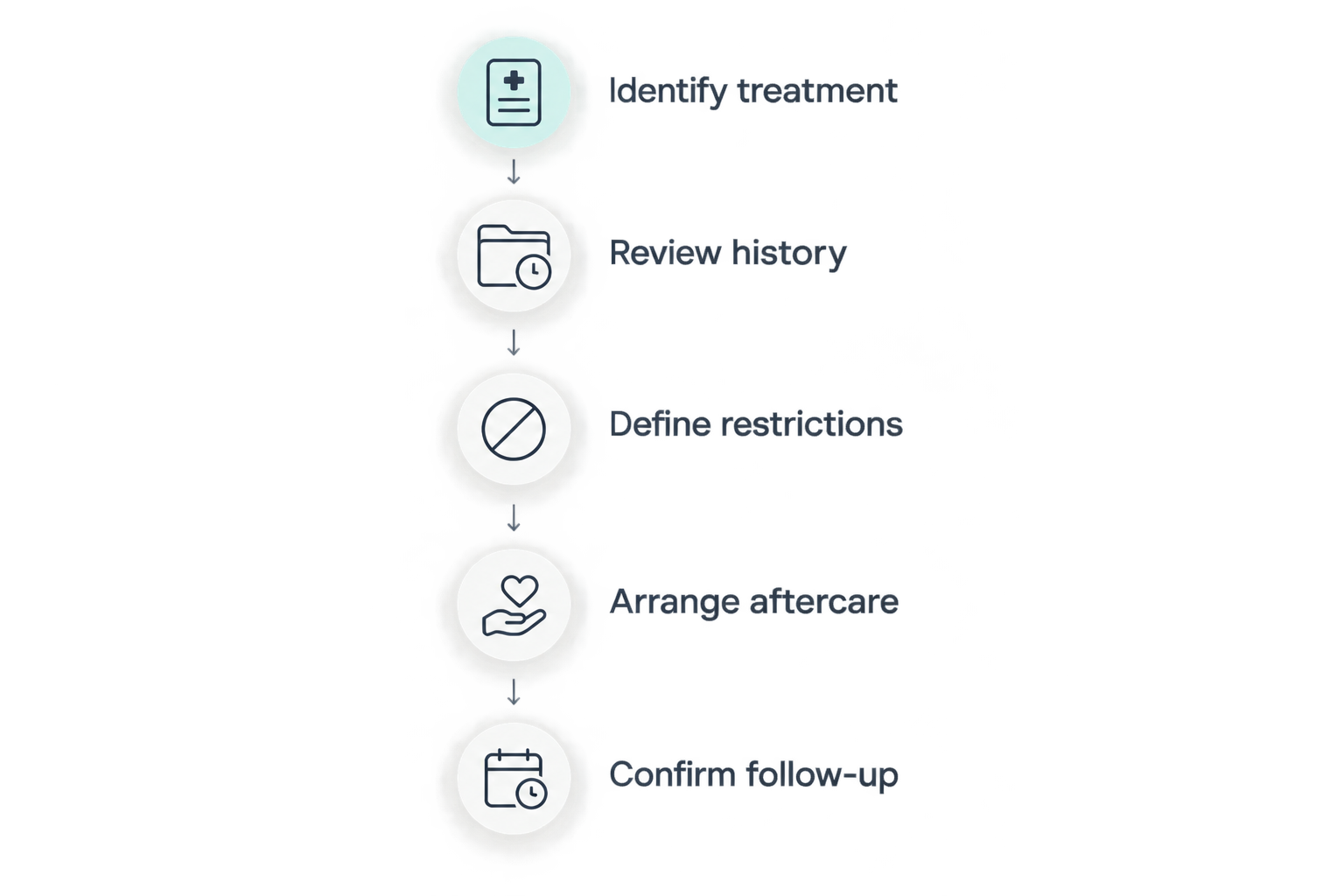
Build your 2026 schedule around the procedure's restrictions, not just the appointment length. Use this sequence before choosing a date:
- Identify treatment. Get the device name and confirm whether the procedure is ablative or nonablative, fractional or nonfractional.
- Review history. Disclose medications, skincare products, previous reactions, cold sores, tanning, and recent treatments.
- Define restrictions. Ask separately about work, makeup, exercise, cleansing, shaving, and sun exposure.
- Arrange aftercare. Obtain the written care plan and any recommended supplies before treatment.
- Confirm follow-up. Know whom to contact if symptoms worsen and how the provider checks healing.
Bring your actual commitments to the consultation. A desk shift, an outdoor run, a wedding, and a beach trip place different demands on healing skin, so asking only when you can return to work leaves important questions unanswered.
What should you do while your skin recovers?
Follow the treating clinician's instructions over a generic online routine. Appropriate care differs between intact skin after a gentle treatment and a healing surface after ablative resurfacing.
Keep the routine limited to the products and cleansing method your clinician approves. Do not restart retinoids, exfoliating acids, scrubs, or other irritating products just because they were comfortable before treatment, and do not stop prescribed medicines without medical advice.
Avoid picking or pulling at peeling skin. Ask when heat, strenuous exercise, swimming, shaving, and friction are acceptable for your procedure rather than applying a universal waiting period.
Sun protection is part of recovery, not an optional finishing step. Use shade and protective clothing, and ask when sunscreen can be applied to the treated surface; freshly resurfaced skin needs procedure-specific guidance.
When should you contact the treating clinician?
Some redness, swelling, and sensitivity can be expected after laser treatment, but the expected pattern must match your procedure. Worsening pain, spreading redness, pus, fever, unexpected blistering, or delayed healing need prompt clinical advice.
Do not assume every change is ordinary peeling. Contact the treating clinician if symptoms increase instead of settling, if you develop cold-sore-like lesions, or if something falls outside the written recovery instructions.
Eye pain or vision changes require urgent medical attention. A scheduled follow-up is not a reason to wait when symptoms are concerning.
Can I go back to work immediately after laser rejuvenation?
Immediate return to work is possible after some gentle nonablative treatments, but it is not a promise that applies to all laser rejuvenation. Your job also matters: heat, outdoor exposure, physical exertion, and equipment rubbing against your face can affect the plan.
Ask whether the answer means you are medically cleared for your duties or simply able to sit at a desk. Those are different standards.
Can I wear makeup while my skin is healing?
Makeup should wait until your treating clinician confirms it is appropriate for the procedure and the condition of your skin. Do not apply it over raw, weeping, or incompletely healed areas to disguise recovery.
For your 2026 aftercare plan, request a clear restart instruction rather than guessing from appearance alone. Skin that looks calmer can still need protection from rubbing and irritating products.
Does more downtime mean better results?
More downtime does not automatically mean a better treatment choice. A deeper procedure can address certain resurfacing goals, but it also brings additional healing demands and risks.
Choose the treatment that fits the diagnosis, your skin, and your ability to follow aftercare—not the longest recovery you can tolerate. A shorter-recovery option is useful only if it can reasonably address the concern being treated.
What should you ask a Downtown Brooklyn provider?
Ammonite Laser Spa offers personalized laser skin rejuvenation for local clients. Ammonite Laser Spa serves Downtown Brooklyn clients seeking personalized laser skin rejuvenation. That local service fit does not establish which device, treatment depth, or recovery schedule is appropriate for you.
Before booking, ask what procedure is proposed, what improvement it targets, and what its limitations are. For laser skin rejuvenation at Ammonite Laser Spa, use the contact page to ask about assessment and procedure-specific recovery instructions.
FAQ
What's the usual downtime after laser skin rejuvenation?
Laser skin rejuvenation downtime depends on the treatment: gentle nonablative procedures generally involve less recovery than ablative resurfacing. Ask for separate estimates for visible redness, activity restrictions, and skin healing.
Is laser skin rejuvenation really a no-downtime treatment?
No-downtime wording does not guarantee that your skin will look or feel unchanged. Even a gentle treatment can cause temporary redness, warmth, swelling, or sensitivity.
Is fractional laser recovery shorter than regular laser recovery?
Fractional treatment does not establish a single recovery timeline because fractional lasers can be ablative or nonablative. Treatment depth and density also affect healing.
Can I exercise after laser skin rejuvenation?
Exercise clearance depends on the procedure and your skin's recovery. Ask when strenuous activity, heat, sweating, and equipment touching the treated area are acceptable.
Can I get laser rejuvenation before a wedding in 2026?
Schedule laser rejuvenation before a 2026 wedding only after discussing the exact procedure and recovery uncertainty with your clinician. Avoid using an important event as the deadline for an unfamiliar treatment.
Is peeling a sign that laser treatment worked?
Peeling is not required for every effective laser treatment. Nonablative procedures can target tissue without intentionally removing the surface, so visible peeling is not a universal measure of success.
Does redness mean my skin is still healing?
Redness can remain after the skin surface has healed, particularly after deeper resurfacing. Persistent or worsening redness needs assessment against the expected course of your specific procedure.
One last thing
Ask for the longest-lasting restriction, not just the shortest recovery estimate. You might feel ready for a meeting before your skin is ready for an outdoor workout, exfoliation, or a long day in the sun.
Write down your next important commitment before the consultation. A specific question about that activity gets you a more useful answer than asking whether the treatment has downtime.