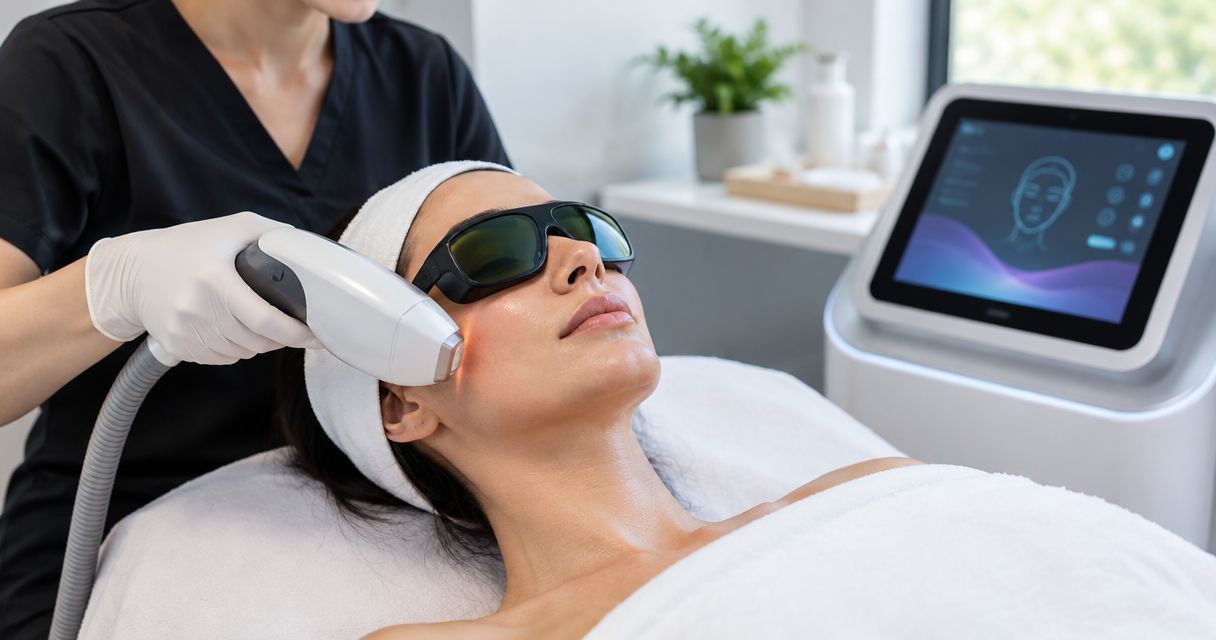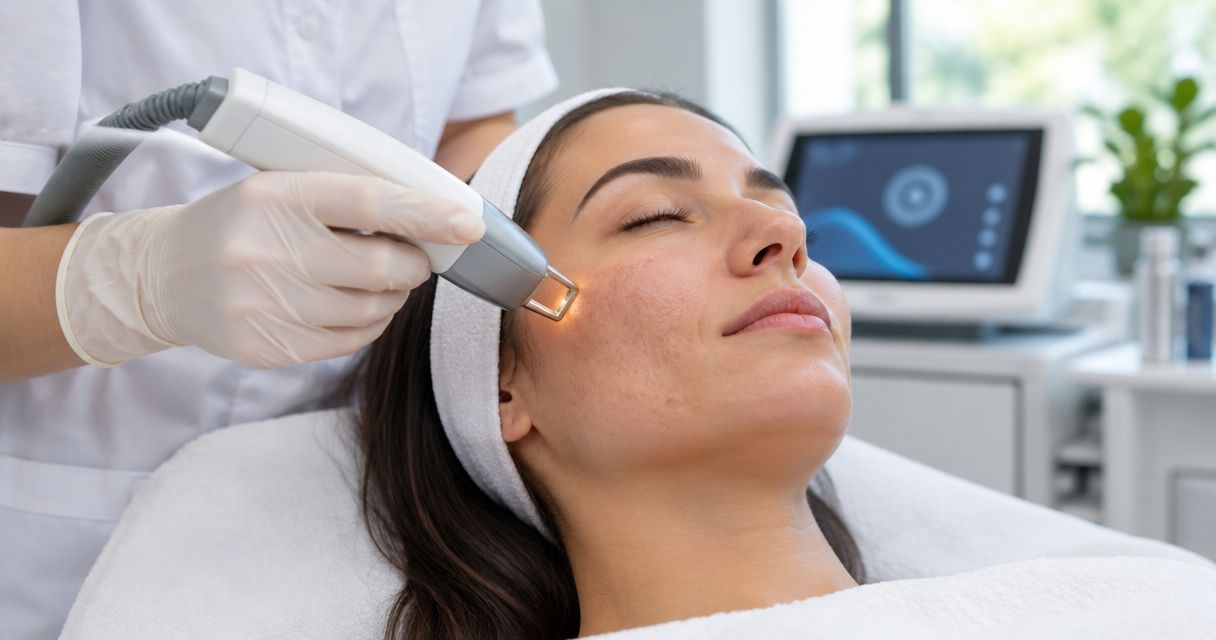
No—laser treatment can improve acne scars, but it does not reliably remove them completely. The result depends on scar shape, depth, skin tone, and the treatment used; flat discoloration also needs a different approach from depressed or raised scars. For treatment planning in 2026, aim for a visible improvement in texture or color—not a promise of scar-free skin.
- Can laser treatment remove acne scars completely? No; the American Academy of Dermatology describes improvement, not guaranteed erasure.
- Flat acne marks and indented acne scars need different treatment plans.
- Deep or tethered scars often need procedures beyond laser resurfacing.
- Choose treatment by scar type, skin tone, and recovery requirements—not the device name alone.
Why this matters
The wrong treatment can address color while leaving the indentation you actually want corrected. It can also expose your skin to unnecessary irritation, pigment changes, and recovery time.
Start by separating texture from discoloration. If your main concern is a flat brown mark rather than a pit, the guide to treatments for post-acne pigmentation explains that distinction. A lighter mark does not necessarily mean a structural scar has changed.
Choose a treatment for the feature you want improved, not simply because it is called laser rejuvenation. Ask the clinician to identify that feature on your skin before discussing devices or a treatment course.
Can laser treatment remove acne scars completely?
No. Laser treatment changes scar appearance by resurfacing skin, stimulating collagen remodeling, or targeting blood vessels and pigment, depending on the device. It does not consistently restore scarred tissue to its original structure.
The American Academy of Dermatology's patient guidance on acne-scar diagnosis and treatment describes treatment selection by scar type and notes that patients often need more than one approach. That distinction matters for a 2026 consultation: a general promise of smoother skin is not an explanation of how a particular scar will respond.
| Finding | What treatment targets | Potential benefit | Main limitation |
|---|---|---|---|
| Flat brown or gray marks | Excess pigment after inflammation | More even-looking color | Pigment treatment does not fill an indentation |
| Flat red marks | Persistent vascular redness | Reduced visible redness | Redness treatment does not release tethered scars |
| Shallow depressed scars | Uneven surface and collagen loss | Smoother-looking texture | Improvement does not mean complete removal |
| Deep or tethered scars | Deeper tissue loss or fibrous attachments | Targeted procedures can address the underlying structure | Surface resurfacing alone does not address every component |
| Raised scars | Excess scar tissue | Treatment can reduce thickness or symptoms | These require a different plan from depressed scars |
A consultation should establish which findings you have. Your cheeks can contain several scar types alongside discoloration, so one device and one endpoint do not necessarily fit the whole area.
Which acne scars respond to which treatments?
Dermatologists commonly divide depressed acne scars into 3 types: ice-pick, boxcar, and rolling scars. Raised scars form a separate category. These names describe shape, not severity alone, and each points toward a different treatment discussion.
Ice-pick scars: narrow openings with deeper damage
Ice-pick scars are narrow, deep depressions. General surface resurfacing does not directly correct their full depth, so a dermatologist can assess targeted procedures such as chemical reconstruction or punch techniques.
Best for: a targeted dermatology assessment when narrow pits dominate. The benefit is treatment directed at the scar itself; the limitation is that treating individual pits does not automatically improve surrounding discoloration or broader texture.
Boxcar scars: depressions with defined edges
Boxcar scars have more sharply defined edges than rolling scars. Shallow boxcar scars can respond to resurfacing, while deeper examples need assessment for additional procedures.
Best for: a resurfacing discussion when shallow, sharply edged depressions are the main concern. The advantage is broader texture treatment; the limitation is that deeper scars can remain visible even when the surrounding skin becomes smoother.
Rolling scars: broad depressions with underlying attachments
Rolling scars create an uneven, wave-like surface. Fibrous bands can tether the skin downward, which is why collagen stimulation alone does not address every rolling scar.
Best for: assessment for tethering before committing to resurfacing. Subcision is a medical procedure used to release those attachments; its risks include bruising and other procedural complications, and suitability requires an individual examination.
Raised scars: a different treatment pathway
Raised acne scars and keloids involve excess scar tissue rather than a depression. A resurfacing plan intended for pitted cheeks is not interchangeable with treatment for a raised scar.
Best for: dermatologist-led assessment, especially if the area is growing, itchy, or painful. The priority is identifying the scar correctly; treating it as an ordinary surface irregularity risks an unsuitable procedure.
How do laser resurfacing and microneedling compare?
Laser resurfacing and microneedling both involve controlled skin injury intended to encourage remodeling, but they are not interchangeable. Ablative lasers remove tissue, nonablative lasers deliver heat without the same surface removal, and conventional microneedling uses needles rather than laser energy.
“Fractional” describes treatment delivered in microscopic zones, not a guarantee of gentle recovery. Fractional devices can be ablative or nonablative, so ask for the full treatment name.
| Option | Best for | Main advantage | Main drawback |
|---|---|---|---|
| Ablative resurfacing | Selected patients seeking treatment of surface irregularity | Direct resurfacing of treated tissue | More wound care and recovery; infection and pigment-change risks |
| Nonablative laser treatment | Selected patients prioritizing less surface disruption | Collagen stimulation without equivalent surface removal | Results develop gradually and deep scars can remain |
| Conventional microneedling | Selected depressed scars after skin assessment | Mechanical collagen stimulation without laser heat | Does not release every tether or correct every deep pit |
| Targeted scar procedures | Deep pits or tethered scars identified on examination | Addresses a specific structural problem | Requires procedural expertise and its own recovery plan |
These are treatment categories, not a ranking. The best option is the one that addresses the diagnosed scar with an acceptable risk and recovery burden. None guarantees complete clearance.
For your 2026 treatment plan, distinguish a general skin-rejuvenation service from a procedure specifically selected for acne-scar correction. The service label alone does not establish treatment depth or suitability.
Why acne-scar treatment results vary
The main drivers are clinical, not promotional. A device name cannot tell you how your particular mix of scars will respond.
- Scar depth: deeper tissue loss is not the same problem as shallow surface roughness.
- Scar attachments: tethered depressions need assessment for release rather than resurfacing alone.
- Skin tone and pigment history: prior darkening after irritation helps inform the risk discussion.
- Active acne: ongoing breakouts can create new scars while older scars are being treated.
- Treatment characteristics: device type, treatment intensity, and technique affect both response and recovery.
- Aftercare and sun exposure: healing instructions and sun protection help reduce avoidable complications.
A useful consultation connects each recommendation to one of these factors. If the explanation stops at “this laser builds collagen,” ask which scar feature the proposed treatment is intended to change.
What should happen before you book treatment?
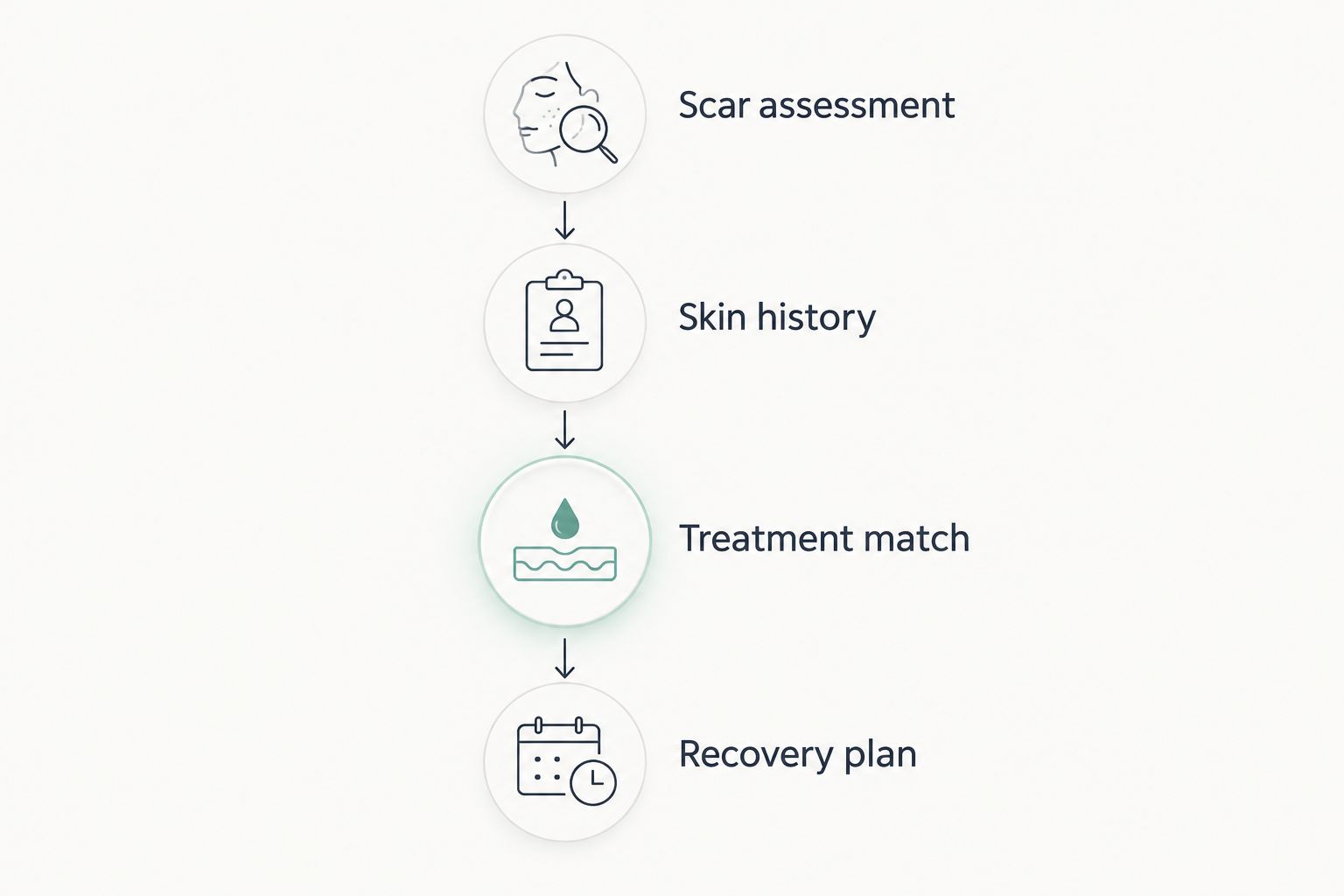
Use 4 consultation checks to assess whether a proposed plan is specific enough. Each check should produce a clear answer before you commit to a procedure.
- Scar assessment. Ask the clinician to identify depressed scars, raised scars, discoloration, and any tethering. Discuss which concern matters most to you.
- Skin history. Disclose medications, recent tanning, cold sores, previous procedures, unusual scarring, and pigment changes after irritation. Do not stop prescribed medication without the prescribing clinician's advice.
- Treatment match. Ask for the exact procedure and why it fits your scar pattern. Confirm who performs it and what experience they have treating comparable skin tones and scars.
- Recovery plan. Get written instructions covering cleansing, sun protection, makeup, exercise, warning signs, and follow-up. Arrange treatment around the recovery requirements—not the other way around.
Bring clear photographs and a list of previous treatments to your consultation. Consistent lighting helps distinguish changes in texture from changes caused by camera angle, shadow, or makeup.
Can laser treatment make acne scars worse?
Yes. Burns, infection, pigment changes, and additional scarring are recognized complications of laser procedures, although individual risk depends on the treatment and patient.
Darker skin is not an automatic exclusion from treatment. It does make experience with your skin tone, appropriate device selection, and a clear pigment-risk discussion especially important.
Ask how complications are handled and whom you should contact after treatment. Increasing pain, spreading redness, drainage, or other unexpected symptoms need prompt clinical advice rather than another cosmetic appointment.
Is acne-scar improvement permanent?
Structural improvement from scar treatment can persist, but it does not prevent future acne or normal skin aging. Flat discoloration also behaves differently from a remodeled depression, so “permanent results” needs a more precise definition.
For 2026 planning, separate 2 goals: improving existing scars and preventing new scars. If inflammatory acne remains active, discuss acne control with a qualified clinician alongside—not after—the scar-treatment plan.
That distinction protects expectations. A treated scar and a new breakout in the same area are different problems, even when they appear close together in photographs.
How long should you wait before judging results?
Judge results after the clinician's specified healing and remodeling period, not immediately after treatment. Early swelling can temporarily make depressions appear less obvious, while redness can make the area look more noticeable.
There is no single timetable that applies to every laser, treatment intensity, or scar type. Ask when photographs will be reviewed and what finding would justify repeating, changing, or stopping treatment.
Use the same lighting, camera distance, and facial expression for progress photographs. A fair comparison is more useful than a flattering after photo.
Where does Ammonite Laser Spa fit?
Ammonite Laser Spa offers personalized laser skin rejuvenation, acne and pigmentation treatments, and microneedling in Downtown Brooklyn. Ammonite Laser Spa is best for local clients seeking personalized skin-treatment services rather than a promise of complete scar removal.
The benefit of considering Ammonite Laser Spa is access to those stated treatment categories. The limitation is that a service list does not establish whether a specific resurfacing device or targeted scar procedure is available or appropriate for you.
Ask Ammonite Laser Spa which offered treatment addresses your diagnosed concern and when dermatologist assessment is the better next step. For a 2026 consultation, bring a specific question: are you treating pigment, surface texture, a deep pit, or an underlying attachment?
FAQ
Can laser treatment remove acne scars completely?
No, laser treatment does not reliably remove acne scars completely. It can improve texture or color, but scar depth, shape, skin tone, and treatment choice affect the result.
What's the best treatment for deep acne scars?
Deep acne scars need treatment selected for their structure, not a universal best laser. A dermatologist can assess targeted procedures for narrow pits, tethering, or deeper tissue loss.
Is laser treatment better than microneedling for acne scars?
Neither laser treatment nor microneedling is best for every acne scar. The choice depends on scar type, skin tone, risk tolerance, and recovery requirements.
Can people with darker skin get laser treatment for acne scars?
People with darker skin can be candidates for laser treatment, but pigment-change risk requires careful assessment. Ask about the clinician's experience with comparable skin tones and the proposed device.
How many laser sessions will I need for acne scars?
The session count requires an individual assessment of your scars and the proposed procedure. Ask when the clinician will review your response before recommending further treatment.
Can sunscreen remove acne scars?
Sunscreen does not remove structural acne scars. Broad-spectrum SPF 30 or higher helps protect skin from ultraviolet exposure; follow your clinician's instructions about its use during healing.
Should I treat active acne before acne scars?
Active acne needs attention before or alongside scar treatment because new breakouts can cause additional scars. A qualified clinician should coordinate acne control with any procedural plan.
One last thing
Before booking, point to the exact feature you want changed. A brown mark, a sharp-edged pit, and a rolling depression can sit next to each other but require different decisions.
Ask the clinician to describe success for that feature in plain language. “Less visible indentation” is an assessable goal; “perfect skin” is not a treatment endpoint.