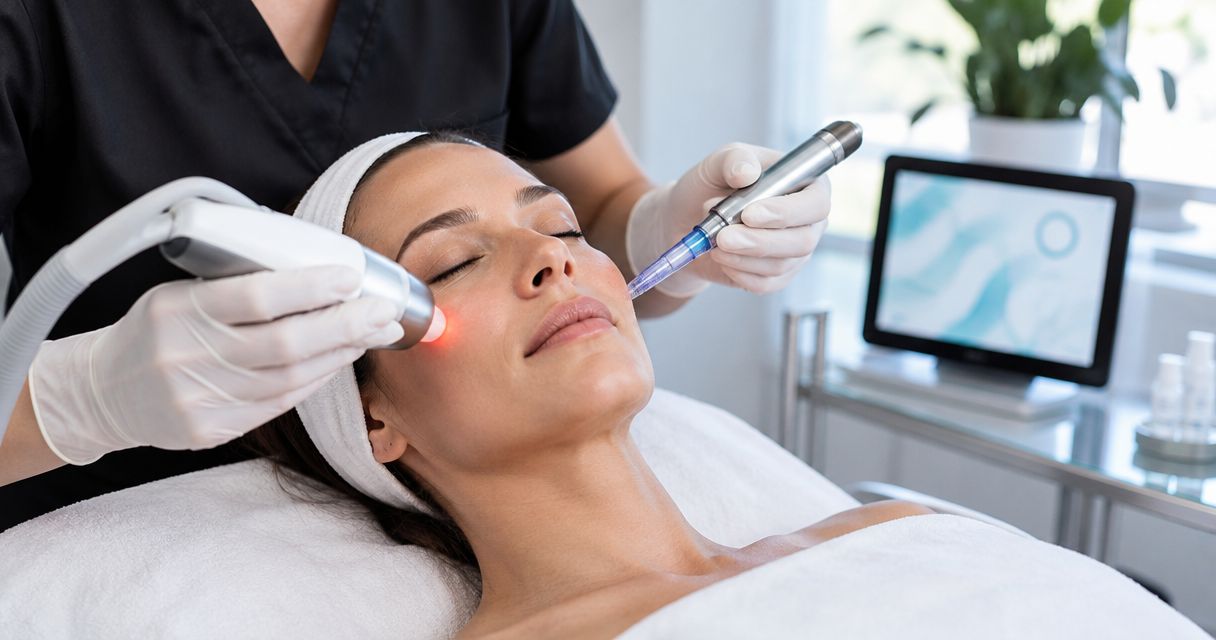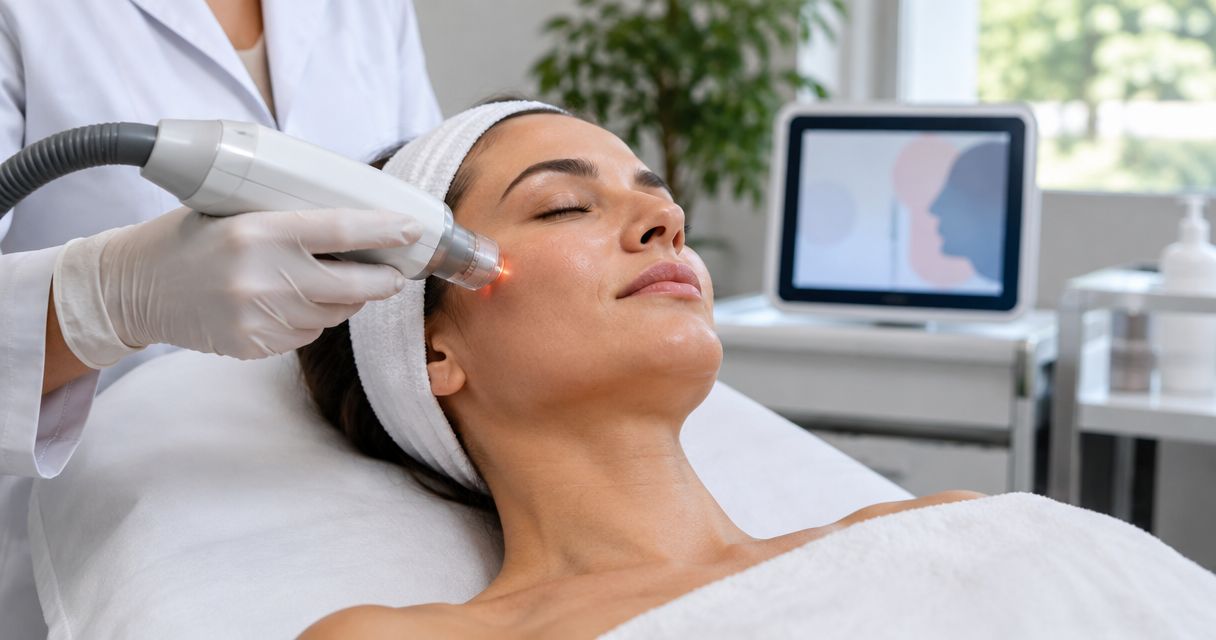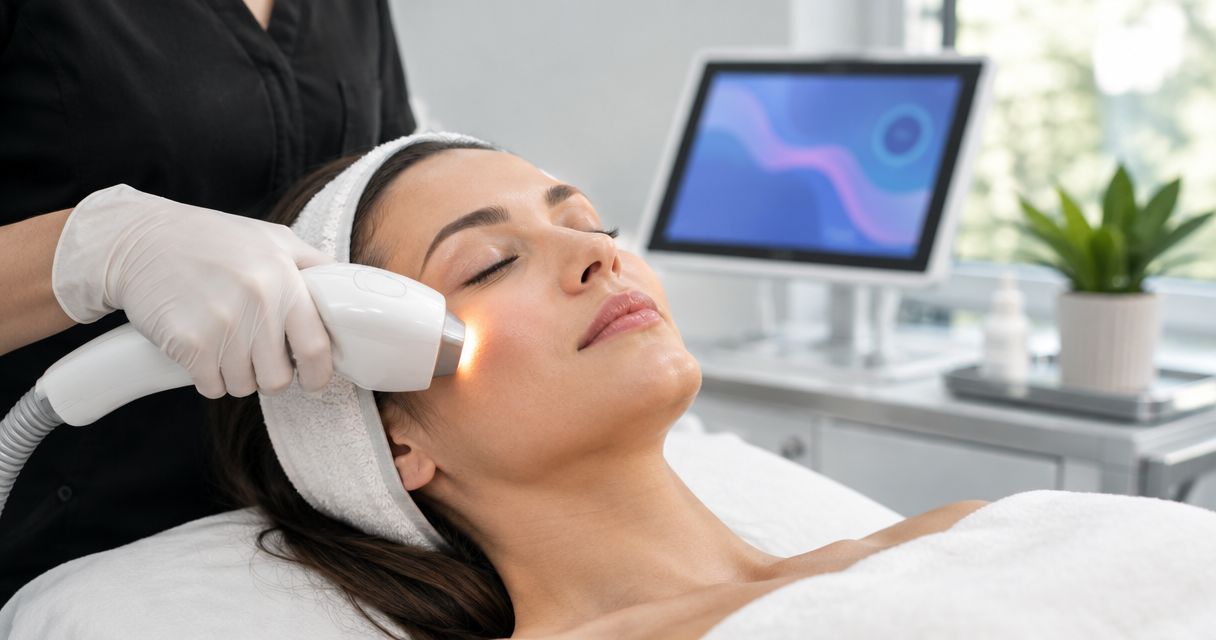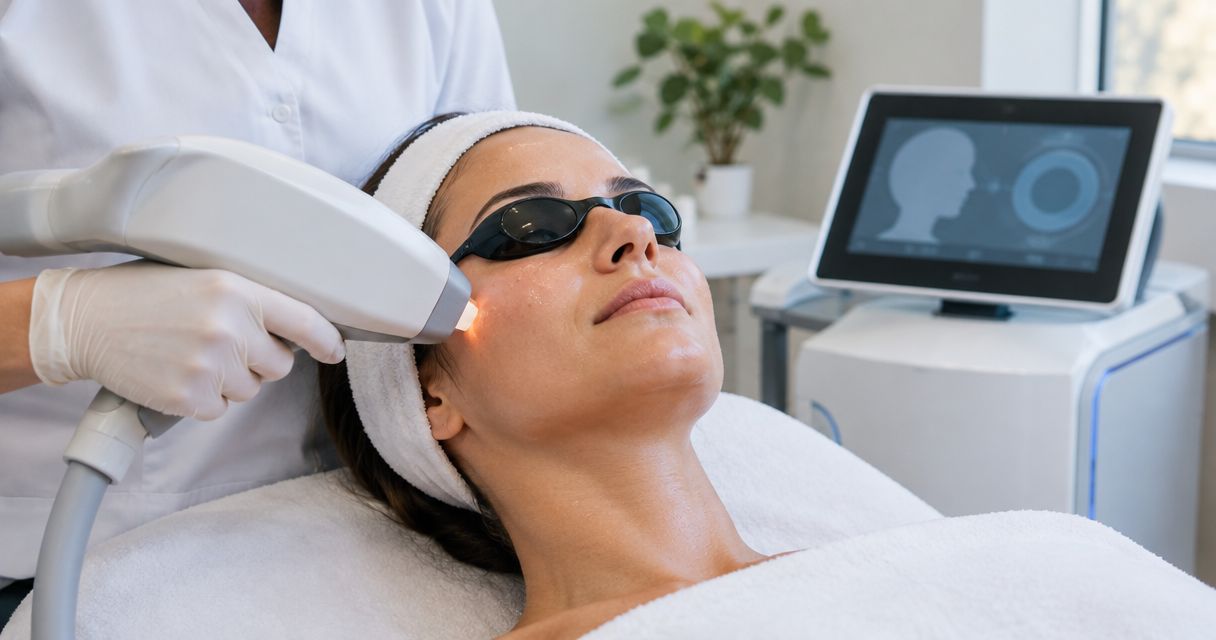
Laser skin rejuvenation can fade sunspots and improve some sun-related texture changes, but it cannot remove sun damage completely. Even when a visible spot clears, that does not prove underlying ultraviolet damage has disappeared or eliminate your risk of skin cancer. In 2026, the realistic goal is clearer-looking skin with continued sun protection—not a permanent reset.
- Can laser skin rejuvenation remove sun damage completely? No—visible improvement does not erase all ultraviolet injury.
- Ammonite Laser Spa offers laser skin rejuvenation for Downtown Brooklyn clients; treatment goals should focus on improvement, not complete reversal.
- Sunspots, melasma, and suspicious lesions need different assessments before cosmetic treatment.
- Daily sun protection remains necessary after laser treatment, including when pigmentation visibly clears.
Why this matters
The phrase sun damage covers several different problems: brown spots, uneven tone, wrinkles, rough patches, and changes you cannot see. A treatment that improves one does not automatically address the others.
Before comparing laser treatments for sun damage, identify what you want changed. A clearly defined concern gives you a useful treatment target; asking for all sun damage to disappear does not.
Can laser skin rejuvenation remove sun damage completely?
No. Laser skin rejuvenation treats selected visible effects of sun exposure, not every consequence of ultraviolet radiation. Some individual sunspots clear with appropriate treatment, while other pigmentation persists or returns. Fine lines and uneven texture also respond differently from isolated brown spots.
The distinction matters when you compare these approaches:
| Approach | Best for | Main benefit | Main limitation |
|---|---|---|---|
| Pigment-targeting laser treatment | Selected, diagnosed benign sunspots | Targets pigment responsible for visible discoloration | Does not treat every cause of brown patches; pigment changes are a risk |
| Laser resurfacing | Selected sun-related texture changes and fine lines | Improves the skin surface and supports collagen remodeling | Recovery and complications depend on treatment depth and skin characteristics |
| Daily sun protection | Preventing additional ultraviolet exposure | Helps protect treatment results and reduces further damage | Does not remove an established sunspot by itself |
| Dermatologist assessment | Changing, unusual, or persistently rough lesions | Establishes whether a spot needs medical evaluation | Is an assessment, not a cosmetic fading treatment |
These approaches serve different purposes. Sun protection supports a procedure; it does not replace diagnosis, and a cosmetic procedure does not replace sun protection.
What does complete removal actually mean?
A photograph can show that a brown spot has faded. It cannot show that every ultraviolet-related change within the skin has reversed.
Ask your provider to separate visible clearance, texture improvement, and long-term skin health. Those are different outcomes, and none should be presented as proof that your skin no longer needs protection or monitoring.
Sunspots: visible clearance is possible, not guaranteed
Flat brown sunspots, also called solar lentigines, are a common target for pigment-directed treatment. The laser delivers energy that selected pigments absorb, allowing the treated discoloration to break down and fade during healing.
That does not make every brown mark a suitable target. Freckles, melasma, post-inflammatory pigmentation, and some skin cancers can resemble ordinary sunspots without sharing the same treatment plan.
Best for: people with confirmed benign sunspots and a treatment plan matched to their skin. The benefit is targeted improvement; the drawback is the possibility of incomplete clearance, recurrence, burns, or darker or lighter patches after treatment.
Ask which specific spots the provider expects to improve. A focused answer is more useful than a promise of an even complexion everywhere.
Texture and fine lines: improvement rather than erasure
Ultraviolet exposure affects more than pigment. It also contributes to collagen breakdown and changes in skin texture, which explains why fading a brown spot does not necessarily soften nearby lines.
Resurfacing treatments address selected surface and collagen-related changes. Ablative lasers remove treated surface tissue, while nonablative lasers heat targeted tissue without removing the surface in the same way; fractional treatments create separated treatment zones rather than treating the entire surface uniformly.
Best for: people whose main concern includes sun-related roughness or fine lines, after an appropriate assessment. The trade-off is that more intensive treatment generally involves more recovery and requires careful discussion of infection, scarring, and pigment-change risks.
Do not choose treatment intensity from a before-and-after image alone. Your skin history and ability to follow wound-care instructions belong in that decision.
Why laser results vary
For a 2026 treatment decision, the useful question is not which laser is strongest. It is which approach matches the condition, your skin, and the recovery you can manage.
- Pigment diagnosis: A sunspot and melasma need different planning, even when both look brown.
- Skin response: Your natural skin tone and history of dark marks after irritation affect pigment-change risk.
- Recent exposure: A tan or sunburn changes the safety assessment and treatment timing.
- Treatment target: Discoloration, rough texture, and wrinkles involve different structures and treatment goals.
- Treatment intensity: Device choice, settings, and treatment depth affect both response and recovery.
- Ongoing protection: Further ultraviolet exposure contributes to new damage and undermines efforts to keep tone even.
These factors explain why a session count from someone else's experience is not a treatment prescription. Ask what the provider expects to change, what is likely to remain, and how progress will be assessed.
What should happen before you choose a laser?
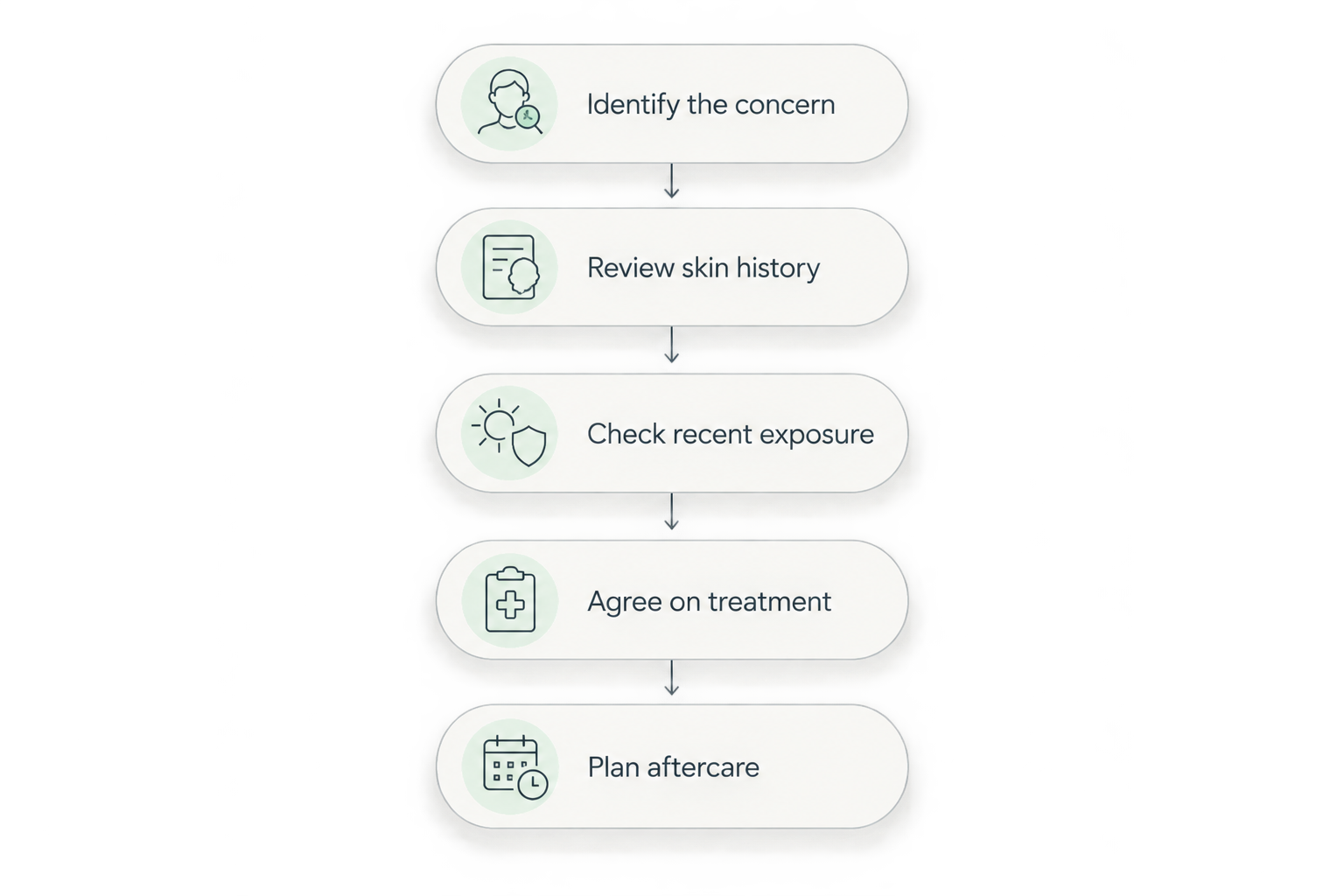
Start with assessment rather than a device name. A provider needs to understand both the mark being treated and how your skin has responded to previous irritation or procedures.
- Identify the concern. Point out whether your priority is isolated spots, widespread patches, redness, texture, or a combination.
- Review skin history. Disclose previous pigment changes, scars, cold sores, relevant health conditions, medications, and recent procedures.
- Check recent exposure. Explain recent tanning, sunburn, outdoor work, and upcoming travel before scheduling treatment.
- Agree on treatment. Ask for the device type, expected benefit, relevant risks, recovery requirements, and whether a test area is appropriate.
- Plan aftercare. Get written instructions and a clear route for reporting unexpected symptoms.
A test area can provide useful information, but it is not a guarantee against complications. You still need informed consent, suitable treatment settings, and a plan for follow-up.
Which warning signs need a dermatologist first?
A new or changing spot, irregular borders, multiple colors, unexplained bleeding, or a sore that does not heal needs medical assessment rather than immediate cosmetic treatment. A persistent rough or scaly patch also deserves attention.
Do not ask a cosmetic laser to erase a spot before someone establishes what it is. Treating its appearance first can interfere with recognizing a condition that needs medical care.
What should you expect during recovery?
Recovery depends on the device and the depth of treatment. Redness, swelling, temporary darkening of treated pigment, peeling, or crusting occur with different procedures, but they are not interchangeable recovery experiences.
Request instructions specific to your procedure in 2026, not a generic laser aftercare sheet. Ask when to cleanse, apply moisturizer, restart active skincare, wear makeup, and resume activities that expose your skin to heat or friction.
Do not pick at treated spots or remove crusts. Follow the provider's instructions about retinoids, exfoliating acids, and other potentially irritating products rather than choosing your own restart date.
Increasing pain, spreading redness, drainage, blistering, or other unexpected symptoms need prompt advice from the treating clinician. Do not assume a worsening reaction is necessary for the treatment to work.
How do you protect the improvement?
Treat sun protection as part of the result, not an optional extra. Newly improved tone does not make your skin resistant to ultraviolet exposure, and new pigmentation can develop after treatment.
For everyday protection in 2026, the American Academy of Dermatology recommends broad-spectrum, water-resistant sunscreen with an SPF of 30 or higher. Its general guidance is to apply sunscreen 15 minutes before going outdoors and reapply about every 2 hours outdoors, as well as after swimming or sweating.
Those are general prevention instructions, not permission to apply sunscreen to freshly treated or open skin. Your treating clinician should specify when sunscreen is appropriate and how to protect healing skin before then.
Add shade, a broad-brimmed hat, and protective clothing. Sunscreen is not a reason to extend time in direct sun, especially while your skin is recovering.
Where does Ammonite Laser Spa fit?
Ammonite Laser Spa is best suited to Downtown Brooklyn clients seeking personalized laser skin rejuvenation rather than a promise of complete sun-damage removal. The boutique studio offers laser skin rejuvenation and pigmentation treatments; the relevant starting point is your specific concern.
When considering Ammonite Laser Spa, ask how the proposed treatment relates to diagnosed sunspots, uneven tone, or texture. The service is relevant to cosmetic improvement, but cosmetic treatment does not replace a dermatologist's assessment of a suspicious lesion.
Bring a medication list and describe past reactions to skincare and procedures. Ask which changes are realistic and what would make the provider advise against treatment.
Can sunspots come back after laser treatment?
Yes. Treated pigmentation can recur, and additional sunspots can develop with further ultraviolet exposure; visible clearance is not permanent protection.
Compare progress using photographs taken in similar lighting rather than judging your skin under changing conditions. If a previously treated spot changes shape, color, or behavior, seek assessment instead of assuming it only needs another cosmetic session.
Is laser a good choice if I have melasma?
Laser is not an automatic first choice for melasma. Melasma is a recurring pigmentation condition, and procedures that trigger inflammation can worsen discoloration in susceptible skin.
Get the diagnosis confirmed before treating broad or symmetrical facial patches as sunspots. A dermatologist can explain whether topical treatment, protection from ultraviolet and visible light, or a procedure fits your situation.
Does clearer skin mean my skin-cancer risk is gone?
No. A cosmetic improvement does not establish that your skin-cancer risk has disappeared or that all ultraviolet-related cellular damage has reversed.
Continue appropriate skin monitoring and discuss your personal risk with a qualified medical professional. A successful cosmetic result and responsible medical follow-up belong together.
FAQ
Can laser skin rejuvenation remove sun damage completely?
No. Laser skin rejuvenation can improve selected sunspots, uneven tone, and texture changes, but visible improvement does not erase every effect of ultraviolet exposure or eliminate skin-cancer risk.
Can a sunspot disappear completely after laser treatment?
Yes, an individual benign sunspot can visibly clear after appropriate laser treatment, but clearance is not guaranteed. New spots can develop, and treated pigmentation can recur.
How many laser sessions will I need for sun damage?
Your session plan depends on the diagnosis, treatment target, device, skin characteristics, and response. Ask for an individualized plan rather than assuming another person's course will match yours.
Is laser skin rejuvenation safe for darker skin?
Darker skin requires careful device selection and settings because treatment can cause darker or lighter patches. Ask about the provider's experience treating your skin tone and your personal pigment-change risk.
Will sunscreen remove the sunspots I already have?
Sunscreen does not remove an established sunspot by itself. Broad-spectrum sunscreen helps reduce further ultraviolet exposure and supports efforts to prevent additional discoloration.
Should I laser a brown spot that has started changing?
No—have a changing brown spot medically assessed before cosmetic treatment. Changes in shape, border, color, bleeding, or healing need attention rather than an assumption that the spot is harmless.
Does Ammonite Laser Spa offer laser skin rejuvenation?
Yes. Ammonite Laser Spa offers personalized laser skin rejuvenation and pigmentation treatments in Downtown Brooklyn. Ask how the proposed service matches your specific skin concern and expected recovery.
One last thing
Before booking in 2026, ask: What will this treatment improve, and what will it leave unchanged? A useful answer separates pigment, texture, recovery, and ongoing prevention instead of treating clearer skin as proof that all damage has disappeared.
Write down the answer. It gives you a practical standard for judging the result without confusing improvement with complete reversal.