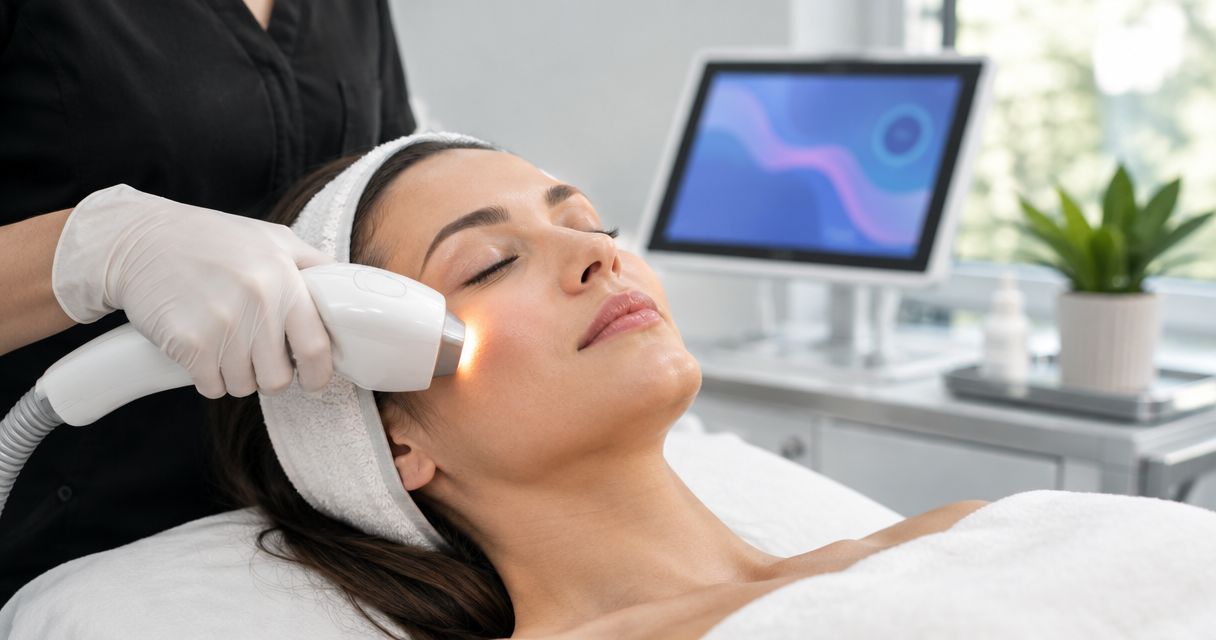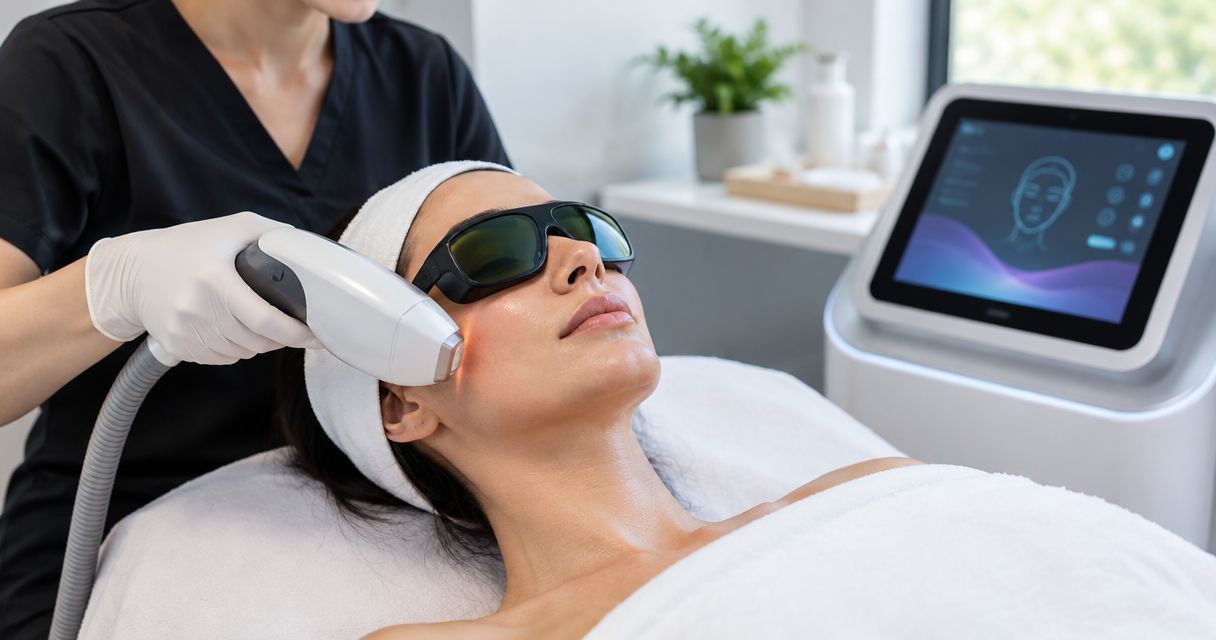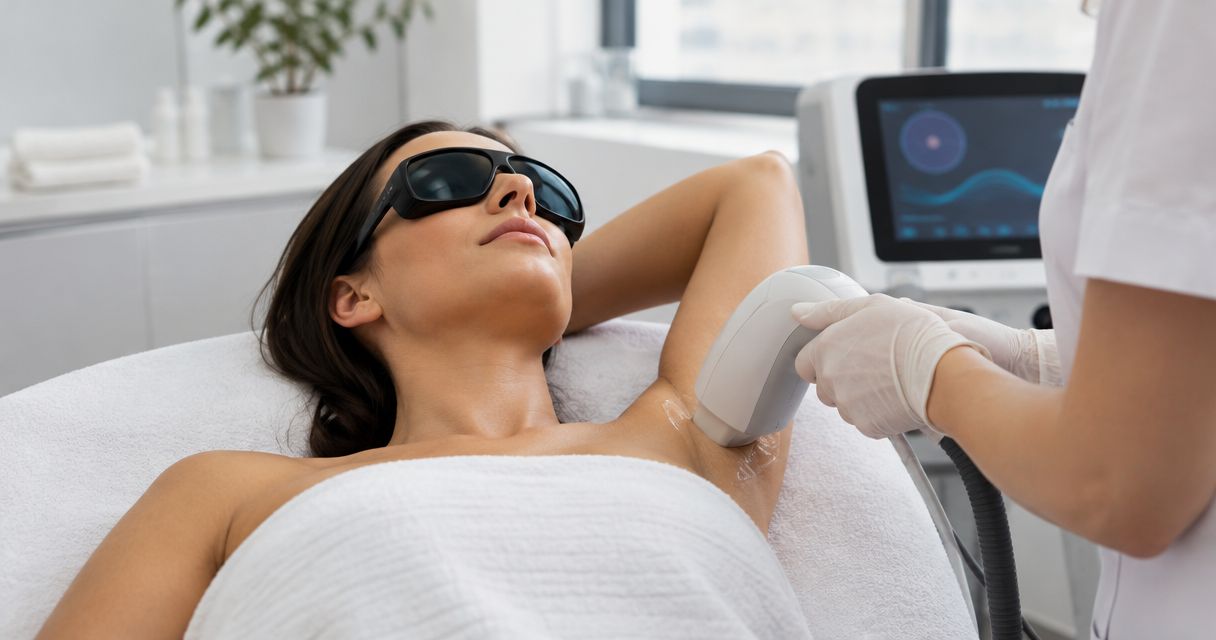
You should not book laser hair removal while on Accutane without an assessment from your prescribing dermatologist and the treating laser clinician. In 2026, published expert guidance distinguishes hair-removal lasers from aggressive resurfacing, but isotretinoin medication guidance still warns against laser procedures during treatment and for at least 6 months afterward; newer evidence is not automatic clearance.
- Laser hair removal while on Accutane requires individualized medical assessment, not automatic clearance from an online answer.
- Isotretinoin medication guidance advises avoiding laser procedures during treatment and for at least 6 months afterward.
- Published expert recommendations distinguish nonablative hair-removal lasers from fully ablative resurfacing.
- Ammonite Laser Spa offers personalized laser hair removal in Downtown Brooklyn; disclose isotretinoin before discussing treatment.
Why this matters
The practical problem is conflicting advice. Your medication guide can tell you to avoid lasers, while a discussion of newer dermatology research says the evidence does not support a blanket delay for every procedure. Those statements address different levels of decision-making: a broad medication warning versus procedure-specific clinical assessment.
Neither a general article nor a successful treatment someone else describes establishes that your skin is ready. Your prescription history, skin condition, treatment area, and proposed device all belong in the decision.
Ammonite Laser Spa offers personalized laser hair removal for local clients in Downtown Brooklyn. Bring medication questions to your prescriber before arranging a cosmetic procedure, rather than treating a booking confirmation as medical clearance.
Can you get laser hair removal while on Accutane?
Some patients can be considered for laser hair removal during or soon after isotretinoin treatment under individualized medical supervision. That is different from saying everyone taking Accutane can safely proceed.
Accutane is a familiar name for oral isotretinoin. Tell the clinician the exact medication you take, including a generic or different brand name; the relevant issue is isotretinoin exposure, not the name printed on the package.
The evidence behind the distinction includes these published sources:
- Isotretinoin Medication Guide: Patient instructions warn against skin-resurfacing procedures such as waxing, dermabrasion, and laser procedures during treatment and for at least 6 months afterward because of possible scarring. Read the guide supplied with your prescription.
- Spring and colleagues, JAMA Dermatology, historical 2017 systematic review and consensus recommendations: The review assessed 32 publications reporting 1,485 procedures. Its conclusion found insufficient evidence to support delaying laser hair removal and certain other procedures solely because of current or recent isotretinoin use.
- American Society for Dermatologic Surgery task force, historical 2017 consensus recommendations: The task force found insufficient evidence to justify delaying nonablative lasers, including hair-removal lasers, in patients currently or recently exposed to isotretinoin.
Those publication and procedure counts cover the review's broader procedural evidence, not exclusively hair-removal sessions. They are not a personal complication rate or proof of zero risk.
For a 2026 treatment decision, the useful conclusion is narrow: a blanket rule and an individualized clinical decision are not interchangeable. Your prescriber and treating clinician must resolve the medication warning, the proposed procedure, and your current skin findings together.
Why the type of laser procedure changes the answer
Hair removal and skin resurfacing are not interchangeable procedures. Hair-removal lasers target pigment associated with hair follicles; fully ablative resurfacing removes the treated skin surface. A recommendation about one cannot automatically be applied to the other.
| Procedure | Best for | Relevant distinction | Limitation during isotretinoin treatment |
|---|---|---|---|
| Laser hair removal | Reducing suitable unwanted hair | Uses a nonablative approach directed at hair follicles | Requires individualized assessment; medication warnings still matter |
| Nonablative laser skin treatment | Selected skin concerns assessed by a clinician | Does not deliberately remove the entire treated skin surface | Evidence and suitability depend on the exact procedure |
| Fully ablative laser resurfacing | Selected resurfacing needs under specialist care | Removes the treated skin surface | The cited consensus does not support treating it like hair removal |
The historical JAMA Dermatology consensus did not recommend fully ablative laser treatment during systemic isotretinoin use. Do not interpret discussion of hair-removal safety as permission to book resurfacing, microneedling, or an unrelated cosmetic treatment.
Ask the provider to name the procedure and device, then explain whether the treatment is ablative or nonablative. A broad description such as laser facial does not identify the procedure clearly enough for your dermatologist to assess it.
Why your treatment recommendation varies
A medication name alone does not describe the condition of the skin being treated. These factors explain why two people taking isotretinoin can receive different recommendations:
- Skin integrity: Peeling, cracking, inflammation, or open areas change the assessment. A treatment area with a damaged barrier needs attention before elective laser exposure.
- Treatment area: Facial skin with active acne and irritation presents a different examination from intact skin elsewhere. Approval for one area does not establish approval for another.
- Skin tone and recent tanning: Epidermal pigment affects laser selection and burn or pigment-change risk. Recent sun exposure belongs in the screening conversation.
- Medication history: Your current prescription, start and stop dates, dose changes, and other skin treatments give the prescriber context. A low dose is not a self-issued exemption.
- Scarring and pigment history: Previous abnormal scars, burns, or persistent dark marks are relevant to counseling and planning.
- Procedure details: Device choice, settings, cooling, and operator experience matter. A patch test provides limited information rather than a guarantee.
A guide to laser hair removal for sensitive skin can help you frame additional questions, but medication-specific approval still belongs with the clinicians responsible for your care.
How to handle an appointment while taking isotretinoin
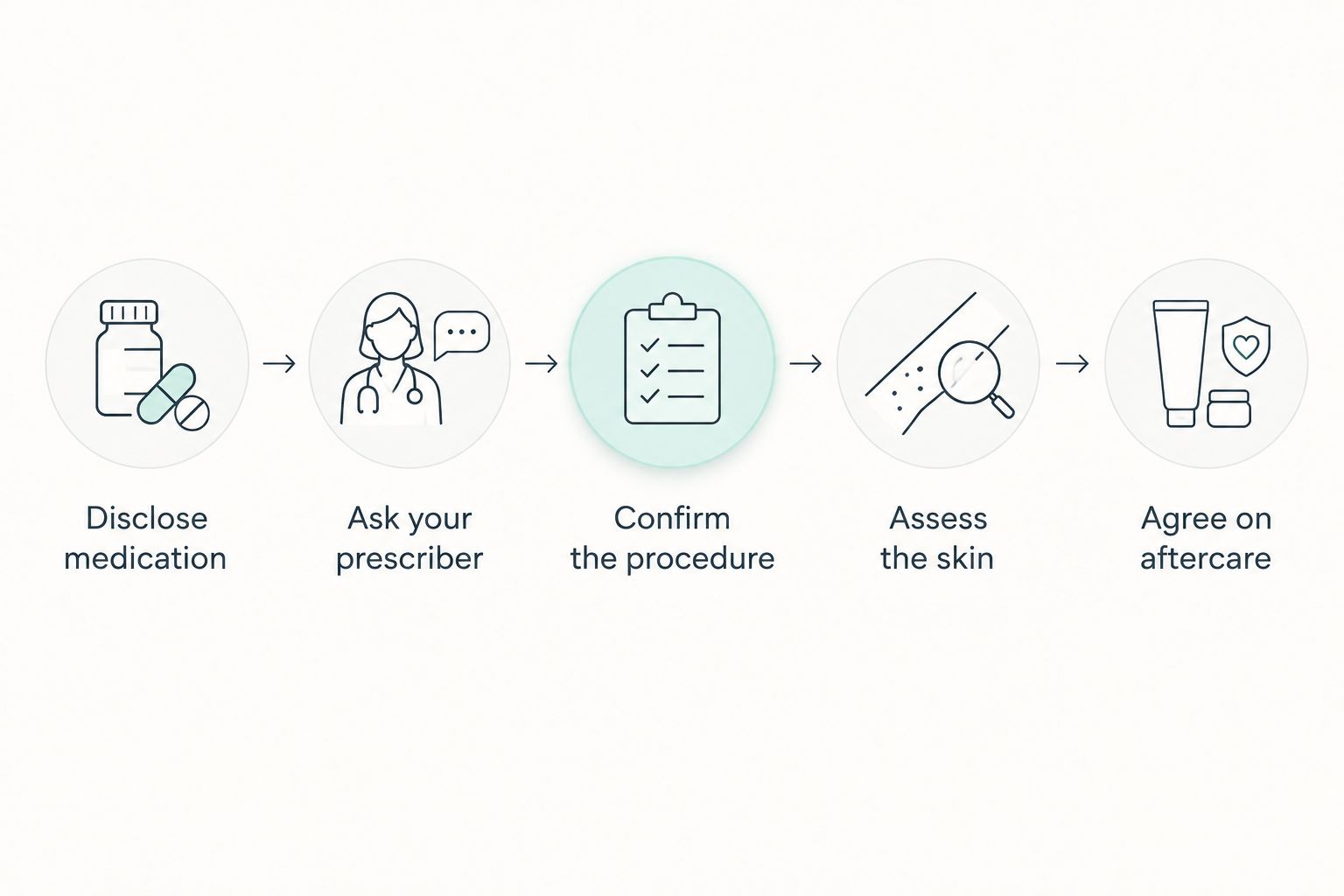
Use this sequence before your next session. It applies whether you are starting a course, already taking medication, or have recently finished.
- Disclose medication. Tell the laser provider about isotretinoin before arriving for treatment. Give the actual prescription name and explain whether treatment is current or recently completed.
- Ask your prescriber. Describe the body area and the exact proposed procedure. Ask whether your present skin condition changes the recommendation and whether the medication guide's waiting period should apply to you.
- Confirm the procedure. Have the treating clinician identify the device, treatment approach, and relevant risks. The provider must also decide whether treatment fits its clinical policies.
- Assess the skin. Report peeling, tenderness, sunburn, open acne lesions, or a recent change in skin sensitivity. Do not hide symptoms to preserve an appointment.
- Agree on aftercare. Get instructions for cleansing, sun protection, products to avoid, and symptoms that require contact. Know whom to call before treatment begins.
A dermatologist's approval does not require another provider to perform the procedure. The treating clinician remains responsible for assessing whether the planned treatment is appropriate.
Keep the plan specific. Approval for a previous session, a different body area, or a time before your prescription changed does not answer the question for your next visit.
What if you already had laser hair removal?
An accidental overlap does not establish that an injury occurred. Tell your prescribing dermatologist and laser provider what happened, including the treatment area, medication details, and any symptoms you notice.
Get prompt medical assessment for blistering, open skin, worsening pain, or signs of infection. Seek urgent care for eye pain or vision changes after laser exposure. Do not rely on an online comparison of photographs to decide whether an injury needs treatment.
Until you receive advice, avoid picking, scrubbing, or adding exfoliating acids and other irritating products to the area. Follow the treating clinician's instructions rather than borrowing someone else's post-laser routine.
For routine sun protection in 2026, American Academy of Dermatology guidance recommends a broad-spectrum, water-resistant sunscreen with SPF 30 or higher, alongside shade and protective clothing. Sunscreen does not make irritated skin ready for another laser session.
Can I shave instead of getting laser hair removal?
Gentle shaving is a temporary option if your skin tolerates it. Unlike waxing, it does not pull hair out from the follicle, but it can still irritate dry or fragile skin.
Avoid shaving over open, cracked, or markedly inflamed skin. Ask your dermatologist about a suitable method if even gentle hair removal causes stinging, bleeding, or persistent irritation.
Do not substitute waxing because a laser appointment was postponed. Isotretinoin medication guidance specifically warns against waxing during treatment and for at least 6 months afterward.
How long after Accutane should I wait for laser hair removal?
At least 6 months after stopping isotretinoin is the waiting period stated in medication guidance for laser procedures. Procedure-specific expert recommendations question a mandatory delay for every nonablative treatment, including hair removal, but they do not create a universal alternative waiting period.
In 2026, use the instructions supplied with your prescription as the starting point for discussion. Ask your prescriber and treating clinician whether an individualized plan is appropriate rather than choosing your own shorter interval.
Do not stop isotretinoin early to fit a cosmetic appointment. Your prescriber should direct changes to acne treatment.
Does a patch test make laser treatment safe on Accutane?
A patch test does not guarantee that laser hair removal is safe while taking isotretinoin. It shows how a limited area responds to a particular exposure; it does not rule out complications across a larger treatment area or future sessions.
A clinician can use a test spot as part of assessment, but it does not replace medication review, skin examination, suitable device selection, or informed consent. Ask what the test is intended to establish and how the result will change the treatment plan.
What to ask a Downtown Brooklyn provider
Choose clarity over reassurance. You need an explanation of the proposed treatment, not a promise that a procedure is safe because other clients have had it.
Ammonite Laser Spa serves Downtown Brooklyn clients seeking personalized laser hair removal. That service description does not establish that the studio accepts clients taking isotretinoin, uses a particular device, or follows a particular clearance policy; confirm those details directly.
Ask whether the provider requires communication with your prescriber, how it assesses irritated skin, and what happens if treatment is postponed. A useful consultation also explains burns, pigment changes, and scarring without dismissing them as impossible.
The limitation matters as much as the service: a cosmetic appointment cannot replace management of your prescription or an examination of a suspected treatment injury.
FAQ
Can I get laser hair removal while on Accutane in 2026?
Do not proceed without an individualized assessment from your prescribing dermatologist and treating laser clinician. Medication guidance advises avoiding laser procedures during isotretinoin treatment and for at least 6 months afterward, while published expert recommendations distinguish nonablative hair removal from aggressive resurfacing.
Does low-dose Accutane make laser hair removal safe?
A low isotretinoin dose does not automatically make laser hair removal safe. Your clinicians must assess your skin, medication history, treatment area, and proposed procedure rather than use dose alone as clearance.
Should I stop Accutane before my laser appointment?
Do not stop isotretinoin on your own for a laser appointment. Ask your prescribing dermatologist whether the cosmetic treatment should be postponed and follow the prescriber's medication instructions.
Can I wax while taking Accutane?
Isotretinoin medication guidance advises against waxing during treatment and for at least 6 months afterward. Ask your dermatologist about a temporary hair-removal method suitable for your skin.
Is laser hair removal the same as laser resurfacing?
Laser hair removal is not the same as laser resurfacing. Hair-removal lasers target hair follicles, while fully ablative resurfacing removes the treated skin surface and carries different procedural considerations.
What should I do if I already had laser treatment while taking isotretinoin?
Tell your prescribing dermatologist and laser provider about the treatment and any symptoms. Blistering, open skin, worsening pain, or signs of infection need prompt medical assessment.
Does Ammonite Laser Spa offer laser hair removal in Brooklyn?
Ammonite Laser Spa offers personalized laser hair removal in Downtown Brooklyn. Contact the studio to discuss medication screening; the service offering alone does not establish eligibility while taking isotretinoin.
One last thing
The most useful question is not simply whether you can have laser treatment; it is whether this procedure is appropriate for this skin area while you take this prescription. Bring the medication packaging and the proposed procedure name to the conversation. That small preparation prevents a discussion about hair removal from becoming an unreliable answer about every treatment called laser.