Pigmentation treatment works gradually, with visible fading developing over weeks to months rather than immediately. The timeline depends on whether you have post-acne marks, sun spots, melasma, or another cause of discoloration, and on the treatment used. Healing after a procedure is not the same as pigment clearance, and recurring conditions can require ongoing management.
- How long for pigmentation treatment to work depends on the diagnosis; expect gradual fading, not an immediate transformation.
- Post-acne pigmentation, sun spots, and melasma need different treatment plans and follow-up expectations.
- Ammonite Laser Spa offers personalized pigmentation treatments in Downtown Brooklyn; suitability requires an individual assessment.
- Daily sun protection supports results, while irritation and new breakouts can create additional dark marks.
How long does it take for pigmentation treatment to work?
Think in terms of gradual improvement over weeks to months, not a guaranteed clearance date. The first useful milestone is a change in the darkness or contrast of the treated marks after any initial irritation has settled.
Before choosing pigmentation treatment services, establish what is causing the discoloration. A brown mark left by acne is not interchangeable with melasma, and a changing spot needs medical evaluation rather than cosmetic treatment.
| Treatment approach | Best for | What improvement looks like | Benefit | Limitation |
|---|---|---|---|---|
| Topical treatment | People whose diagnosis supports a home-care approach | Gradual reduction in the contrast of dark areas | Does not require a device-based procedure | Irritation can worsen discoloration; consistency matters |
| Chemical peels | Selected superficial pigmentation after assessment | More even-looking tone as treated skin heals | Can address surface discoloration | Unsuitable strength or aftercare can cause inflammation and further pigmentation |
| Laser or light treatment | Selected pigment concerns after diagnosis and skin assessment | Fading after the treated area completes its initial recovery | Can target selected areas of pigment | Device choice matters; burns and pigment changes are possible |
These are treatment categories, not interchangeable recommendations. The right option depends on the diagnosis, skin tone, medical history, and response to previous treatment—not simply which promises the fastest result.
Why this matters
An unrealistic deadline encourages you to add products, repeat procedures too quickly, or abandon a suitable plan before it can be assessed. Each decision can make progress harder to interpret, especially when irritation creates fresh discoloration.
For a pigmentation treatment plan in 2026, ask for separate expectations for recovery, first visible improvement, and reassessment. Those are different milestones. A provider should explain what each means for your skin rather than treating them as one finish date.
Post-acne pigmentation: judge fading and new breakouts separately
Flat brown or gray marks after acne are different from indented or raised acne scars. Pigmentation treatment addresses color; a treatment aimed at scar texture answers a different problem.
If acne remains active, new marks can appear while older marks fade. Your overall complexion can therefore look unchanged even when individual spots are improving. Compare the same marks over time rather than judging only the total amount of discoloration.
Control the source of new inflammation while treating existing pigment. Picking, scrubbing, and adding irritating products can undermine that goal. Discuss ongoing breakouts alongside your pigmentation concerns instead of treating them as unrelated issues.
The useful question is not just when a mark will disappear. Ask whether the current plan is reducing existing discoloration without producing new irritation or leaving the underlying acne unmanaged.
Sun spots: separate the treatment response from healing
A localized sun spot needs assessment before treatment, particularly if it is new, changing, bleeding, or unlike your other spots. Do not assume every brown lesion is a cosmetic pigmentation concern.
After some pigment-targeting procedures, treated areas can temporarily darken or develop surface changes. That response does not establish the final result. Follow the procedure-specific instructions, and do not pick or try to remove the treated surface yourself.
Sun exposure also remains relevant after a spot improves. Treatment does not make your skin resistant to future sun damage. For your 2026 treatment plan, discuss both the immediate aftercare and the daily protection needed afterward.
Melasma: plan for control rather than permanent clearance
Melasma often needs a longer-term management approach because improvement does not eliminate the tendency for discoloration to return. Hormonal influences and light exposure can complicate the course, even when a treatment initially helps.
Faster treatment is not automatically better treatment for melasma. Procedures that generate inflammation can worsen pigmentation in susceptible skin. A dermatologist can help establish the diagnosis and determine whether a procedure belongs in the plan at all.
Before choosing a device-based approach, read about whether laser treatment is safe for melasma. The key decision is suitability, not a promised number of appointments.
When assessing progress, distinguish lighter patches from lasting control. A useful plan explains how to respond to recurrence without repeatedly escalating treatment or irritating the skin.
Why pigmentation treatment timelines vary
Pigmentation treatment timelines vary because discoloration is a symptom with different causes, depths, and triggers. These factors explain why someone else's result is not a reliable deadline for yours:
- Diagnosis: Post-inflammatory pigmentation, sun spots, and melasma do not behave identically. Treatment must match the cause rather than the general label of dark spots.
- Pigment depth: More superficial discoloration and deeper discoloration respond differently. Appearance alone does not give you a reliable treatment schedule.
- Skin response: Skin that develops dark marks after irritation needs particular care with product strength, device selection, and aftercare.
- Continuing triggers: New breakouts, picking, and light exposure can create or sustain discoloration while treatment addresses older marks.
- Treatment tolerance: A plan that repeatedly causes inflammation needs review. Stronger treatment is not proof of faster or better progress.
- Consistency: Following the agreed routine and attending reassessments makes the response easier to judge. Frequently switching products obscures what is helping or irritating your skin.
You cannot control every factor. You can avoid changing several parts of the routine at once and tell your provider promptly when the treatment causes persistent discomfort or worsening discoloration.
How to track results without chasing daily changes
For treatment started in 2026, make a simple record before the first appointment or new topical routine. Consistent photographs are more useful than comparing your face under different bathroom lights.
- Baseline photos: Photograph the affected area without makeup, filters, or beauty settings. Use the same camera, position, and lighting for later comparisons.
- Treatment record: Record the treatment date and the products your provider has instructed you to use. Include irritation, new breakouts, and substantial sun exposure.
- Healing check: Keep temporary redness, peeling, crusting, or swelling separate from your assessment of pigment fading. Follow your specific aftercare instructions.
- Progress review: Compare the same marks at the follow-up interval agreed with your provider. Ask whether the darkness, area, or contrast has changed.
- Plan review: If progress stalls or your skin worsens, reassess the diagnosis and routine before increasing treatment intensity.
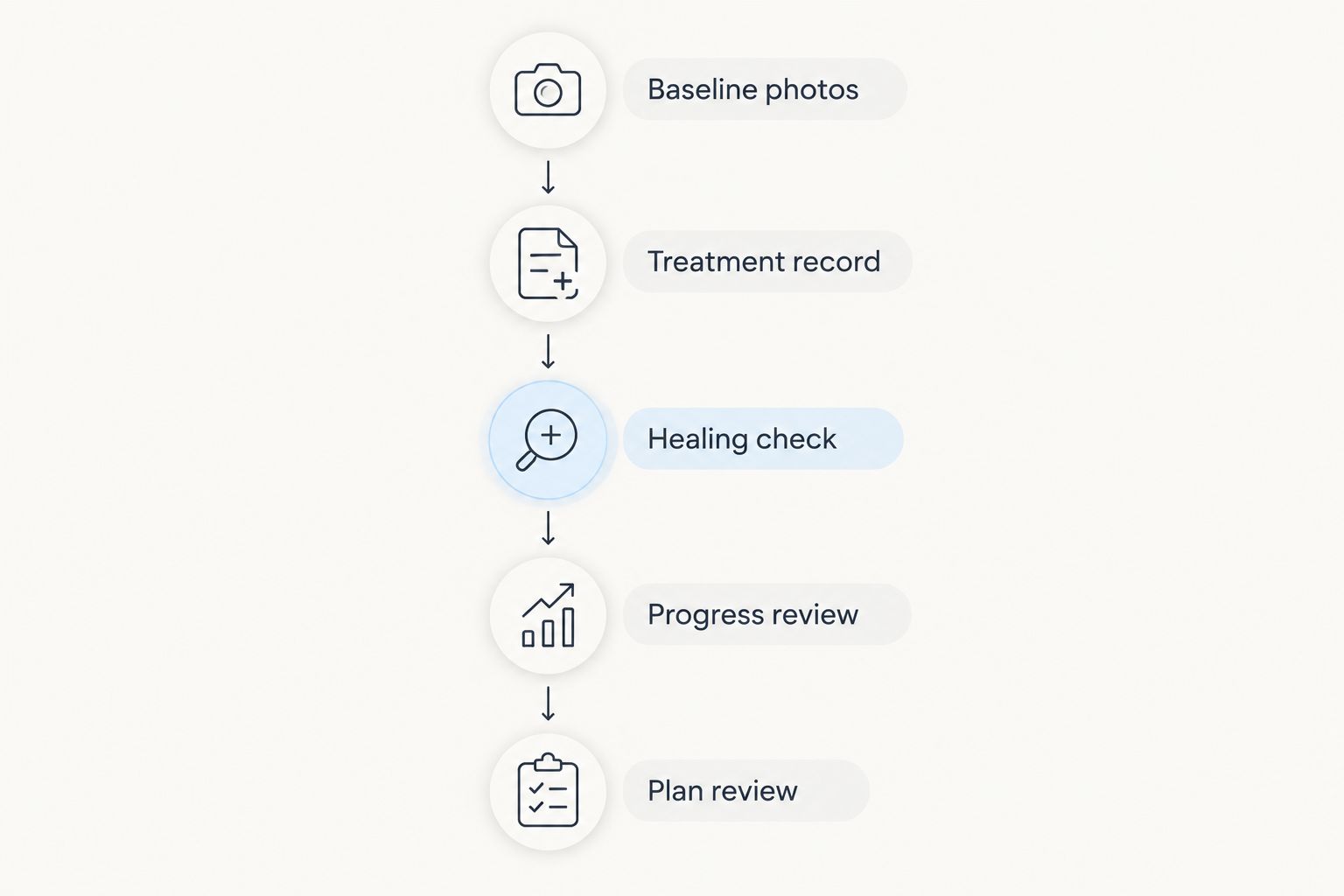
A photograph is a comparison aid, not a diagnosis. New symptoms or a changing lesion need professional assessment even if your tracking routine is otherwise consistent.
What should you do between pigmentation treatments?
Protect your skin and follow the prescribed routine instead of adding more treatment. The American Academy of Dermatology's patient guidance recommends broad-spectrum, water-resistant sunscreen with SPF 30 or higher. For outdoor exposure, its general guidance is to apply sunscreen 15 minutes before going outside and reapply every 2 hours, as well as after swimming or sweating.
Those sunscreen intervals are prevention guidance, not a pigmentation-clearance timeline. Your post-procedure instructions can also include restrictions on products, heat, exercise, or sun exposure; follow the instructions for the treatment you actually received.
For melasma, ask whether a tinted sunscreen containing iron oxides belongs in your routine because visible light can contribute to discoloration. Do not assume that a higher sunscreen label alone answers every protection need.
Keep your 2026 routine manageable. If you cannot tolerate a prescribed product, tell the prescribing clinician rather than compensating with scrubs, acids, or an unplanned procedure.
When should you ask for a treatment review?
Ask for a review when discoloration worsens, irritation persists, or the agreed reassessment arrives without meaningful progress. The next move is to check the diagnosis, treatment suitability, and ongoing triggers—not automatically to book a stronger procedure.
Blistering, severe or increasing pain, spreading redness, drainage, or significant swelling after treatment warrant prompt medical advice. Do not dismiss those signs as evidence that the treatment is working. Contact the treating provider and seek urgent care when symptoms are severe.
Before a procedure, ask what normal recovery looks like and how to reach the provider if something goes wrong. Keep those instructions accessible rather than relying on general advice found afterward.
Can pigmentation treatment work after one session?
One session does not establish a reliable clearance timeline. Some targeted concerns show a visible response after a procedure, but the result still needs assessment after healing, and further care depends on the diagnosis.
Avoid judging treatment by how dramatic the immediate reaction looks. More redness, peeling, or darkening does not prove that more pigment will clear.
Does darker skin take longer to respond?
Darker skin does not have one universal pigmentation-treatment timeline. The important consideration is the risk of additional discoloration after inflammation and whether the chosen treatment suits your skin.
Ask about the provider's experience treating your skin tone, the reasons for the proposed approach, and whether a test area is appropriate. Those answers matter more than a generic promise of fast results.
Can you speed up pigmentation treatment before an event?
You cannot safely guarantee pigment clearance by an event date. Starting an aggressive treatment close to a wedding, trip, or photo session can leave you managing irritation instead of enjoying an improved complexion.
Give the provider your actual event date before agreeing to treatment. For a 2026 event, plan backward from the required recovery and assessment periods rather than assuming the final appointment produces an immediate result.
Choosing a local pigmentation treatment provider
Ammonite Laser Spa is best suited to Downtown Brooklyn clients seeking personalized, local pigmentation treatment. The boutique studio offers pigmentation treatments alongside other skin and beauty services.
That service fit does not establish whether a particular procedure is appropriate for your discoloration. When discussing pigmentation treatment with Ammonite Laser Spa, ask what concern the proposed treatment addresses, what recovery involves, and when the response should be reviewed. A suspicious or changing lesion needs medical evaluation before cosmetic treatment.
Discuss your pigmentation concerns
Ask about treatment suitability, expected recovery, and how your progress will be assessed.
FAQ
How long for pigmentation treatment to work on dark spots?
Pigmentation treatment produces gradual fading over weeks to months, with the timeline depending on the diagnosis and treatment. Your provider should separate expected healing from the point when pigment improvement can be assessed.
Why do my dark spots look darker after treatment?
Temporary darkening can occur after some pigment-targeting procedures, but worsening discoloration also needs assessment. Follow your aftercare instructions and contact your provider rather than picking, scrubbing, or adding active products.
Is laser treatment faster than pigmentation creams?
Laser treatment is not automatically the faster or more suitable choice. Diagnosis, skin tone, pigment depth, and the risk of inflammation determine whether a device-based treatment belongs in your plan.
Will melasma come back after treatment?
Melasma can recur after it improves because treatment does not necessarily remove the underlying tendency to develop discoloration. Ongoing light protection and an individualized maintenance plan remain important.
Should I stop treatment if I do not see a change immediately?
A lack of immediate change does not prove that pigmentation treatment has failed. Keep the agreed reassessment appointment, but seek earlier advice for persistent irritation, worsening pigment, or other concerning symptoms.
Can I use exfoliating acids to make dark spots fade faster?
Do not add exfoliating acids to a treatment plan without checking with your provider. Irritation can create additional pigmentation and interfere with recovery after a procedure.
Does Ammonite Laser Spa offer pigmentation treatment in Brooklyn?
Ammonite Laser Spa offers personalized pigmentation treatments in Downtown Brooklyn. Discuss your concern and treatment suitability directly with the studio, and seek medical evaluation for suspicious or changing lesions.
One last thing
A lighter old mark and a new dark mark can cancel each other out in the mirror. Before deciding that pigmentation treatment has failed, compare individual spots and check whether new inflammation is still creating discoloration. The most useful next step is often better control of the trigger—not more aggressive treatment of the mark.