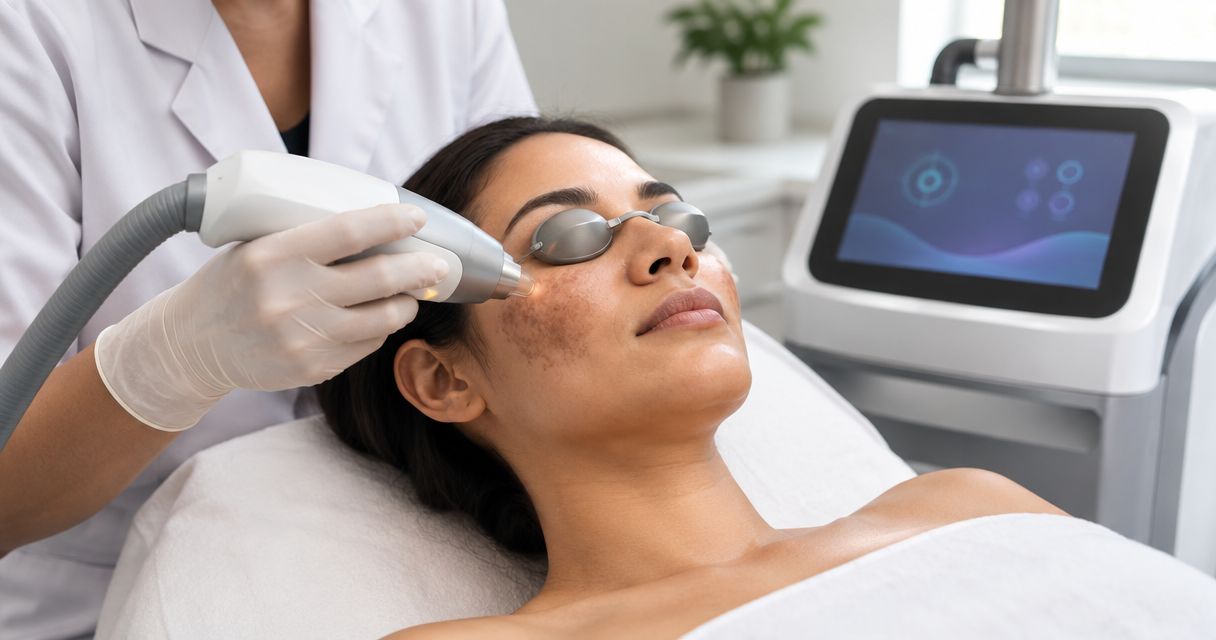
Laser treatment can be appropriate for selected people with melasma, but it is not a risk-free first choice: treatment can cause darker patches, lighter spots, burns, or a melasma flare. A dermatologist should confirm the diagnosis, assess your skin and treatment history, and explain why a particular device is appropriate; pigment improvement does not eliminate the need for ongoing sun protection and maintenance.
- Is laser treatment safe for melasma? Only selectively; rebound pigmentation and recurrence remain important risks.
- The American Academy of Dermatology places sun protection and prescription treatment at the center of melasma care.
- Darker skin needs individualized assessment, not a blanket promise that a particular laser is safe.
- Ammonite Laser Spa offers personalized skin services; obtain a dermatologist-led melasma assessment before choosing laser treatment.
Why this matters
A treatment that fades a sunspot is not automatically suitable for melasma. Melasma is a chronic pigment condition, and irritation from treatment can create additional discoloration rather than resolve the original patches.
For your 2026 treatment plan, the useful question is not simply whether a laser removes pigment. Ask whether the expected improvement justifies the risk for your skin, and what happens if the pigmentation returns. The guide to pigmentation treatments for melasma provides context for discussing options rather than choosing a device first.
Is laser treatment safe for melasma?
Laser treatment is an option for selected melasma patients, not a universal first-line treatment. The American Academy of Dermatology's patient guidance, Melasma: Diagnosis and treatment, describes sun protection and medications as central treatments, with procedures used selectively. DermNet's Melasma guidance also discusses recurrence and the risk of pigmentation problems after procedures.
These sources support a diagnosis-led approach. Neither a device name nor a short recovery period proves that treatment is appropriate for your particular pattern of pigmentation.
| Option | Best for | Potential benefit | Main limitation |
|---|---|---|---|
| Sun protection | Everyone managing melasma | Reduces exposure to light that contributes to pigmentation | Requires consistent use; does not guarantee complete clearing |
| Prescription topical treatment | Patients needing an initial medical treatment plan | Addresses pigmentation without a laser procedure | Can irritate skin; selection and duration need medical guidance |
| Nonablative laser treatment | Selected patients after dermatologist assessment | Can improve pigmentation in an individualized plan | Can worsen pigmentation; recurrence remains possible |
| Ablative resurfacing | Selected resurfacing needs assessed by a specialist | Treats skin through controlled removal of surface tissue | Wound care and pigment-change risks make it a poor default for melasma |
| Intense pulsed light | Selected pigment concerns after careful diagnosis | Treats certain pigmentation using broad-spectrum light | Is not a laser and can aggravate melasma |
In 2026, use this comparison to question the treatment rationale, not to select your own procedure. Your dermatologist should explain why the proposed approach fits your diagnosis better than a less invasive alternative.
Nonablative lasers: an option that still needs caution
Nonablative lasers deliver energy without removing the entire skin surface. That distinction does not mean they cannot cause inflammation, burns, or pigment changes.
Some nonablative approaches are used for melasma that has not responded adequately to medical treatment. The decision depends on your history, the device, its settings, and the clinician's experience treating melasma in skin like yours.
Best for: selected patients whose dermatologist has a clear reason to add a procedure to ongoing care. The advantage is a procedural option without fully ablative resurfacing; the drawback is that less surface injury does not eliminate rebound pigmentation or recurrence.
Ask what improvement would count as success and what would trigger stopping treatment. A plan that automatically continues despite worsening patches needs reassessment, not another routine session.
Ablative lasers: not a routine melasma shortcut
Ablative resurfacing removes skin tissue in a controlled way. It has uses in dermatology, but a procedure suited to texture or scarring is not automatically suited to melasma.
For melasma, the concern is the inflammatory response and subsequent pigment change. Recovery also involves wound care, making the decision different from choosing a treatment advertised as having little downtime.
Best for: specialist-selected resurfacing indications, rather than routine melasma treatment. The potential benefit relates to the specific resurfacing goal; the disadvantage is tissue injury that requires careful management and does not remove melasma's tendency to recur.
If melasma is your main concern, ask why resurfacing is necessary. A treatment recommendation should address your pigmentation diagnosis, not simply the other conditions a device can treat.
Intense pulsed light: not the same as laser
Intense pulsed light, or IPL, uses a range of light wavelengths rather than a laser's specific wavelength. Clinics sometimes group both under light-based treatments, but the distinction matters when discussing risks.
IPL can treat certain pigment concerns, yet melasma can worsen after treatment. Having brown patches does not establish that IPL is the right choice, especially when several types of discoloration coexist.
Best for: selected pigment concerns after an accurate diagnosis. Its benefit is the ability to address particular light-responsive targets; its limitation is that suitability for sunspots does not establish suitability for melasma.
Ask the practitioner to name the diagnosis being treated. If the explanation treats melasma, freckles, and post-acne marks as interchangeable, seek a clearer assessment before proceeding.
Why laser treatment safety varies
Laser safety depends on more than whether a device is described as gentle. These factors change the treatment decision:
- Diagnosis: Melasma, sunspots, and post-inflammatory hyperpigmentation can resemble one another but require different planning.
- Skin tone and pigment history: Previous darkening after irritation or procedures matters when assessing pigment-change risk.
- Current skin condition: Irritated, inflamed, or recently tanned skin needs assessment before an elective procedure.
- Device and settings: Wavelength, energy delivery, treatment density, and technique affect tissue response.
- Previous treatment response: Earlier improvement, worsening, burns, or light spots should influence the next decision.
- Aftercare and exposure: Sun exposure, irritating products, and difficulty following aftercare can undermine the plan.
Skin tone alone does not answer every safety question. A detailed history of how your skin reacts often provides information that a photograph or quick consultation misses.
What should happen before you agree to treatment?
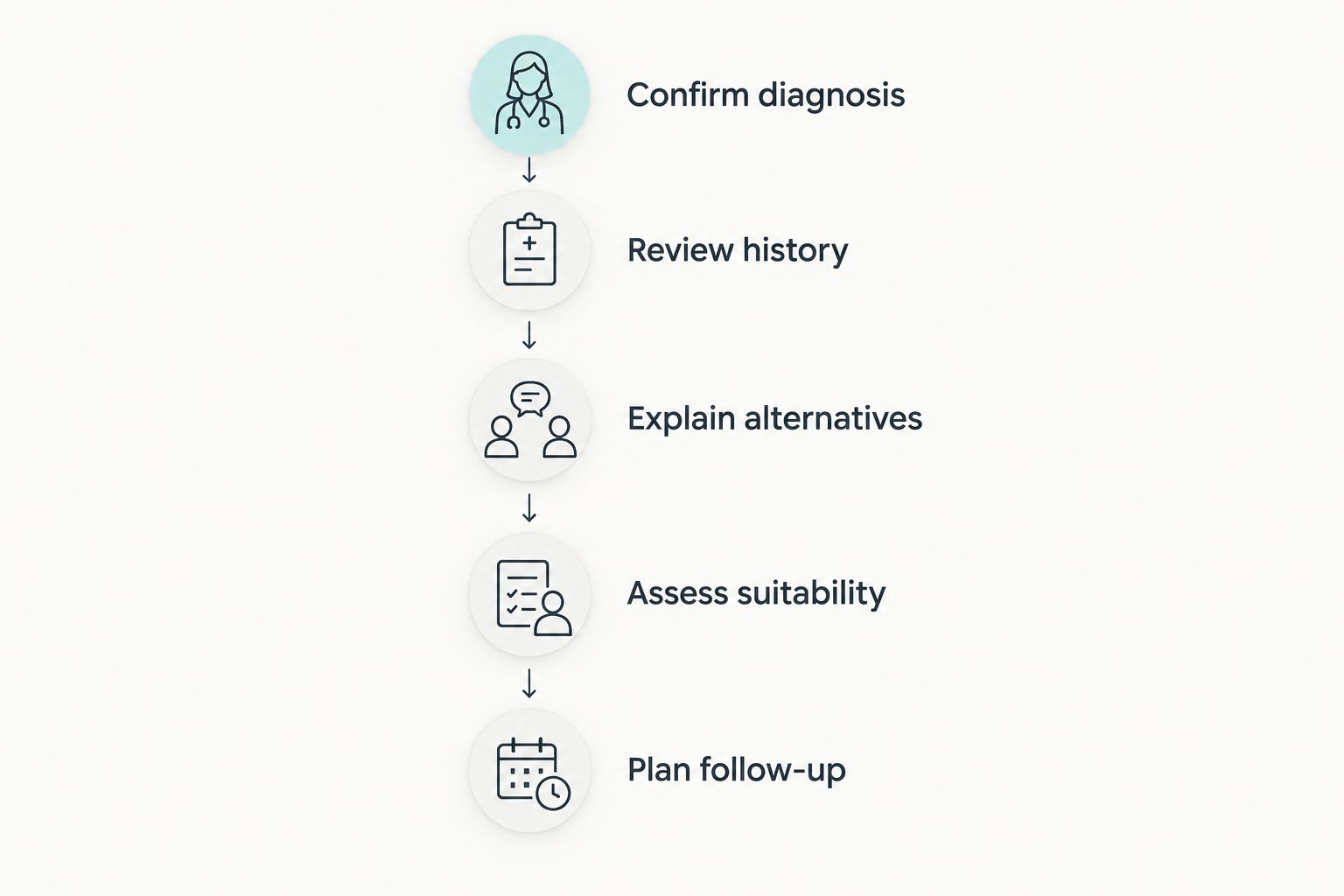
A useful 2026 consultation should end with a reasoned decision, including the possibility of not treating. Take photographs of previous flares and bring the names of products and procedures you have used.
- Confirm diagnosis. Ask whether the patches are melasma, another pigment condition, or a combination.
- Review history. Discuss previous procedures, pigment changes, medications, pregnancy, and current skincare.
- Explain alternatives. Ask what sun protection and prescription treatment can accomplish before adding a procedure.
- Assess suitability. Request a specific explanation of the device choice, relevant risks, and whether a test area is appropriate.
- Plan follow-up. Agree on aftercare, warning signs, review timing, and criteria for stopping treatment.
A test area can help assess a local response, but it does not guarantee that a full treatment course will be safe or that delayed pigment changes will not occur. Treat it as part of assessment, not a safety certificate.
What should make you pause treatment?
Pause an elective procedure if the practitioner cannot explain the diagnosis, promises permanent clearance, or dismisses your history of pigment changes. A device's reputation is not a substitute for an individualized assessment.
After treatment, contact the treating clinician promptly about blistering, increasing pain, spreading redness, or unexpected dark or light patches. Do not treat a worsening reaction by adding acids, scrubs, or bleaching products without medical advice.
How do you reduce the risk of melasma returning?
Your maintenance plan matters before the first procedure, not just after the last one. For 2026 care, keep daily light protection and clinician-directed skincare separate from promises about a laser's results.
The American Academy of Dermatology's melasma self-care guidance recommends broad-spectrum sunscreen with SPF 30 or higher. It also recommends tinted sunscreen containing iron oxide to help protect against visible light, which can worsen melasma.
For outdoor exposure, general American Academy of Dermatology sunscreen guidance recommends application 15 minutes before going outdoors and reapplication every 2 hours, as well as after swimming or sweating. Follow the product directions and your clinician's post-procedure instructions.
Pair sunscreen with shade and a wide-brimmed hat. Avoid deliberately tanning, and tell your clinician if your work, exercise, or commute makes sun avoidance difficult; the plan needs to fit your actual routine.
Can laser treatment make melasma worse?
Laser treatment can make melasma worse by causing inflammation and subsequent pigmentation. A flare can look like darker existing patches or additional discoloration around the treated area.
That risk is why treatment should include a response plan. Ask who will assess unexpected changes and whether further sessions will stop while the reaction is evaluated.
Is laser treatment safe for darker skin with melasma?
Laser treatment requires particular care in darker skin because unwanted pigment changes are a significant concern. Darker skin is not an automatic exclusion, but a generic assurance that a device works on every skin tone is insufficient.
Ask about the clinician's experience managing melasma in your skin tone, not only experience with laser hair removal. Different treatment goals involve different targets and risks.
Does laser treatment remove melasma permanently?
Laser treatment does not guarantee permanent removal of melasma. Improvement can fade because the condition remains responsive to factors such as light exposure and hormonal influences.
Before agreeing to treatment, discuss maintenance and relapse management. The endpoint should be realistic control of pigmentation, not a promise that you will never need care again.
Where Ammonite Laser Spa fits
Ammonite Laser Spa serves Downtown Brooklyn clients seeking personalized skin and beauty treatments. Its listed services include laser skin rejuvenation and pigmentation treatments, but a service category alone does not establish which procedure is appropriate for melasma.
Start with a diagnosis-led discussion rather than requesting a particular laser. The benefit of a local consultation is the opportunity to discuss your goals; the limitation is that cosmetic service selection cannot replace medical assessment of uncertain or changing pigmentation.
Discuss your pigmentation concerns
Ask about assessment, treatment suitability, and whether dermatology input is needed.
FAQ
Is laser treatment safe for melasma on my face?
Laser treatment can be appropriate for selected facial melasma patients, but it can also worsen pigmentation. A dermatologist should confirm the diagnosis and explain why a procedure is preferable to, or needed alongside, medical treatment.
What's the safest first step if I think I have melasma?
The safest first step is a clinical assessment to confirm the cause of the pigmentation. Sun protection belongs in the plan, while prescription products and procedures should follow an individualized assessment.
Is IPL better than laser for melasma?
IPL is not automatically better than laser for melasma, and both can worsen pigmentation. The correct comparison depends on the diagnosis, skin response, and treatment rationale rather than the device category alone.
Can I get laser treatment for melasma during pregnancy?
Elective cosmetic laser treatment is generally deferred during pregnancy because safety evidence is limited. Discuss pigmentation care with your obstetric clinician and dermatologist, since pregnancy also changes which topical treatments are appropriate.
What sunscreen should I use if I have melasma?
Use broad-spectrum sunscreen with SPF 30 or higher; tinted sunscreen containing iron oxide also helps protect against visible light. Follow application directions and combine sunscreen with shade and protective clothing.
Should I stop treatment if my patches get darker?
Contact the treating clinician before continuing if your patches become darker. Worsening pigmentation needs assessment rather than an automatic increase in treatment intensity.
Can Ammonite Laser Spa help me choose a pigmentation service?
Ammonite Laser Spa lists personalized pigmentation treatments and laser skin rejuvenation among its services. Ask about suitability and whether a dermatologist's assessment is needed before choosing a procedure for suspected melasma.
One last thing
Before booking a laser in 2026, ask: What is the plan if my melasma gets darker instead of lighter? A useful answer names the follow-up process, explains when treatment stops, and addresses maintenance—not just the next appointment.