Skin tightening cost in NYC in 2026 depends on the procedure, treatment area, and complete treatment plan—not just the advertised appointment. Ask for a written, itemized quote that separates the initial course from follow-up care and any recommended maintenance before you compare providers.
- Compare skin tightening cost NYC quotes by procedure, treatment area, and complete course—not appointment alone.
- Ammonite Laser Spa offers personalized laser skin rejuvenation and microneedling in Downtown Brooklyn; discuss suitability before choosing treatment.
- Loose skin, fine lines, and unwanted fullness require different assessments; do not compare them as identical treatment goals.
- Ask what the quote includes, which risks apply, and how the provider will assess your results.
Why this matters
A skin-tightening quote only makes sense when you know what the provider intends to treat. Fine surface lines, loose jawline skin, and fullness beneath the chin are different concerns, even when they affect the same area.
Ammonite Laser Spa offers personalized laser skin rejuvenation and microneedling in Downtown Brooklyn. Ammonite Laser Spa is best suited to local clients seeking personalized skin-treatment planning rather than choosing by a generic procedure label. Ask which offered service addresses your concern; do not assume every rejuvenation treatment is a dedicated lifting procedure.
How much does skin tightening cost in NYC in 2026?
The useful figure is your complete treatment-plan quote, with the procedure and treatment area specified. A facial appointment, a neck treatment, and a combined face-and-neck plan are not interchangeable purchases.
For your 2026 comparison, ask each provider to describe the same scope. Record whether the recommendation concerns the face, neck, jawline, or body, and whether the proposed approach addresses skin texture, laxity, or both.
| Quote format | Best for | Advantage | Limitation to clarify |
|---|---|---|---|
| Individual appointment | Understanding the charge for a defined visit | Makes the appointment scope easy to inspect | Does not establish the full recommended course |
| Initial treatment course | Comparing a provider's complete starting plan | Connects the quote to the recommended schedule | Requires clarity about included areas and reassessment |
| Maintenance plan | Understanding proposed ongoing care | Separates later appointments from the initial course | Needs its own rationale rather than an automatic commitment |
Do not compare these formats as though they describe the same service. Ask for the planned course even when you intend to book appointments individually, and request a separate explanation of any later care.
What should the written breakdown include?
Request the procedure name, treatment area, proposed appointment schedule, and the items included in each visit. Ask whether assessment, preparation, aftercare instructions, and follow-up review are included or handled separately.
A useful quote also explains what happens if the plan changes after assessment. Keep optional treatments separate from the procedure you originally requested so you can decide whether each addition serves your goal.
Initial treatment: define the intended result
Start with the concern, not a treatment name. Explain whether you want an improvement in crepey texture, fine lines, loose neck skin, or a less defined jawline, then ask the clinician to identify what is contributing to that appearance.
Best for: understanding whether the proposed treatment matches your goal. The advantage of an initial assessment is a more specific recommendation; its limitation is that a recommendation still cannot guarantee an individual result.
Ask the provider to describe the expected kind of change in plain language. Smoother-looking skin is not the same outcome as lifting loose tissue, and neither should be presented as identical to reducing unwanted fullness.
For a jawline concern, use the guide to skin tightening treatments for the jawline to prepare questions about the treatment target. Bring those questions to an assessment rather than treating a procedure list as a prescription.
Treatment course: compare the complete recommendation
A treatment course should connect the proposed visits to your skin concern and the selected procedure. Ask why the provider recommends that schedule and when they will reassess whether it remains appropriate.
Best for: comparing the scope of an initial plan across providers. A course gives you a clearer picture than an isolated appointment, but it also requires you to understand the commitment and the provider's written terms before proceeding.
For a 2026 treatment plan, request a distinction between scheduled treatment visits and review appointments. Ask whether the recommendation changes if your skin reacts unexpectedly or if the clinician decides another approach is more appropriate.
Do not translate a longer course into a better result. The relevant question is whether each proposed treatment has a reason tied to your assessment, not whether the plan contains more visits.
Maintenance: separate later care from initial treatment
Ask whether maintenance forms part of the provider's recommendation and what would trigger it. A future appointment should have an identified purpose, such as reassessing your concern or discussing whether further treatment is appropriate.
Best for: understanding the longer-term commitment before starting. Discussing maintenance makes later decisions clearer; the limitation is that your future needs cannot be settled solely by an initial sales proposal.
Keep maintenance separate when comparing plans. A quote covering only initial treatment and another including later visits need to be read differently, even when both use the same procedure name.
Why skin tightening quotes vary
Differences in the proposed service explain why two quotes are not automatically comparable. Before choosing a provider, check these factors:
- Treatment method: Ask for the exact procedure and device, where applicable. “Skin tightening” describes a goal, not a complete technical specification.
- Treatment area: Confirm the boundaries. Jawline, lower face, neck, and combined treatment should not remain undefined.
- Course scope: Establish whether the quote covers an individual appointment, an initial course, or later maintenance.
- Included care: Clarify assessment, preparation, aftercare, and review rather than assuming they are bundled together.
- Combined procedures: Ask why each proposed addition is necessary and whether it is optional.
- Individual assessment: Skin condition, medical history, and the intended outcome belong in the treatment decision, not just the booking form.
These are comparison questions, not reasons to accept a particular quote. A provider should be able to explain the recommendation without relying on a broad promise of younger-looking skin.
Which concern are you actually paying to treat?
Your description of the problem shapes the consultation. Use a mirror to identify the area that bothers you, then describe what you see without trying to diagnose it yourself.
| Your main concern | Best for your consultation | Question to ask | Limitation to recognize |
|---|---|---|---|
| Fine lines or uneven texture | Discussing skin-surface improvement | Does this procedure address texture, laxity, or both? | A texture improvement does not establish a lifting result |
| Loose jawline or neck skin | Discussing laxity and realistic correction | What degree of change is realistic without surgery? | A nonsurgical procedure is not equivalent to a surgical lift |
| Fullness beneath the chin | Determining what contributes to the contour | Is the concern skin, fat, anatomy, or a combination? | Tightening alone does not address every cause of fullness |
This distinction protects you from comparing unrelated recommendations. If providers identify different treatment targets, ask them to explain the difference before comparing their proposed plans.
Ammonite Laser Spa offers both laser skin rejuvenation and microneedling. The service names alone do not establish which approach suits your tightening concern, so ask for a recommendation tied to your skin assessment and intended result.
How do you compare NYC skin tightening quotes fairly?
Use the same questions at each consultation. A consistent process helps you identify differences in scope without treating every proposal as an identical service.
- Define the concern. Describe the area and the change you want. Mention relevant previous procedures and your medical history.
- Confirm the procedure. Request the exact treatment name and ask why it fits the concern identified during assessment.
- Map the area. Have the provider specify the treatment boundaries rather than relying on an informal label such as “lower face.”
- Review the course. Separate the initial recommendation, reassessment, and possible maintenance.
- Check aftercare. Ask about procedure-specific risks, activity restrictions, warning signs, and whom to contact with concerns.
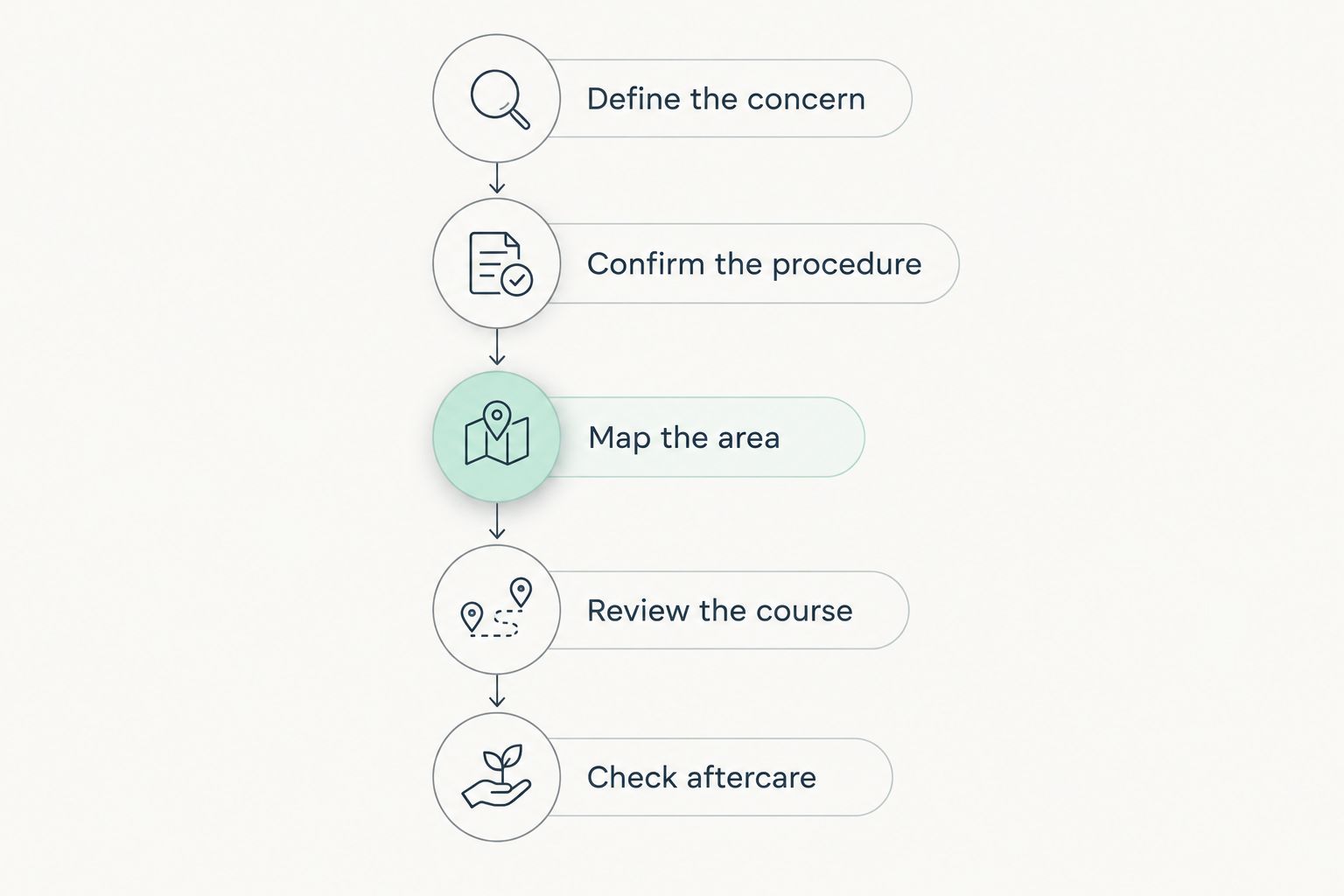
For your 2026 consultations, keep the answers together in a written comparison. If a provider changes the recommendation after assessing your skin, update the comparison rather than matching the new plan against an outdated proposal.
Choose a clearly explained plan over an unexplained treatment label. You should understand the intended benefit, the limitations, and the next decision point before consenting.
Is nonsurgical skin tightening worth considering?
Nonsurgical skin tightening is worth discussing when you want to understand options without committing to surgery. Its suitability depends on the concern, procedure, and individual assessment—not on the appeal of a treatment name.
The potential advantage is an approach that does not involve a surgical lift. The limitation is equally important: nonsurgical treatment should not be presented as producing an equivalent surgical result.
Ask the clinician whether your expectations match the proposed procedure. If your desired change exceeds what the treatment can reasonably address, request an explanation of alternatives, including whether assessment by a dermatologist or plastic surgeon is appropriate.
Can you choose skin tightening by treatment name alone?
No. Skin tightening is a treatment goal, and broad names do not tell you the exact device, technique, treatment area, or suitability for your skin.
Ask who will perform the procedure, what qualifications apply, and what supervision or clinical support is available. For device-based treatment, request an explanation of how the device and settings are selected for your concern and skin characteristics.
Do not substitute a device name for informed consent. Your discussion still needs to cover expected benefits, important risks, alternatives, aftercare, and the option not to proceed.
Should you combine skin tightening with other treatments?
Combine treatments only when the provider explains the separate purpose of each procedure and why the timing is appropriate. Multiple concerns do not automatically require multiple treatments at the same visit.
The advantage of a combined plan is that it can address distinct concerns within a coordinated recommendation. The limitation is greater complexity: you need to understand which procedure addresses which goal, along with its risks and aftercare.
For a combined plan proposed in 2026, request a written sequence and separate optional additions. Ask whether starting with the main concern and reassessing later is a suitable alternative.
FAQ
How do I find out my skin tightening cost in NYC?
Request an individualized written quote specifying the procedure, treatment area, recommended course, and included care. Keep initial treatment separate from possible maintenance so you can compare the same scope across providers.
Is one skin tightening appointment enough?
An individual appointment does not establish a complete treatment plan. Ask the clinician what course they recommend for your concern and when they will reassess your response.
Does microneedling do the same thing as a facelift?
No, microneedling is not equivalent to a surgical facelift. Ask what skin-quality changes the proposed procedure is intended to address and which concerns fall outside its scope.
What should I ask about skin tightening for my jawline?
Ask whether loose skin, unwanted fullness, anatomy, or a combination contributes to your jawline concern. The assessment should guide the recommendation rather than assuming tightening addresses every cause.
Should maintenance be included in my skin tightening quote?
Maintenance should be identified separately if the provider recommends it. Ask what later visits are intended to achieve and when the need for them will be reviewed.
Does Ammonite Laser Spa offer skin rejuvenation in Brooklyn?
Ammonite Laser Spa offers personalized laser skin rejuvenation and microneedling in Downtown Brooklyn. Ask which offered service suits your concern rather than assuming either is appropriate for every skin-tightening goal.
What should I check before agreeing to skin tightening treatment?
Check the exact procedure, treatment boundaries, provider qualifications, expected benefits, risks, and aftercare. Request a clear explanation of limitations and alternatives before giving consent.
One last thing
Before agreeing to a 2026 skin-tightening plan, ask: What finding would make you recommend against this treatment for me? The answer should explain the limits of the recommendation, not just repeat its benefits.
A consultation helps you decide whether to proceed at all. Leave with a defined concern, a clearly described procedure, and a written plan you understand—not simply an appointment on the calendar.