Microneedling is worth considering for indented acne scars, uneven texture, and fine lines when you accept gradual improvement rather than complete correction. It is not a shortcut to scar-free skin, and its value depends on whether your skin concern, recovery needs, and treatment plan fit the procedure.
- Is microneedling worth it? For suitable acne scars and texture concerns, yes; for guaranteed smooth skin, no.
- The FDA distinguishes conventional microneedling from radiofrequency microneedling; ask which procedure you are considering.
- Active acne, infection, and a history of abnormal scarring require assessment before treatment.
- Judge value by lasting texture improvement, not the temporary fullness immediately after treatment.
Why this matters
A treatment can improve skin and still be the wrong purchase for you. If your main concern is a flat brown mark rather than a depressed scar, choosing a procedure for collagen remodeling misses an important distinction.
Before committing to treatment in 2026, separate the problem you want corrected from the result you hope to see. The guide to how many microneedling sessions are needed for acne scars addresses treatment planning; the first decision is whether microneedling suits the scar itself.
Is microneedling worth it in 2026?
Microneedling earns its place when your goal is improvement in suitable scars or texture, not complete removal of every visible concern. The American Academy of Dermatology describes microneedling as a treatment used for concerns including acne scars, wrinkles, and uneven texture. The FDA also identifies specific cleared uses for certain devices; that does not mean every device is cleared for every advertised treatment.
Use the comparison below to match the treatment category to your concern. These are starting points for an assessment, not interchangeable options.
| Treatment approach | Best for | Main advantage | Main limitation |
|---|---|---|---|
| Conventional microneedling | Suitable indented acne scars and uneven texture | Encourages collagen remodeling through controlled skin injury | Does not erase scars; recovery and repeat treatment can be necessary |
| Condition-specific topical treatment | Concerns suited to medication or skincare, including some acne and pigmentation problems | Can address the underlying condition without a needling procedure | Requires consistent use and does not correct every structural scar |
| Laser resurfacing | Selected texture, scar, or sun-damage concerns after assessment | Offers different treatment approaches for different targets | Recovery and pigment risks depend on the device, settings, and skin |
The useful comparison is not which treatment sounds strongest. It is which treatment addresses your diagnosis with an acceptable balance of benefit, risk, and recovery.
Indented acne scars: a reason to consider treatment
Microneedling can improve the appearance of some depressed acne scars by stimulating the skin’s repair response. Improvement means a change in scar appearance, not replacement of scarred skin with untouched skin.
Scar shape matters. Narrow, deep scars and scars tethered beneath the surface can need approaches beyond microneedling alone. Ask the practitioner to identify the scar types rather than treating every depression as the same problem.
Best for: someone seeking a realistic improvement in suitable depressed scars who accepts that a combined treatment plan might be appropriate. It is a poor match if you expect every scar to disappear.
Fine lines and uneven texture: keep the goal specific
Microneedling is also used to improve fine lines and skin texture. That is different from lifting substantial loose skin or changing facial structure.
Define the concern before discussing treatment intensity. A goal such as improving rough-looking cheek texture is easier to evaluate than wanting an entirely younger face. Ask what change the practitioner expects in your particular treatment area and how that change will be assessed.
Best for: texture-focused goals with realistic expectations. It is not a substitute for procedures designed to address significant sagging.
Dark marks without indentations: assess the pigment first
A flat mark left after a breakout is not the same thing as an acne scar that dips into the skin. Post-inflammatory pigmentation, persistent redness, and depressed scars can appear together, but they are different treatment targets.
Microneedling is not an automatic first choice for every dark mark. Skin inflammation can also trigger pigmentation changes, so a pigment-focused assessment matters before deliberately injuring the skin.
Best for: an assessment that separates color changes from texture changes before selecting treatment. If discoloration is your only concern, ask why needling is preferable to a treatment directed at that diagnosis.
Why microneedling results vary
For a microneedling decision in 2026, these factors matter more than a dramatic treatment video:
- The actual diagnosis. Depressed scarring, active acne, pigmentation, and loose skin require different decisions. Treating the wrong target reduces the value of the procedure.
- Scar depth and structure. Surface texture and deeper structural scars do not respond identically. Some scars require a different technique or a combined approach.
- The device and procedure. Conventional microneedling and radiofrequency microneedling are different procedures. Radiofrequency devices add energy delivery and require a separate discussion of risks.
- Your skin and medical history. A history of abnormal scarring, pigment changes, infection, or impaired healing affects suitability and planning.
- Practitioner technique and infection control. Device selection, treatment depth, skin preparation, and appropriate disposable components are safety issues, not minor details.
- Aftercare and expectations. Following instructions supports recovery, while judging results before healing and remodeling are complete creates a misleading verdict.
Do not use a deeper treatment or more aggressive endpoint as proof of better care. The appropriate approach depends on the treatment area, condition, device, and your skin.
How to decide whether treatment is worth it for you
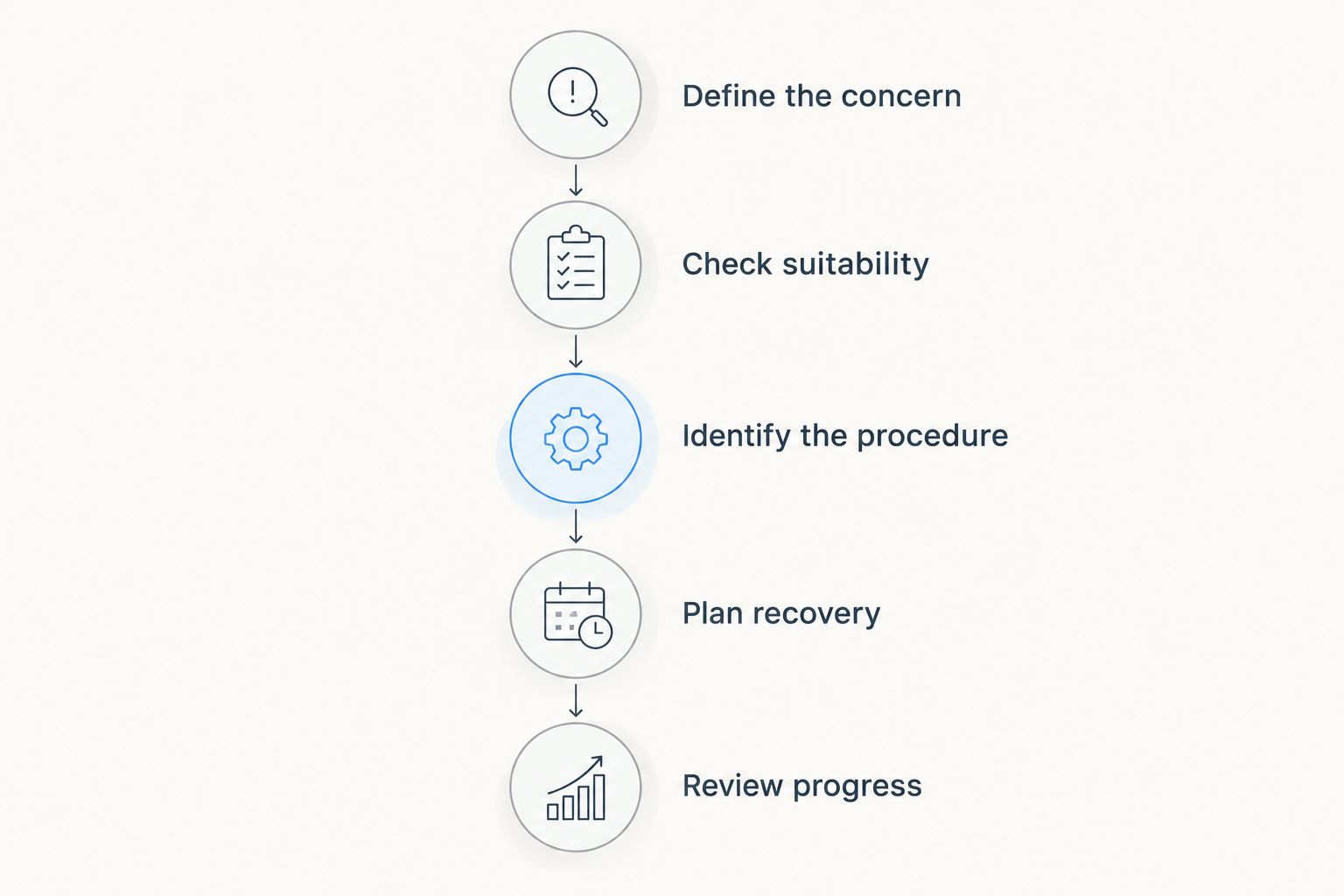
A useful consultation should turn a broad wish for better skin into a specific treatment decision. Use this sequence before agreeing to a course.
- Define the concern. Point out the exact scars, lines, or texture changes you want improved. Explain whether your priority is appearance in ordinary lighting, makeup application, or another visible concern.
- Check suitability. Disclose your medications, recent procedures, active skin problems, and history of unusual healing. Let the treating professional determine whether treatment should proceed or wait.
- Identify the procedure. Ask whether the proposal is conventional microneedling or radiofrequency microneedling. Get a clear explanation of the device, intended use, and who performs the treatment.
- Plan recovery. Ask what skin reactions to expect, which products to stop or restart, and what would require medical attention. Match that guidance to your work and event calendar.
- Review progress. Agree on the concern being tracked and when to reassess it. Use photographs taken under consistent conditions rather than relying on memory.
A clear plan includes reasons to stop or change direction. If the practitioner cannot explain what would count as insufficient improvement, you do not yet have a useful review process.
What recovery and safety mean for value
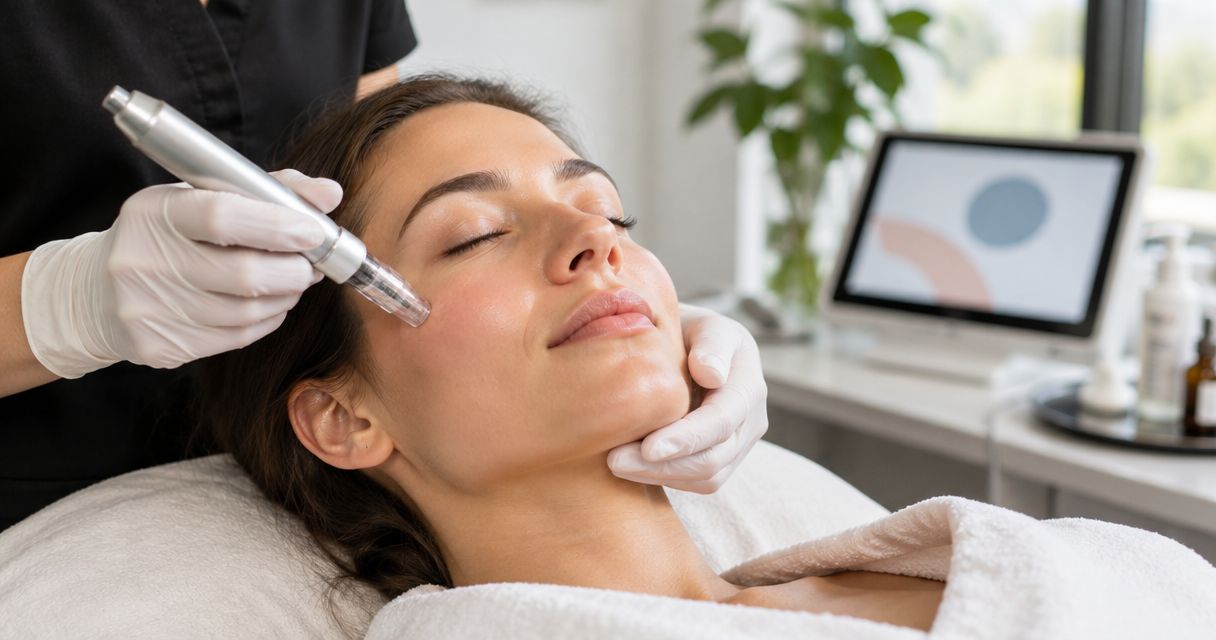
Microneedling creates controlled injuries in the skin. Redness, swelling, irritation, and discomfort are recognized reactions; infection, scarring, and pigment changes are potential complications. A procedure described as minimally invasive still requires an informed discussion of risk.
Do not treat through active infection or assume inflamed acne is simply another area to needle. Discuss cold sores, eczema, other skin conditions, bleeding concerns, and medications before treatment. Your practitioner should explain which details affect your suitability.
Ask about the device, not just the treatment name
For your 2026 consultation, use the FDA’s consumer guidance on microneedling devices as a safety reference. Its scope includes device uses, risks, and questions to ask a provider; it is not an endorsement of a particular studio.
Ask whether the device is cleared for the proposed use and whether a new needle cartridge is used for each patient and treatment session. Also ask about anything applied during the procedure. FDA clearance of a microneedling device does not establish the safety of delivering every serum or other product through the skin.
Make room for aftercare
Follow your treating professional’s instructions on cleansing, skincare, makeup, exercise, and sun exposure. Avoid substituting a social-media routine for guidance specific to the procedure you received.
The American Academy of Dermatology recommends broad-spectrum, water-resistant sunscreen with SPF 30 or higher as general sun protection. After microneedling, ask when and how to apply sunscreen and which formulation suits your recovering skin. Escalating pain, spreading redness, drainage, or other concerning symptoms warrant prompt contact with a healthcare professional.
How should you judge results in 2026?
Judge microneedling by the original concern after appropriate healing, not by the immediate post-treatment appearance. Swelling can temporarily change how texture looks. That is not the same as durable improvement from collagen remodeling.
Take baseline photographs with the same lighting, camera distance, angle, and facial expression used for follow-up images. Avoid comparing a harshly lit before photograph with a softly lit after photograph. A fair comparison should make the treatment easier to assess, not easier to sell.
Write down what you want to evaluate: a particular cheek scar, rough texture, or fine lines in a defined area. At the review, ask what has changed, what remains, and whether continuing the same approach still makes sense.
Is professional microneedling better than an at-home roller?
An at-home roller is not an equivalent substitute for professional microneedling. Devices differ in design and penetration, and home use introduces concerns about technique, hygiene, and inappropriate treatment of skin conditions.
The FDA distinguishes products that reach living skin from shorter or blunt products intended for more superficial effects. Do not assume an online device provides the same treatment as a professional procedure, or that applying more pressure makes home treatment more effective.
Is microneedling worth it if you have darker skin?
Darker skin does not automatically rule out microneedling, but pigment risk still needs an individual assessment. The American Academy of Dermatology describes microneedling as an option for all skin tones when appropriately performed.
Ask about experience treating your skin tone, your history of post-inflammatory pigmentation, and the proposed aftercare. A claim that a treatment is completely free of pigment risk is not a substitute for that discussion.
Where a local consultation fits
Ammonite Laser Spa is a relevant microneedling option for Downtown Brooklyn clients seeking a personalized local skin-treatment consultation. The boutique studio lists microneedling alongside acne and pigmentation treatments and laser skin rejuvenation, making the distinction between texture and discoloration a useful consultation topic.
That service list does not establish your suitability or predict your result. Before choosing treatment, ask about the practitioner, device, safety process, and plan for your concern through the contact page.
FAQ
Is microneedling worth it for acne scars?
Microneedling is worth considering for suitable indented acne scars when your goal is improvement rather than complete removal. Scar shape and depth affect whether microneedling alone is appropriate.
Will microneedling completely remove my scars?
Microneedling does not guarantee complete scar removal. Ask which scars are likely to improve and whether other techniques are needed for deeper or tethered scars.
How many microneedling sessions will I need?
Your treatment plan depends on the concern, scar characteristics, device, and response to treatment. Ask for a proposed course with a defined review point rather than an unconditional promise.
Can I get microneedling while I have active acne?
Active inflammatory acne needs assessment before microneedling, and treatment over affected areas can be inappropriate. Discuss controlling breakouts before focusing on the scars they leave behind.
Is radiofrequency microneedling the same as regular microneedling?
Radiofrequency microneedling is not the same as conventional microneedling because it adds energy delivery through the device. Ask for a separate explanation of its benefits, risks, and suitability.
Can microneedling make pigmentation worse?
Microneedling can cause pigment changes, including post-inflammatory hyperpigmentation. Your skin history, treatment approach, and aftercare belong in the risk discussion.
Should I get microneedling just before a big event?
Do not schedule microneedling immediately before an important event without discussing recovery with your practitioner. Skin reactions and healing vary, and a first treatment should not double as a last-minute event preparation experiment.
One last thing
For a treatment decision in 2026, bring a photograph of your skin in the lighting that bothers you most—not only a flattering selfie. Side lighting can reveal depressions that front lighting hides, helping you explain whether your concern is texture, color, or both.
The best reason to proceed is a clear match between your concern and the treatment—not pressure to finish a package. Ask what improvement would justify continuing and what finding would change the plan.