Yes—laser treatment for hormonal acne scars can improve certain depressed scars and lingering discoloration, but it does not eliminate every scar or treat the hormonal drivers of acne. Results depend on whether you have indentations, raised scars, or flat marks; treatment also carries risks, including burns, prolonged redness, and changes in skin color.
- Laser treatment for hormonal acne scars improves selected scars, not the hormonal causes of breakouts.
- Depressed acne scars and post-acne pigmentation need different treatment plans.
- Control active acne before scar resurfacing to reduce the risk of new scars.
- Ammonite Laser Spa suits Downtown Brooklyn clients seeking personalized skin treatments; confirm suitability before booking.
Why this matters
Treating the wrong problem wastes recovery time. A flat brown spot needs a different approach from a deep indentation, even when both appeared after the same breakout.
Ammonite Laser Spa offers personalized laser skin rejuvenation, acne and pigmentation treatments, and microneedling in Downtown Brooklyn. Those service categories are relevant starting points, but a service name alone does not establish which treatment fits your scars.
For your 2026 treatment plan, separate two goals: preventing new inflammatory acne and improving damage that already exists. Scar treatment cannot substitute for acne control.
Is laser treatment effective for hormonal acne scars?
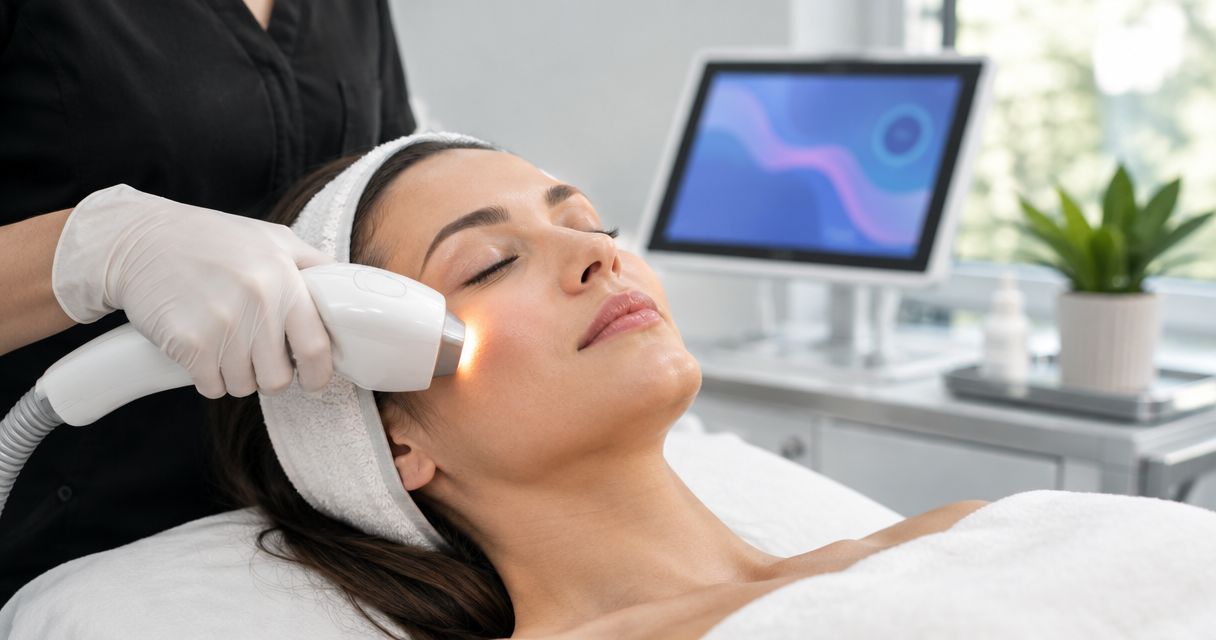
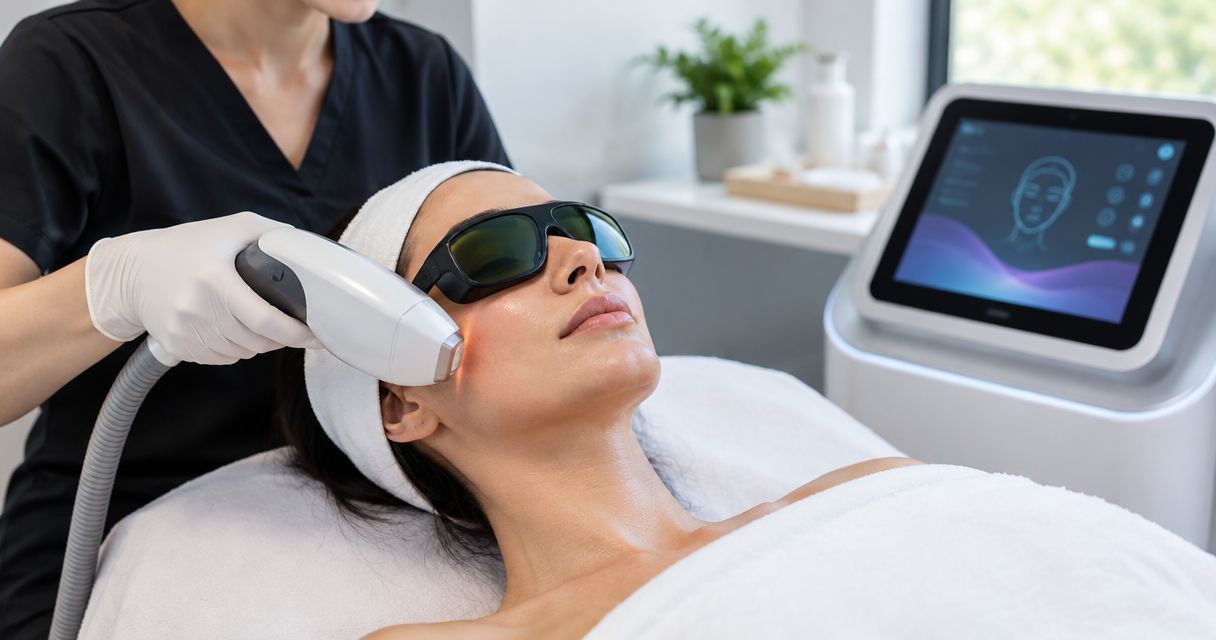
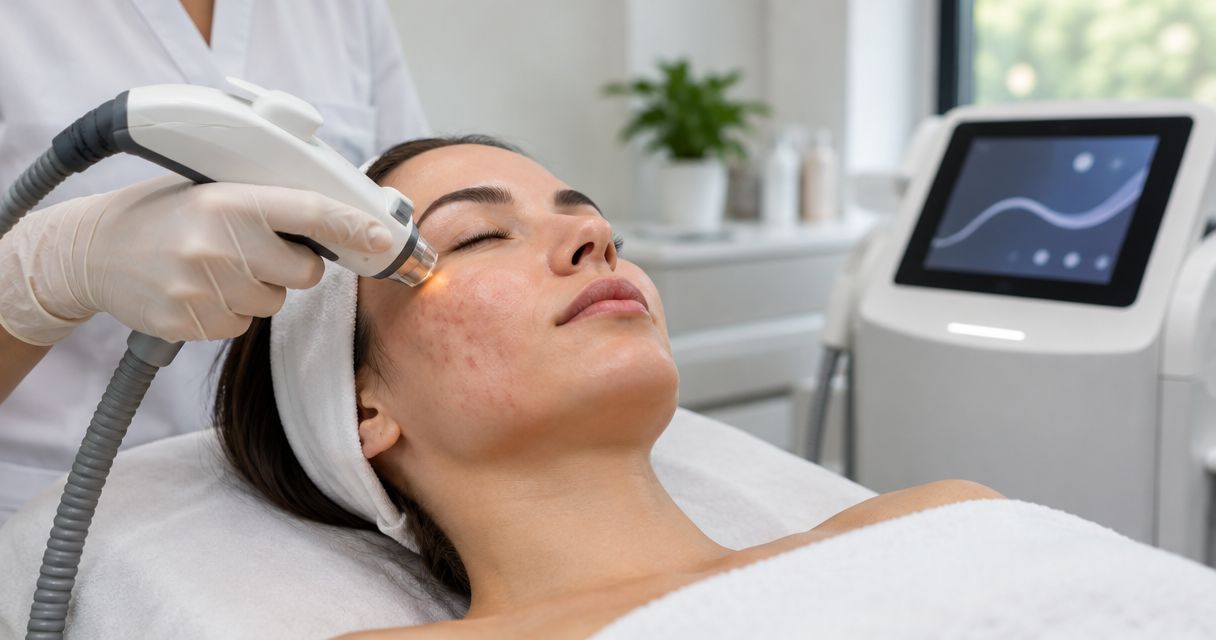
Laser treatment is effective for selected acne scars because some devices create controlled injury that stimulates collagen remodeling. Other devices target redness or pigment rather than depressed texture. The hormonal origin of the original breakout does not determine which laser is appropriate; the remaining skin change does.
The American Academy of Dermatology's patient guidance on acne scars distinguishes scar types and describes treatment selection according to the scars present. That distinction matters more than a treatment advertised broadly for hormonal acne.
| Skin change | Best for | Potential benefit | Main limitation |
|---|---|---|---|
| Shallow depressed scars | Assessment for resurfacing | Collagen remodeling can soften uneven texture | Improvement does not mean complete removal |
| Broad, tethered rolling scars | Assessment for treatment beneath the scar | Releasing tethering can address an underlying cause of the depression | Surface laser treatment alone does not release every tether |
| Deep, narrow ice-pick scars | Assessment for focal scar procedures | Targeted treatment addresses individual deep defects | Broad resurfacing alone often leaves deep defects visible |
| Flat brown or gray marks | Pigmentation-focused care | Appropriate treatment can reduce discoloration | Irritation can cause additional pigmentation |
| Flat red marks | Assessment for vascular treatment | Selected devices target persistent redness | Redness treatment does not correct an indentation |
| Raised scars | Dermatologist-led scar assessment | A scar-specific plan addresses excess scar tissue | Routine resurfacing is not interchangeable with raised-scar treatment |
You can have several of these changes in one area. A useful assessment identifies each concern separately rather than treating every visible mark as the same type of scar.
Depressed scars: resurfacing can improve texture
Depressed, or atrophic, scars form when acne damages supporting tissue. Certain resurfacing lasers stimulate remodeling in that tissue, which can make some depressions less noticeable.
The realistic goal is improvement, not a return to unscarred skin. Scar depth, shape, and attachment to deeper tissue affect how much a surface-focused treatment can accomplish.
Ablative resurfacing
Ablative lasers remove treated skin tissue. Fractional ablative systems treat columns of skin while leaving surrounding areas untreated, supporting the healing process.
This approach can address texture, but recovery and wound care require planning. Infection, persistent redness, pigment changes, and additional scarring are recognized risks. Greater treatment intensity is not automatically the better choice for your skin.
Nonablative resurfacing
Nonablative lasers heat targeted tissue without removing the surface in the same way as ablative resurfacing. They are options for selected texture concerns when the balance between treatment effect and recovery fits the patient.
The trade-off is that a less disruptive treatment is not a promise of dramatic improvement. Ask what change the clinician expects for your specific scar pattern, not simply whether a device stimulates collagen.
Flat acne marks: treat color separately from texture
A flat mark after a breakout is not necessarily a permanent scar. Post-inflammatory hyperpigmentation produces darker discoloration, while post-inflammatory erythema produces persistent pink or red marks.
These concerns need different targets. A treatment intended to remodel depressed scars is not automatically the right choice for pigment, and a redness-focused device does not fill missing tissue.
If your main concern is flat discoloration, start with the guide to treatments for post-acne pigmentation. Distinguishing color from contour helps you ask for the right assessment.
A careful 2026 plan also considers whether apparent acne pigmentation is another condition, such as melasma. Treating an assumed diagnosis without examining the skin creates avoidable risk, especially when inflammation itself can deepen discoloration.
Why laser results vary
Laser treatment for hormonal acne scars does not have one predictable outcome. These factors change the treatment choice and the result:
- Scar structure: Shallow depressions, deep pits, and tethered scars respond differently because they involve different patterns of tissue damage.
- Active acne: Continuing inflammatory breakouts can create new scars while older scars are being treated.
- Skin tone and pigment history: A history of dark marks after irritation is important when assessing post-treatment pigmentation risk.
- Device and settings: Wavelength, treatment depth, energy, and treatment density affect the tissue response and healing burden.
- Healing and aftercare: Picking, sun exposure, infection, and inconsistent wound care can undermine recovery.
- Mixed concerns: Pigment, redness, and texture often require separate decisions rather than a single all-purpose treatment.
Choose a plan that explains these differences. A package described only by its session count does not tell you whether it addresses the scars you actually have.
Should you control hormonal acne before treating scars?
Yes—control active inflammatory acne before elective scar resurfacing. Otherwise, you can improve existing scars while new breakouts create additional damage.
The American Academy of Dermatology advises treating acne before acne scars. Depending on your symptoms, medical acne care can include topical treatment, oral medication, or hormonal treatment prescribed by an appropriate clinician.
Do not diagnose a hormonal disorder from the location of your acne alone. Recurring jawline breakouts are worth discussing, but a clinician needs your history and examination to decide whether further evaluation is appropriate.
For your 2026 consultation, bring a medication list and describe any pattern around your menstrual cycle. Include current or previous isotretinoin use; procedure timing requires an individualized decision rather than a blanket rule copied from an online checklist.
Is laser or microneedling better for hormonal acne scars?
Neither laser nor microneedling is universally better for hormonal acne scars. Both can support collagen remodeling in selected depressed scars, but their suitability depends on scar structure, skin characteristics, and treatment goals.
| Option | Best for | Advantage | Limitation |
|---|---|---|---|
| Laser resurfacing | Selected depressed scars requiring device-specific treatment | Treatment depth and tissue targets vary by laser | Thermal injury introduces burn and pigmentation risks |
| Microneedling | Selected depressed scars after skin assessment | Mechanical needling stimulates a repair response | It does not release all tethered scars or correct every deep pit |
| Subcision | Selected tethered rolling scars | Targets fibrous attachments beneath depressions | Bruising and other procedural risks require medical assessment |
| Focal scar procedures | Selected deep, narrow scars | Treat individual defects directly | They are not substitutes for treating widespread pigment or redness |
Microneedling is not risk-free because it is sometimes described as gentler. Infection, irritation, and pigment changes remain possible, particularly when treatment technique or aftercare is inappropriate.
Match the procedure to the defect, not to the trend. Combination treatment is justified when each component has a clear purpose—not simply because more procedures are available.
Can laser treatment remove hormonal acne scars completely?
No—complete removal is not a realistic guarantee for hormonal acne scars. Treatment can soften texture or reduce certain marks, but established structural scars often remain visible to some degree.
Collagen remodeling develops gradually, so your immediate post-treatment appearance is not the final result. Swelling can temporarily make depressions look smoother, while redness can make the skin look worse during recovery.
Ask when your clinician will assess the outcome and what photographs will be used for comparison. Consistent lighting, camera distance, and facial expression make the comparison more useful than images taken under flattering conditions.
What should you ask before booking treatment?
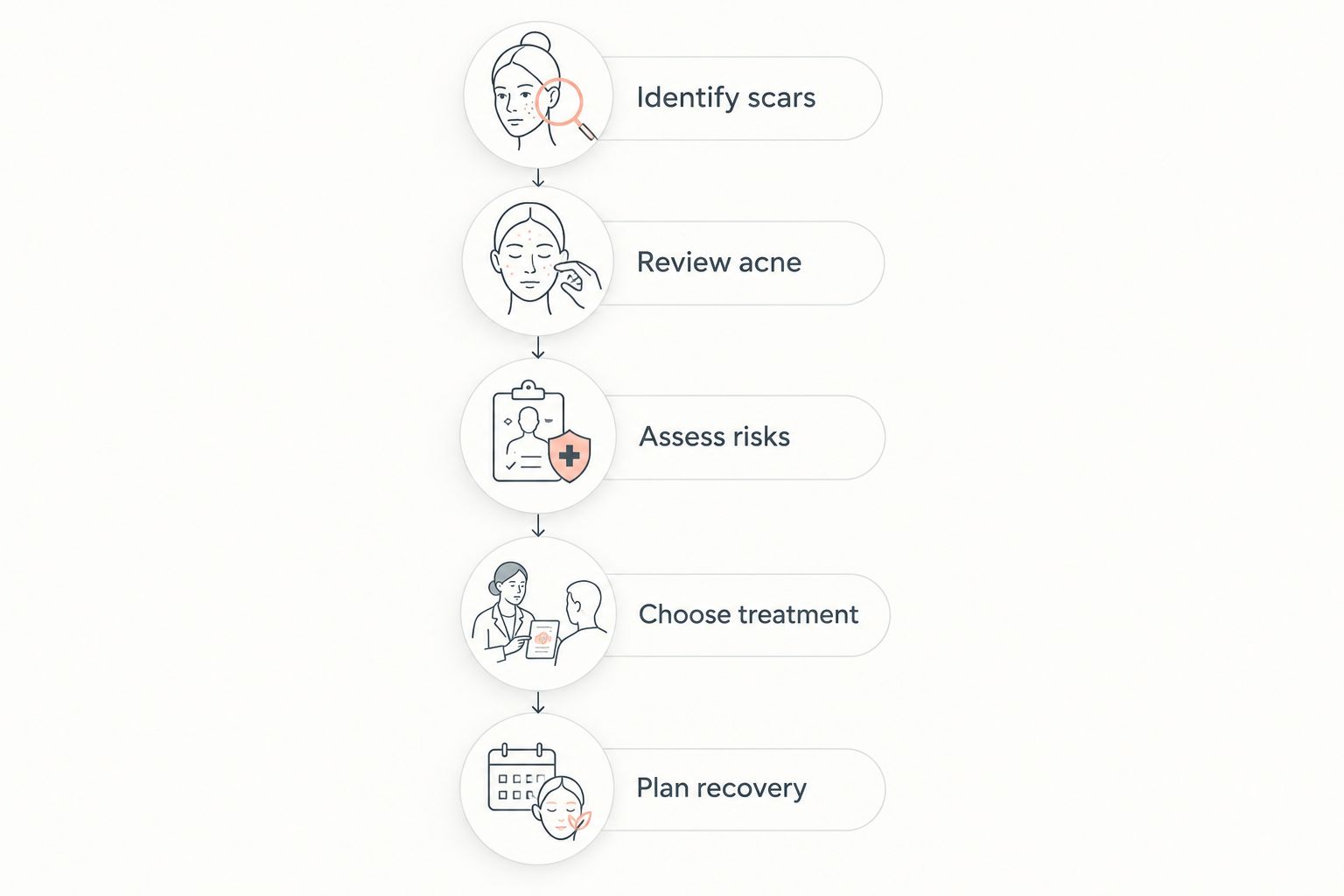
A useful consultation connects your diagnosis to a specific treatment target. Use this sequence before agreeing to a procedure:
- Identify scars. Ask which areas are depressed scars, raised scars, pigment, or redness. Have the clinician point out the differences on your skin.
- Review acne. Explain whether you still develop painful or inflamed breakouts. Clarify who will manage ongoing acne.
- Assess risks. Discuss skin tone, previous pigment changes, recent tanning, medications, cold sores, and healing problems.
- Choose treatment. Ask for the device or procedure name, the intended tissue target, and why it fits your scar pattern.
- Plan recovery. Get written preparation, aftercare, warning signs, and a contact route for complications.
Bring photographs of previous reactions if you have them. Tell the clinician if your skin becomes dark after minor irritation; that history is relevant even when the skin looks calm on appointment day.
For a 2026 booking at Ammonite Laser Spa, confirm which procedure is proposed, who performs it, and whether your concern requires dermatologist-led care. Do not infer the equipment, credentials, or suitability of a procedure from a general service listing.
How can you reduce avoidable treatment risks?
Start with an accurate assessment and a qualified clinician experienced with your skin tone and intended procedure. Follow the preparation instructions rather than adding exfoliating products or home devices to accelerate results.
The American Academy of Dermatology recommends broad-spectrum, water-resistant sunscreen with SPF 30 or higher. Sun protection is particularly relevant when post-inflammatory pigmentation is a concern, but freshly treated skin also needs procedure-specific wound-care instructions.
Avoid picking or scrubbing healing skin. Ask when to restart retinoids, exfoliating acids, makeup, and exercise instead of borrowing another patient's recovery schedule.
Contact the treating clinician promptly for worsening pain, spreading redness, drainage, blistering, or other unexpected changes. Severe or rapidly worsening symptoms need urgent medical assessment, not another cosmetic treatment.
FAQ
Does laser treatment for hormonal acne scars stop hormonal acne?
No—laser treatment for hormonal acne scars does not correct the hormonal drivers of acne. Ongoing inflammatory breakouts need a separate medical treatment plan.
Can I get acne scar laser treatment while I still have breakouts?
Control active inflammatory acne before elective scar resurfacing. New breakouts can produce additional scars, so a clinician should assess both the acne and the existing damage.
Is laser treatment safe for acne scars on darker skin?
Selected laser treatments can be used on darker skin, but pigment changes are an important risk. Seek a clinician experienced with your skin tone and the proposed device.
Will laser treatment remove deep acne pits?
Laser treatment alone does not reliably remove deep acne pits. Deep, narrow scars or tethered depressions can require focal procedures or treatment beneath the scar.
How many laser sessions will I need for hormonal acne scars?
Your session count depends on the scar pattern, device, settings, and response to treatment. Ask for an individualized plan with reassessment rather than a guaranteed universal course.
Are brown spots after hormonal acne actually scars?
Flat brown spots after acne are often post-inflammatory hyperpigmentation rather than structural scars. An examination distinguishes discoloration from depressed or raised tissue.
Does Ammonite Laser Spa offer treatments relevant to acne marks?
Ammonite Laser Spa offers acne and pigmentation treatments, laser skin rejuvenation, and microneedling. Confirm which approach fits your concern before choosing a procedure.
One last thing
Judge texture and color separately. A treatment can improve the appearance of dark marks without changing an indentation, and that is a different result from scar remodeling.
Before starting treatment in 2026, ask your clinician to record those goals separately. That simple distinction makes it easier to recognize genuine progress—and to avoid repeating a procedure aimed at the wrong target.