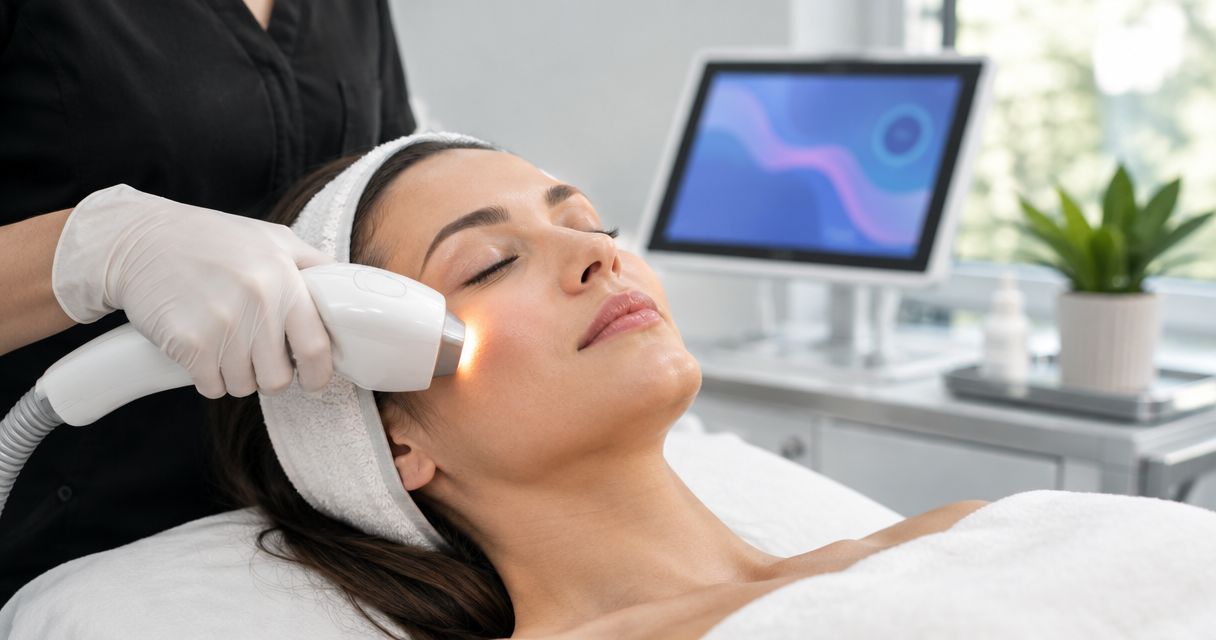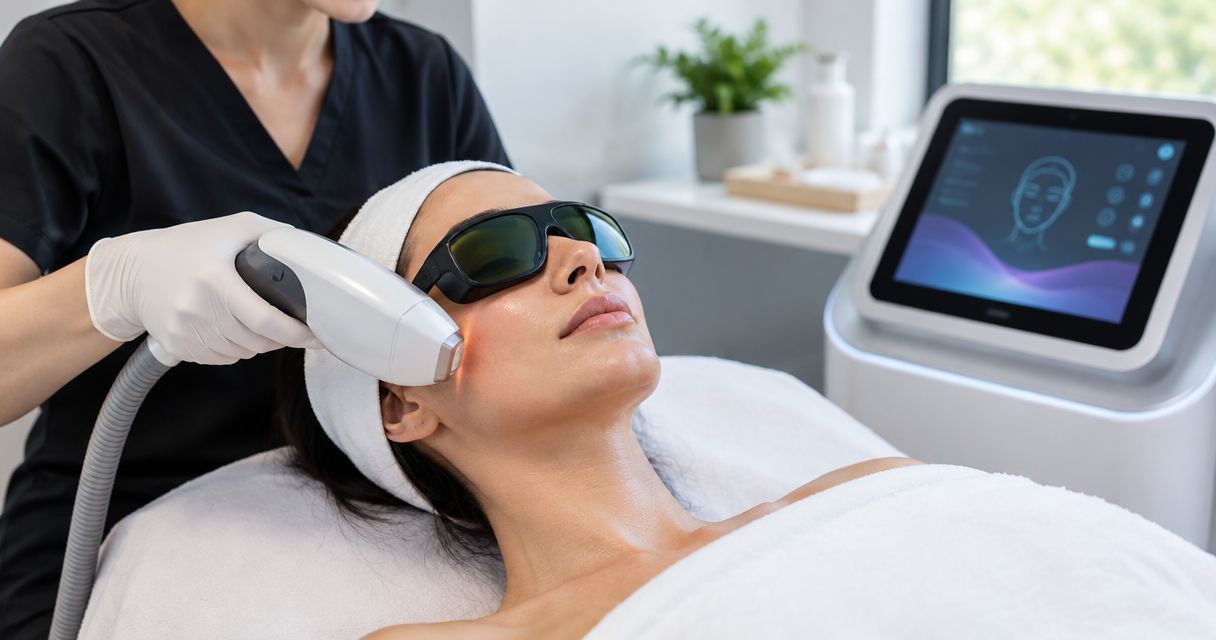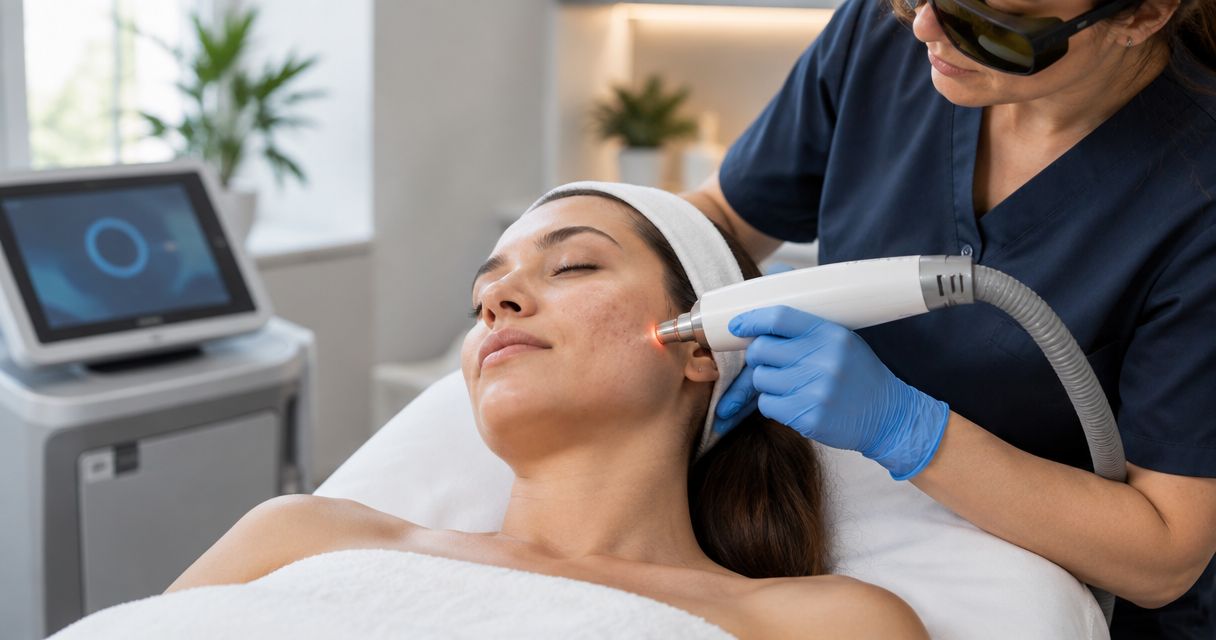
Acne scar laser treatment results develop over several months, not as soon as the surface heals; the timing depends on the laser, the scar type, and whether treatment involves a series of sessions. Early swelling can temporarily soften the appearance of indentations, so your first post-treatment view is not your final result.
- How long for acne scar laser treatment results? Expect gradual improvement over months, not an overnight change.
- The American Academy of Dermatology distinguishes early healing from the longer wait for visible laser scar improvement.
- Flat post-acne pigmentation and indented acne scars need different assessments and treatment goals.
- Judge progress with consistent photographs and your clinician’s review, not temporary swelling.
Why this matters
Surface recovery and scar improvement are different timelines. Redness settling does not mean collagen remodeling has finished, and skin looking smoother while swollen does not prove that a scar has changed permanently.
You also need to identify what you want treated. Brown marks, persistent redness, and depressed scars are not interchangeable. Start with the distinction between texture and post-acne pigmentation treatments before judging whether a laser treatment matches your concern.
For your 2026 treatment plan, ask for separate expectations for recovery, the first useful progress assessment, and the final review. A single promised results date hides those differences.
How long does it take to see results from acne scar laser treatment?
Expect improvement over months, with the assessment timed to your specific procedure. The American Academy of Dermatology’s public patient guidance on laser scar treatment explains that results can take months to appear and that treatment sometimes requires a series of sessions. That guidance is not a guaranteed schedule for an individual acne scar.
Use these stages to understand what you are seeing rather than treating every visible change as a result:
| Stage | What you might notice | What it means for your assessment |
|---|---|---|
| Early recovery | Redness, swelling, sensitivity, or peeling, depending on treatment | Focus on healing; swelling can disguise indentations |
| Surface settling | Less irritation and a clearer view of the treated area | Appearance becomes easier to assess, but remodeling continues |
| Remodeling | Gradual changes in texture as the healing response develops | Compare photographs under the same conditions |
| Treatment-course review | Your clinician evaluates the response across the planned course | Decide whether the approach needs adjustment |
These stages overlap. Your clinician should identify the review point that fits the device, treatment intensity, and your skin’s response.
If you are booking around an event in 2026, distinguish looking socially recovered from seeing the fullest improvement. Neither date should be assumed from the appointment date alone.
Ablative laser: recovery comes before a fair results assessment
Ablative resurfacing removes skin tissue in the treated area. Fractional ablative treatment treats microscopic zones rather than the entire surface uniformly. Both descriptions matter because the word laser alone tells you little about recovery.
The benefit is a resurfacing approach that can address appropriate textural scars. The trade-off is a more involved healing period, with risks that include infection, pigment changes, and scarring. Greater treatment intensity does not automatically make a procedure the right choice for your skin.
Best for: people whose clinician identifies suitable textural scars and who can follow the required wound-care and recovery plan.
Do not judge the outcome while crusting, swelling, or substantial redness obscures the skin. Ask when the treated surface should heal and when photographs will become useful for evaluating scar texture. Those are separate questions.
Nonablative laser: gradual change without removing the surface
Nonablative lasers heat targeted tissue without removing the skin surface in the same way as ablative resurfacing. They generally involve less recovery, but less recovery does not mean immediate scar correction.
The benefit is a less disruptive approach for appropriately selected concerns. The limitation is that improvement can be modest and a series of treatments can be necessary. Deep or tethered scars also need assessment for treatments that address their structure directly.
Best for: people whose clinician recommends a gradual approach and who prioritize less recovery over more intensive resurfacing.
Before starting a nonablative course in 2026, ask what the specific device is intended to improve. A treatment aimed at redness or general rejuvenation should not be presented as interchangeable with treatment for deep indentations.
How do ablative and nonablative approaches compare?
| Approach | Best for | Main benefit | Main limitation |
|---|---|---|---|
| Ablative resurfacing | Suitable textural scars when more recovery is acceptable | Removes tissue to resurface the treated area | More involved healing and wound care |
| Nonablative treatment | Suitable concerns when less recovery is a priority | Treats tissue without ablating the surface | Gradual change; repeated sessions can be needed |
Neither approach wins for every acne scar. The correct comparison is suitability for your scars, not which treatment sounds stronger. Ask the treating clinician to explain the choice in terms of scar structure, skin tone, and recovery requirements.
Why acne scar laser results vary
Several factors change both the treatment plan and when it makes sense to assess the result:
- Scar structure. Narrow, deep scars, broad depressions, and scars attached to underlying tissue do not respond identically. Laser alone does not address every structural problem.
- Treatment type and intensity. Ablative and nonablative procedures create different treatment effects and recovery demands. Settings matter as well as the device name.
- Skin tone and pigment response. Treatment selection must account for the risk of unwanted darkening or lightening, particularly in skin prone to pigmentation changes.
- Active acne. New breakouts can produce new marks or scars while older scars are being treated. Acne control belongs in the plan.
- Treatment sequencing. A course of sessions or a combination approach has a different review schedule from a single procedure.
- Healing and aftercare. Irritation, picking, infection, and ultraviolet exposure can complicate recovery and make progress harder to assess.
For a 2026 consultation, bring your medication list, history of pigment changes, and details of previous procedures. Your clinician needs that information before choosing a treatment, not after an unexpected reaction.
How can you track improvement without mistaking swelling for results?
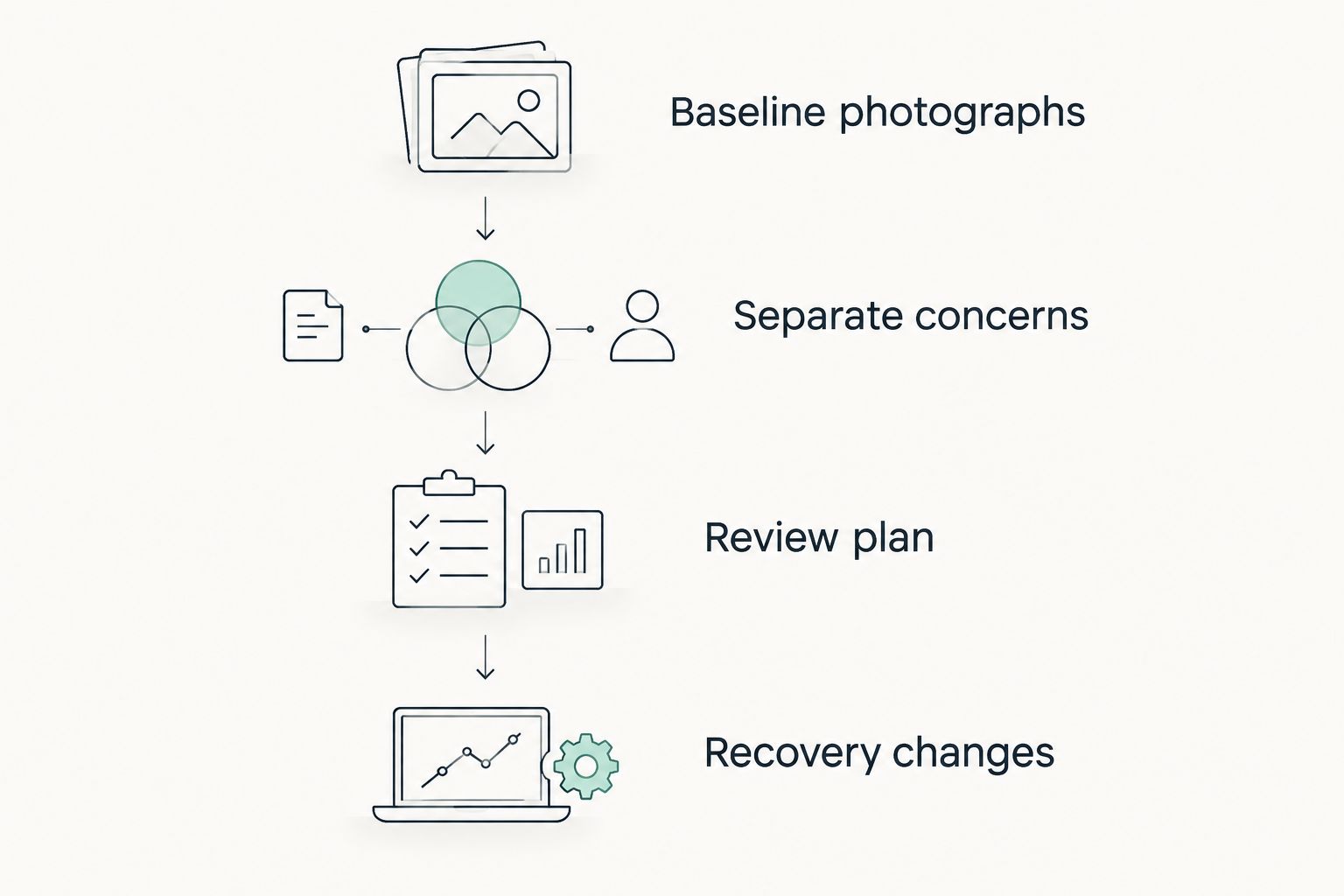
Create a repeatable record before treatment. A casual selfie in flattering light is a poor baseline for judging a shallow indentation.
- Take 3 baseline photographs: front-facing, left side, and right side. Use the same camera, distance, facial expression, and lighting for later comparisons.
- Separate texture from color. Record whether your main concern is an indentation, a raised area, redness, or a brown mark. Improvement in one does not establish improvement in another.
- Get 1 written review plan. Ask when your clinician wants photographs and when they will assess the response. Avoid choosing your own endpoint from an unrelated treatment story.
- Record recovery changes. Note new discomfort, persistent irritation, and other symptoms your clinician asks you to monitor. Contact the practice about concerns rather than interpreting them as normal progress.
Do not repeatedly change skincare to accelerate the result. Follow the procedure-specific instructions, including when to restart products that can irritate healing skin.
What should you ask before choosing a treatment?
Ask the clinician to identify your scar types and explain what the proposed procedure can realistically change. If the explanation focuses only on brighter or fresher-looking skin, bring the discussion back to the indentations or marks that concern you.
Useful questions include:
- Is this treatment intended for scar texture, pigment, redness, or a combination?
- What is the exact laser, and is the proposed treatment ablative or nonablative?
- Which of my scars are unlikely to respond to this procedure alone?
- What recovery signs are expected, and which require a call?
- When will we review results before deciding on additional treatment?
Ammonite Laser Spa is best suited to Downtown Brooklyn clients seeking personalized skin treatments. The studio offers laser skin rejuvenation, acne and pigmentation treatments, and microneedling; those service descriptions do not establish which procedure is appropriate for a particular scar.
When discussing Ammonite Laser Spa skin treatments, ask which offered procedure addresses your diagnosed concern. Suitability and a clear review plan matter more than a generic promise of faster results.
Discuss your skin concerns
Ask which treatment addresses scar texture, pigmentation, or active acne, and when to review progress.
When should you contact your clinician during recovery?
Contact your treating clinician if pain worsens, redness spreads, drainage develops, or you experience other symptoms that your aftercare instructions identify as concerning. Seek urgent medical assessment for severe symptoms, eye problems, or signs of a serious reaction.
Do not wait for a scheduled results review to report a healing concern. A follow-up intended to judge scar improvement is not a substitute for assessing a possible complication.
For ongoing protection, the American Academy of Dermatology recommends broad-spectrum, water-resistant sunscreen with SPF 30 or higher. Immediately after a procedure, follow your clinician’s instructions about wound care, physical sun protection, and when sunscreen can be applied to treated skin.
Can acne scars look better immediately after laser treatment?
Immediate smoothness is not a reliable final result because swelling can temporarily fill out depressions. Assess lasting texture changes after recovery and at the review point set for your procedure.
A fading brown mark can also make skin look more even without changing an underlying indentation. Keep color and texture separate when comparing your photographs.
Does needing more sessions mean the treatment failed?
Additional sessions do not automatically mean failure; some laser approaches are planned as a course. The important question is whether the response matches the agreed goal and whether continuing is clinically appropriate.
If your 2026 treatment course changes, ask what finding supports the change. A recommendation to continue should come with an explanation, not simply another appointment date.
FAQ
How long for acne scar laser treatment results to become noticeable?
Acne scar laser improvement develops over months, with timing determined by the procedure and your healing response. Early swelling and redness make immediate assessment unreliable, so use the review schedule set by your treating clinician.
Will my acne scars disappear completely after laser treatment?
Laser treatment does not guarantee complete acne scar removal. Improvement depends on scar structure, treatment selection, and response; some scars require a different or combined approach.
Is recovery time the same as the time needed to see results?
Recovery time and results time are different. The surface can settle while deeper remodeling continues, so looking healed does not mean you have reached the final outcome.
Can laser treatment help brown acne marks as well as scars?
Some laser treatments target pigmentation, but brown marks and depressed scars are different concerns. A clinician should identify the problem before choosing a device and setting expectations.
Should I treat active acne before starting scar treatment?
Active acne needs assessment and management as part of a scar-treatment plan. New breakouts can create additional scars, and inflammation can affect which procedures are appropriate.
When should I worry that my skin is not healing normally?
Contact your treating clinician about worsening pain, spreading redness, drainage, or other warning signs listed in your aftercare instructions. Do not wait for your results appointment to report a possible complication.
What should I ask Ammonite Laser Spa about acne scar treatment?
Ask Ammonite Laser Spa which offered skin treatment addresses your specific concern and whether a separate medical assessment is needed. Request procedure-specific recovery instructions and a clear point for reviewing progress.
One last thing
A fair before-and-after comparison starts before treatment, not afterward. Save your baseline photographs without filters and preserve the lighting setup so you can reproduce it.
Before committing to treatment in 2026, make sure you can state the goal plainly: less visible indentation, more even pigmentation, or reduced redness. A precise goal makes it easier to recognize meaningful improvement—and to question a plan that is not addressing your concern.