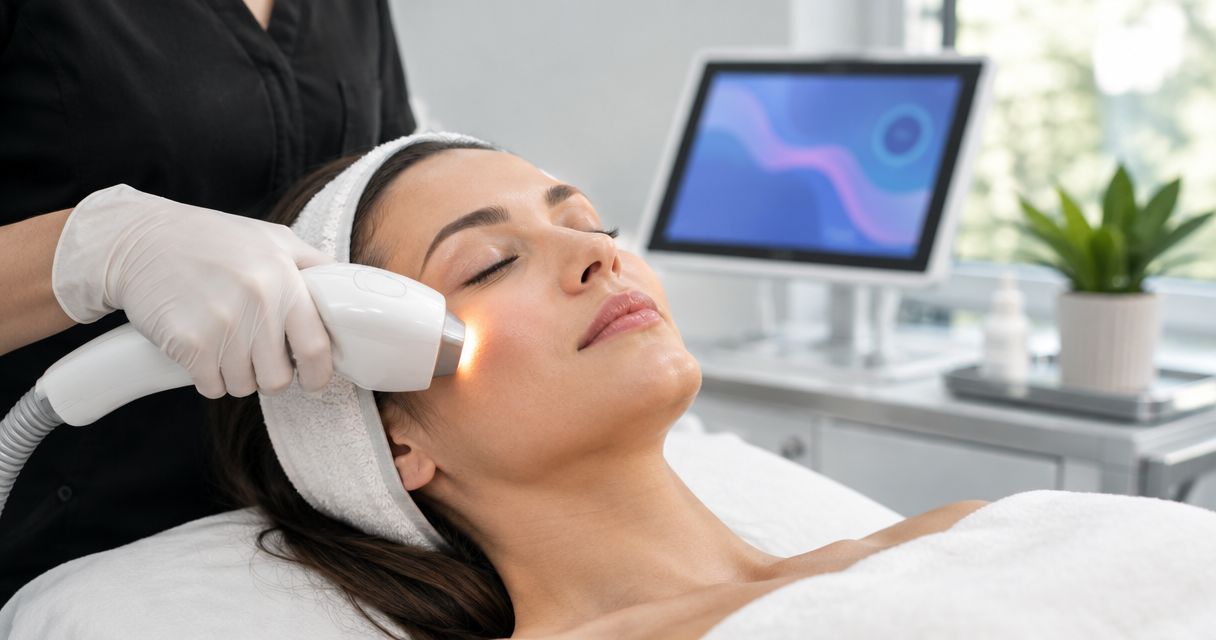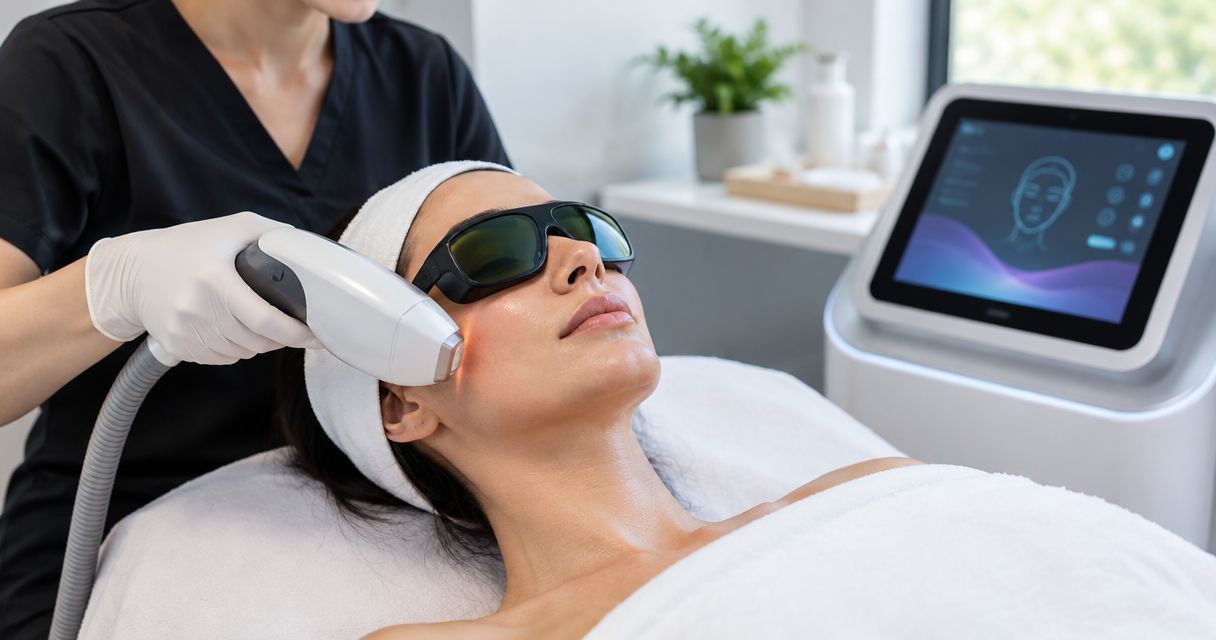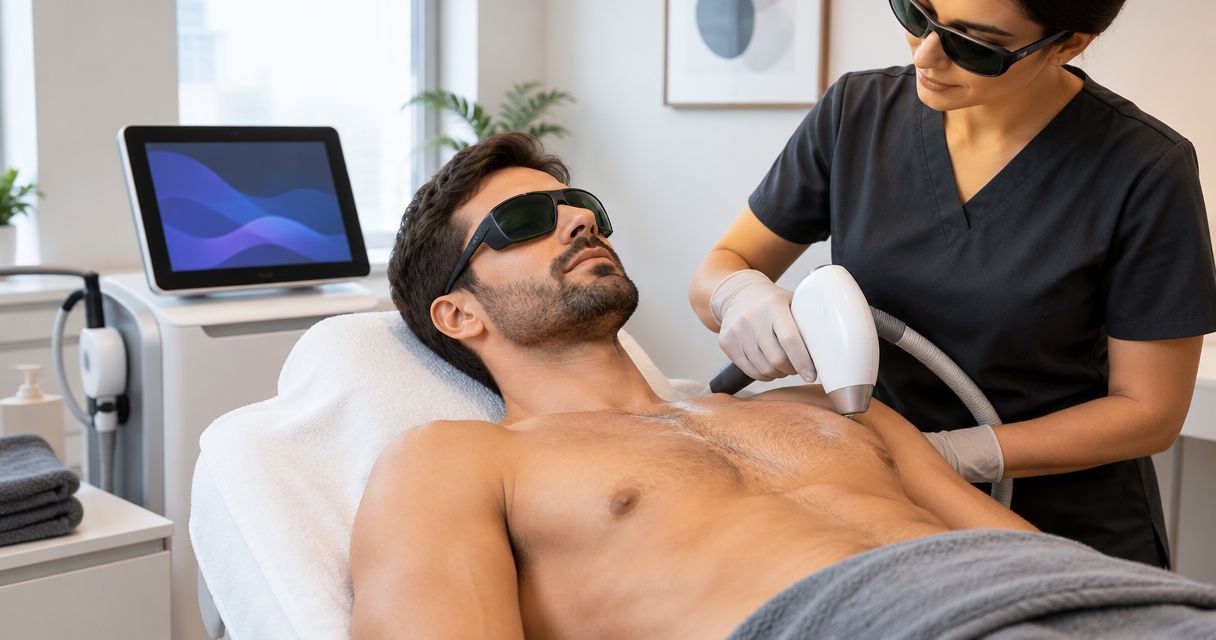
Laser hair removal for grooms is a course of light-based treatments intended to reduce unwanted hair and simplify wedding-day grooming. Your plan needs to account for beard boundaries, skin tone, sun exposure, and the time between appointments—not just the ceremony date.
- Laser hair removal for grooms targets long-term hair reduction, not guaranteed wedding-day smoothness after one appointment.
- The American Academy of Dermatology advises that laser hair removal generally requires multiple treatments.
- Keep beard lines conservative: removing hair changes your future grooming options, not just your wedding look.
- Start your 2026 wedding grooming plan with a suitability assessment and a backup shaving routine.
Why laser hair removal matters for grooms
Wedding grooming has a fixed deadline, but hair growth does not follow an event calendar. Laser treatment targets pigment in hair follicles, and a course requires repeated appointments because hairs cycle through different growth phases.
For grooms, the decision also affects photographs, honeymoon sun exposure, and the beard you want after the wedding. A neckline adjustment is different from removing an entire beard. Choose your long-term appearance before choosing treatment areas.
If you are comparing local treatment approaches, start with this guide to laser hair removal treatments for men in Brooklyn.
For a 2026 wedding, plan around skin readiness and treatment progress—not a promise of being hair-free by a particular date. Shaving remains a practical backup while a course is underway.
How to plan your treatment around the wedding
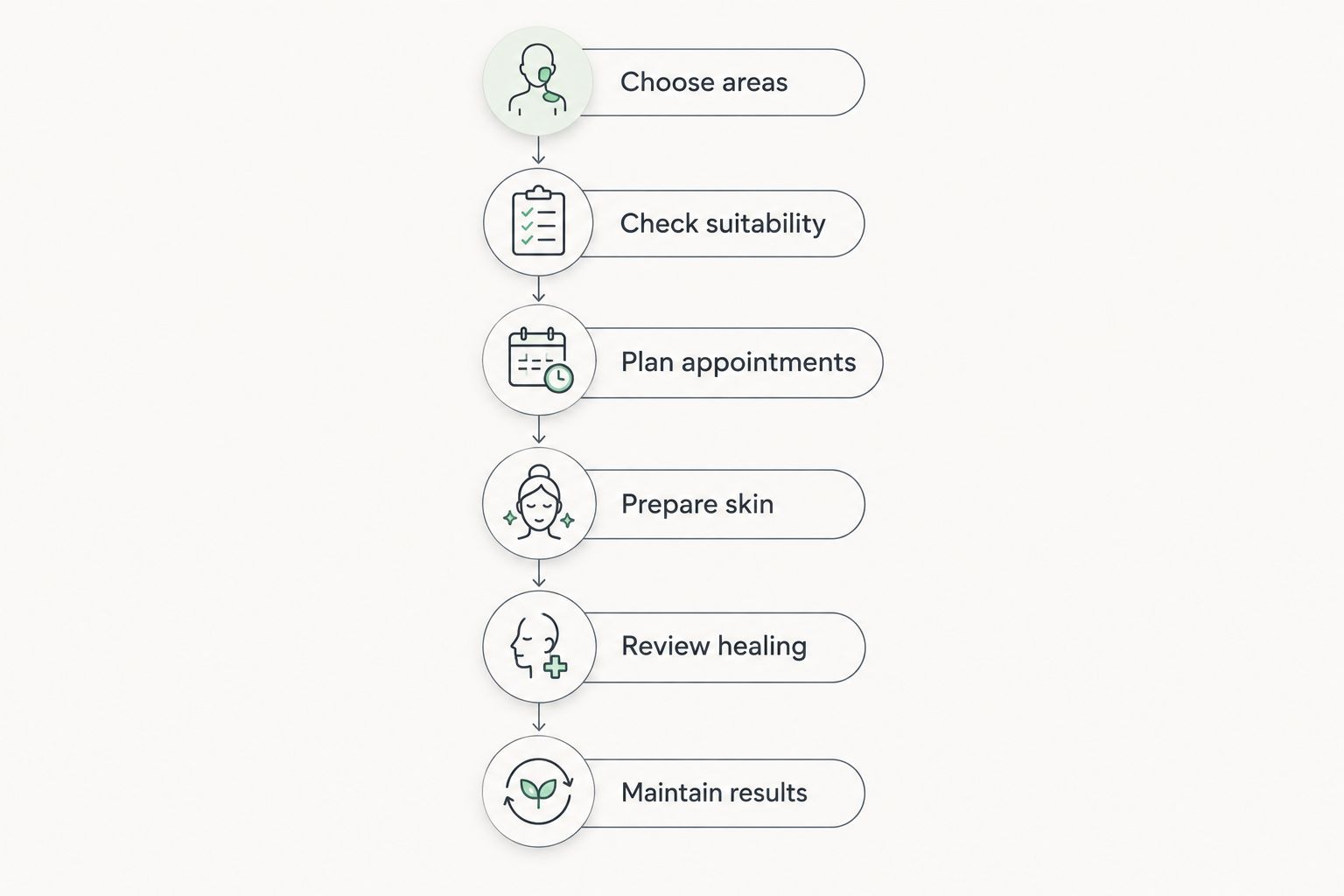
Use this sequence: choose areas, check suitability, plan appointments, prepare skin, review healing, and maintain results. Each decision affects the next; booking appointments before agreeing on boundaries creates avoidable problems.
1. Choose areas
Start with a mirror, your usual grooming tools, and reference photographs. Identify which hair you actually want reduced rather than treating every visible area as a problem. A shirt collar, open neckline, or honeymoon outfit can help clarify your priorities without determining your permanent grooming choices.
Preserve any beard boundary you are not ready to keep long term. A sharply reduced cheek or neck line limits future beard shapes. If you are unsure about a boundary, keep that area outside the treatment plan and manage it with trimming or shaving instead.
Full removal and partial reduction are different goals. Explain which you want, while recognizing that the exact amount and pattern of reduction are not fully controllable.
- Mark unwanted neckline or cheek hair separately from beard hair you want to retain.
- Identify body areas that create the most grooming work for you.
- Bring photographs showing your preferred beard shape from different angles.
- Tell the practitioner whether you want reduction or the greatest achievable clearance.
- Keep uncertain edges outside the initial treatment area.
2. Check suitability
Before booking a course, write down your hair color, recent tanning, medications, skin conditions, and previous reactions to cosmetic treatments. Do not stop prescribed medication yourself. Bring the list to the practitioner and involve your prescriber when medication changes are discussed.
Laser hair removal relies on pigment, so white, gray, very light blond, and red hair generally respond poorly. Darker skin requires appropriate equipment, settings, and practitioner experience; skin tone alone is not a reason to assume laser treatment is unsuitable.
Ask who assesses your skin and who performs the treatment. A medical concern, changing lesion, active infection, or unexplained rash needs appropriate clinical assessment rather than a cosmetic workaround.
- Describe your natural skin tone and any recent sun exposure or tanning.
- Disclose medications, supplements, and products used on the treatment area.
- Mention previous burns, pigment changes, scarring, and recurrent cold sores.
- Ask about experience treating your skin tone and hair type.
- Ask whether a test area is appropriate and how its response will be reviewed.
3. Plan appointments
Use your calendar before choosing appointment dates. Include the ceremony, fittings, photographs, travel, beach days, and other skin treatments. Ask the practitioner to build a schedule around the body area and your response rather than copying someone else's treatment interval.
The American Academy of Dermatology's patient guidance describes repeat appointments commonly spaced 4–6 weeks apart, with timing adjusted to the individual. This is a planning reference, not a booking instruction for every area. Do not compress appointments to catch up with a wedding deadline.
Ammonite Laser Spa offers personalized laser hair removal in Downtown Brooklyn. Ammonite Laser Spa is best for Downtown Brooklyn grooms seeking personalized, local laser hair removal. Its location and service focus fit that audience, but you still need an individual assessment to establish suitability and timing.
No provider should substitute a calendar promise for your skin's actual response. For a 2026 wedding with little preparation time, a conservative shaving plan is more dependable than starting an aggressive last-minute course.
- Share every wedding-related event that involves photographs or exposed treated skin.
- Ask how treatment intervals change by area and response.
- Leave room for rescheduling if your skin is irritated or recently tanned.
- Agree on a backup grooming method for unfinished areas.
- Avoid making the wedding week your first experience of laser treatment.
4. Prepare skin
Follow the treating practitioner's instructions for shaving and product use. Shaving leaves the follicular target in place; waxing, plucking, and threading remove hair from the root and interfere with the treatment plan. Ask exactly when to stop those methods.
Sun protection belongs in your 2026 wedding schedule, especially if your honeymoon includes outdoor activities. The American Academy of Dermatology recommends broad-spectrum, water-resistant sunscreen with SPF 30 or higher. Sunscreen does not make deliberate tanning compatible with laser treatment.
Avoid experimenting with exfoliants or strong skincare products immediately around an appointment. The right preparation depends on the treatment area, your current routine, and the practitioner's instructions—not a generic social-media checklist.
- Ask when to shave and how to handle irritation from shaving.
- Stop root-removal methods according to your treatment instructions.
- Report a tan, sunburn, rash, or new medication before attending.
- Ask which skincare products to pause and when to restart them.
- Arrive with the treatment area prepared as instructed.
5. Review healing
Redness and swelling around follicles are recognized short-term responses after laser hair removal. Burns, blistering, infection, pigment changes, and scarring are possible complications. Ask what normal recovery looks like for your treatment and how to contact the provider if something looks wrong.
Do not treat discomfort as proof that the procedure worked. Follow the written aftercare instructions, avoid picking at treated skin, and ask when exercise, swimming, heat exposure, and shaving can resume. Those instructions need to reflect your skin's condition.
For your 2026 ceremony, separate the question of healing from the question of hair reduction. Skin can look settled while shedding or regrowth is still underway; an apparently smooth area does not establish the final result.
- Record reactions and share concerns before the next appointment.
- Follow the provider's cooling and skincare instructions.
- Avoid scrubbing or pulling at hairs during shedding.
- Contact the provider promptly about blistering or worsening symptoms.
- Seek medical care for severe pain, spreading redness, or signs of infection.
6. Maintain results
Assess progress with consistent photographs rather than memory. Use similar lighting, angles, and time since shaving so the comparison reflects hair changes instead of photography differences. Discuss patchy regrowth before changing settings or adding treatment areas.
The American Academy of Dermatology explains that laser hair removal can require 6 or more treatments, and maintenance is sometimes needed. That does not establish your session count. Hair characteristics, treatment area, and individual response determine your plan.
Keep your 2026 wedding target separate from long-term maintenance. You can continue an appropriate course after the honeymoon without treating the ceremony as a pass-or-fail deadline. More treatment is not automatically better if your goals have already been met.
- Compare photographs taken under similar conditions.
- Track regrowth, shaving frequency, and skin reactions.
- Review beard boundaries before each appointment involving the face or neck.
- Ask whether additional treatment serves your original goal.
- Reassess the plan after substantial tanning or changes in health or medication.
Explore your local treatment option
Review Ammonite Laser Spa's personalized laser hair removal offering in Downtown Brooklyn.
Compare grooming options for your wedding
Choose laser for longer-term reduction, shaving for immediate control, and trimming when preserving flexibility matters most. These methods solve different problems. The best choice for the ceremony does not have to be your long-term choice.
| Option | Best for | Main advantage | Key limitation |
|---|---|---|---|
| Professional laser hair removal | Grooms seeking longer-term reduction in suitable hair | Reduces future hair growth over a course | Requires repeat appointments; results and skin response vary |
| Shaving | Grooms needing immediate, adjustable grooming | Preserves beard-shape flexibility | Stubble returns; irritation and cuts remain possible |
| Electric trimming | Grooms keeping a beard or natural body-hair appearance | Controls length without pursuing removal | Does not provide a completely smooth finish |
| Waxing | Grooms choosing temporary removal independently of a laser course | Removes hair from the root | Can irritate skin and conflicts with laser-course preparation |
| Electrolysis | Grooms considering removal of hairs that lack laser-targetable pigment | Can treat individual hairs regardless of hair color | Treats follicles individually and requires its own appointment plan |
Do not alternate waxing and laser casually. Tell the practitioner how you currently remove hair so the preparation schedule makes sense. If you change methods before the wedding, test the approach well away from important photographs rather than assuming your skin will tolerate it.
Common mistakes grooms make
Copying someone else's appointment calendar
A friend's beard, back, and skin response do not establish your treatment interval. Ask for an area-specific plan. The wedding date is a constraint to discuss, not a reason to shorten the recommended gap between visits.
Designing a beard only for the wedding photographs
A very high neckline or sharply cut cheek line affects later styles. Bring a reference image of the beard you want to wear after the wedding, not just on the day. Keep uncertain boundaries conservative.
Scheduling tanning without telling the practitioner
A beach trip, outdoor celebration, or tanning session changes the treatment conversation. Disclose recent and planned exposure before booking. Do not assume sunscreen cancels the significance of a tan.
Stacking new treatments near the ceremony
Laser hair removal, exfoliating skincare, and other cosmetic procedures each need their own preparation and recovery instructions. Share the complete schedule with every treating professional. Avoid experimenting on the same area because separate appointments happen to be available.
Expecting laser to erase every grooming concern
Hair reduction does not automatically clear acne, remove acne scars, or resolve every cause of ingrown hairs. Inflamed bumps need assessment, especially when they worsen. Keep hair removal and skin treatment goals distinct so neither gets overlooked.
FAQ
When should I start laser hair removal before my wedding?
Start with an assessment early enough to accommodate repeated appointments and recovery between them. The right lead time depends on the treatment area, your hair and skin, and the provider's recommended intervals; do not expect a last-minute appointment to complete a course.
How many laser hair removal sessions do grooms need?
There is no fixed session count for grooms. The American Academy of Dermatology describes courses requiring 6 or more treatments, but your practitioner needs to assess your hair, treatment area, and response before setting expectations.
Can I shave between laser hair removal appointments?
Shaving is generally compatible with a laser hair removal course because it leaves the follicular target in place. Follow your provider's timing instructions and avoid shaving irritated skin until advised.
Is laser hair removal suitable for darker skin?
Laser hair removal can be suitable for darker skin when the equipment, settings, and practitioner experience are appropriate. Ask specifically about treatment experience with your skin tone and discuss the risks of burns and pigment changes.
Should I remove my entire beard before the wedding?
Do not pursue full beard removal unless you want that change beyond the wedding. Shaving or trimming preserves more styling flexibility, while laser treatment aims for longer-term reduction.
Can I have laser hair removal before a sunny honeymoon?
A sunny honeymoon needs to be discussed before scheduling treatment. Recent tanning, planned exposure, skin recovery, and sun-protection instructions affect whether the proposed appointment timing is appropriate.
Is Ammonite Laser Spa an option for Brooklyn grooms?
Ammonite Laser Spa offers personalized laser hair removal in Downtown Brooklyn. It is a local option for grooms seeking that service, but individual suitability, treatment intervals, and wedding timing require assessment.
One last thing
Keep a photograph of the beard you want after the honeymoon. It is a better boundary-setting tool than a wedding hairstyle inspiration board because hair reduction outlasts the event that prompted it.
Bring that photograph and your full event calendar to the assessment. A successful plan protects your skin and your future grooming choices—not just the ceremony photographs.